The reasons for using another artist’s work in one’s own are many and often complicated. However, this adoption of another artist’s style is not a new phenomena – in fact it has occurred for several hundred years.
The Romans copied the art, architecture and stylistic traditions of the ancient Greeks as early as 500 BC. It was not uncommon for classical Greek sculptures to adorn both Roman villas and palaces. The rationale was a reflection of the Roman admiration of the Greek ideal as a whole rather than copying specific works. Continuing throughout history, one sees many well-known artworks allude to their historical counterparts to convey underlying messages and meaning.
Of course, there are examples of renowned pieces represented in contemporary artworks for purely aesthetic reasons, or as a direct juxtaposition when the two works are installed in the same space. For example, Austrian painter Franz Matsch portrayed emperor Franz Joseph I being courted by the German princes on the occasion of the 60th anniversary of the emperor’s reign in 1908.
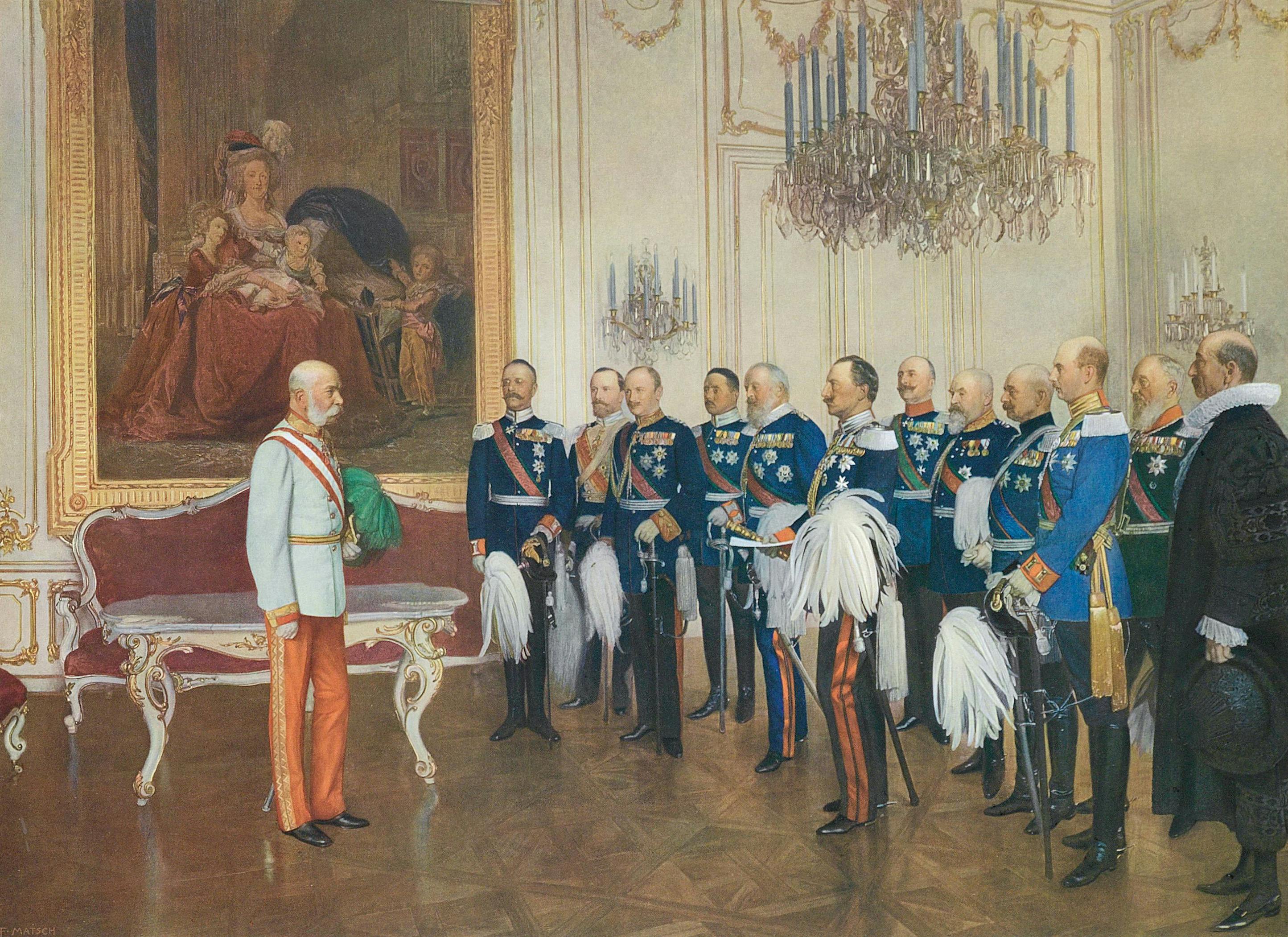
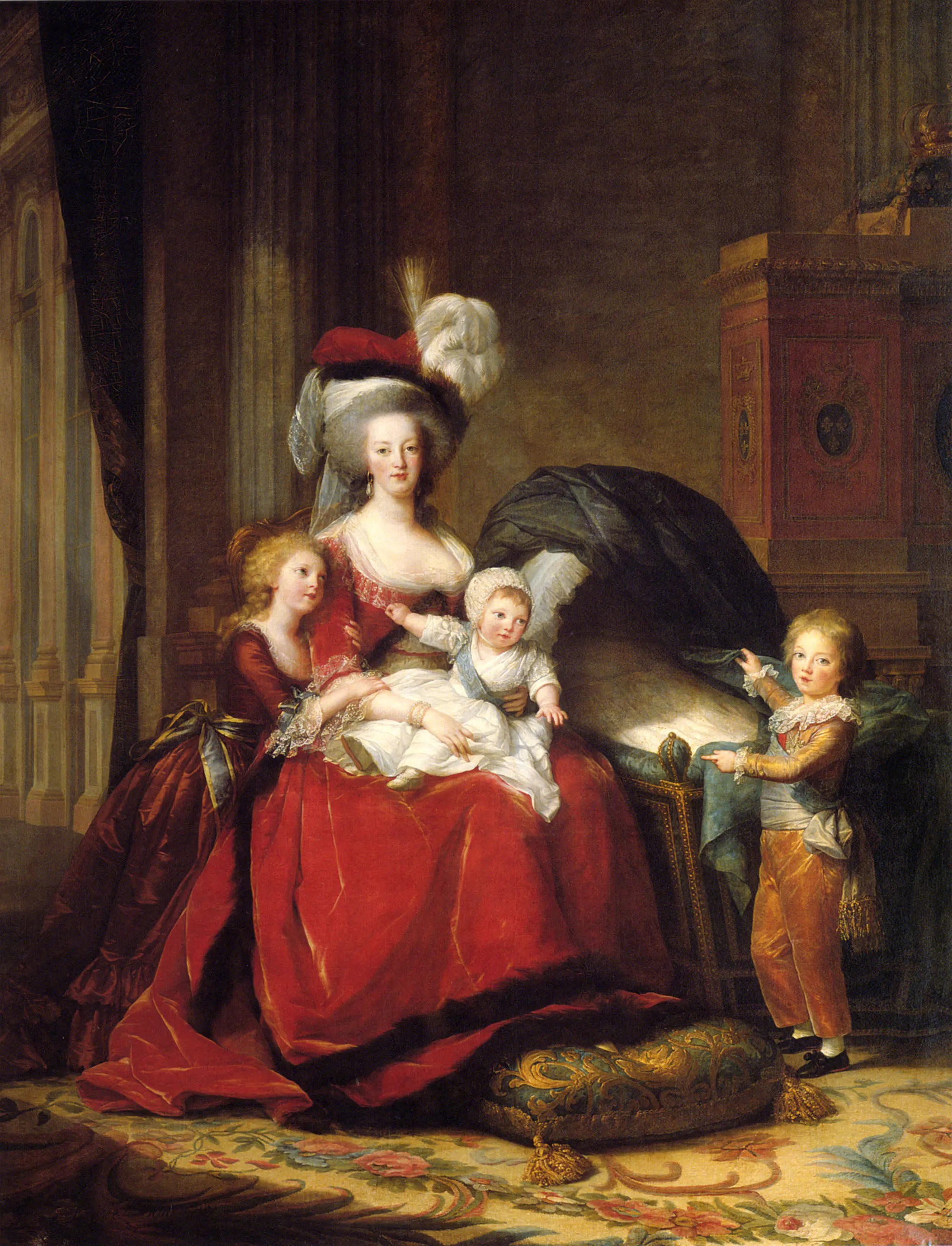
In the background of Matsch’s piece is Elisabeth Vigée Le Brun’s portrait of Marie Antoinette with her children. The iconic French artwork was painted by Vigée Le Brun in 1787, but the version in Matsch’s painting is actually an image of a tapestry in the same motif. It was gifted to the Austrian royal family by Napoleon III, and hung in the Austrian Schönbrunn Palace for several years.
See also: The 15 Most Expensive Female Artists
Although the portrait of Marie Antoinette shown in Matsch’s painting appears to allude to a larger allegory, Matsch simply painted what he saw.
The art of collecting works
The Salon, or Salon de Paris, was a biennial exhibition in the French capital beginning in 1667. Here, the most recent and refined artworks were exhibited, and the event was one of the greatest among the French aristocracy, attracting international guests. Before the French Revolution, artists included in the showcase had to be a member of Académie Royale de Peinture et de Sculpture, France’s preeminent art institution. The most prominent guests were the French monarchy and its favorites, an outward demonstration of the monarchy’s good taste. However, in 1791 the rules were amended and artists who did not belong to the academy were allowed to participate.
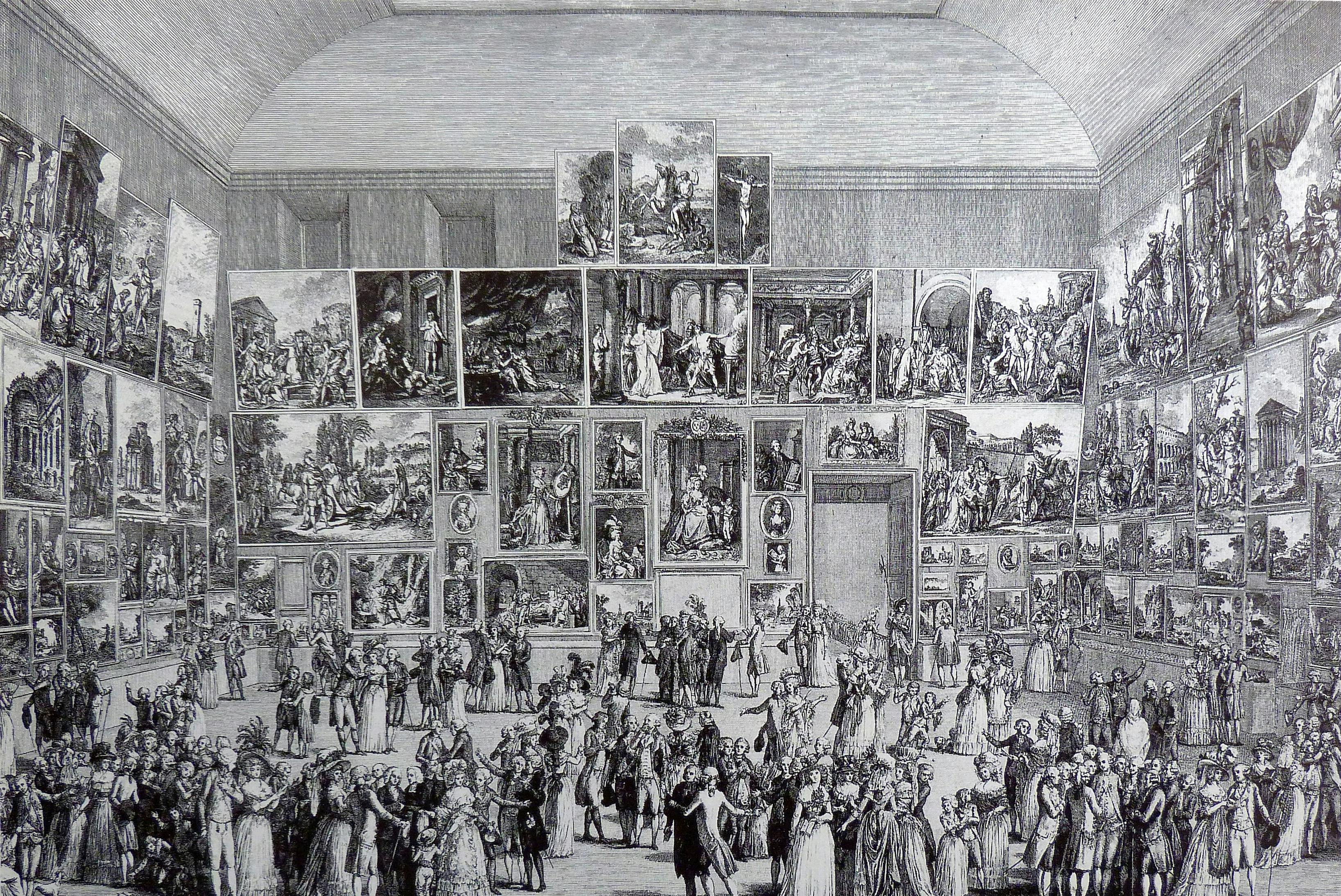
In addition, annual shows were held in Salon Carré – the original lounge for the Salon. In 1785, the Italian artist Pietro Antonio Martini created an etching where the Salon itself became the subject. Martini’s work offers insight into how the exhibition was organized, showing both how the artworks were hung in relation to each other, and which works were allowed to dominate the room – a portrait of a member of the French royal family was almost always placed in the centre.
See also: The 5 Most Notorious Art Forgers
In 1785, the dominant space was occupied by Swedish painter Adolf Ulrik Wertmüller. Wertmüller, who had joined the French Academy only one year prior, chose the subject matter of Marie Antoinette with her eldest children. Unfortunately, the portrait wasn't appreciated by everyone, including Marie Antoinette herself, and it was eventually shipped to Sweden. Today, the portrait belongs to the Swedish National Museum.
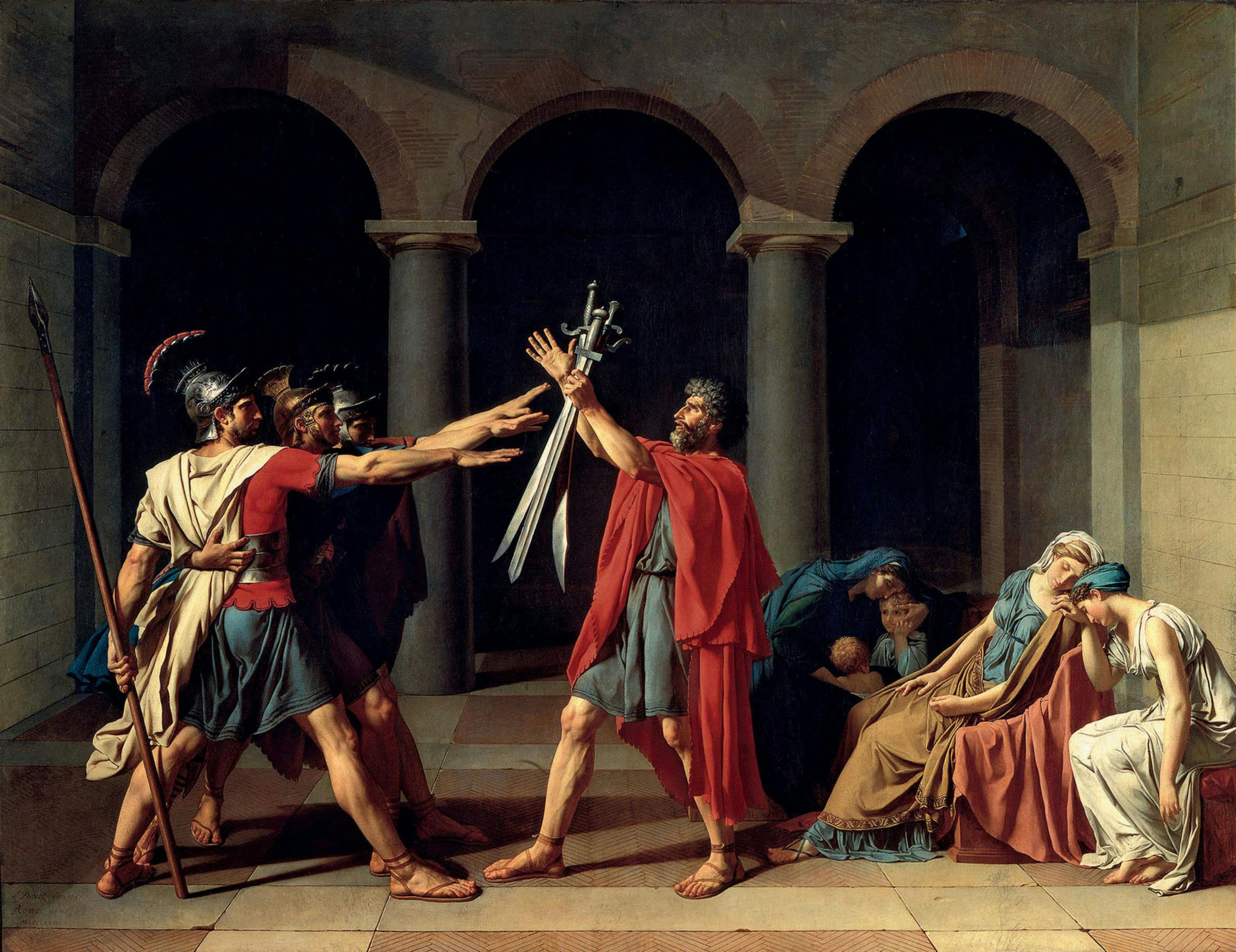
The real star of 1785’s salon was instead Martini’s etching, which depicted the painting hung above the portrait of Marie Antoinette, Oath of the Horatii by Jacques-Louis David. Like Wertmüller, David had become a member of the academy the previous year.
If the Salon’s strict rules about entering the show had made the artworks perspicuous during the 1800s, that drastically changed during the coming decades when more artists were allowed to exhibit.
See also: The 10 Most Scandalous Artworks
As more artists were included in the Salon over the coming years, it became increasingly difficult to tame the sheer volume of artworks exhibited. The last exhibition organized by the French state was held in 1880, before the show was taken over by the Société des Artistes Français. The exhibition featured over 7,000 works by more than 5,000 artists. The works were organized by genre or place of origin.
Of course, works such as those by Martini, depicting the magnificence of the Salon, shouldn’t just be perceived as pictorial testimonies of historical events, but also as fully-fledged artworks in themselves. Nevertheless, these works offer an exciting opportunity to discover and investigate the paintings hidden within.
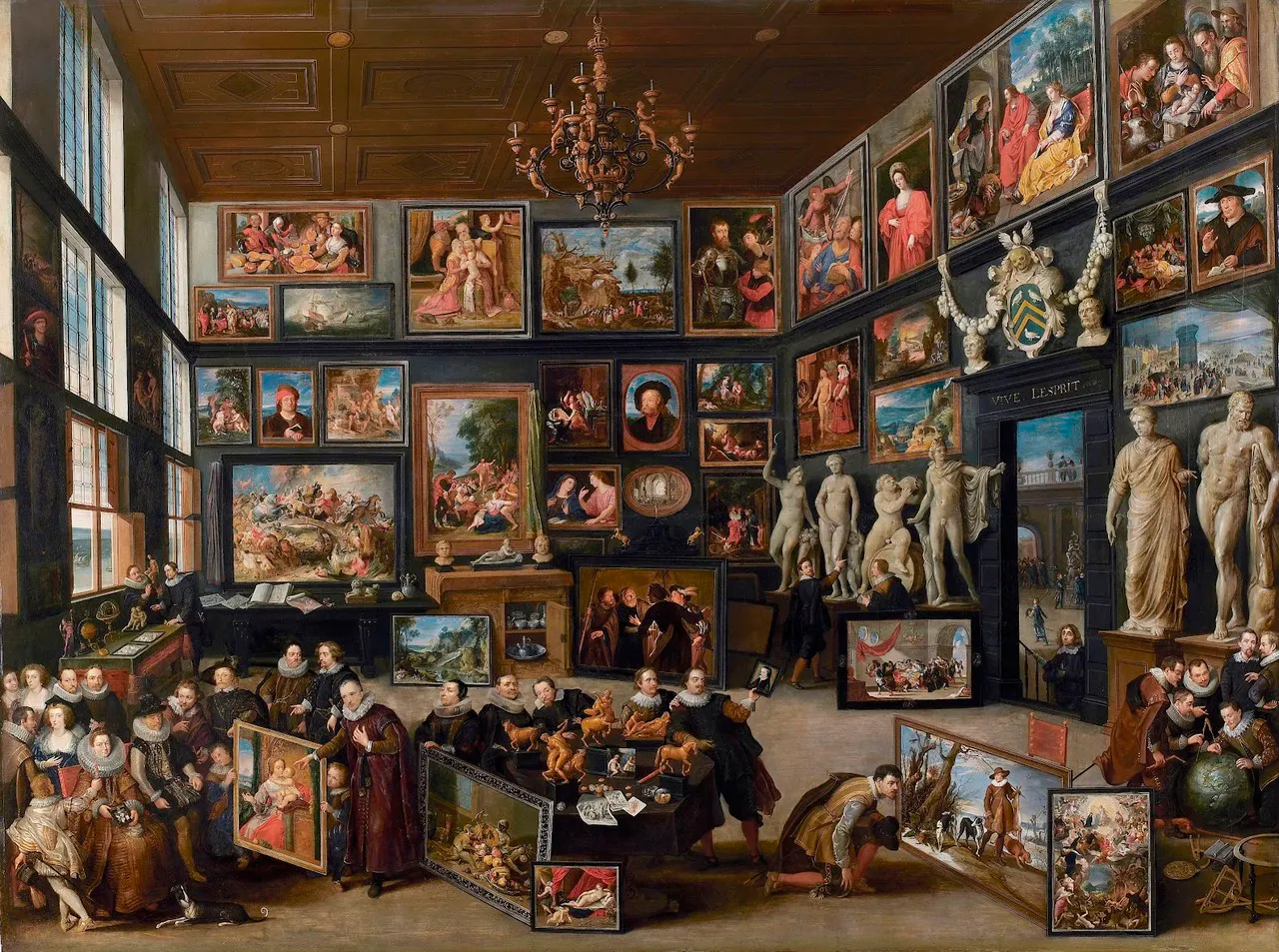
The same principle of deciphering artworks within artworks applies to the painted ‘collection works’ of private or public art collections – something of which Flemish painter Willem van Haecht specialized. During the 1630s, van Haecht curated the collection of Cornelis van der Geest, a Belgian spice merchant, which van Haecht himself portrayed several times during the coming years.
In a work by Haecht from 1628, we see how van Geest's prestigious collection is being admired by a number of visitors, including Albert VII and Archduke and Archduchess Isabella Clara of Austria. The royal couple were artistically inclined and favored both Dutch and Spanish artists. Among the notable artworks van Heacht depicted are Peter Paul Rubens' Portrait of a Commander and Portrait of a Young Scholar, Quentin Matsys’ Madonna and Child, as well as Pieter Aertsen's The Pancake Bakery. In addition, we can see a winter landscape by Jan Wildens and the work Woman Bathing by Jan van Eyck. And if the paintings were not enough, van Heacht's work also shows some stunning marble statues, such as Apollo Belvedere and Farnese Hercules.
See also: From Van Eyck to Botero: The Mystery of the Arnolfini Portrait
The depiction of Apollo and Hercules emphasizes their significance – ever since the Renaissance, these pieces were considered exemplary and studied other artists for generations.
From the year 1666, twenty years after the Academy was formed, residential programs were organized for promising young artists. The students were taught the classical arts and often copied antique works. The works that were copied were often those of the Louvre. The works were copied partly for study purposes, but also in order to preserve the paintings of the test of time.
Imitation is the sincerest form of flattery.
Even today, the Louvre's classic paintings are often copied by art students armed with blocks and pens. However, special permission is now a prerequisite to studying pieces from their famed collection.
See also: The 12 Most Expensive Paintings Ever Auctioned
It was common practice to sketch entire rooms, which made it possible to depict several works by important masters at the same time. Of these rooms, Salon Carré in the eastern end of the large gallery of the Denon-wing was the most commonly depicted. Around 1880, the French painter Alexandre Jean-Baptiste Brun captured the famous space on canvas.
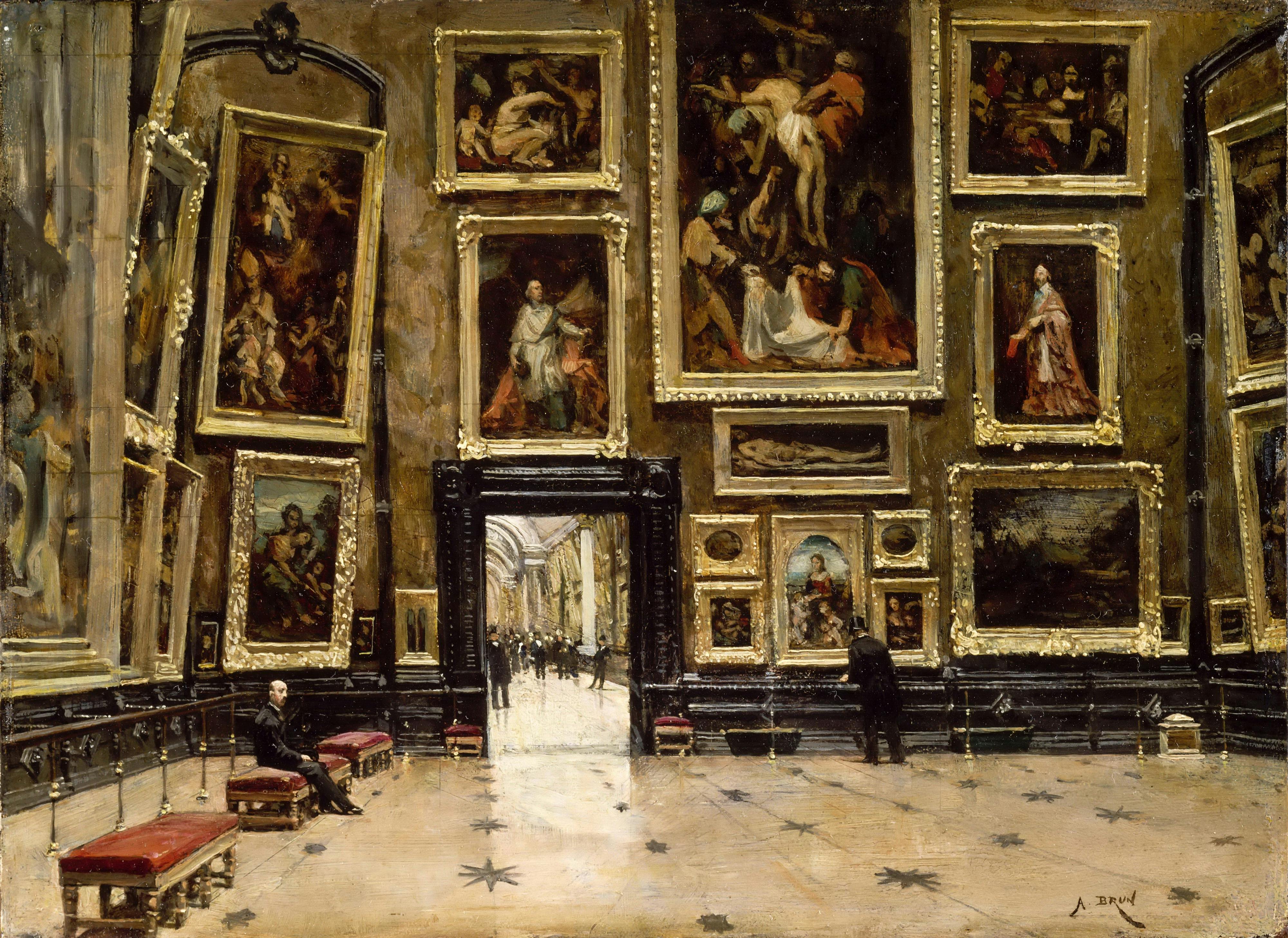
Brun's work not only shows what paintings were owned by the Louvre during the 1880s, but also their configuration in the space. The paintings were hung very close together, as was the style during the Salon era, and have little in common with today's disposition. The most important works of Italian and French Baroque and Renaissance hung in the hall, including Leonardo Da Vinci’s The Virgin and Child with St. Anne, Jean Jouvenet's Descent from the Cross, and a portrait of the Duke of Richelieu, painted by Philippe de Champaigne.
See also: The First Works of 10 Famous Artists
Art as a tool for comment and criticism
The artwork depicted in other paintings is thus a recurring theme throughout history and is undoubtedly an inspiration for artists to admire their predecessors. In addition, artists could put the pictured art into a new context that allowed the viewer to identify the underlying themes of the work. This method could also work as a form of skilled criticism in some cases.
An example of the latter is the six-part series Marriage A-la-mode by British painter William Hogarth, where the artist criticized the upper class's moral conduct in the mid-1900s. In particular, the fourth work of the series, The Toilette, is full of whispers about the moral fall of aristocracy and shows the upper class in relation to moral allegories from the Bible and Greek mythology. The work takes place in a fictional count’s house, where the count, his wife and their friends are portrayed in several compromising situations.
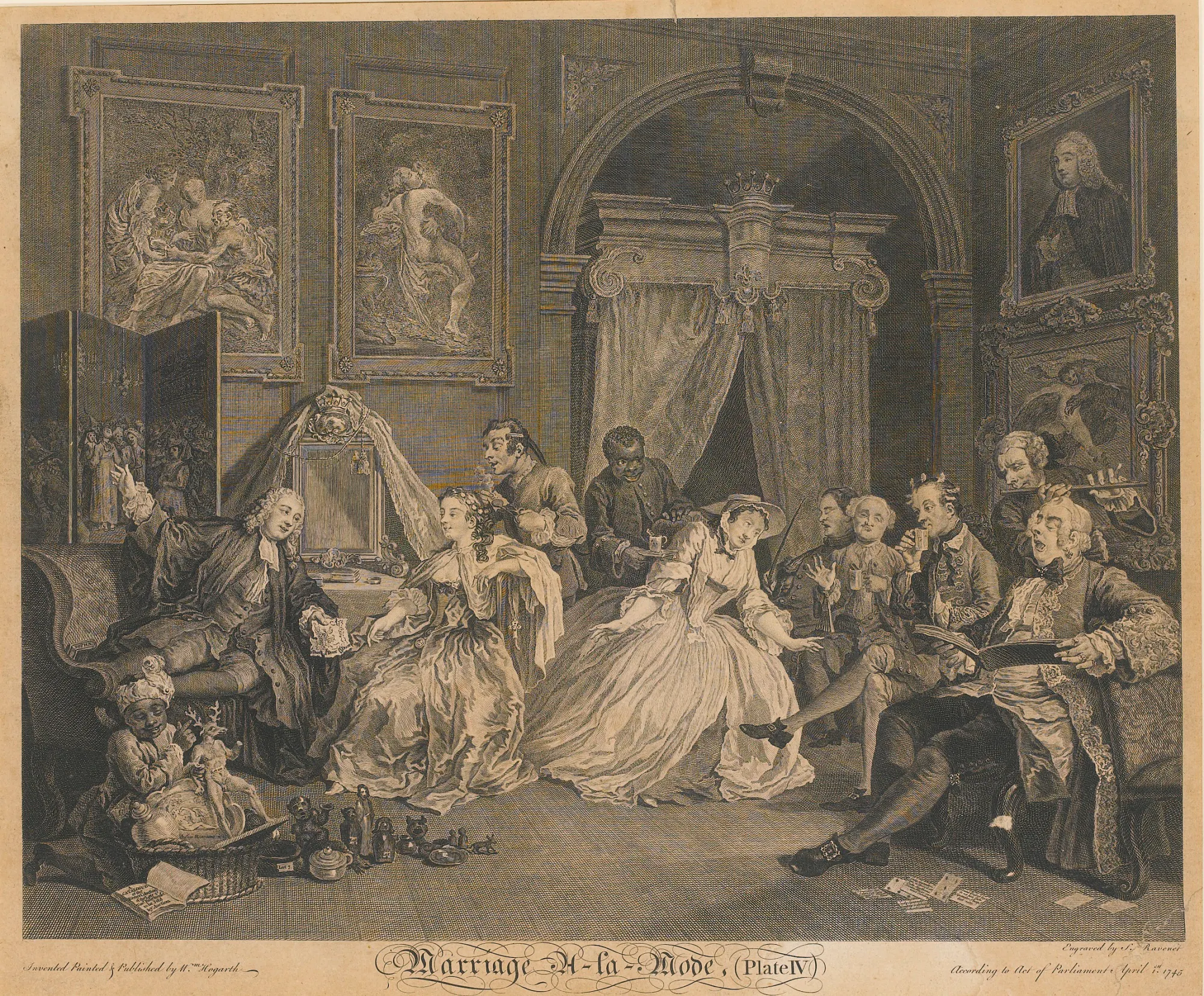
Hogart decorated the count’s bedroom with art that had immoral motifs, like The Rape of Ganymede by Michelangelo and Correggio's Jupiter and Io. In addition, several paintings with the Bible's Lot and his two daughters are seen in purely incestuous situations. What Hogarth thought about the upper class and its alleged moral ideals could not be made any clearer.
See also: The Top 10 Stolen Masterpieces
In the English artist John Everett Millais’s work The Black Brunswicker, the painter commented on a historic event: the battle of Waterloo. The work was painted in 1860 and thus the battle had occurred 45 years earlier, which meant the memory of the war was still very much alive.
The link to the Battle of Waterloo is clearly alluded to in the title of the painting – the Black Brunswickers was the name of voluntary troops fighting with the allied forces in the war against Napoleon I. The link is emphasized by the fact that Jacques-Louis David’s world-famous Napoleon portrait hangs on the wall of the room.
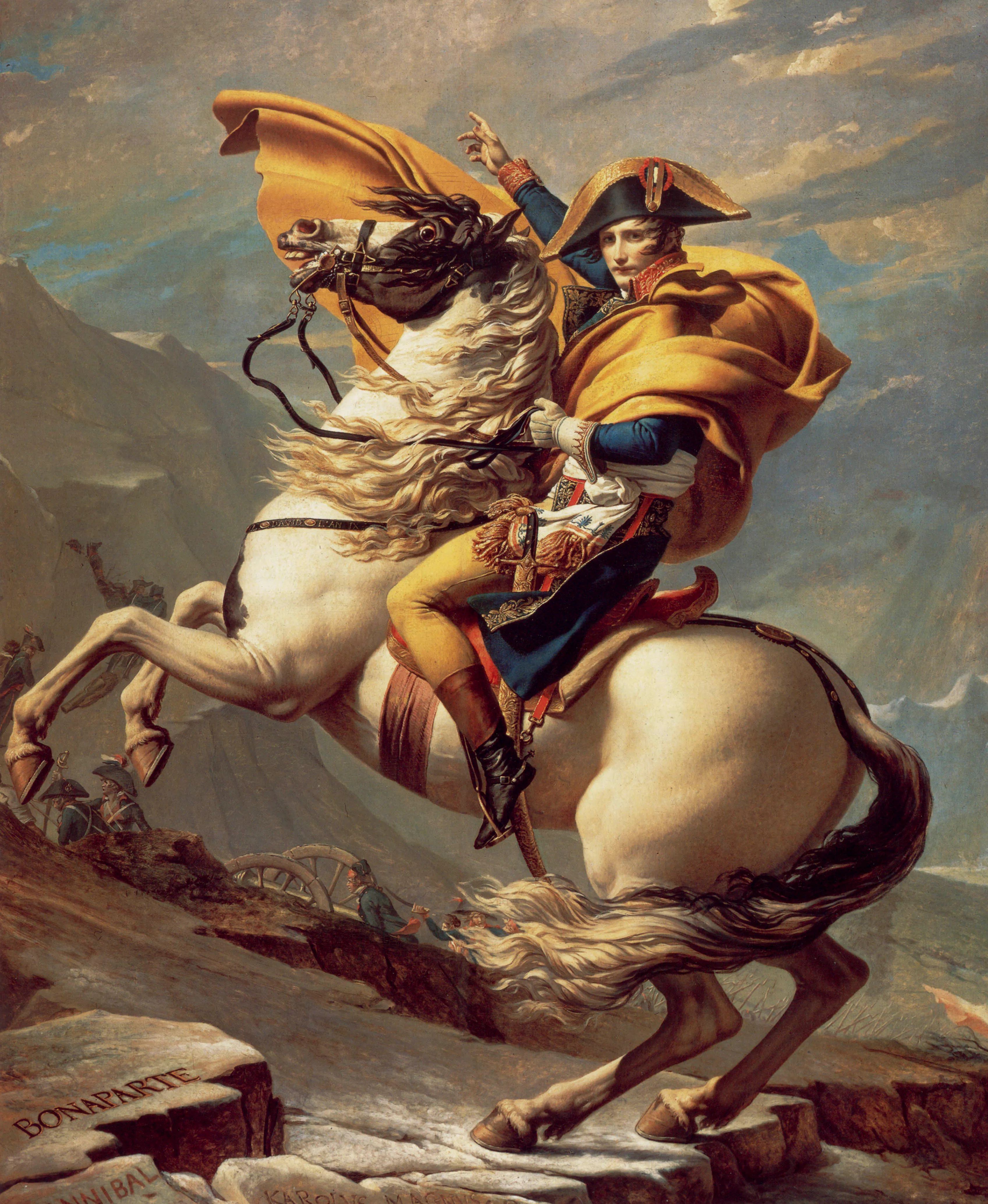
Similarly, classic statues have often been depicted in paintings to underscore symbolic context. The Roman war god Mars has been added several times in paintings of prominent warriors to emphasize their strategic military skills.
Similarly, sculptures of Venus have often been used to underline romantic features in paintings.
In some of these scenes, Venus has been replaced by Amor or Erot, a winged god of love in the form of a child. An example of this is Jean-Honoré Fragonard's The Swing from 1768 – however Fragonard also did not portray Amor, but rather the classic sculpture L'Amour menaçant by the French sculptor Étienne-Maurice Falconet. The statue was shown for the first time in 1757 at the Salon and attracted much attention at the time.
As a sign of admiration
Occasionally, the primary reason for an artist to reproduce a colleague's work has been pure admiration. A contemporary example of this is the French artist Gully who, after years of graffiti art, is increasingly making his work on canvas.
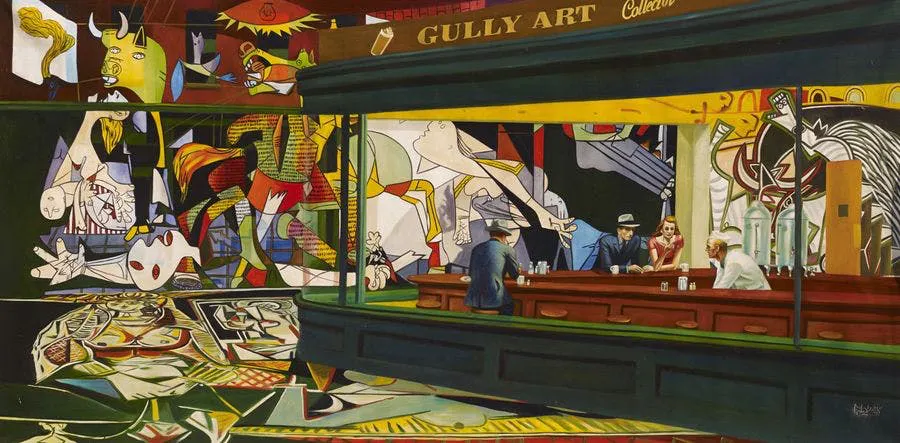
Gully’s intention is to repurpose notable pieces by plucking them out of their original context and placing them in his own universe. In other words, his own paintings should be seen as remixes of the past works, modern tributes to artists Gully admires and who inspire him in his own practice. Salvador Dalí, Niki de Saint Phalle, Pablo Picasso, Vincent van Gogh, Andy Warhol, Jean-Michel Basquiat, Edward Hopper and Alexander Calder all appear on Gully's canvas.
The reasons for using existing art in new works are as varied as art history itself. And to put it in the words of Oscar Wilde: "Imitation is the sincerest form of flattery".