Considered one of the great masterpieces of Flemish art, The Arnolfini Portrait, created in 1434 by Jan Van Eyck, has never ceased to intrigue and excite historians and art lovers thanks to its intense realism, pictorial illusion and infinity of symbolic elements.
The painting portrays the merchant of Lucca, Giovanni Arnolfini, with his first wife, Costanza Trenta. The two were married from 1426 to 1433, the year of Costanza's death. The Arnolfini were a wealthy Italian family residing in Bruges, who traded luxury goods, especially precious fabrics, throughout Europe.
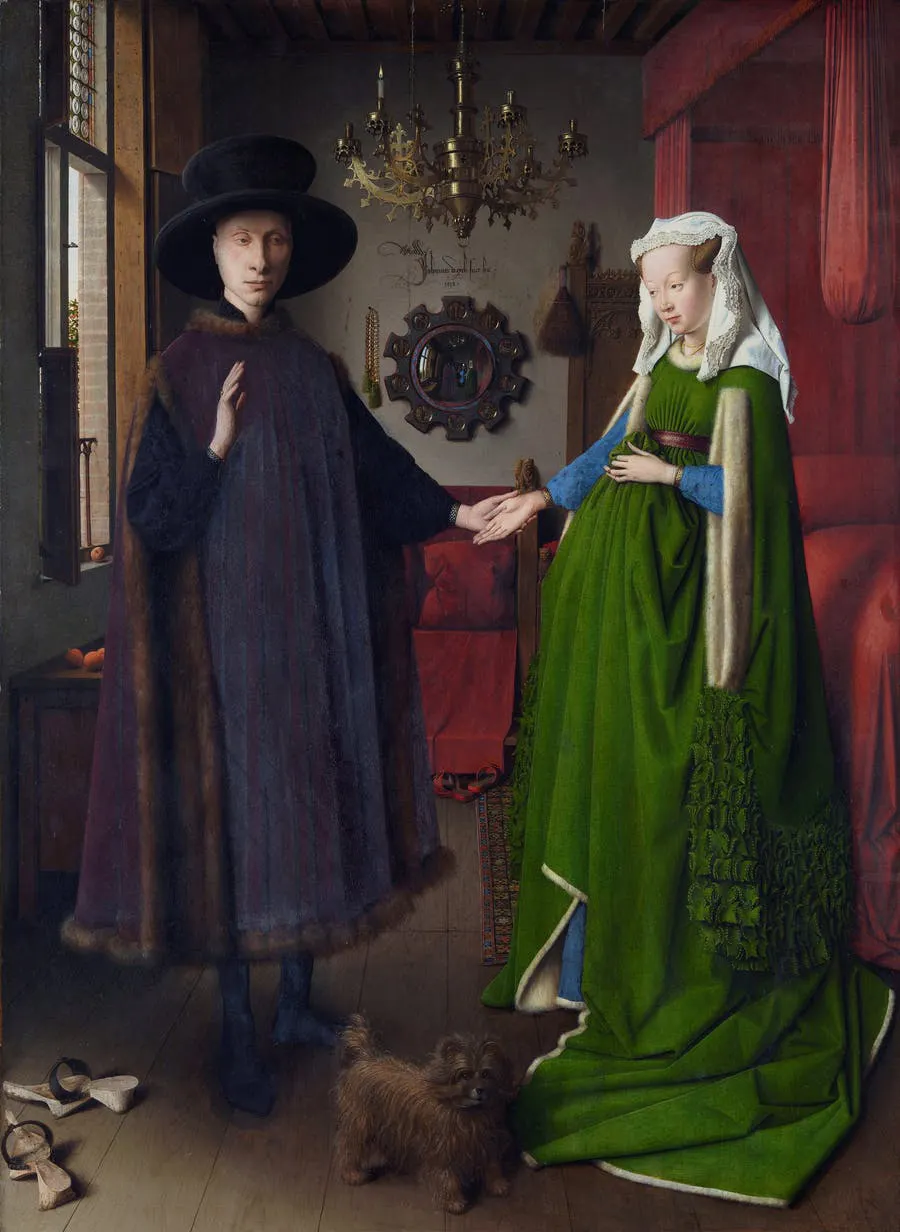
The couple stands inside a richly furnished bedroom, holding hands (or rather, the woman puts her right hand on the left of the man). Dressed in heavy and draped clothes, the two stare at the viewer: Giovanni Arnolfini makes a gesture that can be interpreted in various ways - a blessing, greeting, or oath - while his wife rests her left on her belly, a gesture that alludes to pregnancy.
Related: On and Off the Canvas: Art's Most Famous Muses
Their room is represented in great detail and filled with numerous objects that have been the subject of investigation into the various meanings attributed by Van Eyck himself and by art historians who study the painting. Among these objects, the convex mirror stands out, the most famous and enigmatic detail of the entire work.
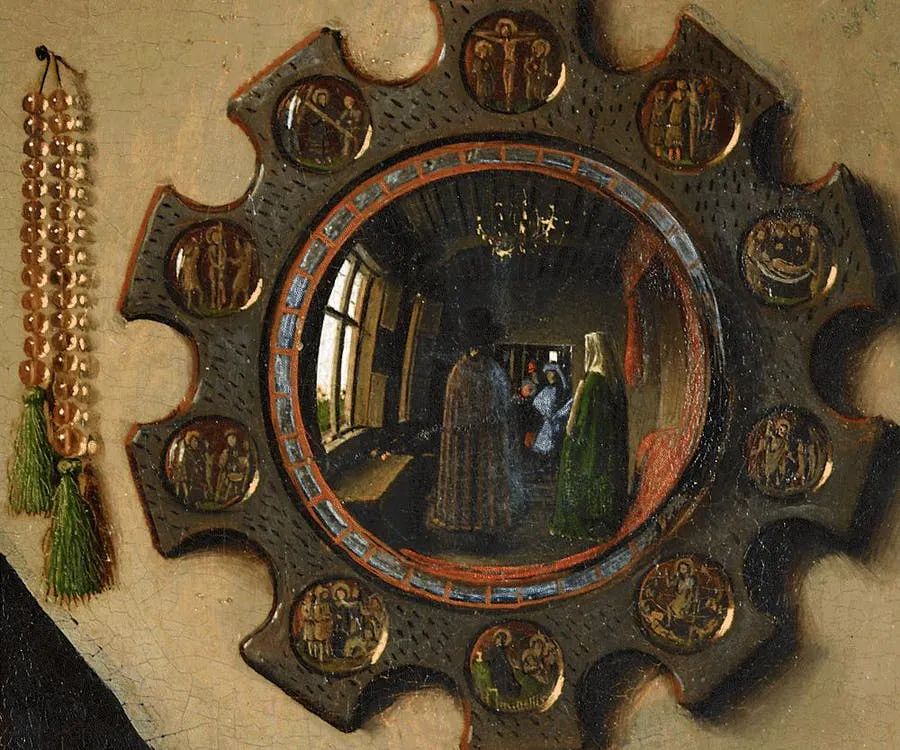
The mirror, which measures 5.5 cm, is adorned with ten episodes of the Passion of Christ. Its presence in the work and the decoration of the frame suggest the religious implication of the painting. The glass also alludes to the virginity of Mary (speculum sine macula) and, consequently, the purity of the bride.
Related: Mirrors: A Reflection
Some analyzes carried out by the National Gallery show that most of the symbolic objects were painted after creating the main scene and that they are, in any case, very expensive little treasures, testifying to the social position of the family. Every detail, therefore, was not designed with aesthetic purposes, but conceived for more in-depth readings. The painting is a social allegory of marriage, a union aimed at generating prosperity and wealth.
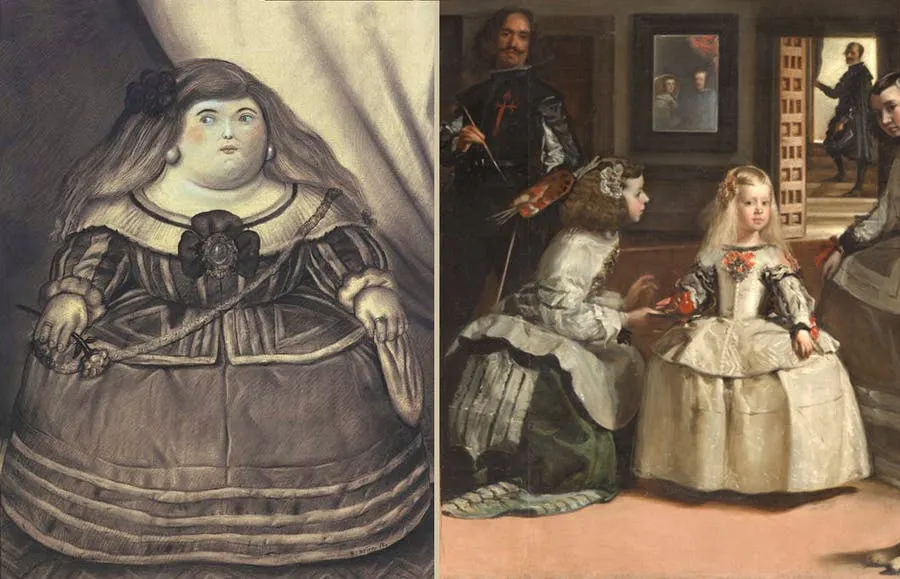
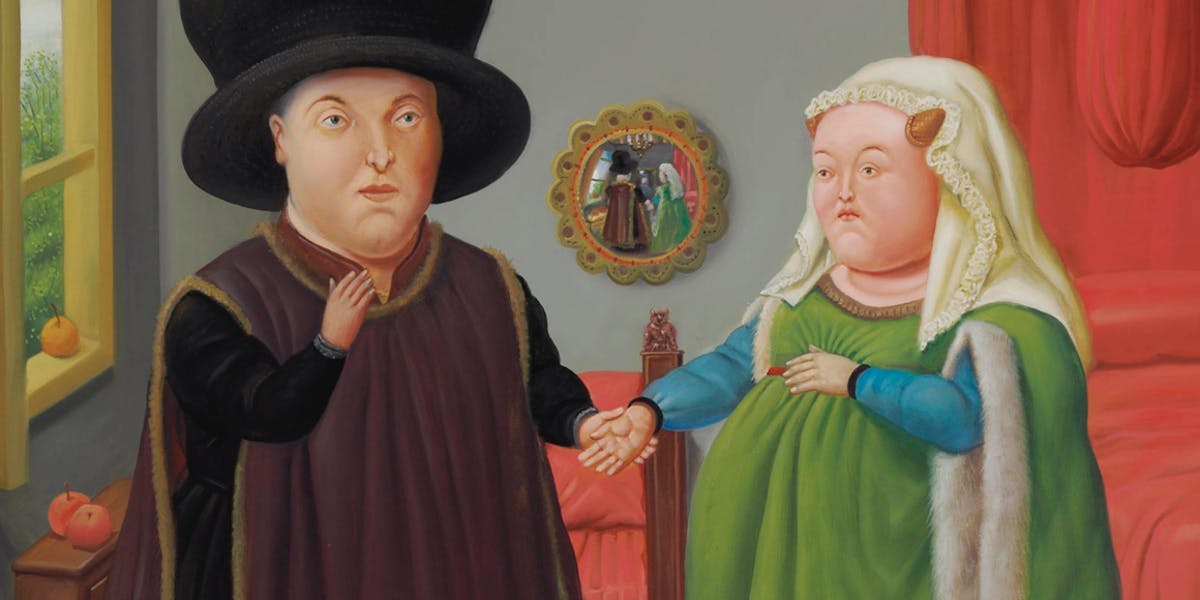
Fernando Botero's interest in the work of other artists, both ancient masters and modern painters, is evident in his numerous imitations, made throughout his career. In 1952, after winning the second prize at the Salón Nacional de Artistas in Bogota, 20-year-old Botero sailed from Colombia to Europe. During his first year in Madrid he copied the works of the great masters exhibited at the Prado, then moved to Paris and later to Florence, to study the Italian Renaissance.
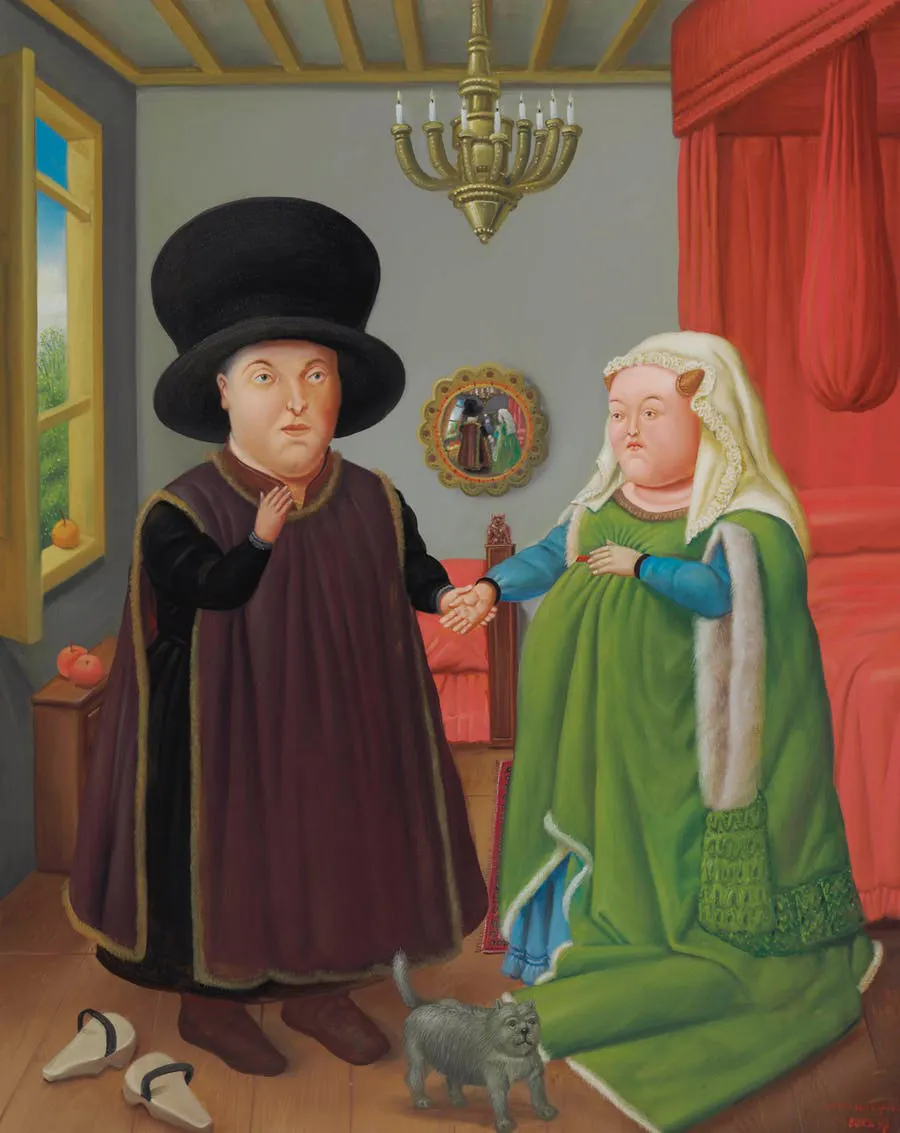
His particular interest in Van Eyck's work came some time later, when he returned to Colombia in the late 1950s. His passion for this work, as well as those of Diego Velázquez or Peter Paul Rubens, continued for most of his career. Botero visited the National Gallery in London many times, where the Flemish masterpiece is exhibited, and made different versions of the work with its unmistakable style and voluminous forms. In each different version Botero has modified the composition, focusing above all on the relationship between the spectator and the spaces.
Related: A New Renaissance for Old Masters
From the '80s onwards, Fernando Botero focused increasingly on the surrounding environment rather than only on his voluptuous characters. Although the figures of the spouses still remain the main protagonists of the work, Botero's attention is concentrated, as in the case of Van Eyck's original, on the spaces and the world in which the couple lives. The orthogonal lines, the perspective and the depth are built upon the center of the composition: the couple's united hands.
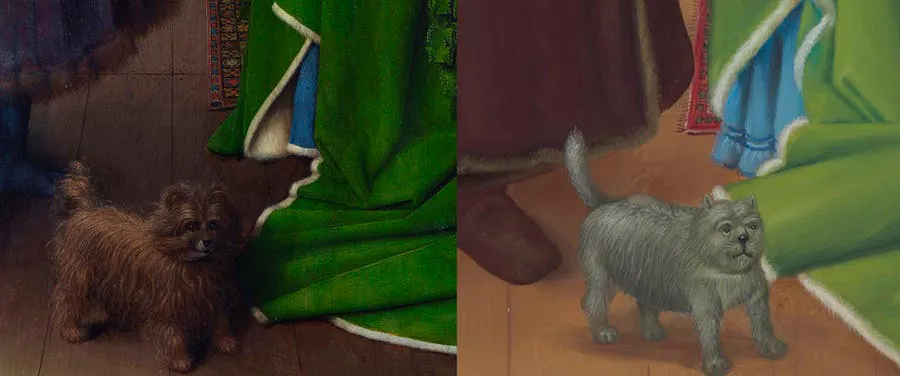
The main symbolic details used by Van Eyck are replicated by Botero: the little dog - a symbol of loyalty and nobility; slippers - which represent the different roles of men and women; the fruit on the windowsill and on the table - original sin; the canopy and the Persian carpet - representation of the economic and social position of the spouses and finally the mirror, in the reflection of which the full meaning of the painting is read. In addition to the two spouses, there are two other reflected figures, one of whom is believed to be the painter himself. The presence of witnesses also serves to seal the legitimacy of the marriage, emphasizing the Christian faith of the two spouses.
Related: How The Medici Influenced Renaissance Florence
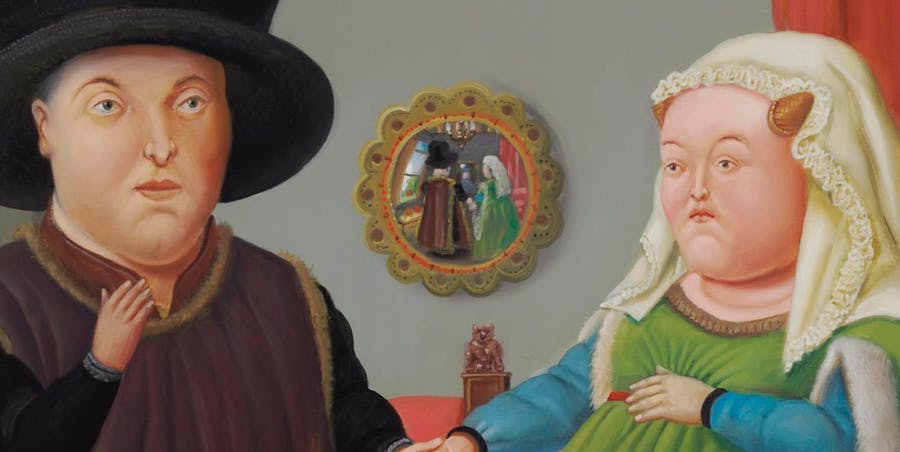
What makes the Colombian artist's version truly unique, however, is not the replica of a famous Flemish painting in the "Boterian" version, but the way in which he uses pictorial illusionism to affirm and at the same time compromise the concept of realism in painting. If Van Eyck has meticulously constructed an almost photographic scene, Botero focuses on the construction of an artificial visual world, with incongruous relationships between the figures of the spouses and the surrounding environment. The window, which in Van Eyck's version assumes an almost architectural role, is instead a fundamental element in Botero's work looking out into a surreal landscape, inspired by the surrealism of René Magritte and the limits between reality and fiction.
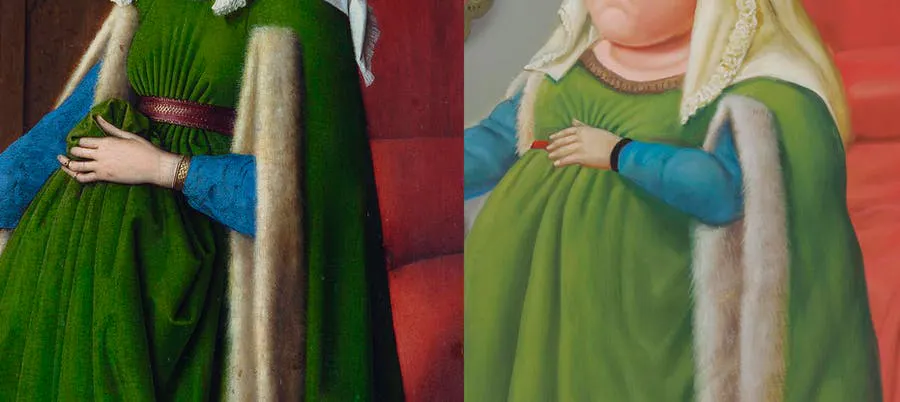
Two curiosities abound however: in both works, Costanza Trenta keeps her hand on her belly, seemingly insinuating a pregnancy. Looking closely, in Van Eyck's version, Costanza is actually holding up the heavy fabric of her dress, which was very fashionable in the Flemish era, and according to the English art critic Waldemar Januszczak, is made of wool adorned with red squirrel fur. Botero, on the other hand, represents her with her hand simply placed on her belly, in a gesture typically associated with an already ongoing pregnancy.
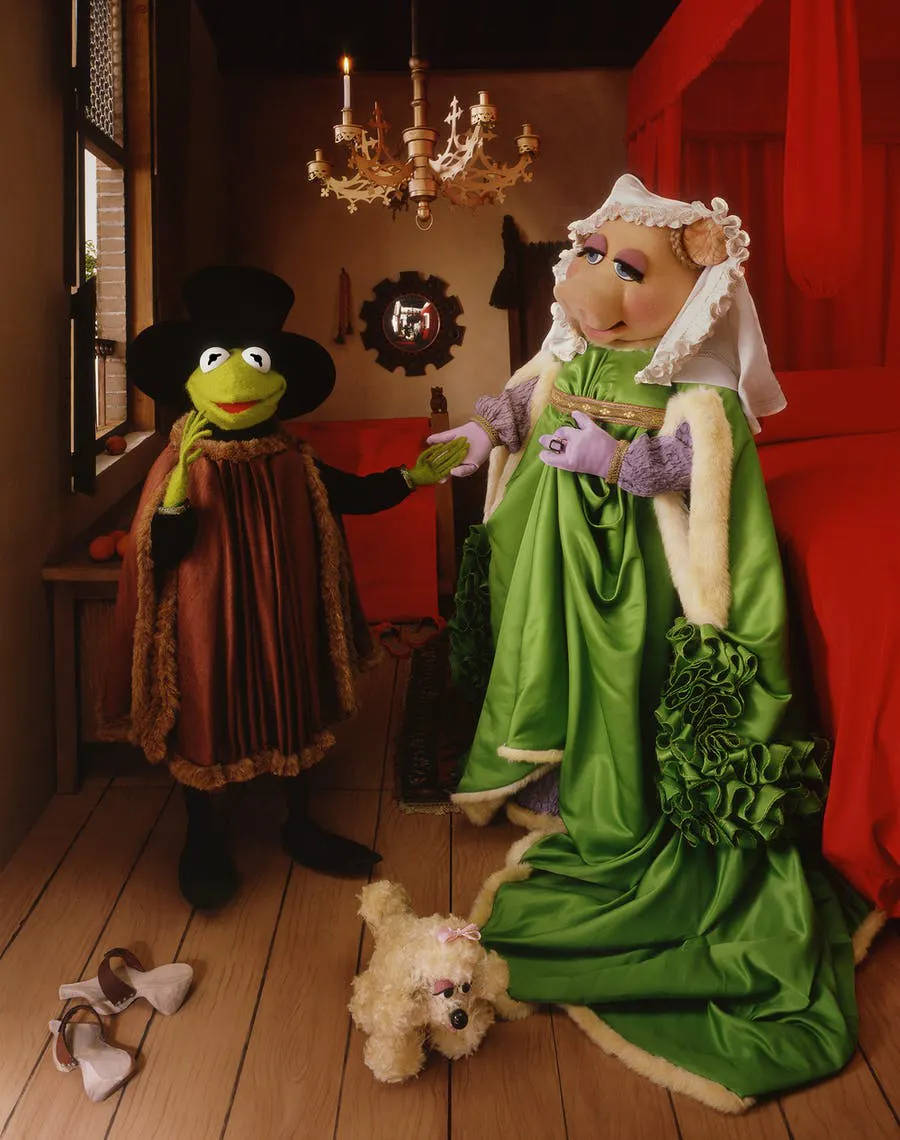
There are numerous versions of Van Eyck's original work: among the funniest, there is "The Marriage of Froggo Amphibini and Giopiggi Porculini" (Jim Henson Productions, 1993), with the two protagonists replaced by the famous characters of the Muppets.