
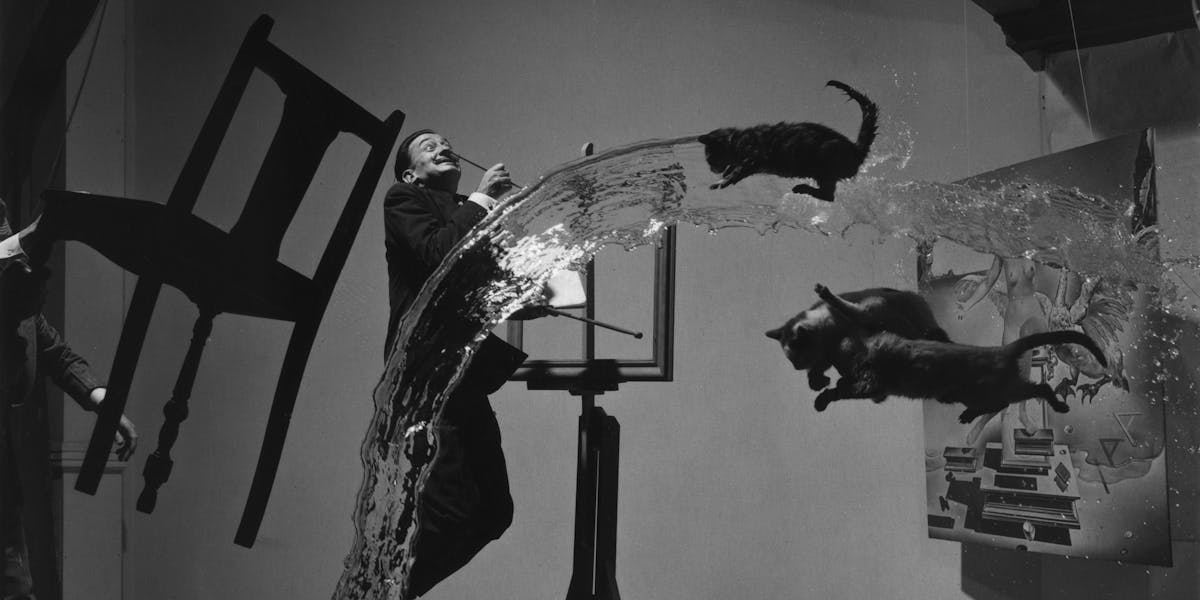
A prominent figure in 20th-century art, Salvador Dalí left a host of works tinged with paranoiac delirium and Surrealist dreaming. Yet, these works often play second fiddle to his eccentric personality, for Dalí’s major work was, perhaps, himself.
Right up to the end of his life, Dalí cultivated the image of a megalomaniac star that he lavished with all possible stereotypes: wealth, celebrity, genius… His keen consciousness of himself as a media identity would later inspire others like Andy Warhol and Jeff Koons.
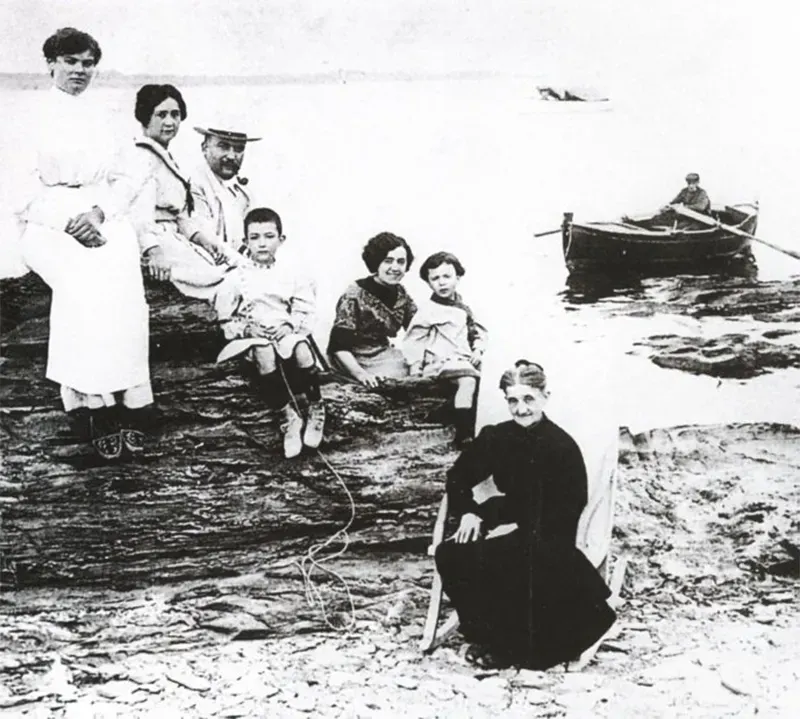
Dalí was born in Figueres, Spain in 1904 into a family of notaries. His parents, having lost another child several months earlier, once told the future artist during a visit to the dead child’s grave that he was his brother’s reincarnation. This was his first internal trauma, and also the basis of his first artistic caper.
Related: The First Known Artworks of 10 Famous Artists
At the age of six, Dalí produced his first creations and revealed his precocious talent. At the age of 14, he took part in an exhibition at the municipal theatre of Figueres. In 1922, Dalí left for Madrid to study at the Real Academia de Bellas Artes. This was where he met Federico García Lorca, Luis Buñuel and Joan Miró. The young Dalí already bore the mark of a few significant influences: Impressionism and the works of Renaissance and Spanish artists, like Francisco de Zurbarán and Diego Velázquez, whose moustache he copied and became renowned for.

His mother’s death in 1921 triggered a second trauma. Dalí was devastated by her loss. He and his father were also not on good terms after he once publicly commented, "Sometimes, I spit for fun on my mother's portrait”. In 1925, he organized a solo exhibition at the Galeries Dalmau in Barcelona, and one year later he came up with his first masterpiece, Basket of Bread. In the same year, he was kicked out of the Academia, whose teaching he criticized as “sterile”. Instead, he pursued his vocation to become a writer as part of the avant-garde ‘Generacion del 27’ group.
Related: The Surrealists and the Subconscious
In 1927, Dalí moved to Paris. There, he met André Breton, Marcel Duchamp and Pablo Picasso, who soon became his close friends. Two years later, he joined the Surrealist camp. Initially, the artist was in the good books of the Surrealist leader, André Breton, and in his paintings, Dalí developed a symbolic language loaded with recurring figures: Lenin, William Tell, Hitler and Jean-François Millet’s The Angelus. He became obsessed with certain themes such as death, food, and ‘softness’. He also drew on a vast pictorial bestiary composed of animals and references to Catalonia.
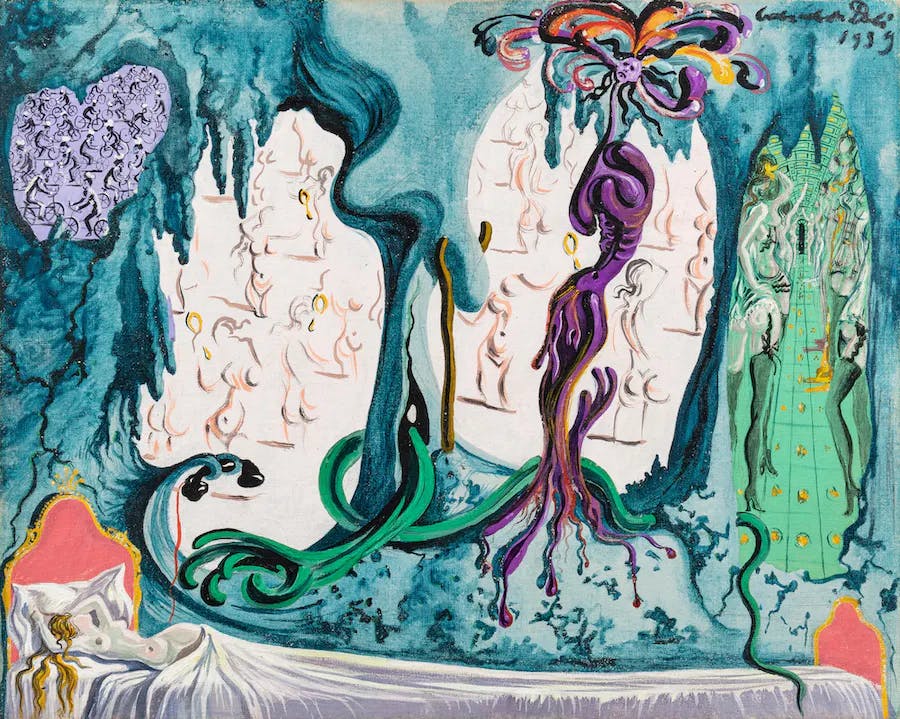
Dalí painted two masterpieces during this period: The Great Masturbator (1929) and The Persistence of Memory (1931). But his relationship with André Breton soon deteriorated due to his provocative statements on Hitler and pedophilia… and the adulterous relationship he engaged in when he seduced Paul Éluard’s wife, Gala, who thereafter became his cherished muse (Portrait of Gala, 1931). In 1934, André Breton excluded Dalí from the Surrealist group.
Related: The Tales Behind Art History's Most Important Muses
Dalí’s research, however, went on unhindered. The Metamorphosis of Narcissus (1937) was the first painting to be executed using the ‘Paranoid-Critical method’: a means of grasping reality through delirium, inspired by Freud’s psychology. Incidentally, the painter and the psychologist had mutual respect for one another and met in London in 1938. In the following year, Dalí left for New York, where he went on to live for eight years. He made a fortune among the nouveaux riches who fell for his talent and eccentricity. In the States, he created jewelry and stage sets, wrote texts, and in 1941 had a retrospective dedicated to him at the MoMA.
Related: Salvador Dalí’s Lobster Telephone: 5 Facts to Know
After 1945, Dalí turned a sharp corner. He converted to Catholicism and became a monarchist. In 1949, he met Pope Pius XII and crossed the Atlantic again to settle in Catalonia. Drawing on both his crisis of faith and the innovations brought by nuclear physics, Dalí invented ‘corpuscular mysticism’ and composed monumental paintings that played with optical effects and the geometrical relationships of volumes.
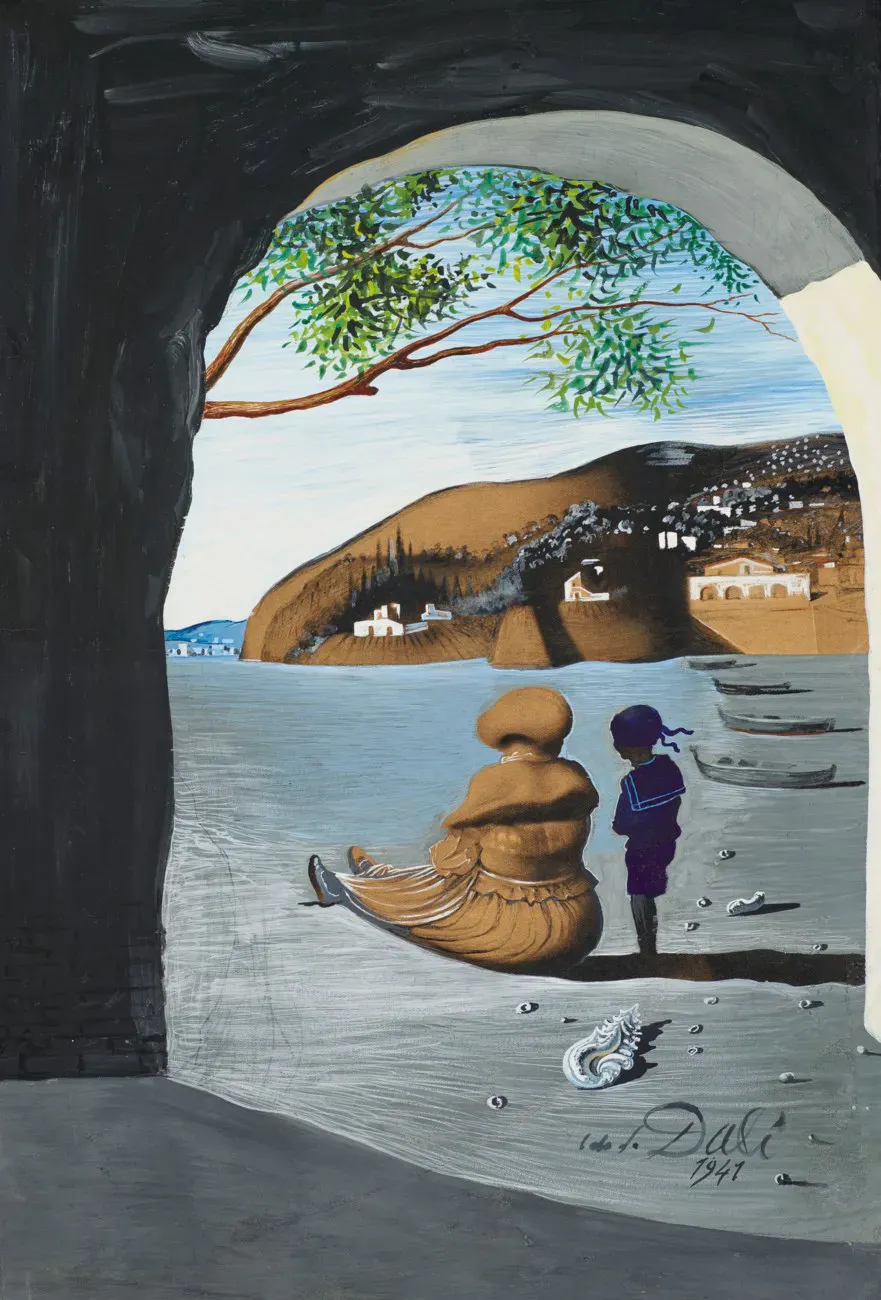
This evolution was reflected by his Temptation of St Anthony (1946) and Christ of St John of the Cross (1951). Otherwise, Uranium and Atomica Melancholica Idyll recalled the bombing of Hiroshima, while Perpignan Train Station (1965) was presented as the new ‘cosmic centre of the world’. This was the period when Dalí also tried his hand at sculpture with his Anthropomorphic Cabinet (1970) and Profile of Time (1984).
Related: The Twelve Tribes of Israel by Salvador Dalí
In his final years, Dalí continued to nurture his image as an exuberant all-rounder. He socialized with Elvis Presley and Alice Cooper and produced blustery writings on his life and on art. He collaborated with Christian Dior by creating a lobster dress and declared that he was ‘crazy about Lanvin chocolate’ in the world-famous advertisement.
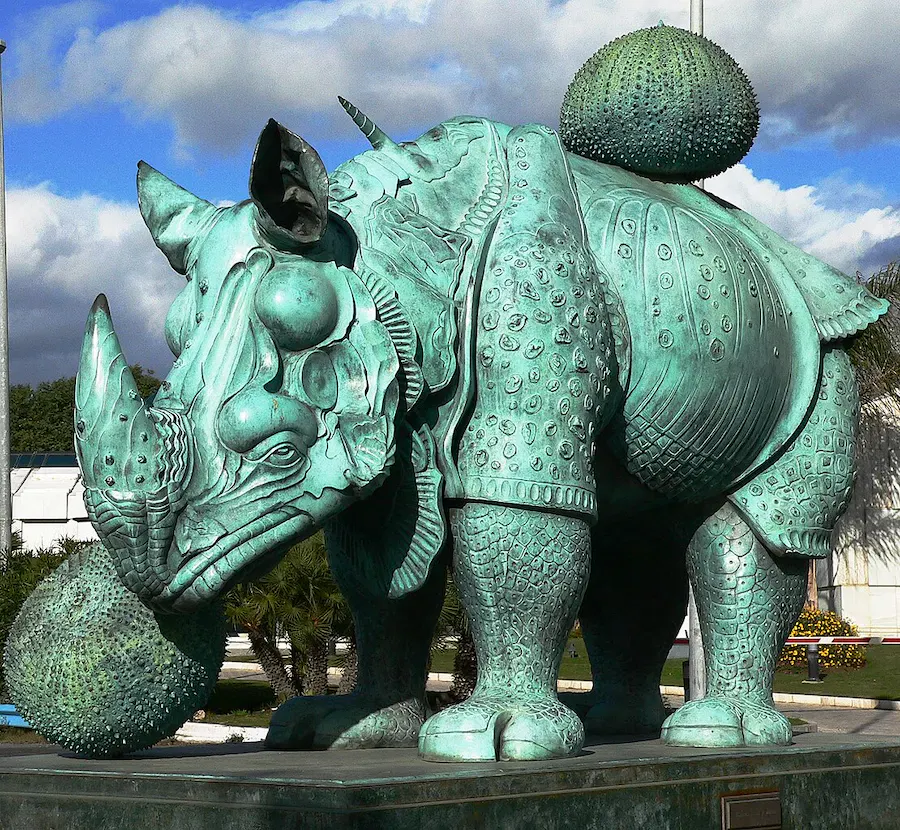
The exhibition dedicated to him in 1978 at the Centre Georges Pompidou, Paris was a worldwide success boasting 850,000 visitors. In Figueres, he opened a theatre-museum devoted to his work at the very spot where he first exhibited his early creations at age 14. In the early 1980s, the then-monarch Juan Carlos even bestowed on him a title of nobility in recognition of his career.
Related: Dalí in Wonderland: His Surrealist Illustrations for Lewis Carroll's Classic
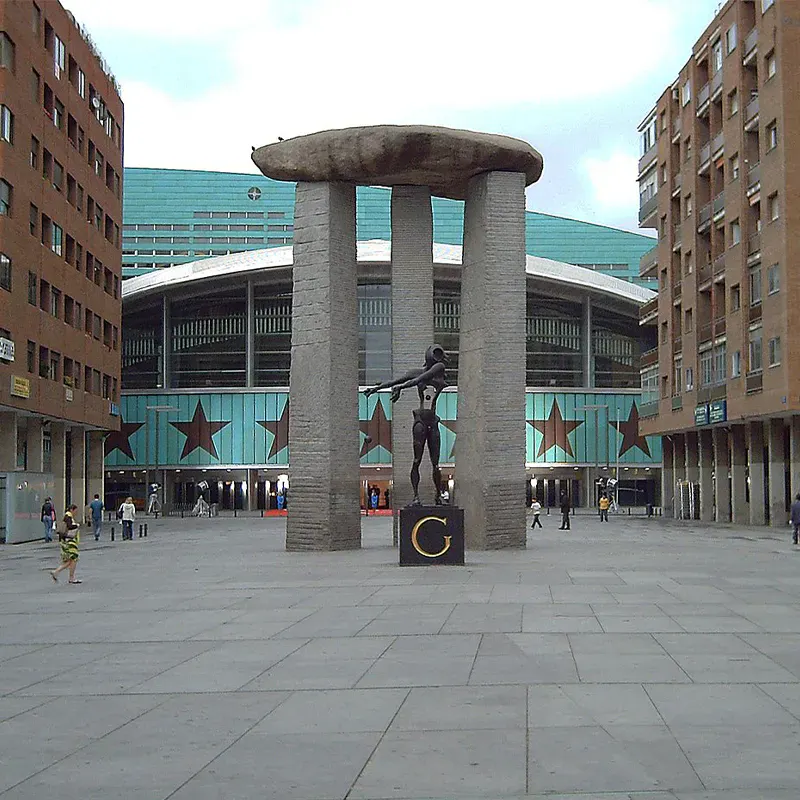
His wife Gala died in 1982 and Dalí followed her seven years later on January 23, 1989. Among the many different sites that have since opened in his honor, the museum in Figueres remains a special spot as a showcase of the Dalí’s outlandish universe. And the reopening of the Espace Dalí in Paris in 2018 was a fresh sign that the painter and his work continue to rouse as much curiosity and sympathy as ever. His work also fetches multimillion dollar prices on the auction market, with his record set by Portrait de Paul Éluard, which sold at Sotheby's London in 2011 for £13.4 million ($21.7 million.)
Discover more articles on Barnebys Magazine!
This is an updated version of the article previously published in October 4, 2018.
