Liselotte von der Pfalz, sister-in-law to King of France, Louis XIV, once commented on the plight of the female artists around her saying, “Being an artist is a real handpiece!” It was not only the work that was difficult, but rather the everyday living conditions at a time when women were not entitled to a self-determined life.
Training
It was difficult for women in the 17th and 18th centuries to find success as artists. The first challenge was to discover one’s talent for art. For most, this required being born the daughter of a painter. Some notable examples include Catarina van Hemessen (1527/28-1583), Anna Dorothea Therbusch (1721-1782) and her sister Anna Rosina Gasc (1713-1783), and Alida Withoss (1661/62-1730), all whose parents were active artists.
Related: The 15 Most Expensive Female Artists
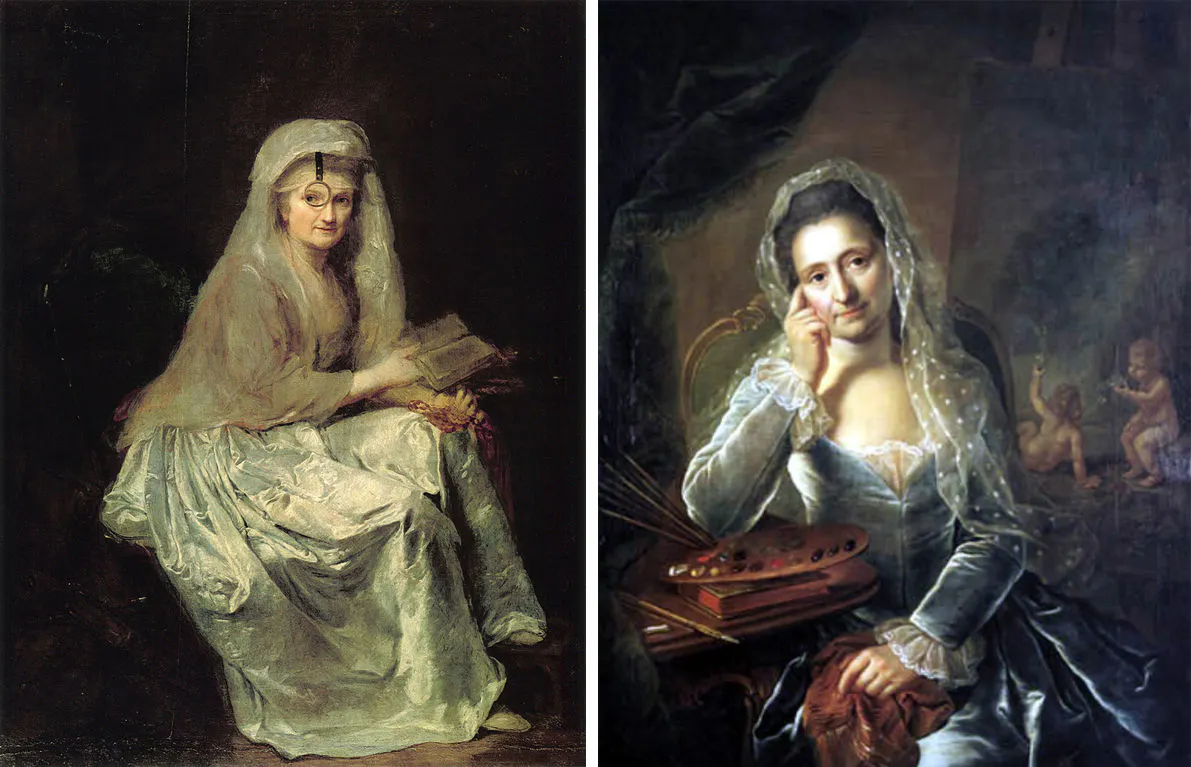
Generally speaking, a father’s studio offered a rare opportunity for a woman to come into contact with art. If the daughter proved talented, and the father was inclined to pass on his knowledge to his female offspring, the training usually took place in his home workshop.
Some female artists did not come from families of painters, but rather belonged to the upper class of artisans or the educational bourgeoisie. For instance, the father of the Englishwoman Mary Moser (1744-1819) was a goldsmith, Adélaïde Labille-Guiard’s (1749-1803) father ran a very lucrative Parisian fashion boutique, Maria van Oosterwijk’s (1630-1693) father was pastor, and Rachel Ruysch’s (1664-1750) father was a respected anatomist and botanist. These women’s family connections to other artists provided the opportunity to have an artistic education, even without a family painting studio.
Related: 5 Feminist Masterpieces
However, not every artist was willing to train a woman professionally. A rare exception was the Dutch Baroque painter Willem van Aelst, who instructed multiple women. Notable pupils include Maria van Oosterwijk and Rachel Ruysch.
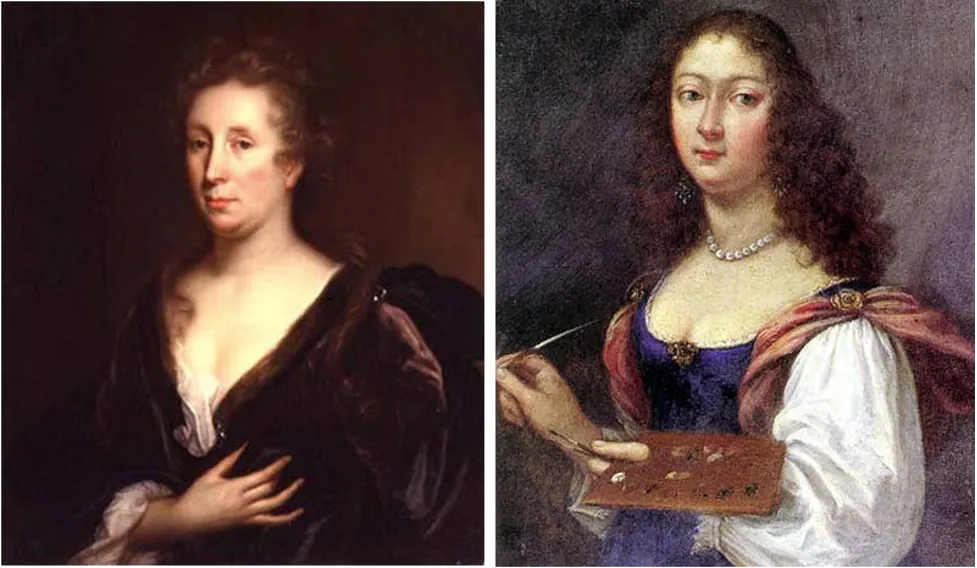
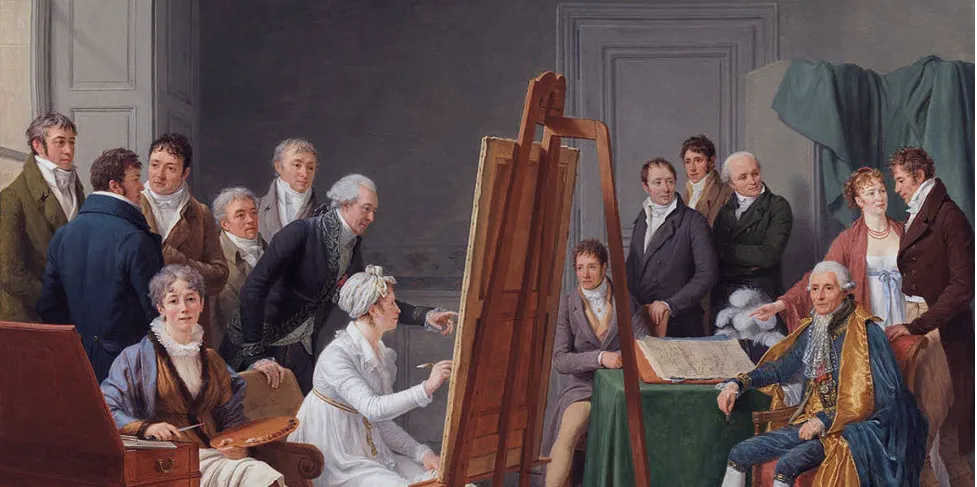
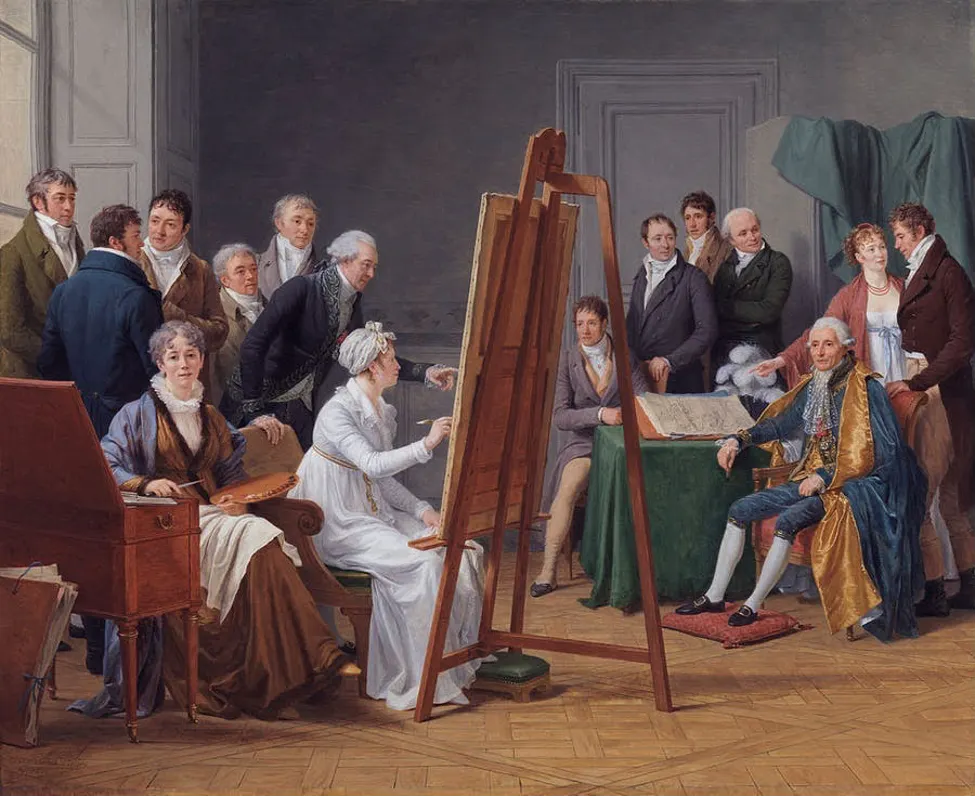
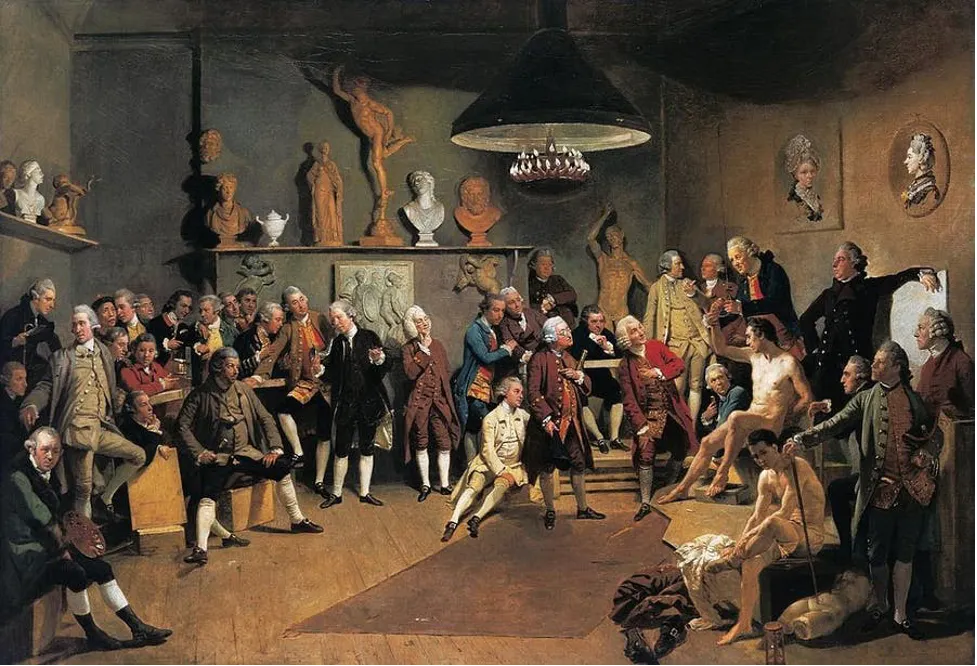
The art academies during these times would not admit women, making it difficult for them to receive good educations as artists. To deal with this, special schools were opened. In 1781, Adélaïde Labille-Guiard opened the first painting school for women in Paris. A century before, Elisabetta Sirani (1638-1665) had dared to do the same in Bologna.
Related: The 9 Most Important Feminist Photographers
Subject matter
Because the nude paintings taught at the academies were considered inappropriate for women, this genre played a rather subordinate role in the works of female painters. Otherwise, female artists were as broad as their male colleagues in terms of genres, painting landscapes and mythological and historical works. However, the above-average number of portraits and still lifes in female painters’ oeuvres is striking, the latter of which are primarily dominated with floral motifs.
Related: 5 Portraits of Women in Black
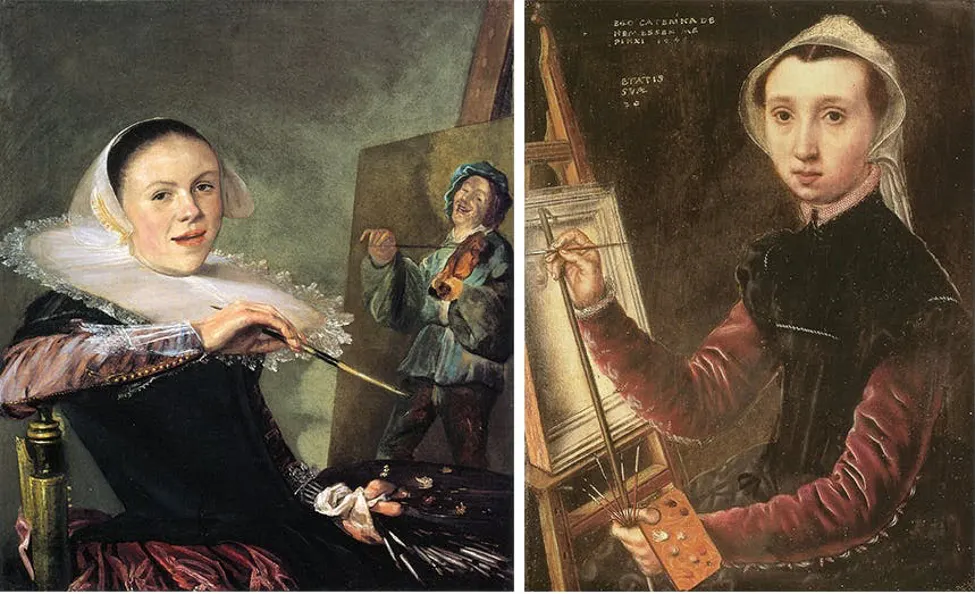
Unusually, the Dutch Baroque painter Judith Leyster (1609-1660) often chose to paint ‘masculine’ topics. She painted lively inn scenes with musicians and seducers.
Related: 11 Women Who Changed Photography
Despite the social confinement in which female artists lived and worked, many of them still had room for innovation. For instance, the Renaissance painter Catharina van Hemessen, who confidently signed her works, created the first self-portrait in which a painter presented oneself at an easel. Clara Peeters (1594-1658) is likewise considered a pioneer of still life painting, a genre which had its heyday during the Golden Age of the Netherlands.
Clients
If a woman's father worked as a court painter, this could serve as an excellent starting point for his daughter’s career. His daughter could follow in his footsteps, as happened with Anna Maria Ehrenstrahl (1666-1729) in Sweden or Adriana Spilberg (1650-1697) in Düsseldorf.
Related: 12 Women who Rocked the Art World
But it was also quite possible for a female painter to gain a royal patron based solely on her talent. The artistic governor of the Spanish Netherlands, Leopold Wilhelm of Austria, noticed the abilities of Michaelina Woutiers (c. 1620-1682). Similarly, after Élisabeth Vigée Le Brun (1755-1842) received a commission from Queen Marie Antoinette, a real friendship developed between the two women.
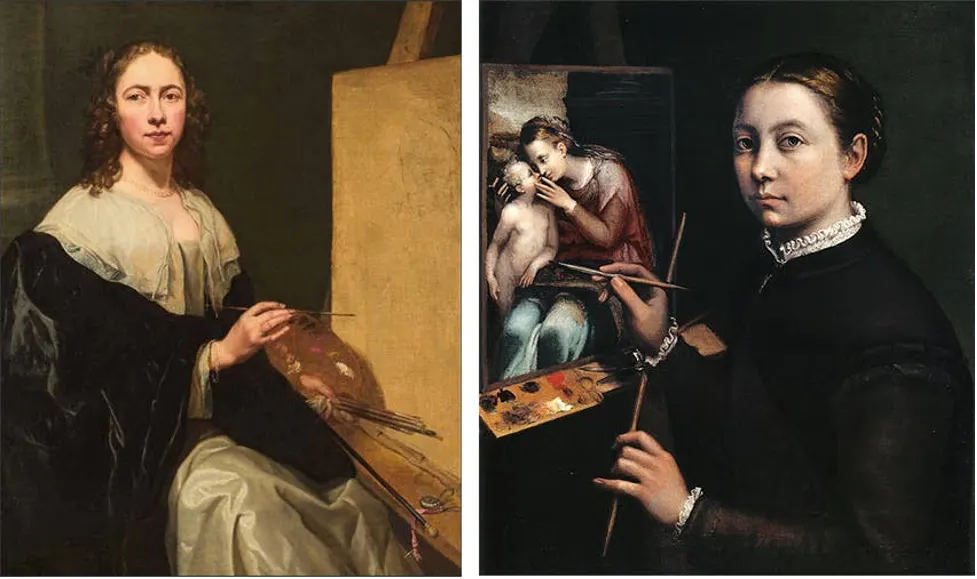
Similarly, the exceptionally gifted Renaissance painter Sofonisba Anguissola (c. 1531/32-1625) was in special favor of several female members of the Spanish royal family. She was also honored when the young Peter Paul Rubens copied several of her works for the Duke of Mantua.
The Bruges-born miniature painter Levina Teerlinc (c. 1510-1576) had a good reputation in England, where King Henry VIII hired her as a court painter in 1545. Teerlinc maintained this court position with Henry's children Eduard VI, Mary I and Elizabeth I. Her annual salary was £40, which was higher than that received by the previous court painter, Hans Holbein.
Marriage
As was expected of them, most female artists entered into the sacred covenant of marriage during their lives, often with men who also worked as painters.
Few fathers, even if they were painters themselves, paid attention to the career aspirations of their daughters. An exception seems to have been the father of Düsseldorf court painter Adriana Spilberg, who is said to have rejected several marriage requests for his daughter in order to advance her career.
Related: History’s Best Wedding Dresses
For many female artists, marriage, and the resulting motherhood, most likely meant the end of her career. For Dutchwoman Alida Withoos, who specialized in botanical drawings, this was the case. However, with some portrait painters of the 18th century, like Anna Dorothea Therbusch or Vigée Le Brun, it was different. It is possible their commissioned work continued because it contributed so significantly to the household budget.
Recognition
As we have already learned, women were denied training at the academies. But even if they had already made a name for themselves as an artist, it was still difficult for them to be accepted as a member of one of these influential institutions.
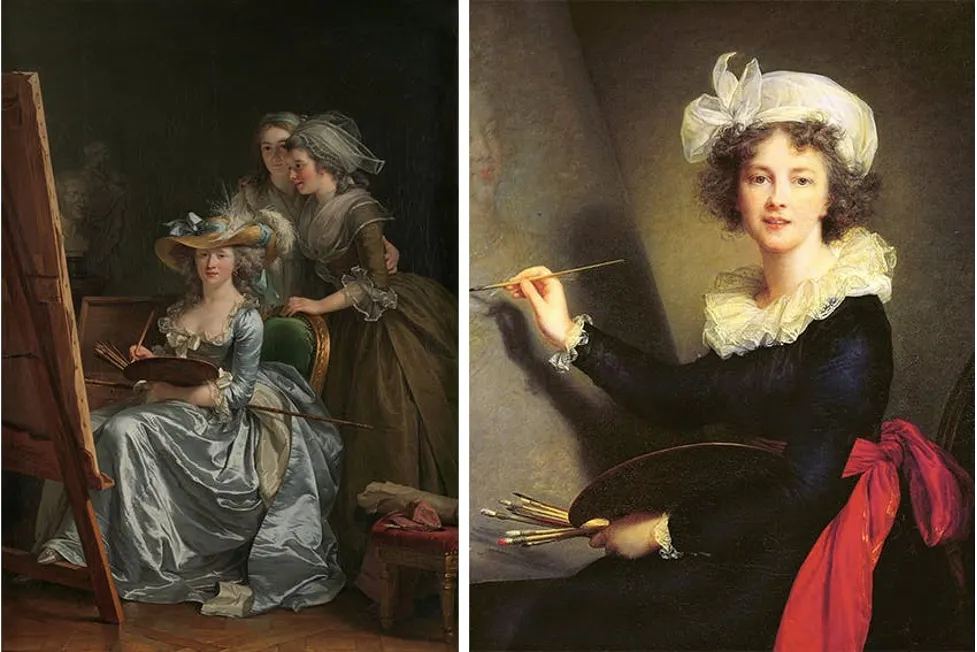
The Académie royale de peinture et de sculpture in Paris generally received only four painters at the same time. In 1783, Vigée Le Brun and Labille-Guiard received this honor on the same day. In 1767, Anna Dorothea Therbusch from Berlin became a member of the Académie. She had been rejected two years earlier because the painting she submitted was considered too good to have been painted by a woman.
Related: The Art of Motherhood
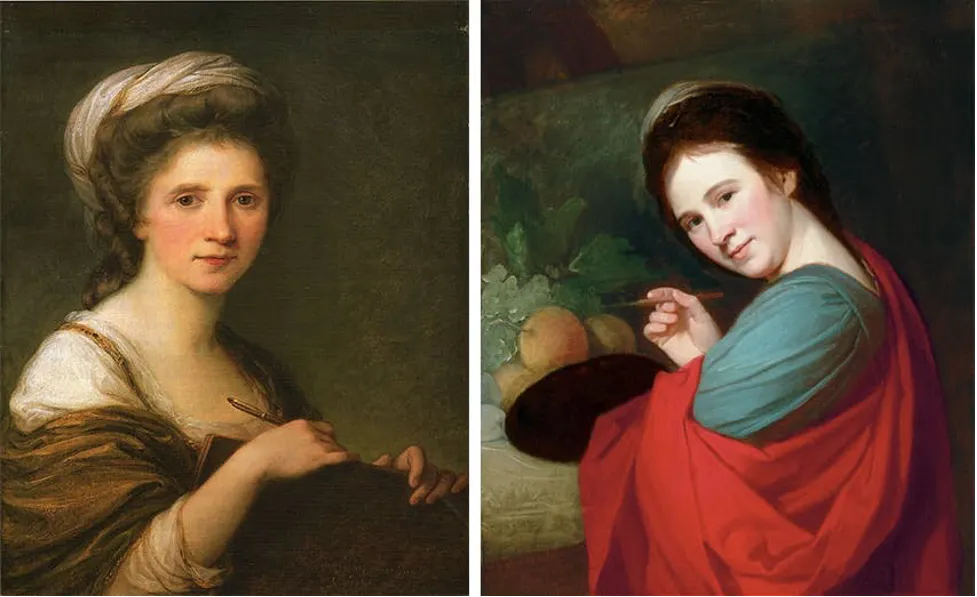
England seemed to be a little more progressive, where Angelica Kauffmann (1741-1807) and Mary Moser were among the founding members of the Royal Academy of Arts in 1768.
In the 17th century, only three women in the Netherlands managed to be accepted into the prestigious Academy of St. Luke: Rachel Ruysch, Judith Leyster and Sara van Baalbergen.
The struggle to find recognition as an artist – or to become one in the first place – remained until the 20th century. Even in the 19th century, anti-feminist Arthur Schopenhauer fundamentally denied that women had any artistic ability. But we know he was wrong, after all, the above-mentioned artists and their colleagues impressively demonstrate the opposite in the centuries before.