On September 22 and 23, Thomaston Place Auction Galleries is hosting their Tribal Arts and Antiquities two-day sale that will feature primitive art, relics, and cultural artifacts from around the globe. The auction on Friday will start with over a hundred lots of antiquities from the estate of US Foreign Service diplomat John Clayton and JoAnn Clayton-Townsend that were collected throughout the Mediterranean region. This will be followed by 150 lots of Pre-Columbian artifacts and 200 lots of Native American and Inuit items, as well as 50 lots of Oceanic pieces.
Here we talk to Thomaston Place about the top lots to keep an eye on and what to know about the auction.
Barnebys: Your upcoming sale is titled Tribal Arts and Antiquities. Tell us a bit about the sale and how it was consigned and curated.
Thomaston Place: Any of the specialty sales at TPAG are driven by material that surfaces along Midcoast Maine, mostly. Maine itself, the “Nation’s Attic”, is known for the depth of material for auction, in the case of the maritime coast that is further enriched by items brought home by sailors and 200 years of ‘Summer Cottages’ filled by the wealthy of Boston and New York, with their fantasy dressings. Ethnic antiques are well represented, especially from ‘destination’ sailing routes, and the sale consists of impressive collections by distinctive buyers.
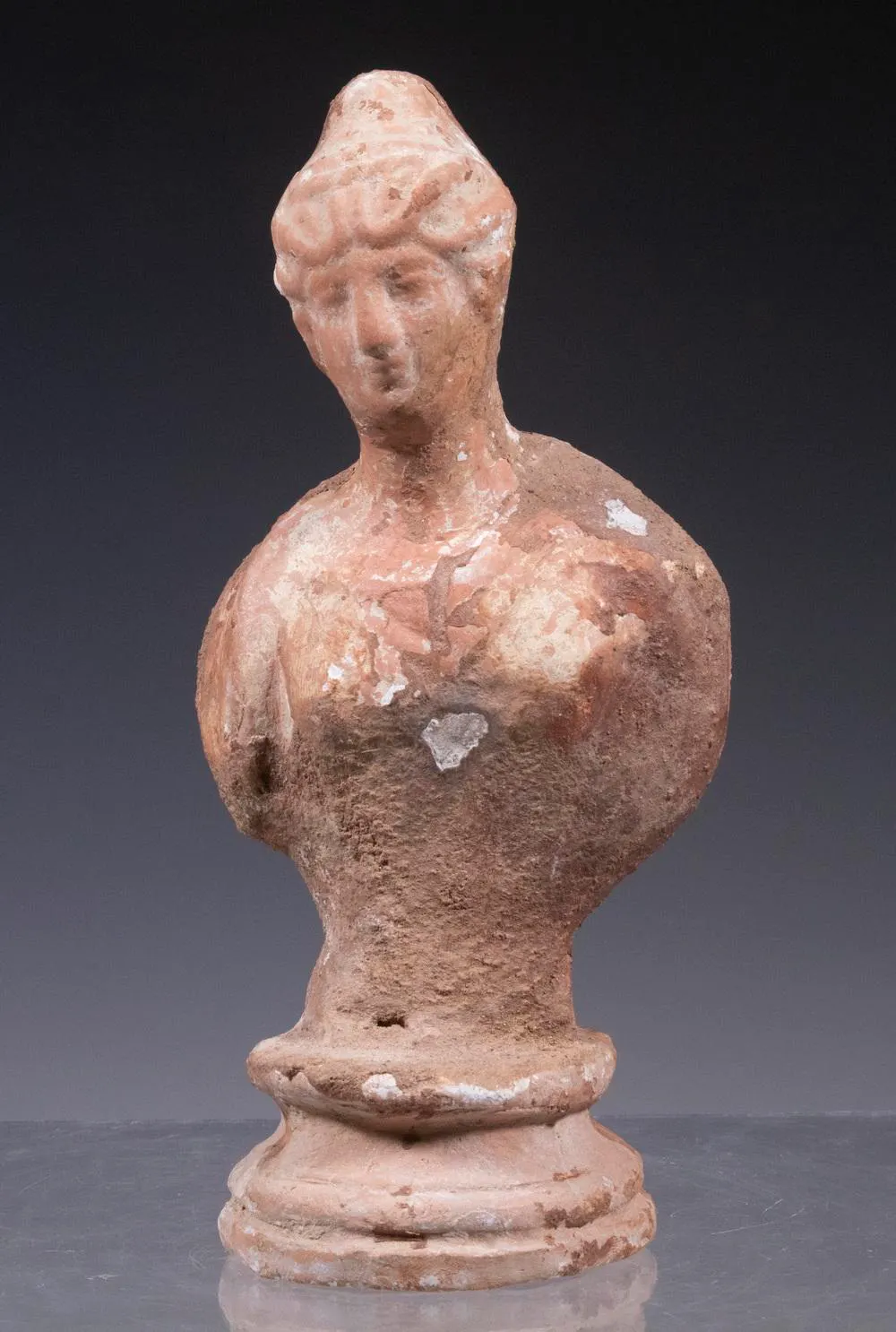
For example, Day 1 opens with antiquities that constitute over 100 lots of Greco-Roman objects from the estate of John Clayton, who served in the Foreign Service, and JoAnn Townsend, who was the former director of the ASEB at the National Academy of Sciences; this represents a lifetime collection and commitment to the preservation of these rare items.
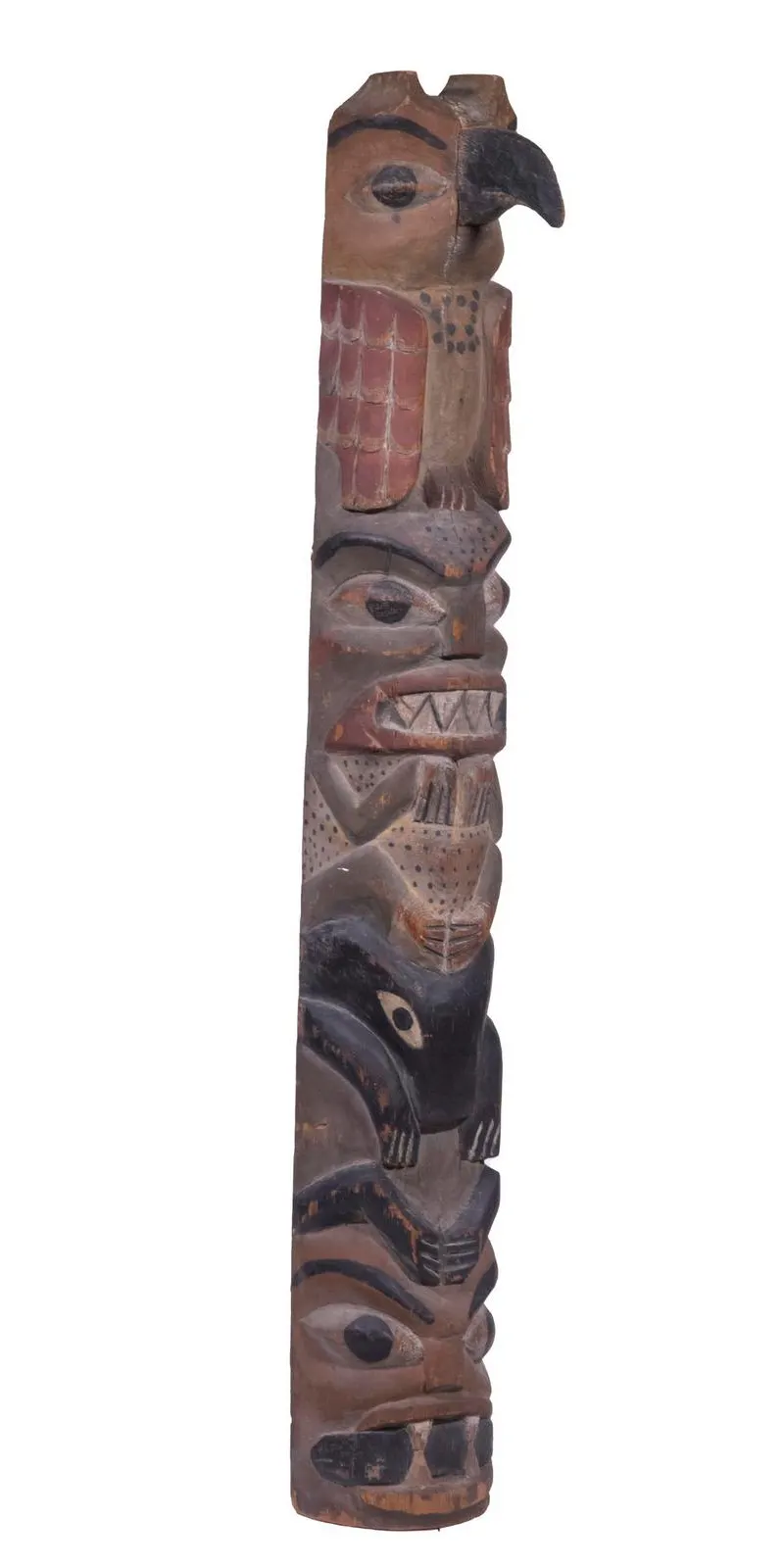
Barnebys: One of the most valuable lots is a Northwest Wood Totem from the collection of Dr. James Goodrich. What is the history of the object and how was it valued? Thomaston Place: The Northwest Totem (lot 4264) is another good example of how destination trade routes play a role in the acquisition and preservation of cultural objects. The Northwestern US was the major Northwestern US port for Trans-Pacific trade, but managed to retain customs and relics of the wilderness and coastal tribes like the Haida, mostly now in Canada and Alaska. This totem probably stood in front of the cedar clan longhouse and represented ancestral animal form guardians. Dr. James Tait Goodrich collected Pre-Columbian artifacts, medical instruments and antiques; this totem is a unique example. There are over 100 lots of Native American items in Day 1 from throughout North America.
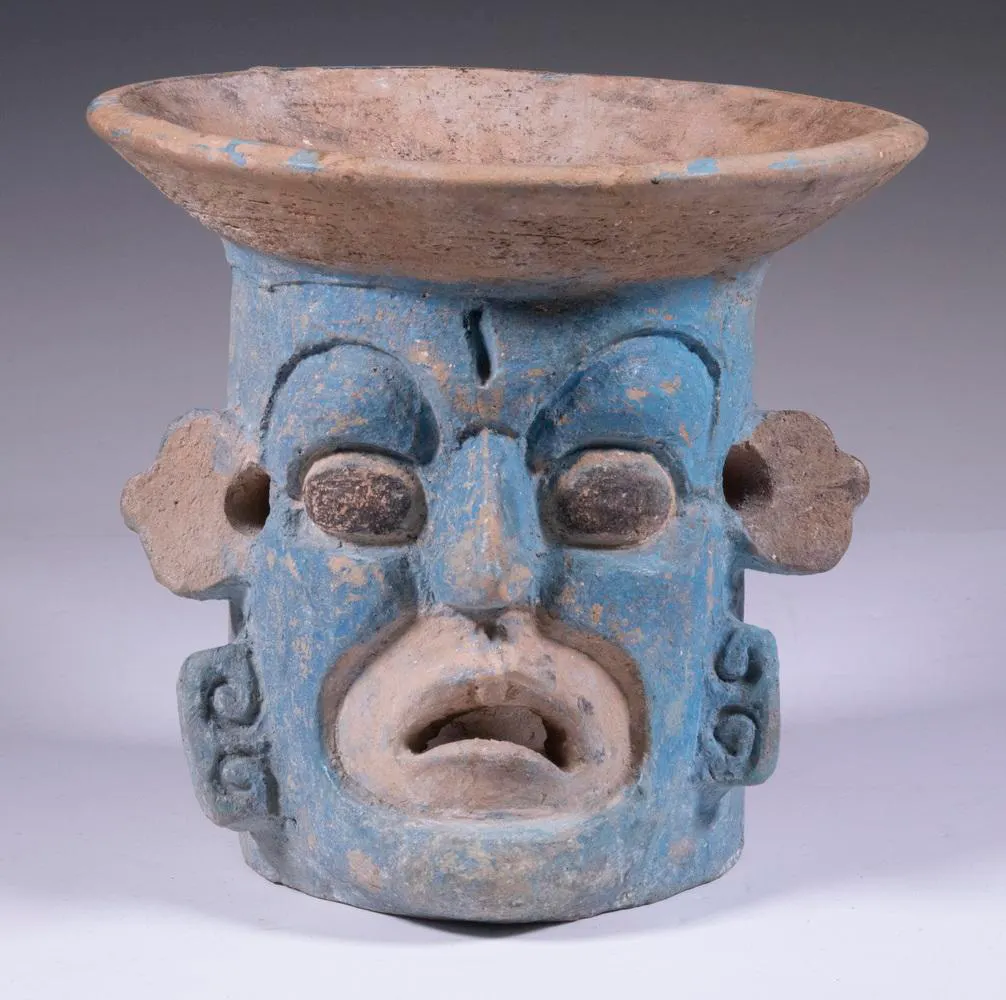
Barnebys: Another top lot is a Mayan censer depicting a sacrificial victim. What is the significance of this lot?
Thomaston Place: The Mayan Censer is a fine and rare depiction of a sacrificial human offering in blue face pigment, which represented a cloudless sky, and drought. The victims were sacrificed to Chaak, the rain god. This is but one of 120 Pre-Columbian lots in Day 1, a diverse selection also including cultural items from the Aztec, Inca, and Taíno.
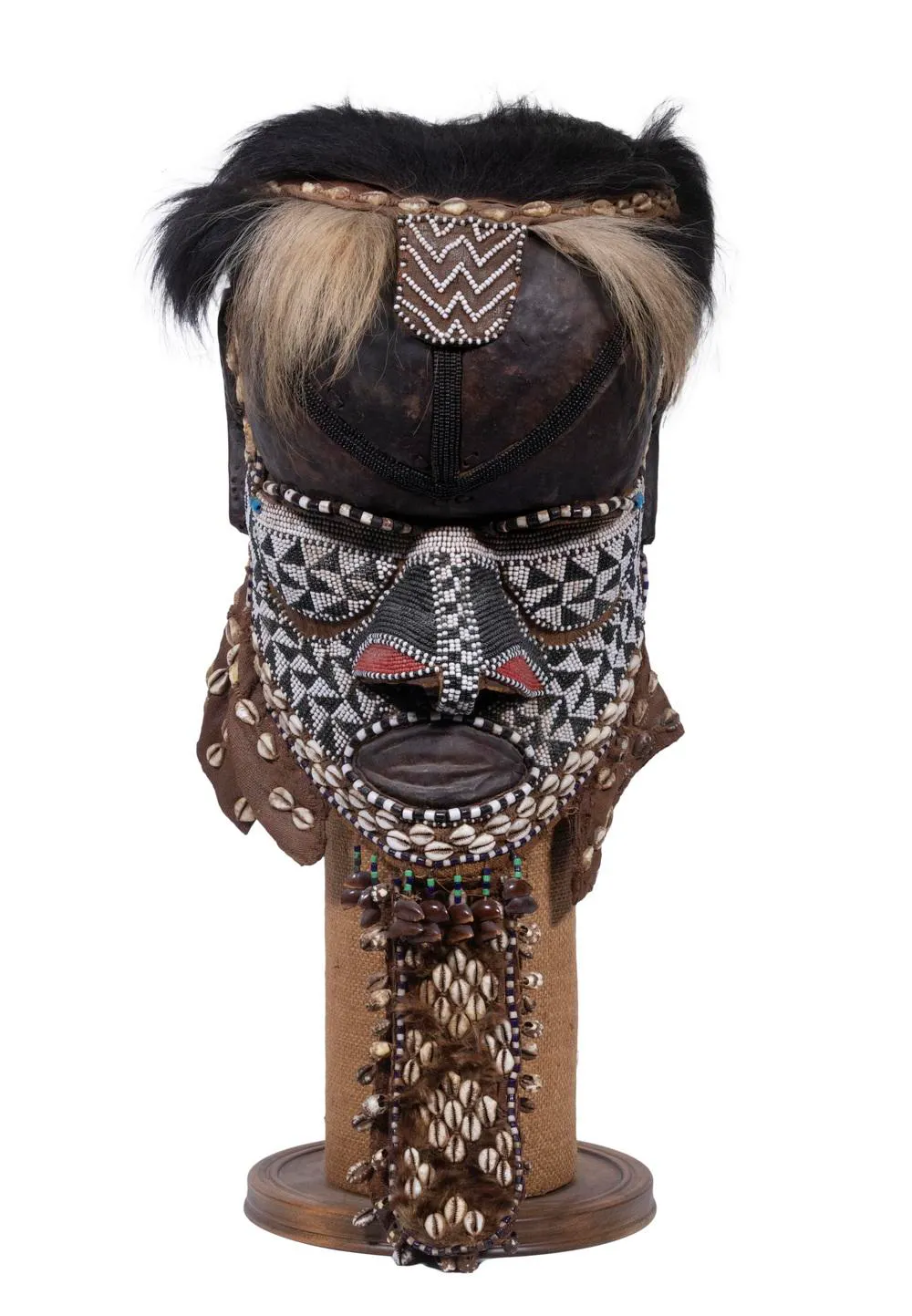
Barnebys: A work of exquisite craftsmanship is an African beaded helmet mask. What is the story and usage of such a detailed mask?
Thomaston Place: An early Bawoom Helmet Mask (lot 5002) is one of three types of the Kuba Royalty in what is now Zaire and the Democratic Republic of the Congo. It represents a challenger to the king, a Tshwa Pygmy of the original tribe of the region and was likely used in legend enactment dances. This is an early example.
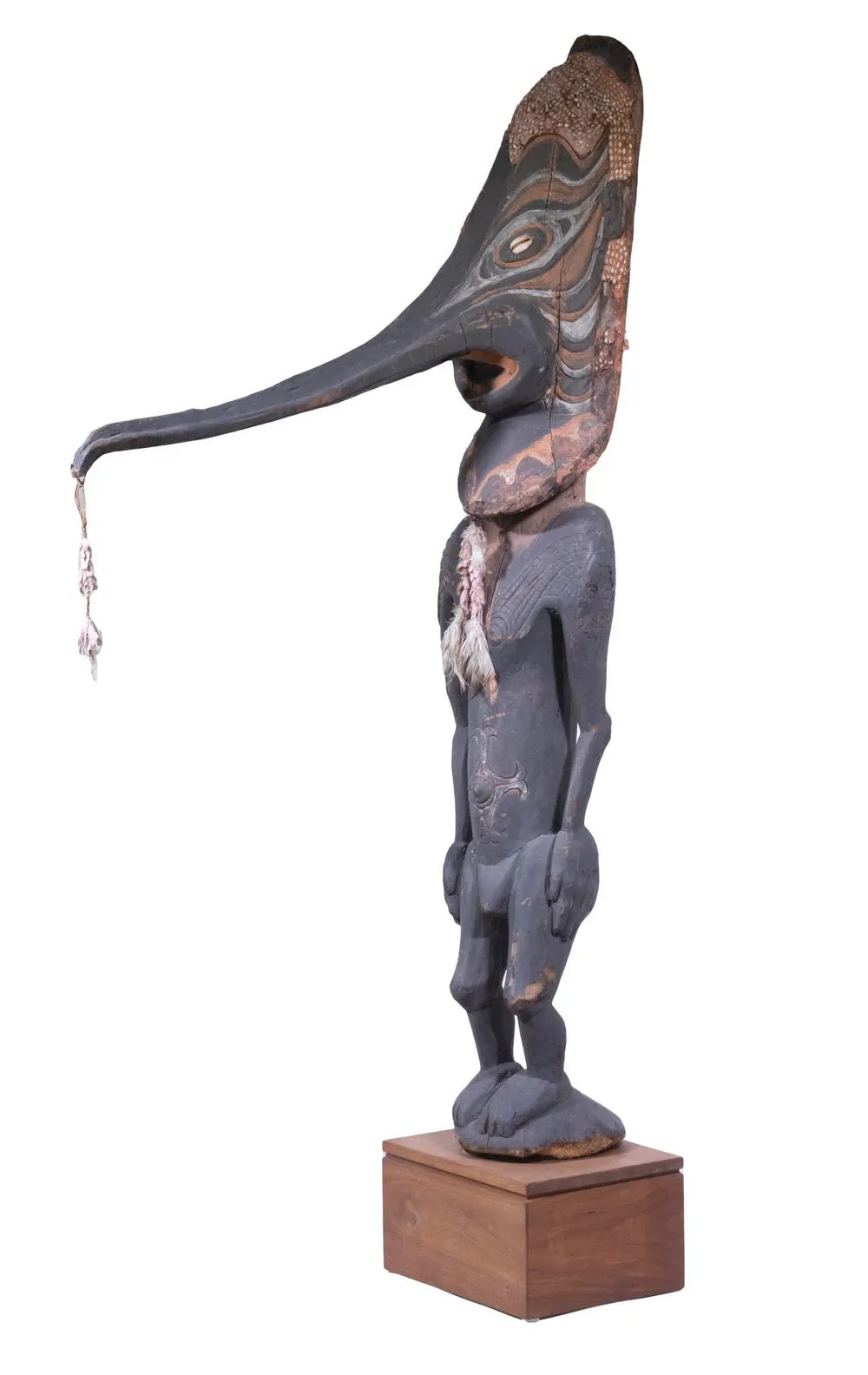
Barnebys: This Papua New Guinea anthropomorphic figure is made of fascinating materials such as conch shells, feathers and wood. What is the purpose of such a figure and the importance of these materials? Thomaston Place: The Oceanic lots in Day 1 come from a multitude of locations ranging from Polynesia, Fiji, and Borneo. The Papua, New Guinea Guardian Figure or Iatmul Mwai, is from the Middle Sepik River region and would have served as the gable for the central lodge of the settlement. The mud, shells, wood and feathers represent primal elements of their lives, the fact the figure is carved from a single trunk emphasizes the ancient source, bringing longevity to those who passed beneath.
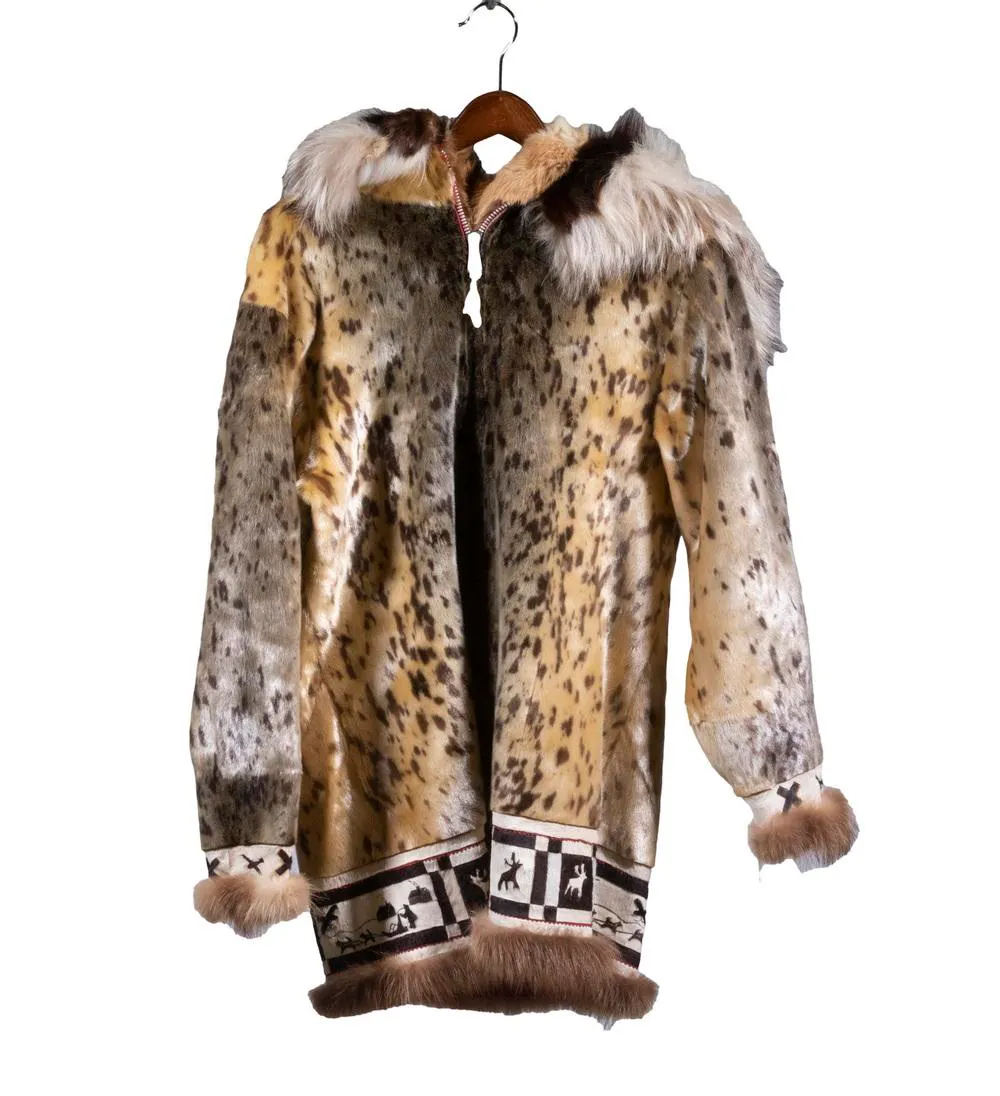
Barnebys: What else would you like potential collectors to know about this sale and the cultures exhibited?
Thomaston Place: This sale owes much of what makes it so unique to the passions of dedicated collectors with distinctive interests. The Inuit items in Day 1, for example, include 80 lots from the collection of Cecilia Piper. She served as a WAMS aircraft mechanic in World War II, as well as a missionary pilot after the war, flying to remote regions in the Arctic. Likewise, Day 2 is dedicated entirely to over 400 lots of African art and relics. Many of these are from the lifetime collection of Robert and Terisa Doucette, prolific artists and photographers who traveled the world and had a great passion for African art and culture. In this way, every collection has its own story and is defined by individuals with remarkable experiences and taste.
Find more from Thomaston Place Auction Galleries on Barnebys

![Andy Warhol (1928-1987), American, REBEL WITHOUT A CAUSE (JAMES DEAN), FROM "ADS," 1985 [F&S II. 355], screenprint in colors on Lenox museum board, the full sheet. Image © Waddington's (detail)](https://images.prismic.io/barnebys/eac0e6a7-09a4-4fc6-be84-f6ce6be52684_Andy+Warhol+edition.jpg?auto=format,compress)