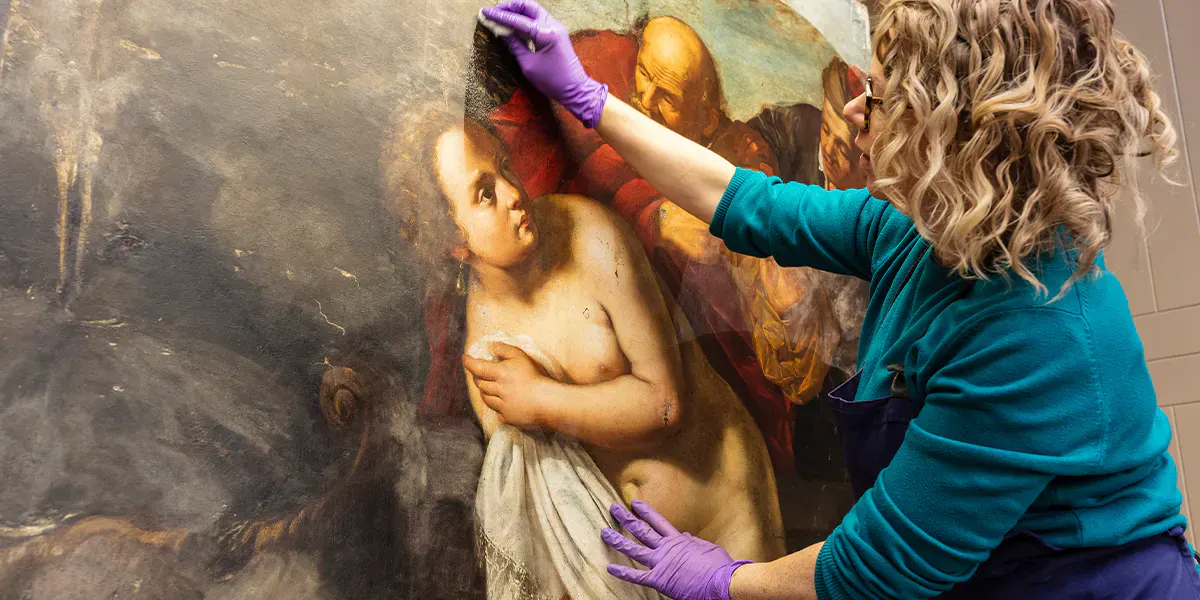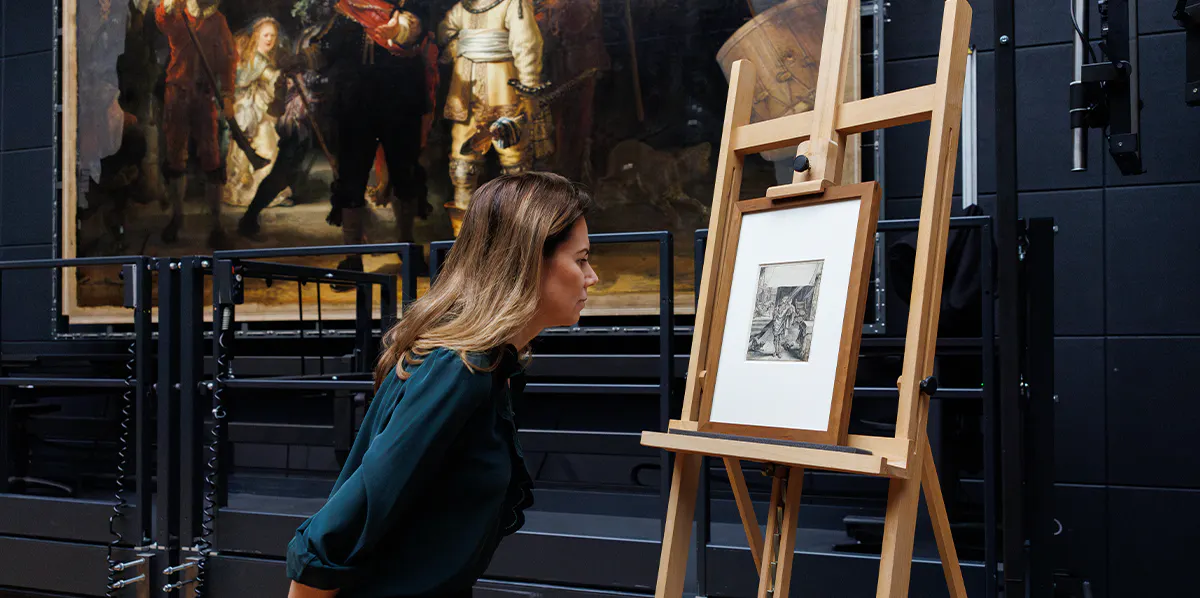
The Night Watch by Dutch Baroque painter Rembrandt van Rijn is one of the best-known paintings in the world. Since 2019, it has been under detailed study and restoration as part of "Operation Night Watch". The work is displayed at the Rijksmuseum in Amsterdam, enclosed in glass and visible to the public, and has already revealed several new findings.
See also: Rembrandt's 'Night Watch' is Being Restored in Public
Sometimes discoveries occur by accident. That was the case for Anne Lenders, curator of "Operation Night Watch". While viewing an exhibition, her attention was caught by a drawing by Adriaen van de Venne from 1619. She noticed a striking similarity with Rembrandt’s painting. Van de Venne’s drawing, which has been in the Rijksmuseum’s collection for a century, illustrates the biblical story of Joseph and Potiphar’s wife. It was originally made for the title page of Jacob Cats’s widely read book Self-stryt, dat is, Krachtighe beweginghe van Vlees ende Gheest (Self-conflict, or the Powerful Movements between Flesh and Spirit), published in 1620.
Want more articles like this straight to your inbox? Subscribe to our free newsletter!
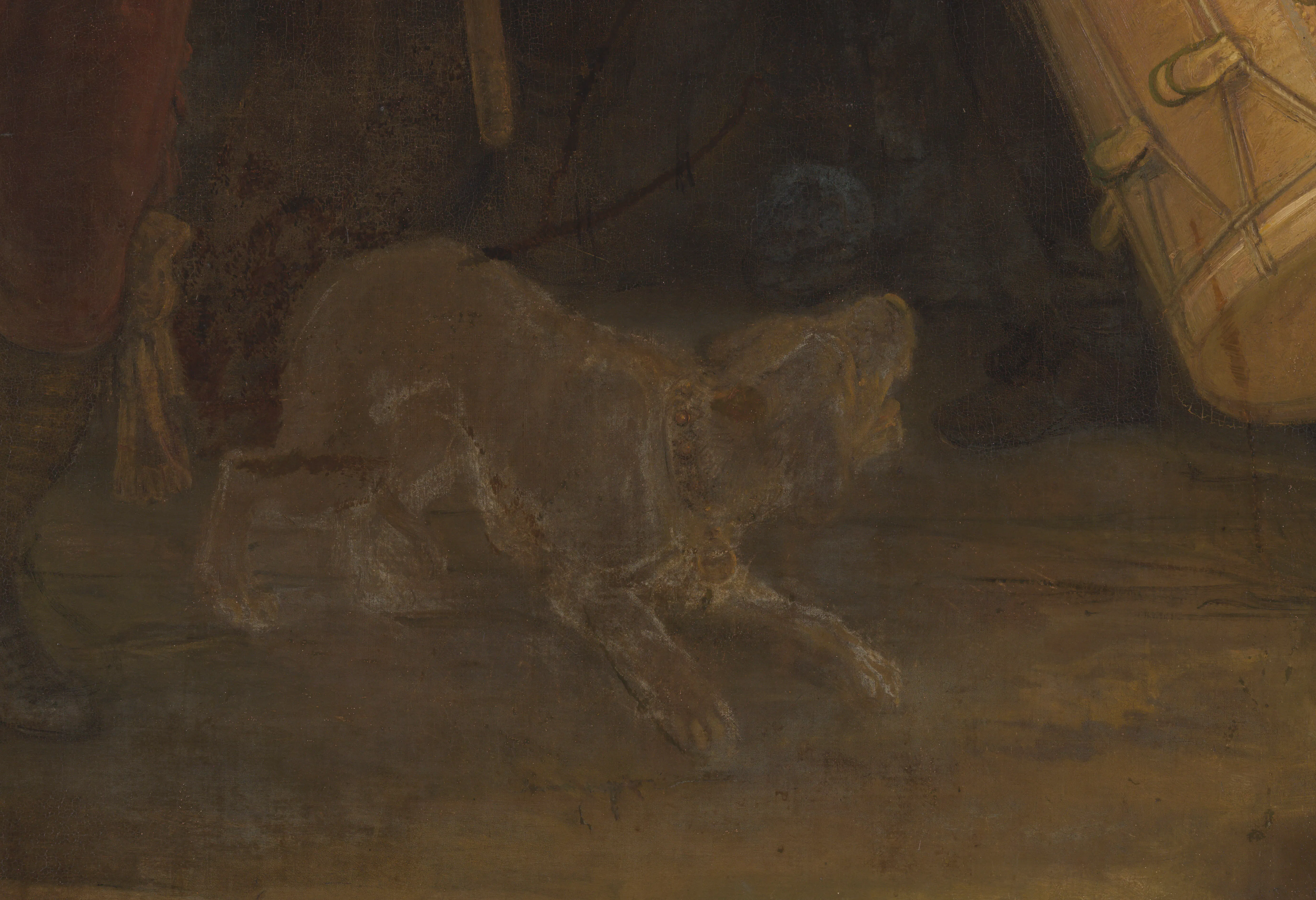
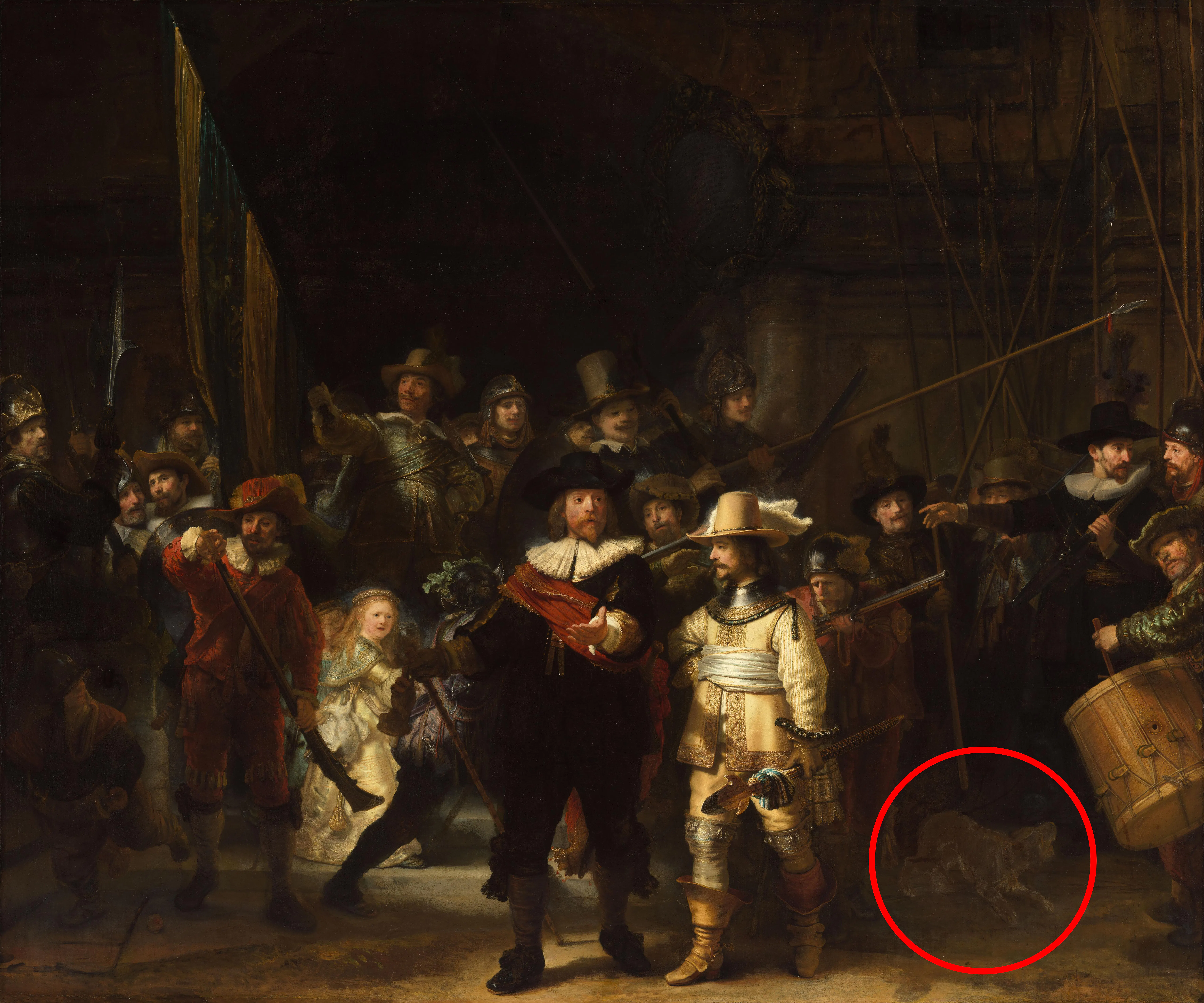
The detail that drew Lenders’s attention was the dog. Its appearance reminded her immediately of the one in The Night Watch: "When I saw the drawing in an exhibition, I immediately thought of the dog from The Night Watch. The dog's head, collar, and posture bear such a strong resemblance that it can only be concluded that Rembrandt used this drawing as a source of inspiration. Subsequent research confirmed this."
See also: Dogs in Art: 10 Portraits Through the Ages
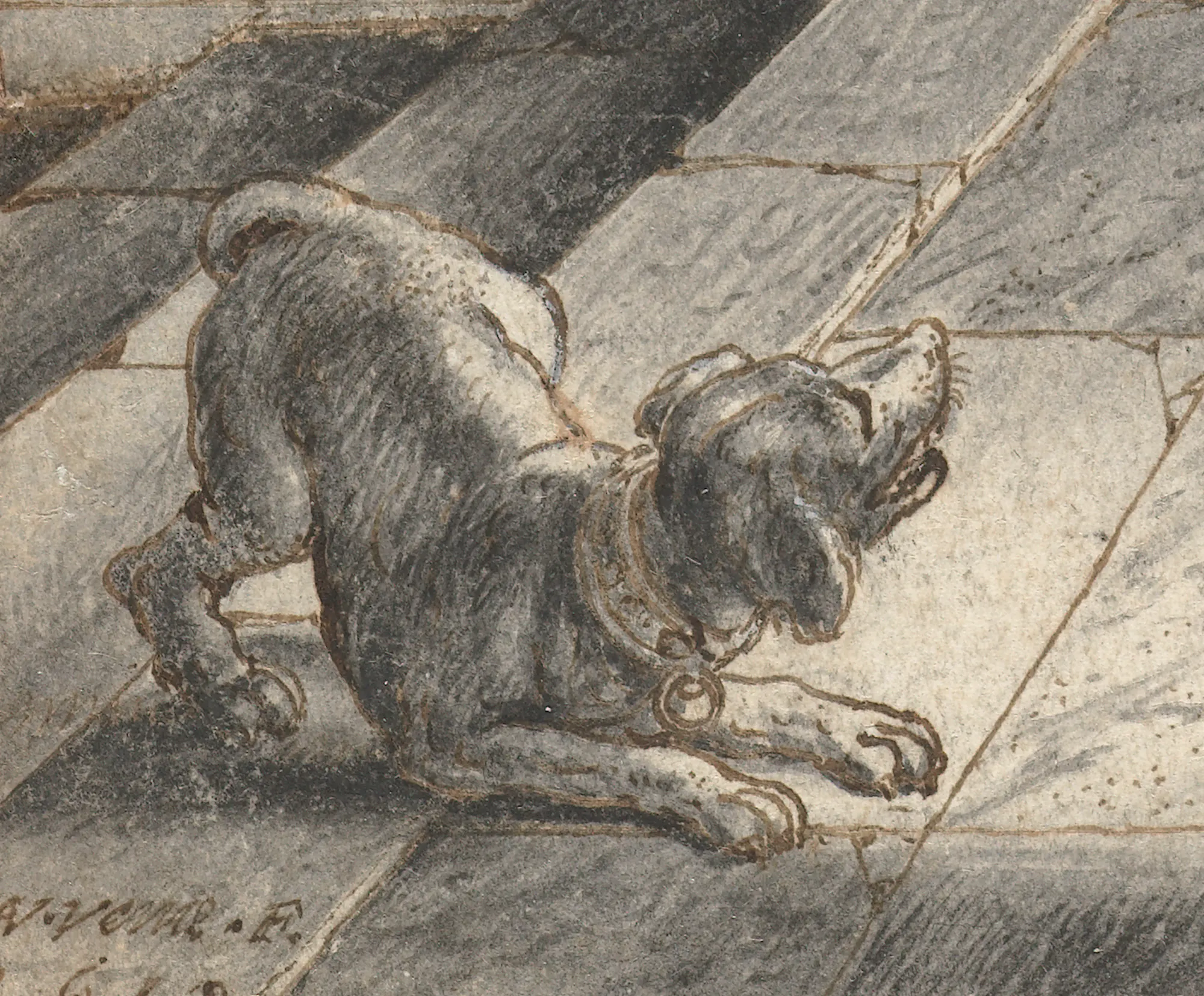
Rembrandt owned a large collection of drawings and prints by other artists. Although it is not known whether Van de Venne’s work was among them, the similarities between the two depictions suggest a connection, even if the details are not identical. In Rembrandt’s painting, for example, the dog’s ears are slightly longer, the chest is lifted higher from the ground, and the mouth is more open. But the posture and upward gaze are the same. The recently uncovered underdrawing of The Night Watch even shows that Rembrandt’s first version of the dog was closer to Van de Venne’s model.
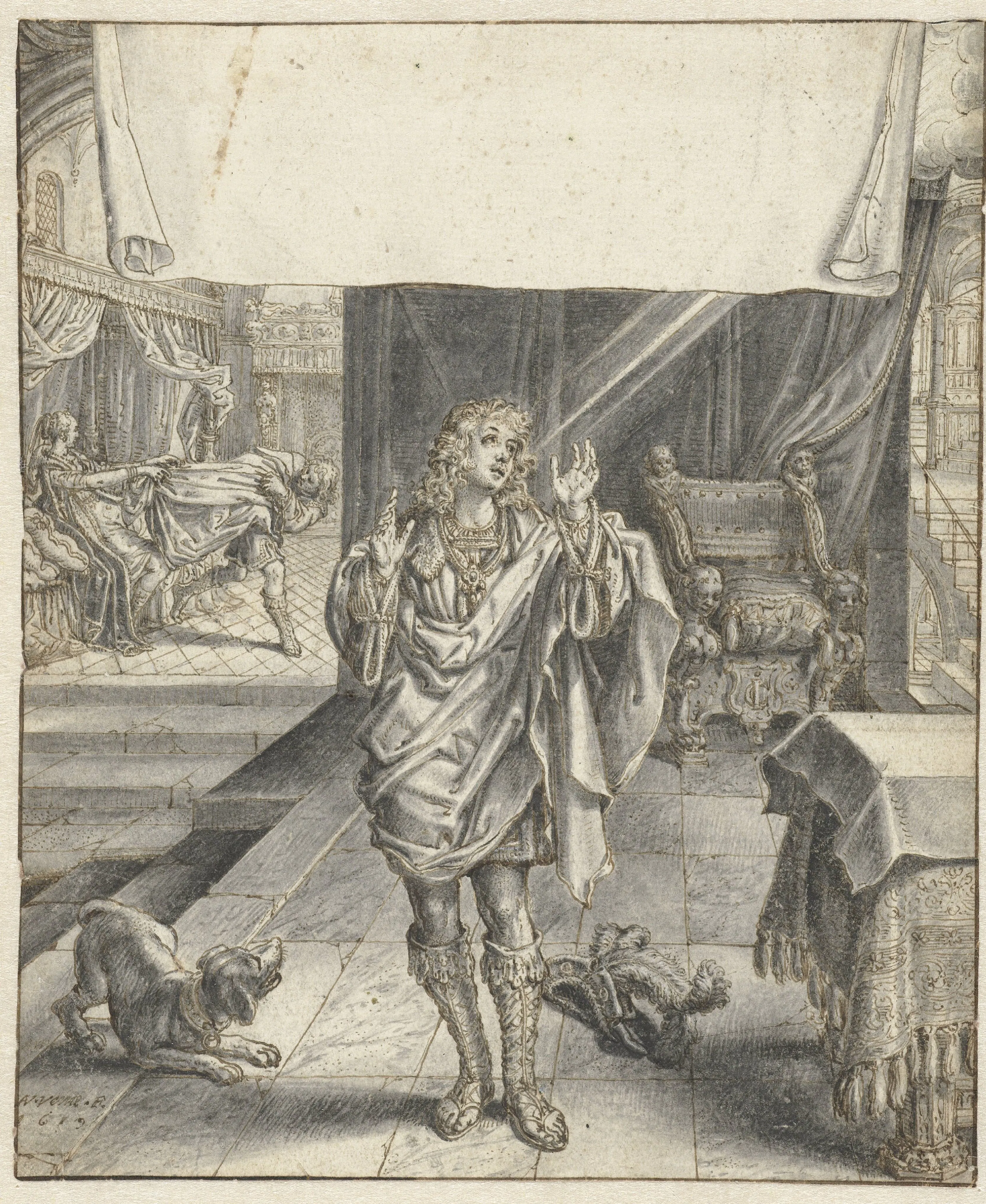
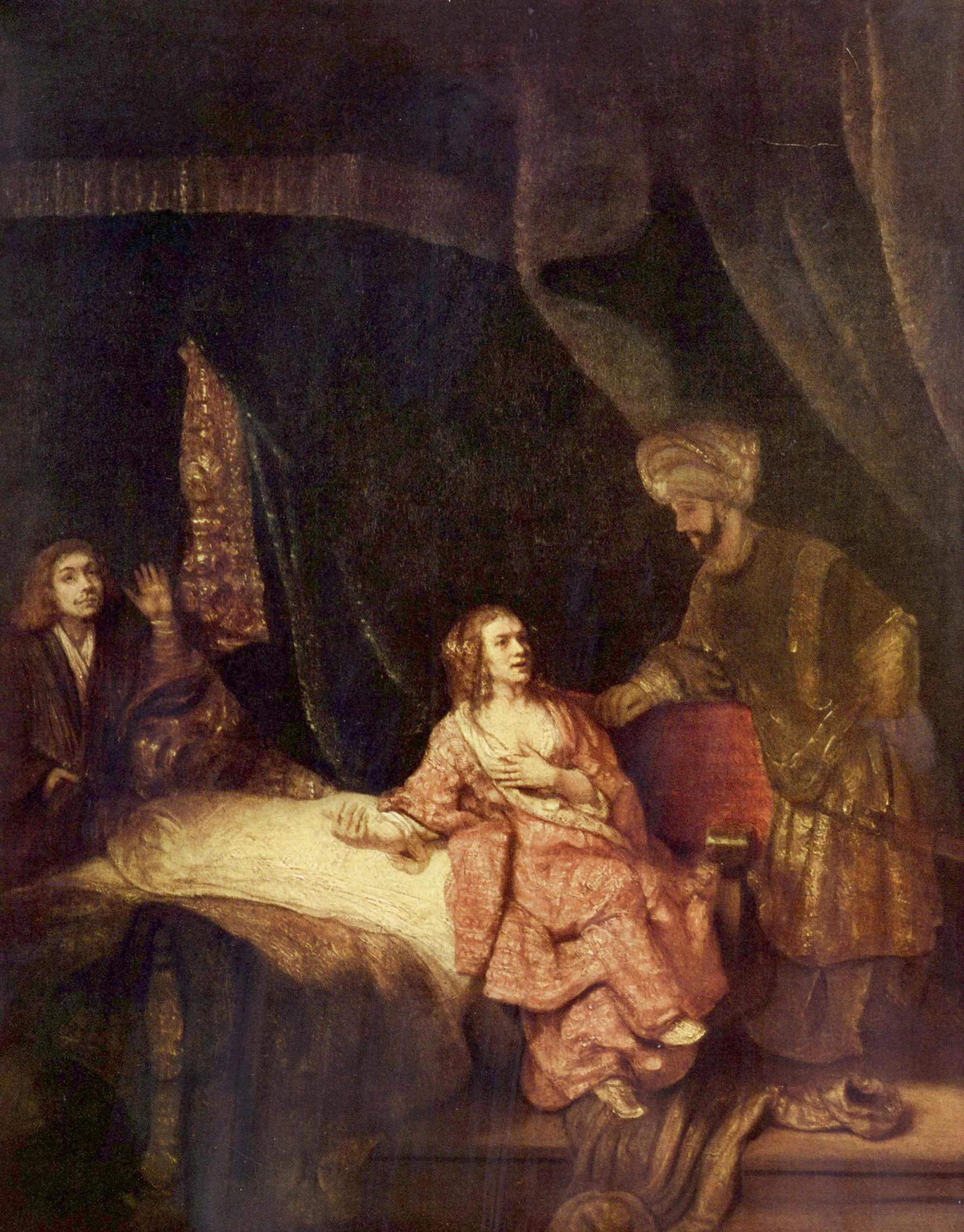
Other works by Rembrandt also suggest that he knew Van de Venne’s print. The figure of Joseph in Rembrandt’s 1655 painting Joseph and Potiphar’s Wife (Gemäldegalerie, Berlin) recalls Van de Venne’s version, as does the bed scene in his 1634 etching Joseph and Potiphar’s Wife (Rijksmuseum, Amsterdam).
See also: 8 Paintings that Vincent Van Gogh Copied
The discovery is an important addition to the study of art history and of Rembrandt’s working methods. Taco Dibbits, Director General of the Rijksmuseum, commented: "It is remarkable that, almost 400 years after its creation, new insights are still being gained into one of the most researched paintings in the world. This discovery gives us further insight into Rembrandt's thought processes during the creation of this work."
"Operation Night Watch" is expected to conclude in 2027. Further discoveries may still come to light as the project continues.