From the burial reliefs of Egyptian pharaohs and the 'cave canem' mosaics in Roman homes to Jeff Koons' Balloon Dog and George Rodrigue's Blue Dog, dogs have long been a favourite subject in art. We've selected ten examples for you to explore.
1. Anthonis van Dyck, The Five Eldest Children of Charles I (1637)

In art, dogs have long symbolised loyalty, as seen in Jan van Eyck’s famous The Arnolfini Wedding. By the Renaissance, it became fashionable to be depicted with a dog by one's side. Rulers and nobility often chose large guard or hunting dogs, representing their power, dominance over nature, and their exclusive right to hunt. A striking later example is Anthonis van Dyck's group portrait The Five Eldest Children of Charles I from 1637. At the painting’s centre, the future King Charles II, aged seven, confidently rests his hand on a dog nearly as big as he is, perhaps symbolising his future authority.
See also: From Van Eyck to Botero: The Mystery of the Arnolfini Portrait
2. Giovanna Garzoni, Canina con Biscotti (around 1648)
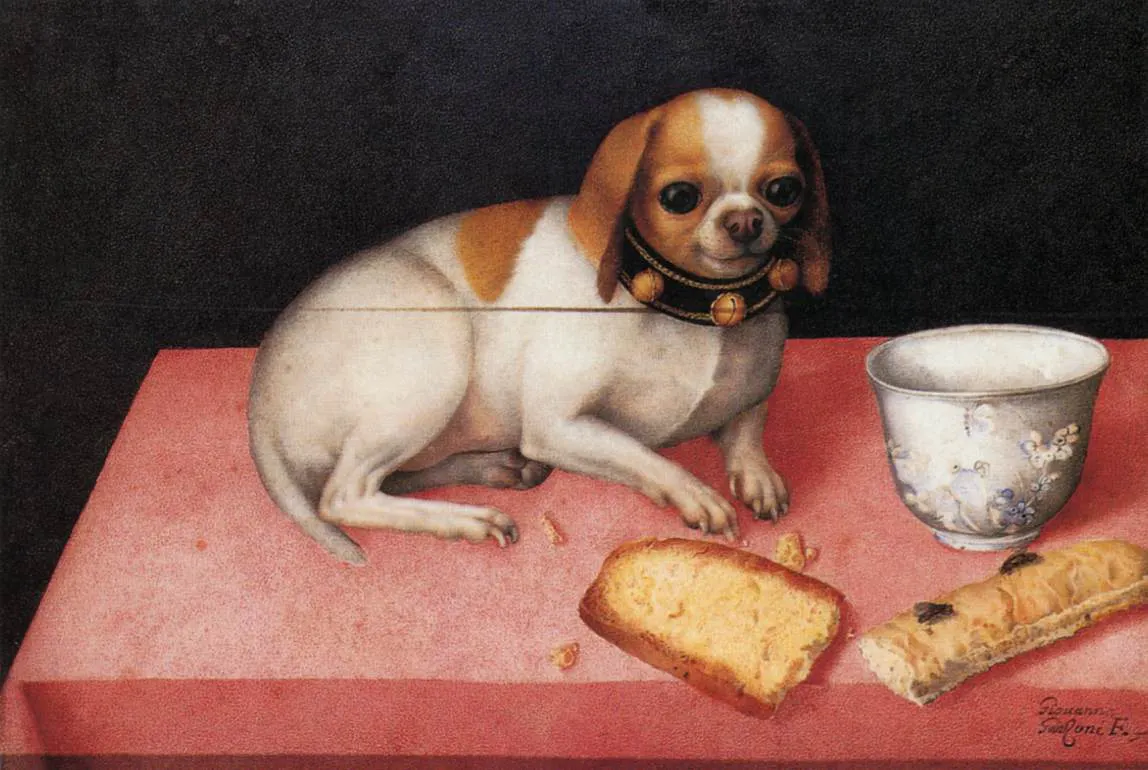
At the same time, small lapdogs became fashionable, often featured in portraits as accessories, especially in ladies’ portraits. They were also sometimes depicted on their own, as seen in this example from around 1648 by the Italian Baroque painter Giovanna Garzoni (1600–1670). The focus seems to be on emphasising the dog’s small size, with a cup, biscuits, and even flies included for comparison. But whose pet was it? Garzoni was living in Florence then, where Vittoria della Rovere, Grand Duchess of Tuscany and wife of Ferdinando II de’ Medici, was one of her most notable patrons.
See also: A Portrait of Marie Antoinette's Dog Sells for 100x Estimate
3. Giuseppe Castiglione (Láng Shìníng), Ten Prized Dogs Album (18th century)
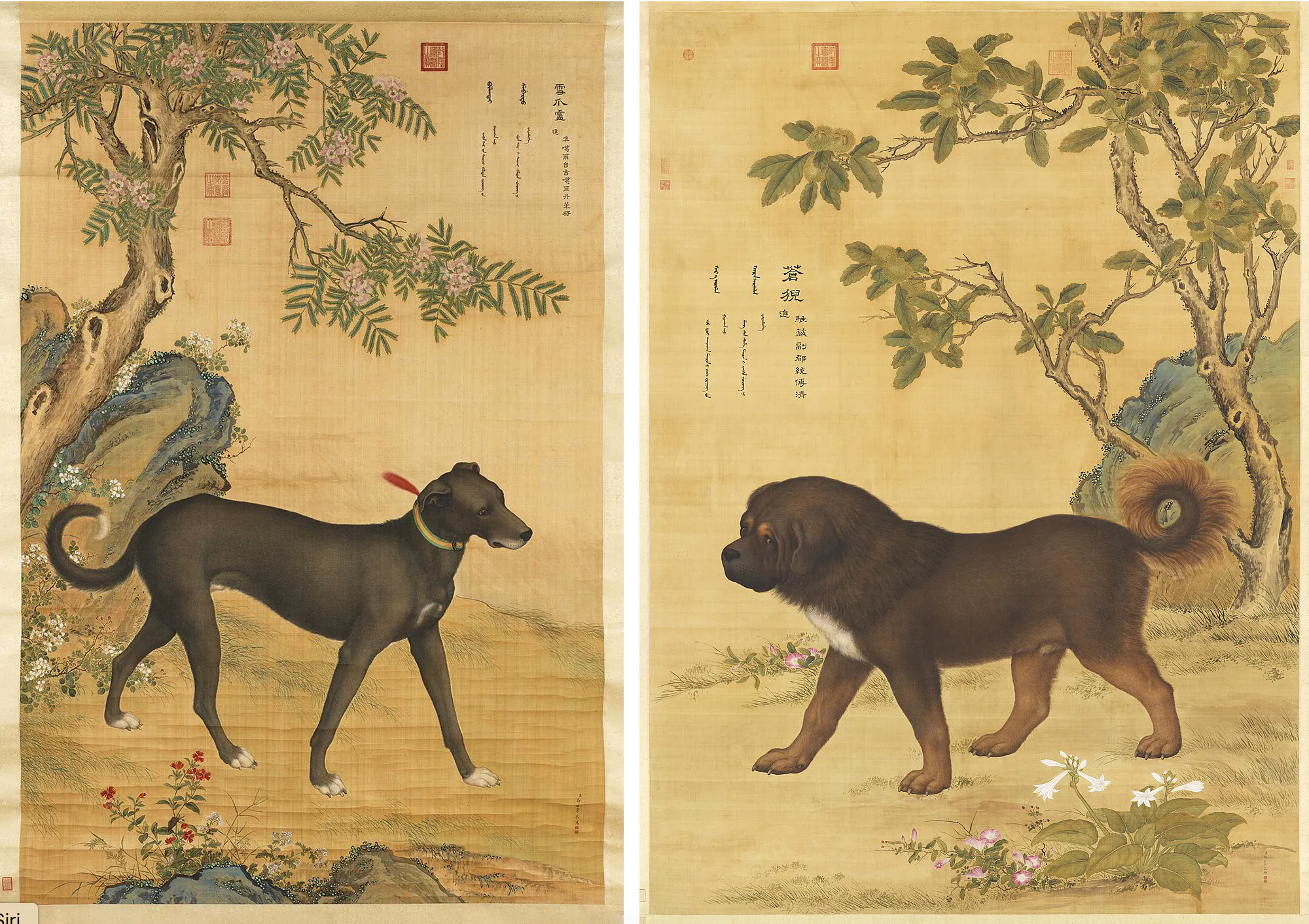
Dogs have been beloved worldwide, even in distant China, where Jesuit monk Giuseppe Castiglione (1688–1766) became the court painter for Emperor Kangxi in the early 18th century, adopting the name Láng Shìníng. Under Kangxi and his successors, Yongzheng and Qianlong, Láng Shìníng produced court portraits, historical scenes, and nature studies. Among his works is the Ten Prized Dogs Album, which depicts Emperor Kangxi’s ten favourite dogs.
4. Edwin Landseer, Eos, A Favourite Greyhound of Prince Albert (1841)
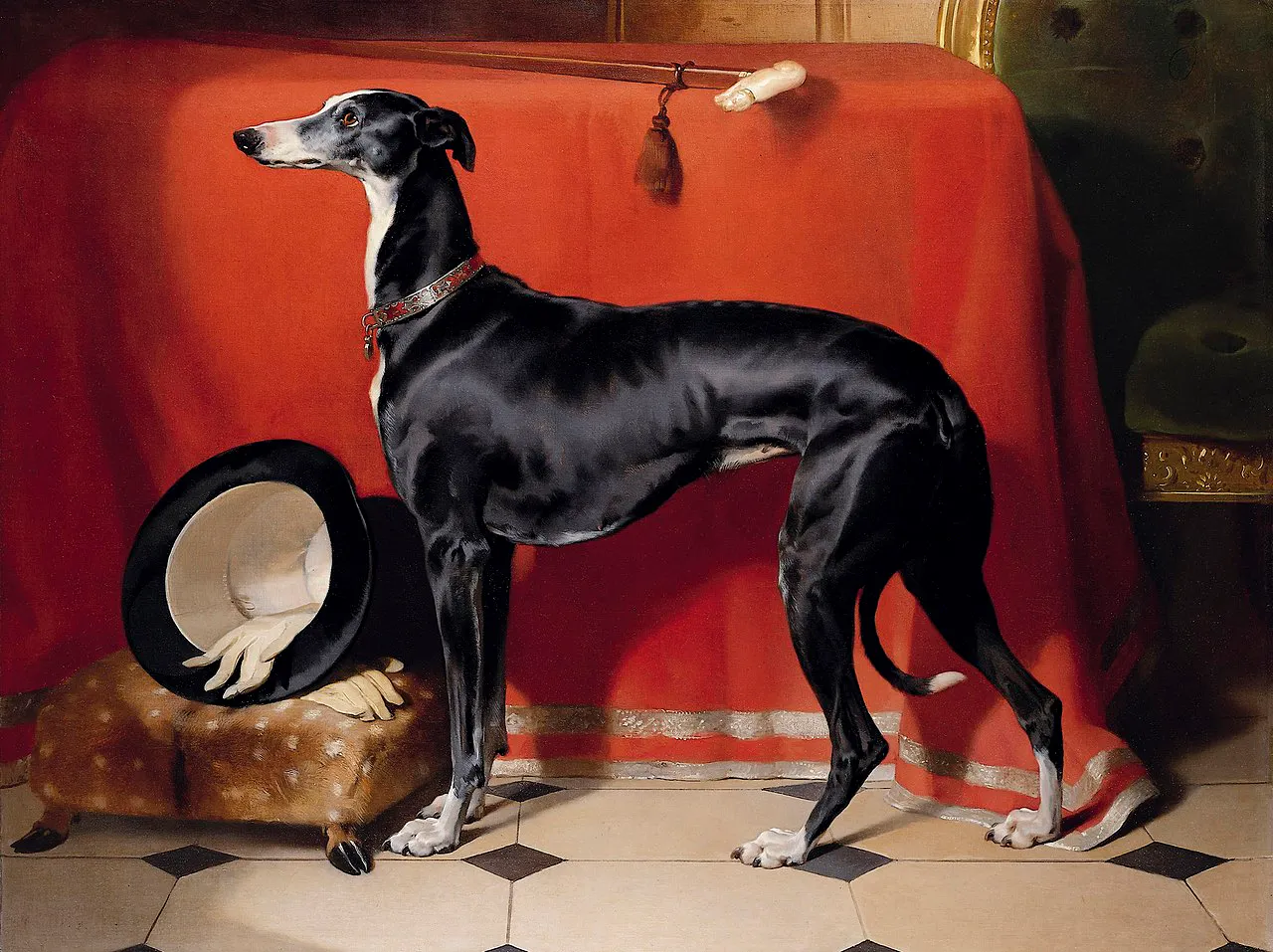
The British royal family has a long history of loving dogs, from the Cavalier King Charles Spaniel under Charles I to the iconic corgis of the late Queen Elizabeth II. Queen Victoria and her beloved husband Albert (1819–1861) were also devoted dog lovers. When Albert married Victoria in 1840, he brought his cherished dog Eos into their union.

The following year, Victoria surprised Albert with a large portrait of Eos, painted by the renowned animal artist Edwin Landseer (1802–1873). Interestingly, Albert also captured Eos in his own painting from 1839, The Death of Count Mansfeld (1580–1626). In this work, a black and white greyhound gazes faithfully up at its master, who, according to legend, is said to have died standing.
See also: Sporting Art: Works by Cecil Aldin
5. Anton Romako, Empress Elisabeth with Saint Bernard Dog (1883)
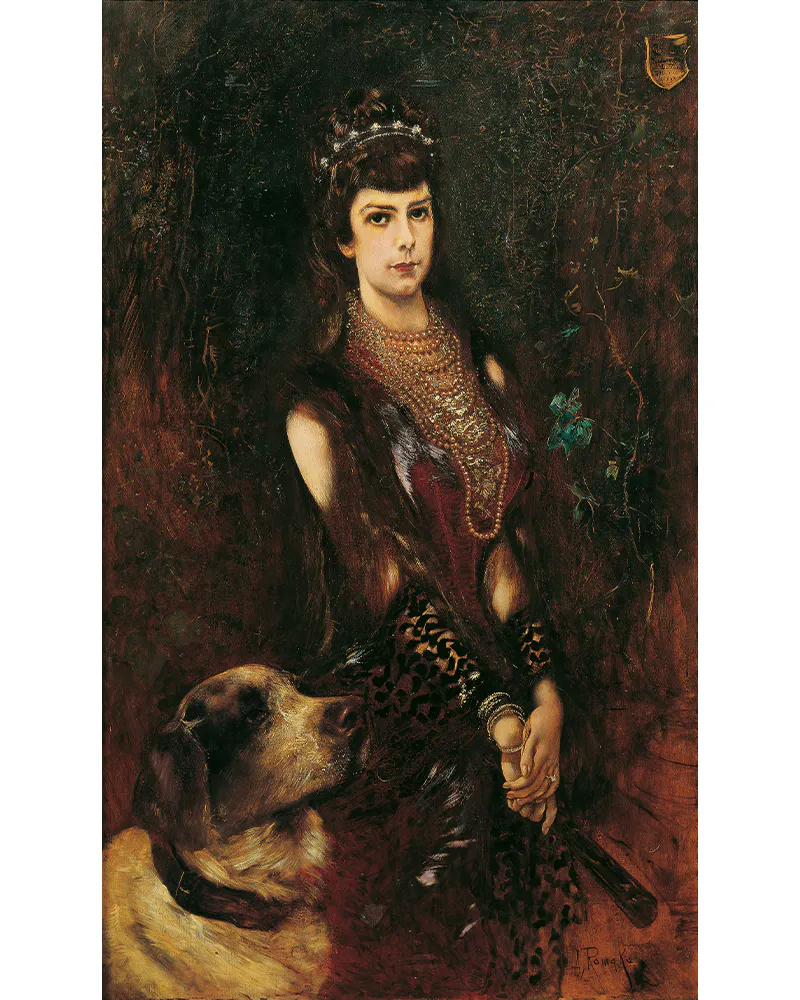
Empress Elisabeth of Austria had a great love for dogs, particularly large breeds. She once confessed, “I almost fear that a dog as large as I wish for does not exist.” Among her favourite four-legged companions were a Great Dane named Shadow and an Irish Wolfhound named Houseguard. From 1870 onwards, seven fluffy Leonbergers also joined her imperial pack. In 1883, the Austrian painter Anton Romako (1832–1889) created a portrait of the empress based on a photograph. True to his unconventional style, which was often unpopular with his contemporaries, the portrait of Elisabeth did not receive a warm reception either. However, it’s easy to imagine that Elisabeth might have appreciated it, as her outfit resembles that of the fairy queen Titania from Shakespeare’s A Midsummer Night’s Dream, a character with whom she liked to compare herself. And then there’s the big dog... While not the portrait's focal point, Romako couldn’t have chosen a better “accessory” for the empress.
See also: Beauty is Truth: A Real Portrait of Empress Elisabeth of Austria
6. Francis Barraud, His Master’s Voice (1898/99)
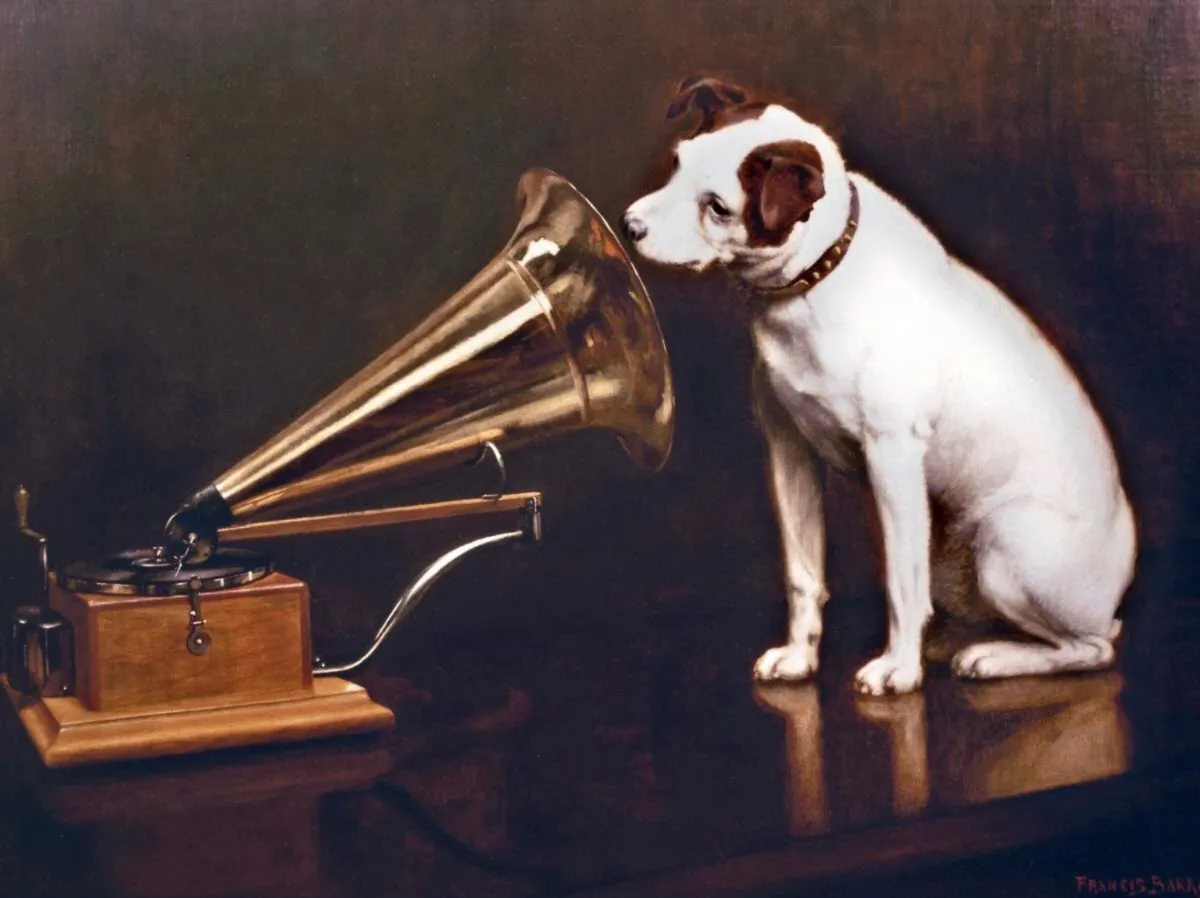
After the death of his brother Mark, British painter Francis Barraud (1856–1924) took in his dog Nipper, a brown-and-white terrier mix. Nipper missed his former master and often sat by the door, waiting for his return. Inspired by the dog’s attentive posture, Barraud painted Nipper in front of a cylinder phonograph, later replacing it with a gramophone to offer the work to the Gramophone Company, which purchased it along with the marketing rights. Today, the iconic image of the listening dog is used by various record companies. The version of the story claiming that Francis Barraud owned a record featuring his brother's voice remains in the realm of legend.
See also: The Gramophone: A History
7. C. M. Coolidge, Dogs Playing Poker (1894 and 1903)
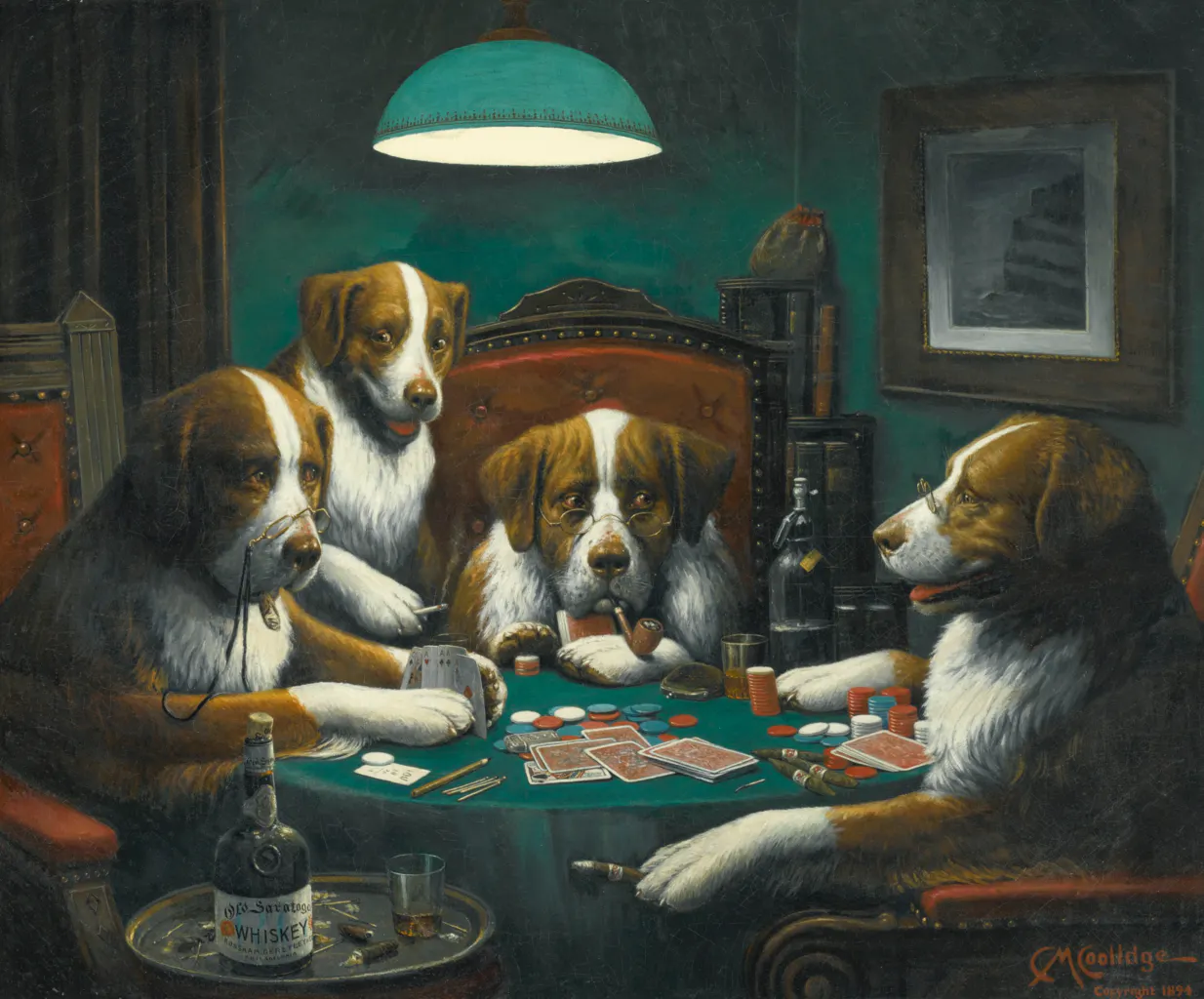
On behalf of the publisher Brown & Bigelow, American painter Cassius Marcellus Coolidge (1844–1934) created several oil paintings featuring anthropomorphic dogs playing poker, starting in 1903. These works were intended to advertise cigars. Interestingly, Coolidge had already painted a similar piece in 1894, which sold for a record $658,000 at Sotheby’s in New York in 2015. This impressive sum highlights the enduring popularity of Coolidge's Dogs Playing Poker series, which has been repeatedly referenced and replicated over the years. Despite—or perhaps because of—their kitschy design, these paintings have secured a place in American popular culture and beyond.
Want more articles like this straight to your inbox? Subscribe to our free newsletter!
8. Franz Marc, Dog Lying in the Snow (1911)
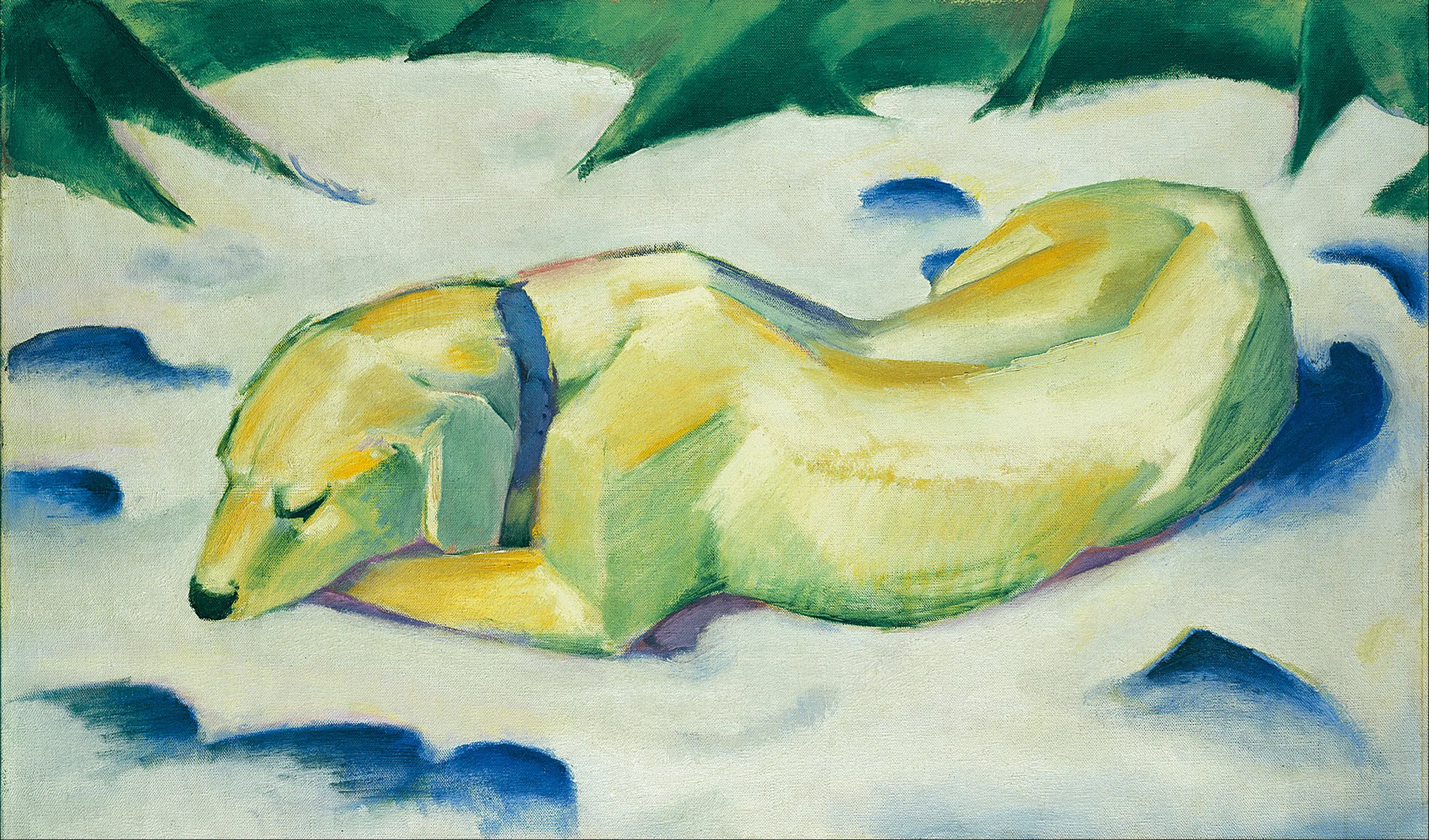
Animals were central to the art of Franz Marc (1880–1916), representing, in their innocence, the embodiment of natural harmony. In his personal life, he fell in love with a white Siberian shepherd dog named Russi, who entered his life in 1909 and became a frequent subject of his paintings. The most famous portrait of Russi is Dog Lying in the Snow from 1911, where Marc explored how the dog’s predominantly white fur transformed into shades of yellow against the pure white snow. Russi held a special place in Marc’s thoughts, even during the First World War, where he often considered his loyal companion. Upon returning home on leave and finding Russi shockingly old and frail, Marc wrote to his wife Maria, wondering if it would be best to relieve Russi of his suffering. Tragically, Franz Marc himself was killed a month later at Verdun.
See also: Franz Marc: A Creative Powerhouse
9. Thomas Theodor Heine, Siegfried (1921)
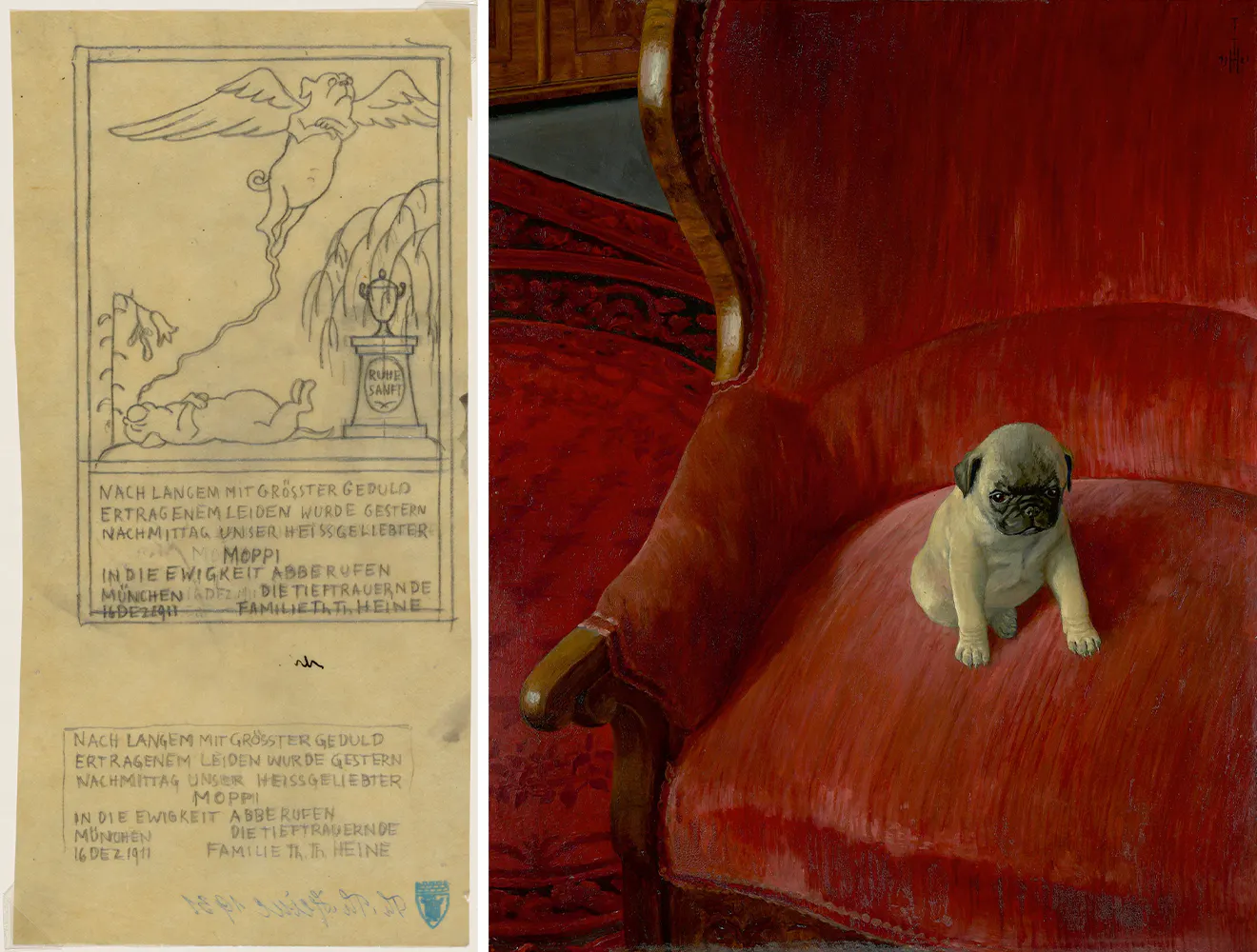
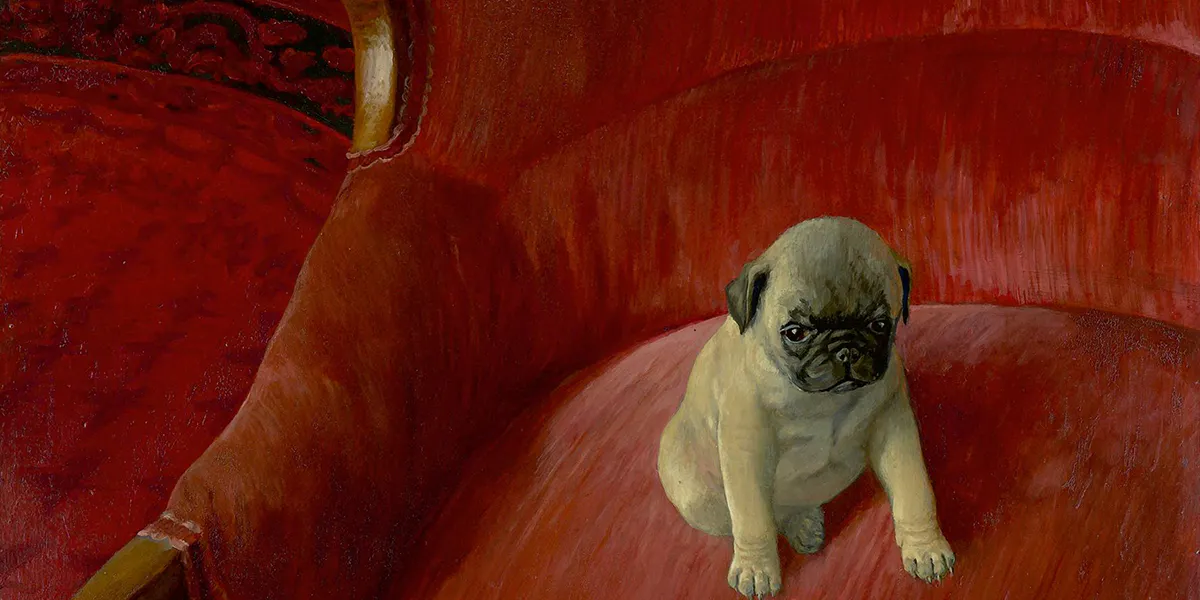
The painter and renowned caricaturist Thomas Theodor Heine (1867–1948) is best known for the red bulldog, the "mascot" of the political satire magazine Simplicissimus. However, his heart seemed to belong especially to pugs. In 1902, he created a double portrait of his six-year-old daughter Johanna alongside a pug, and as early as around 1890, he drew a self-portrait featuring himself with a pug during a winter walk. Also poignant, albeit with an ironic twist, is his Obituary for a Pug from 1911, in which the Heine family mourns the death of a dog named Moppi. Equally enchanting is the painting Siegfried from 1921, which depicts a young pug sitting on a red chair. The viewer's perspective from above and the off-centre positioning of the dog highlight its small size and endearing innocence.
See also: An Artist's Best Friend: 8 Painters and Their Pets
10. Max Beckmann, Majong and Chilly (1930)
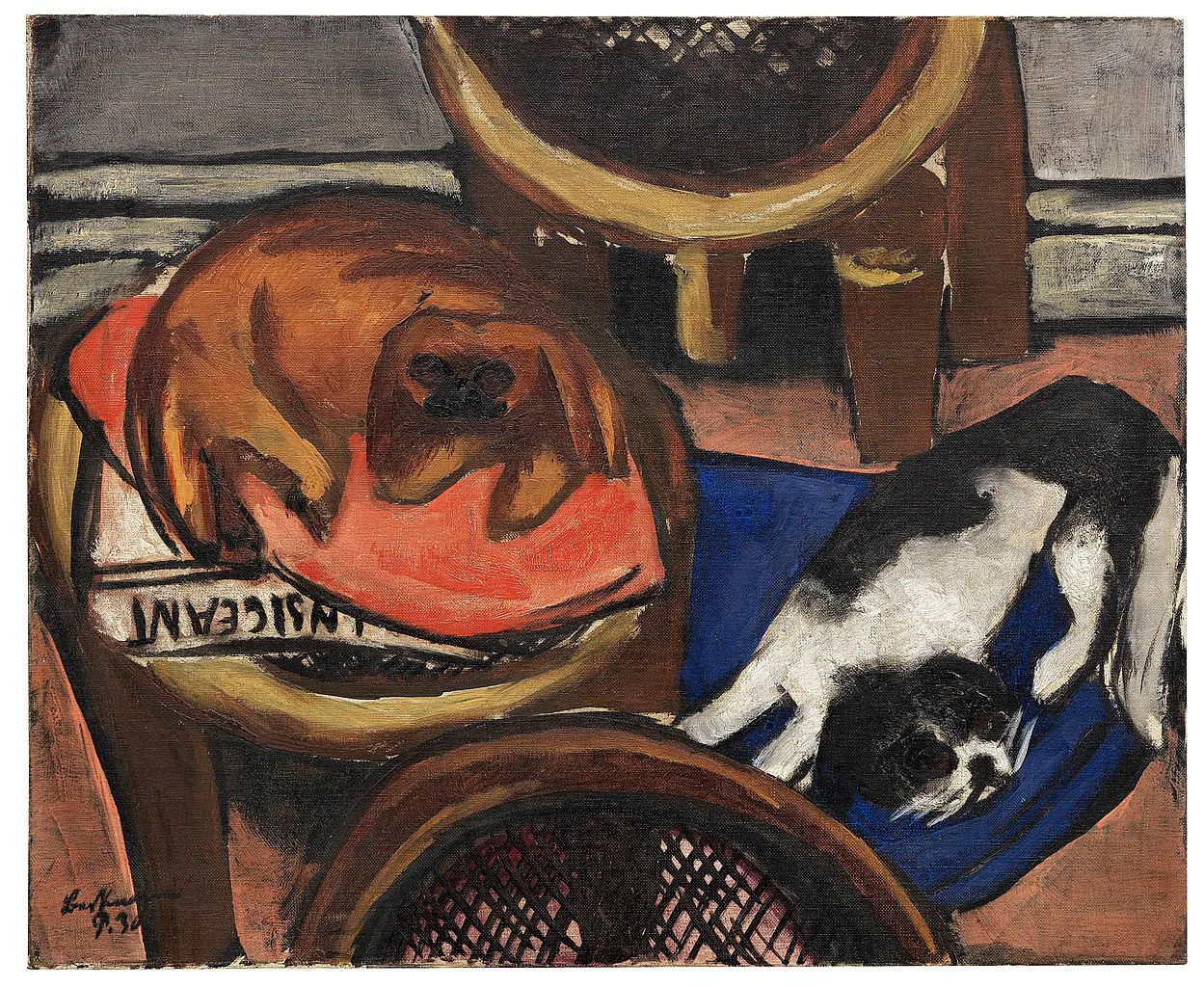
Max Beckmann (1884–1950) and his wife Mathilde "Quappi" shared a deep love for their dogs, although Beckmann had been more of a cat person before marrying. This changed when Quappi brought a black-and-white Japanese Chin named Chilly into their home. Max soon fell for the little dog as well. A few years later, he gifted Quappi a Pekingese named Majong, as she had grown up with dogs being the youngest daughter of the painter Friedrich von Kaulbach.
See also: Cats in Art: 10 Decidedly Feline Works
When Max and Quappi left Berlin for Amsterdam in 1937, they initially had to leave their dogs with a caretaker couple. Majong was able to join them a few months later, but Chilly was already too old for such an adventure. After Majong passed away, a new Pekingese named Butschy became part of the Beckmann family. Butschy evidently enjoyed a great deal of freedom; for instance, Max sketched her playfully posing on the breakfast table, and she was taken everywhere, even to the cinema!