
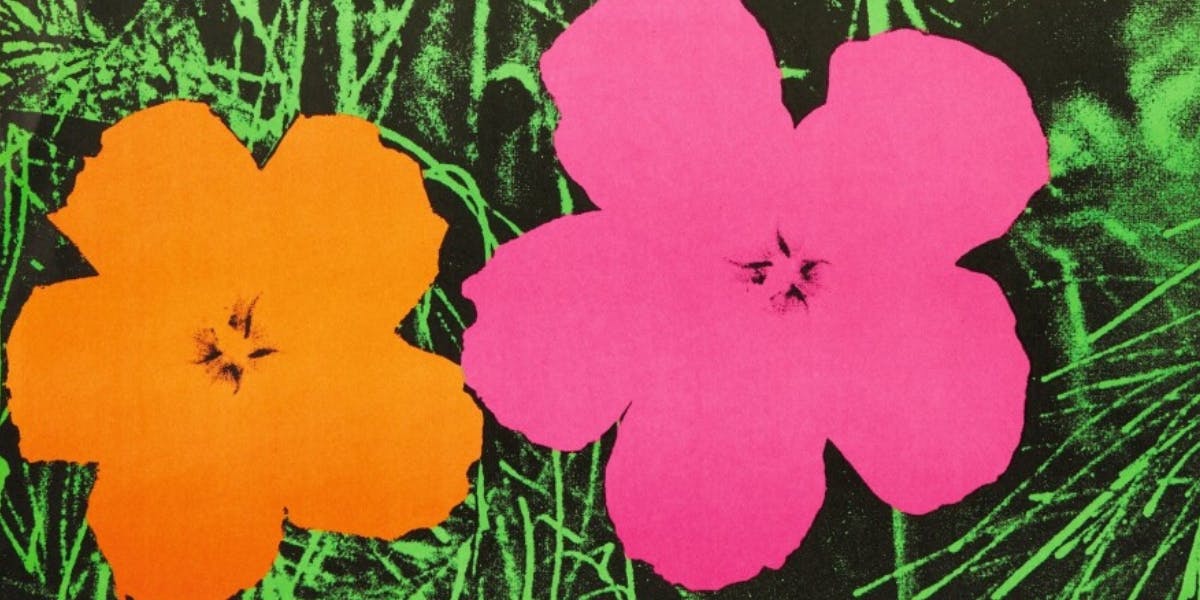
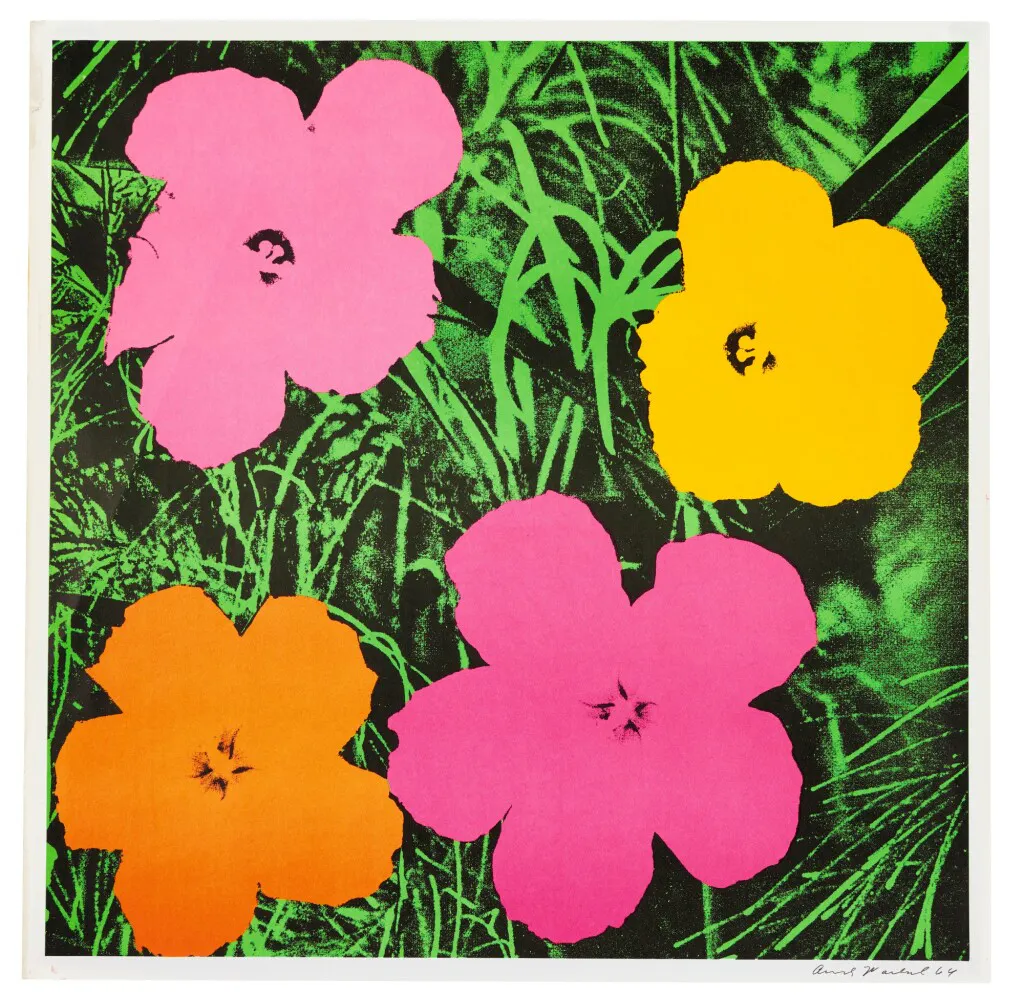
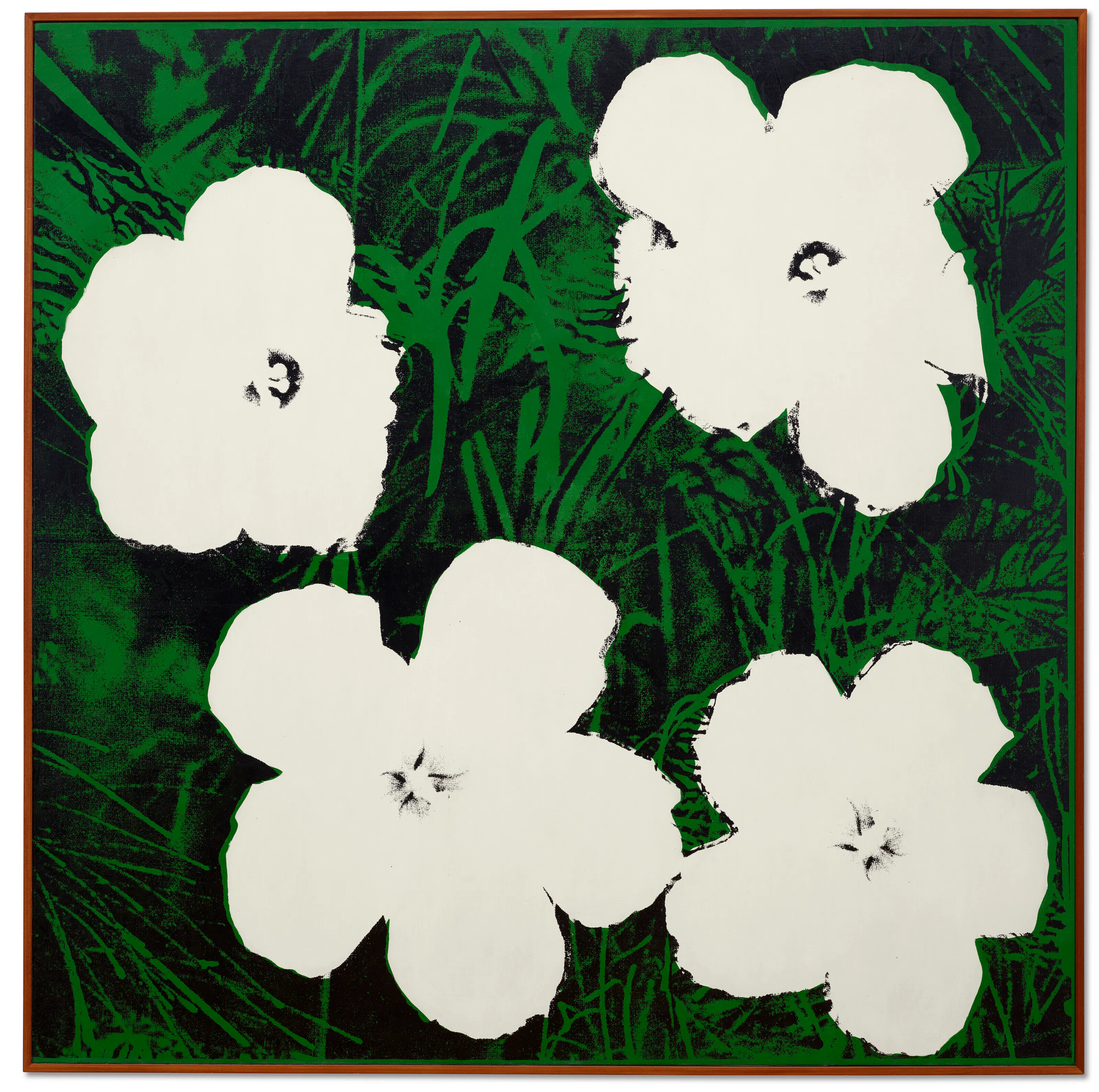
The idea first came to Andy Warhol when Henry Geldzahler, curator of American art at the Metropolitan Museum of Art, showed him a copy of Modern Photography magazine. He spotted a photograph of hibiscus flowers, which had been taken by Patricia Caulfield. Warhol began creating a composition using the image by cropping the photograph into a square and manipulating the flower so that four copies of them could be placed within the square format.
Related: Andy Warhol: The Pope of Pop
Soon after he began to work on the Flowers series, Warhol decided that this would be the focus of his first show at Leo Castelli's gallery in the autumn of 1964. Warhol's works caught the eye of Caulfield, landing Warhol in hot water as she brought a case against him for copyright issues. Warhol offered Caulfield prints from the series in an attempt to settle the case, but she refused his offer, and they eventually settled the case out of court.
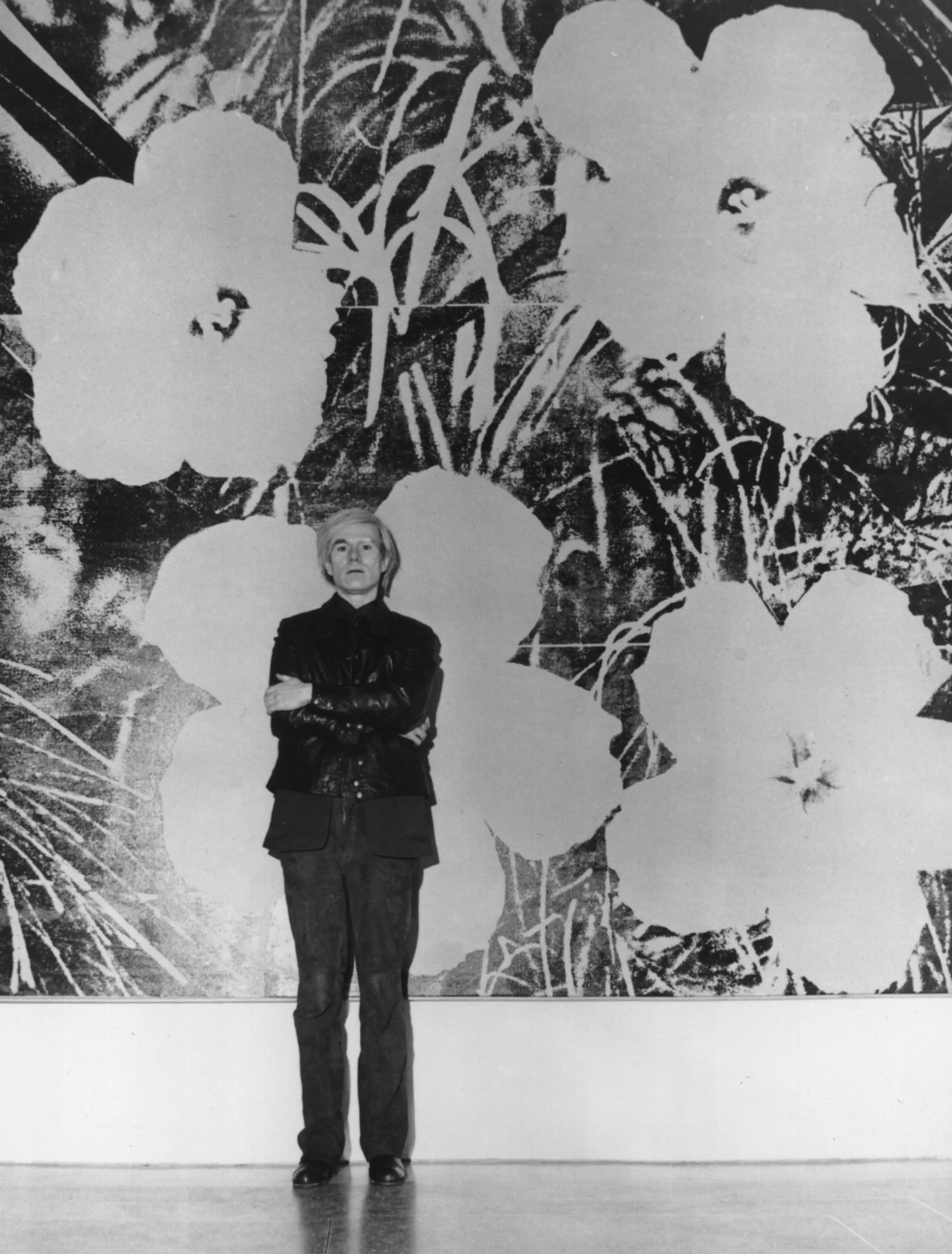
So many layers of irony surround the Flowers series. First of all, it may have seemed to critics Warhol had taken a sharp departure from his usual celebrity and brand subject, but the reality was Warhol spotted the image of the flower in a magazine, and never actually laid eyes on his natural subject in real life. He then went on to manipulate it and put the organic image through the same print screen process as he had done with his images of Marilyn Monroe and Campbell's soup cans - meaning the flower was no less subject to Warhol's attempts at immortal iconography.
Related: Warhol’s Marilyn Smashes Record Price
However, unlike images of superstars and commercial logos, flowers have an ephemeral quality, their beauty eventually fading. Through creating the Flowers series, Warhol attempted to immortalize even the most impossible subject matter - nature.
Also, the silkscreen method was originally intended for commercial use. By placing the image of the flower through this process, Warhol strips the flower of its individual qualities.
Related: Why You Should Collect Prints
Much irony lies in the fact that Warhol - an artist who made his living from producing mass images of brands and logos - would come under fire for copyright issues surrounding a flower - a subject that surely no one 'owns.' It is believed that, following the case Caulfield brought against him, Warhol would go on to only use his own photography.
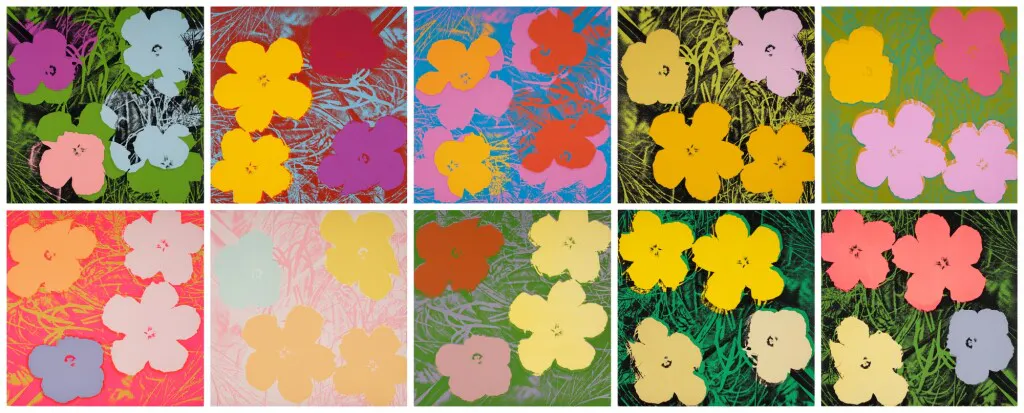
In 1970, Warhol produced his Flowers portfolio, which comprised of 10 prints, all with varying compositions. The works from the 1964 series were the first of Warhol's works that had no fixed upright format and could be installed in a variety of ways.
Related: Andy Warhol’s Influence on Fashion
Today, the Flowers series may seem another part of Warhol's oeuvre, but at the time it was a bold turn in the artist's explorations. He had previously worked on his Death and Disaster series, and the series prior to Flowers was the 13 Most Wanted Men, made up of mug shots from the 1962 NYPD booklet. The series was commissioned for the New York Art Fair, but was censored before it went on display. Twenty years after Flowers first went into print, Warhol returned to the subject with his Daisy series.
Want articles like this directly to your inbox? Subscribe to our free newsletter!
Today, his Flowers series are some of his most popular at auction and achieve million-dollar prices. The most expensive Flowers edition was sold for $15.8 million at Christie's in 2022, one of the largest of his Flowers (6.8 ft x 6.8 ft) and one of the originals shown at the Leo Castelli Gallery in 1964.


