I think of all the trees of the world, flying birds, their nests with eggs and abandoned nests. And in this moment I also become a tree, a bird, an egg in the nest and abandoned nest.
The decidedly innovative works of the Slovak artist Mária Bartuszová have an illusionistic and tactile force at the same time. They know how to be physical and ethereal at the same time. To get to know her better and admire her work live, you have until June 25, 2023 to enjoy the astonishing retrospective at the Tate Modern in London, which offers a complete overview of her vision and oeuvre.
Born on April 24, 1936 in Prague, Bartuszová was a member of the Concretist Club (Klub konkrétistů), an organization of Concrete Art. Her works, included in important museums and galleries such as the Center Pompidou in Paris and the Slovak National Gallery in Bratislava, embody human anxiety and fragility.
Attracted by spirituality, the artist loved Chinese and Japanese culture, Oriental philosophy and social psychology. Although she lived under a totalitarian regime and in a time when there were few opportunities for women, she was still able to leave a legacy of around 500 sculptures, many of which are born from simple curved shapes found in nature, such as seeds, drops of water, and egg shells. Contact with nature generally had a therapeutic effect on the sculptor, which she in turn tried to convey to the viewer through her works. Her Snow Melting cycle is famous, in which the artist inserted natural elements, such as stones and tree branches, into the mass of plaster in the process of solidification.
Related: The 10 Most Expensive Sculptures Sold at Auction
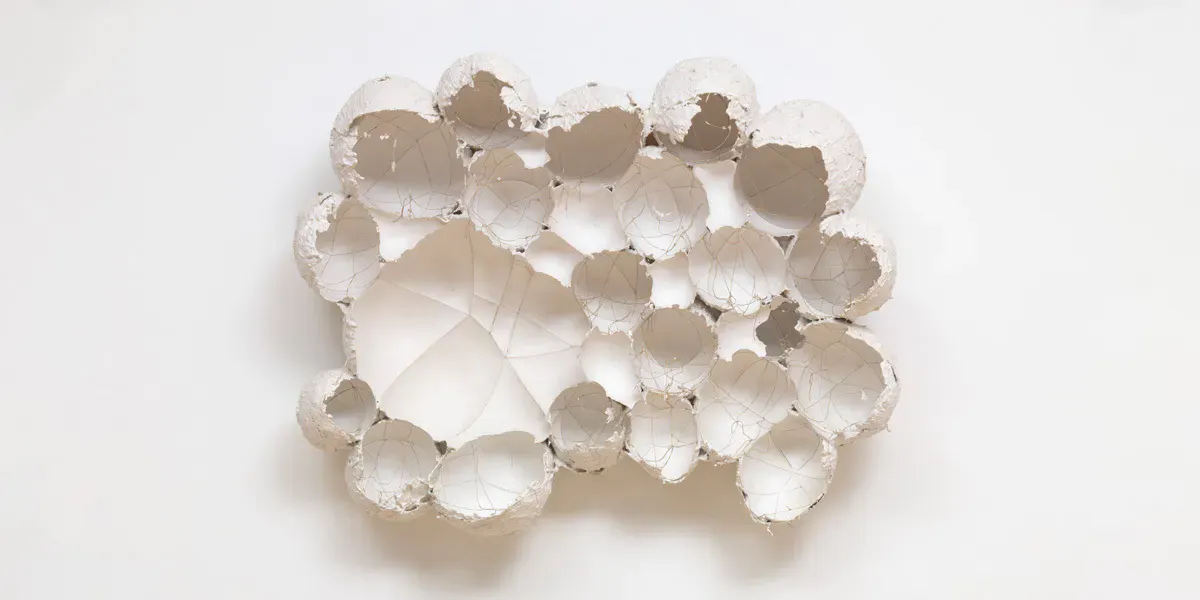
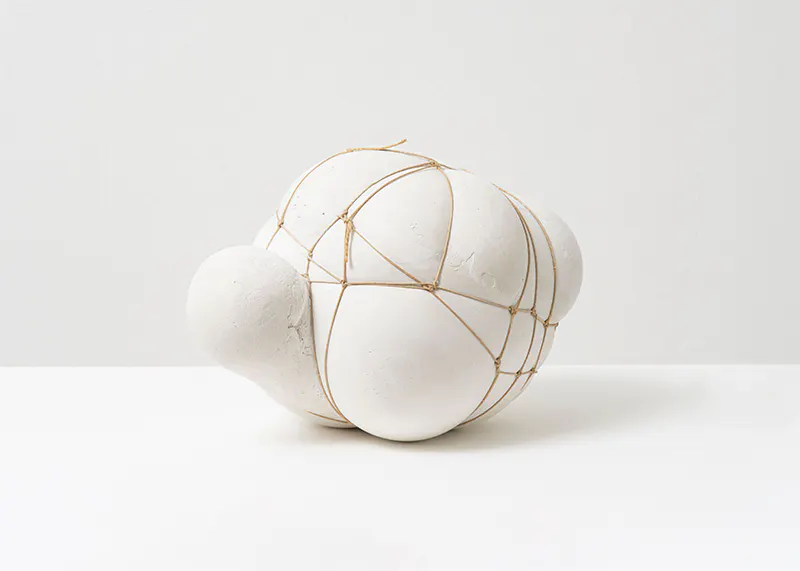
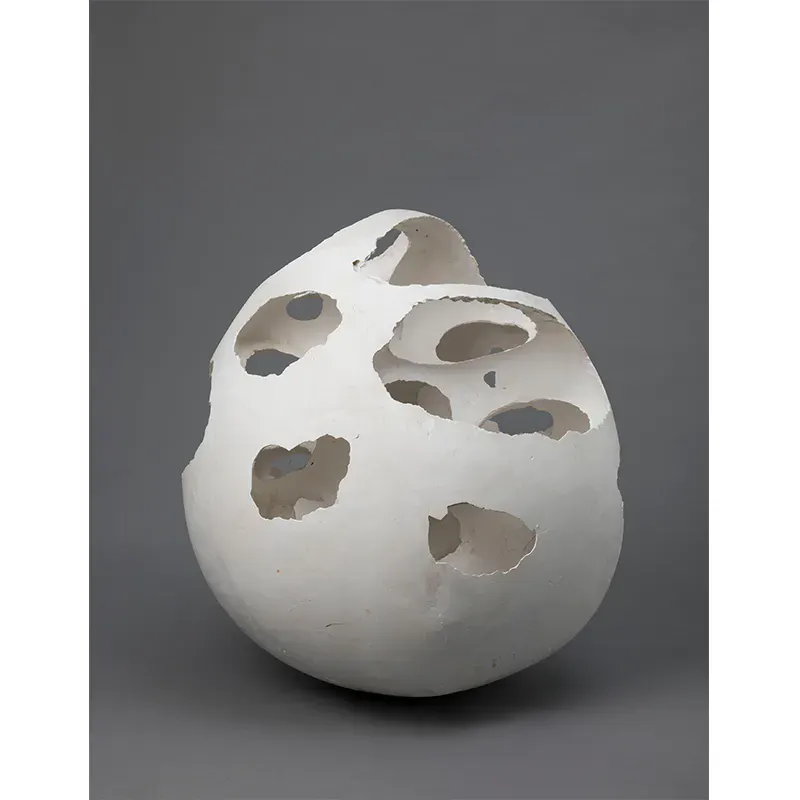
Although she has also experimented with bronze and aluminum, her works are mainly made of plaster, an easily moldable, delicate and impermanent material. The result is works imbued with feelings of fragility, transience and incompleteness, which seems to imitate the ephemeral condition of human existence.
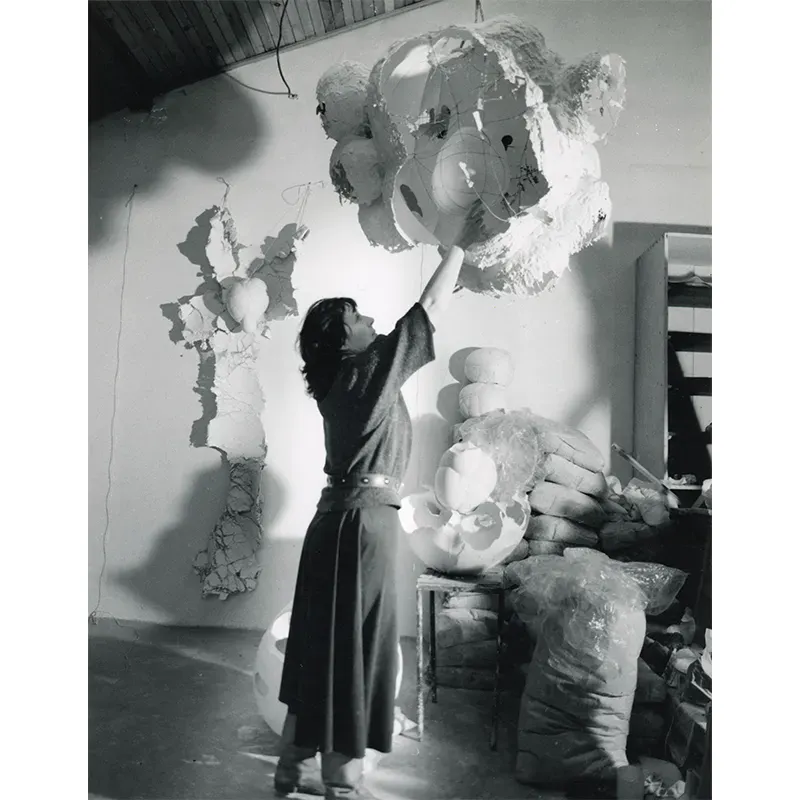
Bartuszová loved curved shapes, in her opinion they were "organic," capable of giving a sense of warmth to the touch, similar to the sensation of a caress or a hug. She was also interested in exploring the relationships between objects and surrounding spaces. She herself said, in relation to her art, "I think of all the trees of the world, flying birds, their nests with eggs and abandoned nests. And in this moment I also become a tree, a bird, an egg in the nest and abandoned nest."
Related: When Art is... Curvy
In the early 1960s, while playing ball with her young daughter, she had a moment of inspiration that prompted her to use rubber balloons in conjunction with the force of gravity to create completely new, organic, irregular and natural shapes. This technique was called "gravistimulation" and represents a key moment in her creative experience.
Starting in the 1980s, the work of the Slovak artist was instead dominated by the use of the "pneumatic modeling" technique. This consisted of blowing air into the balloons and then pouring chalk on their surface. This created organic, ovoid shapes, like hollowed out eggs and shells, which the artist described as "a small void filled with a small infinite universe."
Related: Alberto Giacometti: Sculptor of Unbearable Lightness
Bartuszová's creations sometimes walk the line between sculpture and installation and lead the viewer to confront each piece in a sensorial way. They are often designed to be picked up and touched. Aware of the fact that in the visually impaired vision is replaced by an extremely enhanced sense of touch, Bartuszová sought to evoke emotional behaviors through her sculptures, also creating objects made up of several parts to touch and assemble like a puzzle. These objects were also used in an innovative way, in 1976 and 1983 for expressive workshops for blind and visually impaired children run by the artist together with the art historian Gabriel Kladek.
Want to receive news and articles like this by email? Sign up to our newsletter!
The artist appreciated and was inspired by some of the greats of the 20th century, including Constantin Brancusi for the perfection of form and philosophy of work, Alberto Giacometti for the sense of time and the transience of the human being, Giorgio De Chirico for the conception of temporal immobility and Lucio Fontana for the simplicity of the method and his elegant playfulness. All these characteristics can also be found in the works of Bartuszová, who in the biomorphism of her works achieves a relationship with nature that in some cases surpasses the style used by the masters.
This extraordinary artist did not receive the recognition she deserved during her lifetime. She died on December 22, 1996 in Košice, Slovakia. Today, however, also thanks to important exhibitions such as the one organized by London's Tate Modern, her creations are known and appreciated by an increasing number of people, are highly sought after by collectors and are present in the collections of major museums around the world .