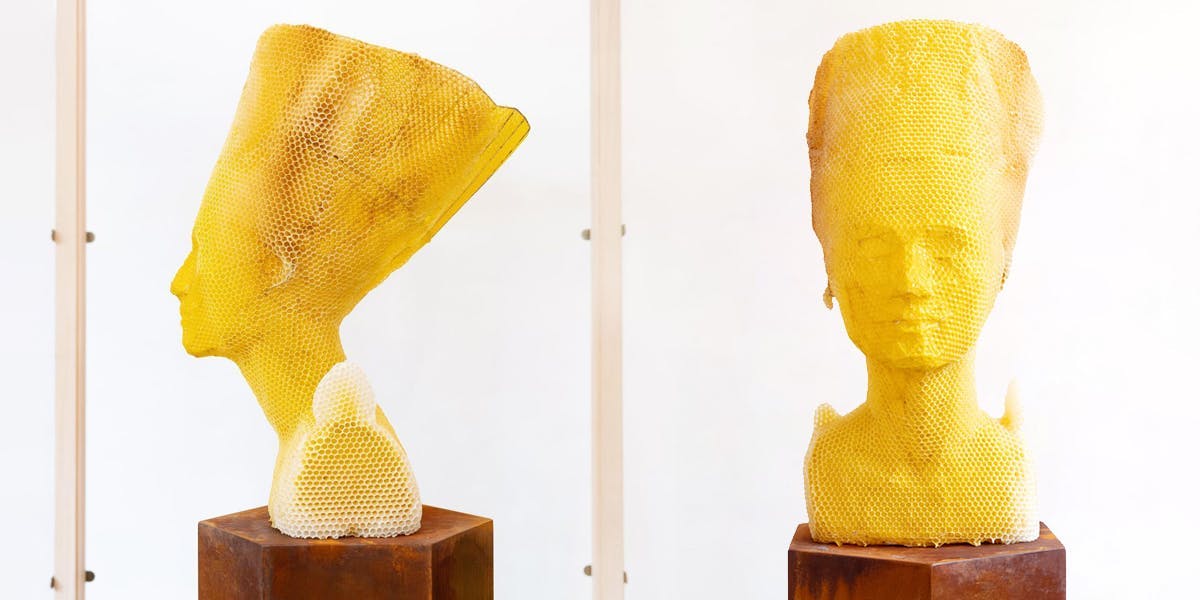
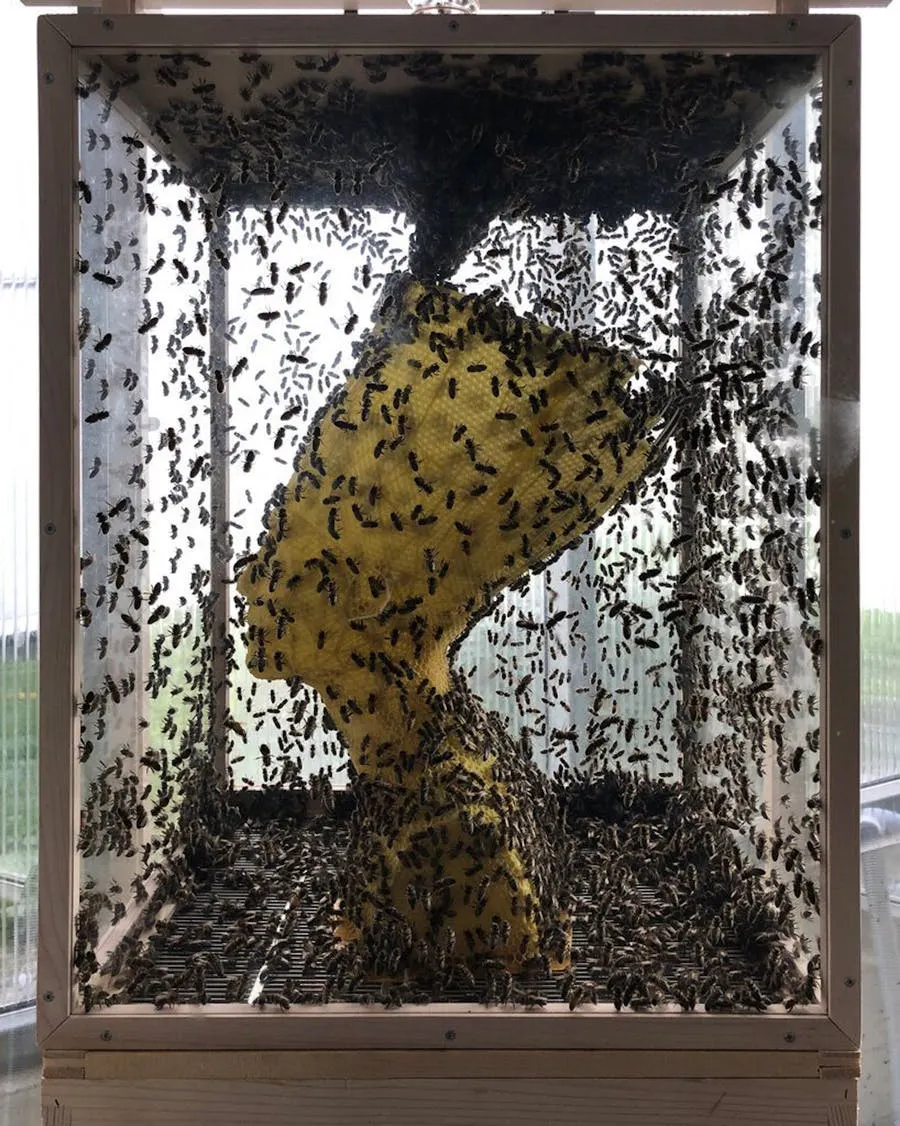
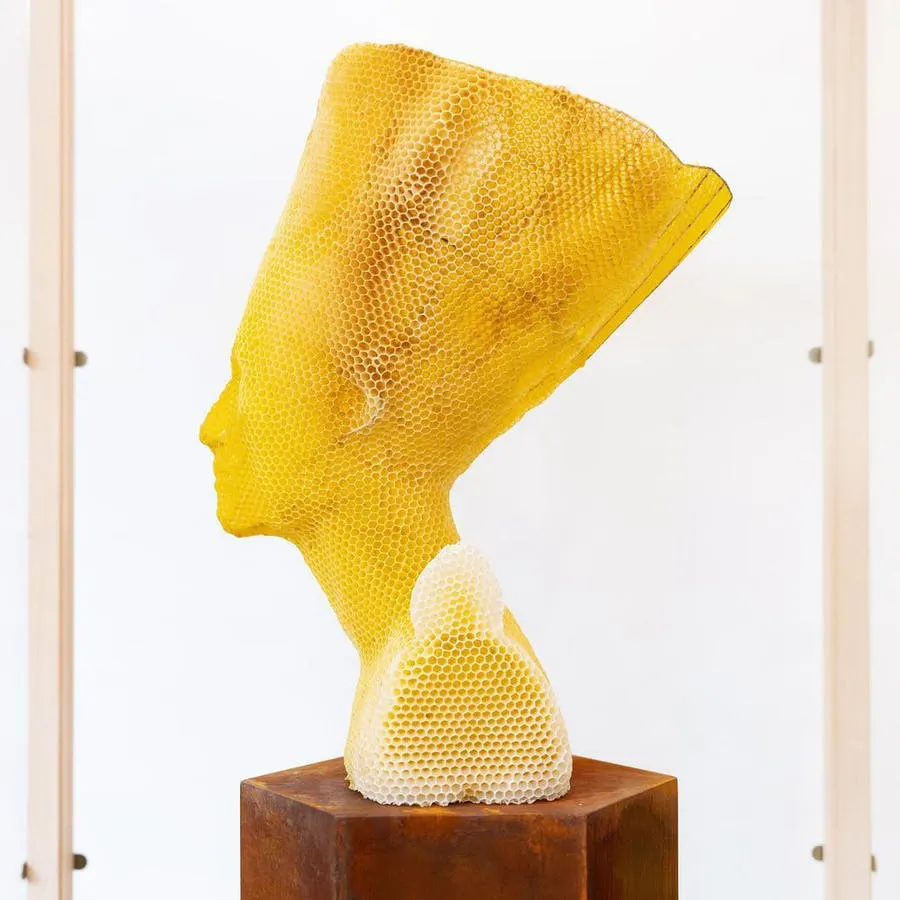
Eternity is the latest work by contemporary artist Tomáš Libertíny, a Slovakian visual artist who explores the beauty of nature and the questions inherent in the human mind. For this project, the artist “collaborated” with 60,000 bees over two years, inviting the insects to gradually build their wax nests around a 3D model of the bust of Queen Nefertiti.
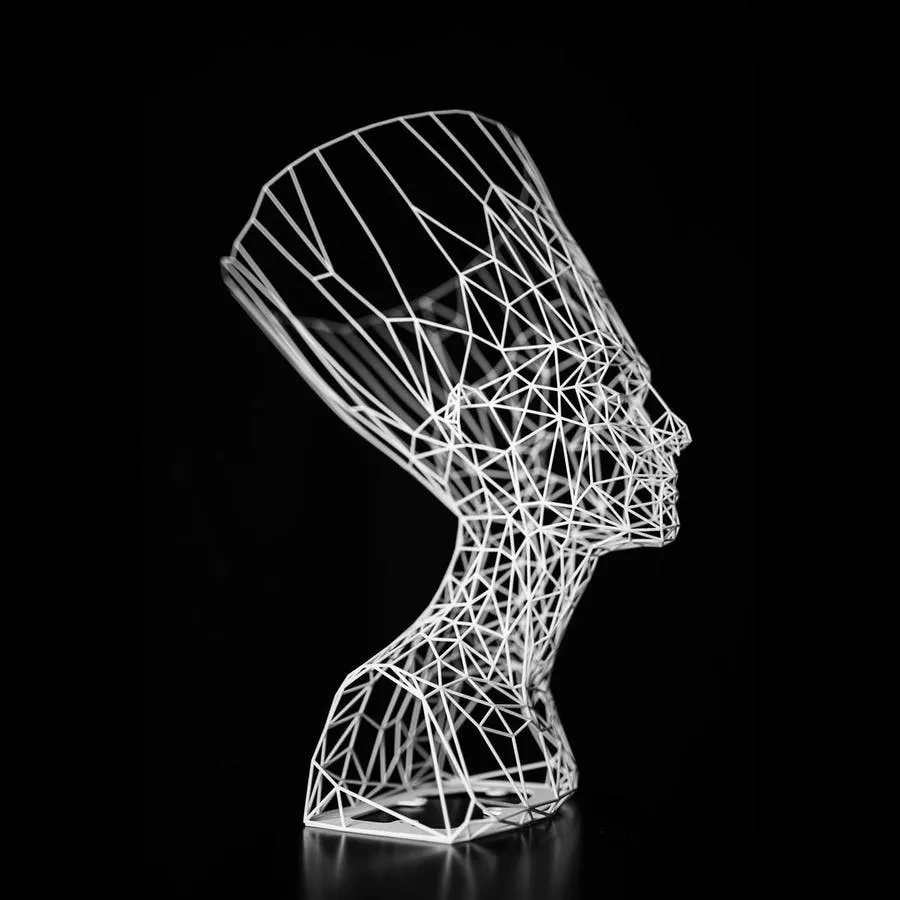
The bust is based on one found in the Neues Museum in Berlin, created in 1345 BC, from the Amarna period and considered then the archetype of female beauty. A supposed work of the sculptor Thoutmôsis, the head of Nefertiti is arguably the most famous representation of a female face in the world after the Mona Lisa.
Related: Travel Inside a Mysterious Ancient Egyptian Tomb
The Eternity project took two years to be finalized and the creation process was made public in 2019 in Rotterdam, thanks to a “living” installation showing the 60,000 workers buzzing around the model. Mostly covered with wax, the bust of the Egyptian sovereign was already recognizable. After some final touches, the work was revealed during Melancholia, a solo exhibition by Libertíny held at the Rademakers Gallery in Amsterdam in December 2020.
The project aims to pay homage to the sustainability of nature's work and to Nefertiti, one of the most powerful women in history. Besides her legendary beauty, Nefertiti exercised an important political and religious role during the Amarna period. She has also inspired more representations than her royal husband, Pharaoh Akhenaton. The two rulers were famous for abandoning the polytheism of ancient Egypt and introducing worship of Aten, the sun god, though without success.
Related: 10 Famous Sculptures in Art History
“The wax sculpture connects with the idea of 'mother nature',” the artist told The Calvert Journal. “I chose Nefertiti because I wanted to materialize a symbolic queen for the colony. There aren't many women in history who have both the fame and the face associated with her name." The work Eternity makes the link with "mother nature" more tangible, it testifies to her strength and timelessness.
By opting for such an atypical material, Libertíny hopes to show that it is possible to push the limits of creation. "Artists are usually only limited by their tools and skills, not by their imaginations."
The bust of the queen is part of a series of wax sculptures titled Made by Bees, on display during Melancholia, which also includes a depiction of Brutus, Caesar's assassin, and a Greek amphora.