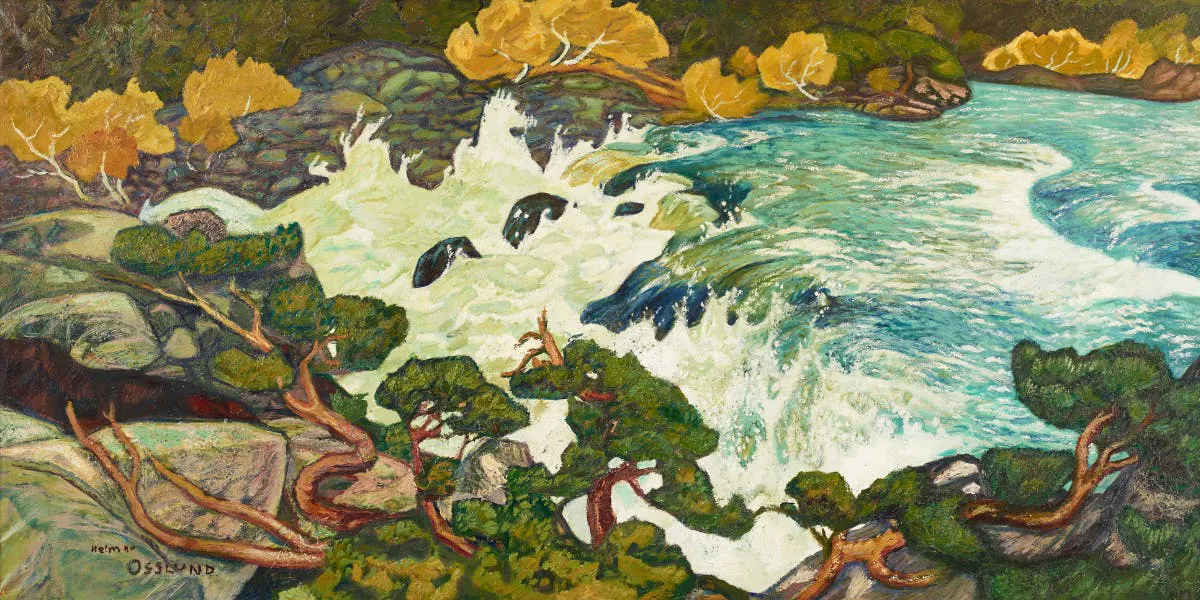
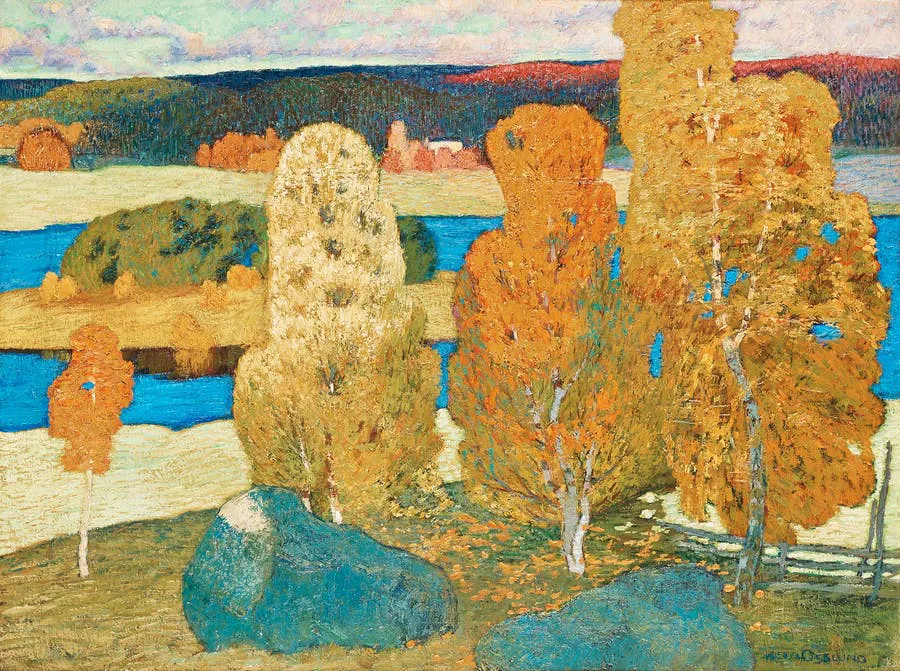
Sweden’s Helmer Osslund was active during a time when many artists worked with geographical motifs. Like Carl Larsson and Anders Zorn with Dalarna, Eugène Jansson Stockholm, and Carl Wilhelmson with Bohuslän and the West Coast, Osslund drew Sweden’s northern landscape in clear, colorful features.
Related: Josef Frank: The Definition of Modern Swedish Design
Helmer ‘Åslund’ was born in 1866 in Sweden in Tuna, Medelpad as the first son in an artistically placed family. His father, Daniel Åslund, worked as a surveyor, but painted and wrote fiction. Both Helmer's younger siblings worked creatively, his sister Frida as a writer and brother Elis as an artist. Despite this, the artistic path wasn’t self-evident for the young Helmer, who had plans to travel.
After completing his technical studies, Helmer moved to the United States and changed the spelling of surname from Åslund to Osslund. There, he turned parts for locomotives in Boston.
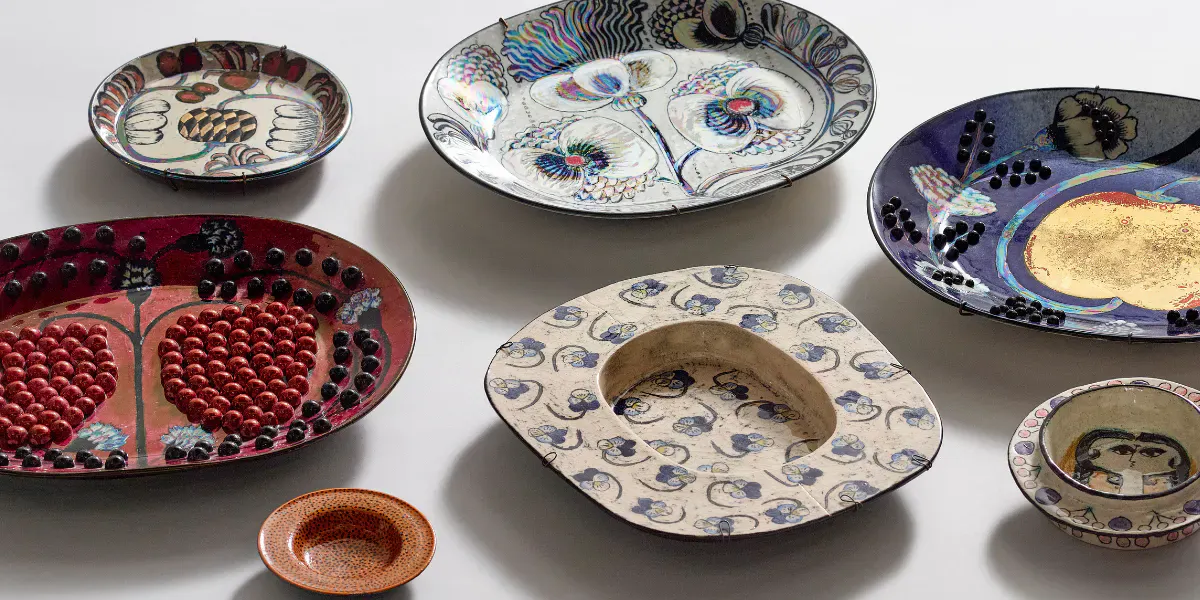
However, he didn’t stay long in the States, returning to Sweden after eleven months for further studies. In 1889, when he was 23 years old, he was employed at Gustavsberg's porcelain factory, where he worked as a decorator for four years. At Gustavsberg, Osslund painted everything from plates to bowls and pots.
Related: Collecting Like a King: Meissen Porcelain 101
In the autumn of 1894, Osslund had had enough. He had always been interested in old and new art, keeping up to date with museum visits and art literature, but hadn’t been able to indulge in art for financial reasons. He wanted to invest wholeheartedly in painting and resigned from Gustavsberg's porcelain factory. The next year, he travelled to Paris, with only SEK 800 (£65) in his pocket to study painting.
Related: The 12 Most Expensive Paintings Ever Auctioned
Osslund thus began his artistic education, studying for a period under the French post-impressionist Paul Gauguin at the Académie Colarossi. Although his period studying under Gauguin was short, Osslund was inspired by decorative painting and returned home full of a new creative spirit. He also travelled to Bonn, Rotterdam, Amsterdam and Scotland, where he painted both landscapes and portraits. In 1898, Osslund returned to Sweden, partly due to his limited finances, but also because as the artist discovered his own artistic design language, Norrland began to hold greater attraction.
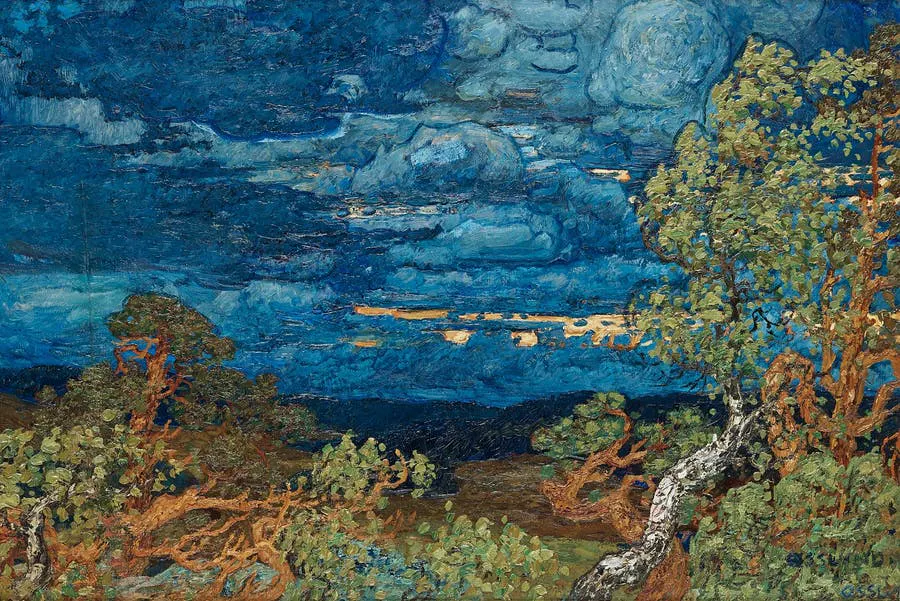
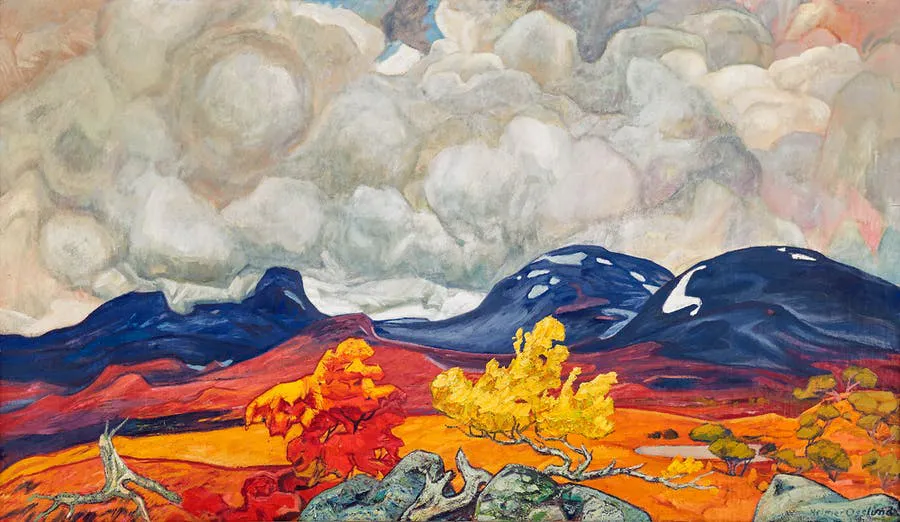
It was at the beginning of the twentieth century that Osslund seriously found his artistic place: he began to paint the northern wilderness expanses, with Lapland at the centre. The artist fell in love with the magnificent landscape with its wild rapids, colorful forests and massive mountains. His painting became more and more dynamic and Osslund set out on long walks in the wilderness with paints and greaseproof paper. Sometimes, the walks lasted for whole months which took the artist around Norrland, from Nordingrå in Ångermanland to Torneträsk in Lapland.
However, he didn’t spend much time in Jämtland, which he found ‘too arranged’. The Lapland landscape better suited his mood.
Related: 5 Paintings to Celebrate Autumn
During these wanderings, he painted almost exclusively on greaseproof paper, something he absorbed from his studies under Gauguin. The paper was easier to carry than heavy canvases and Osslund also thought that the gloss of the colors became clearer.
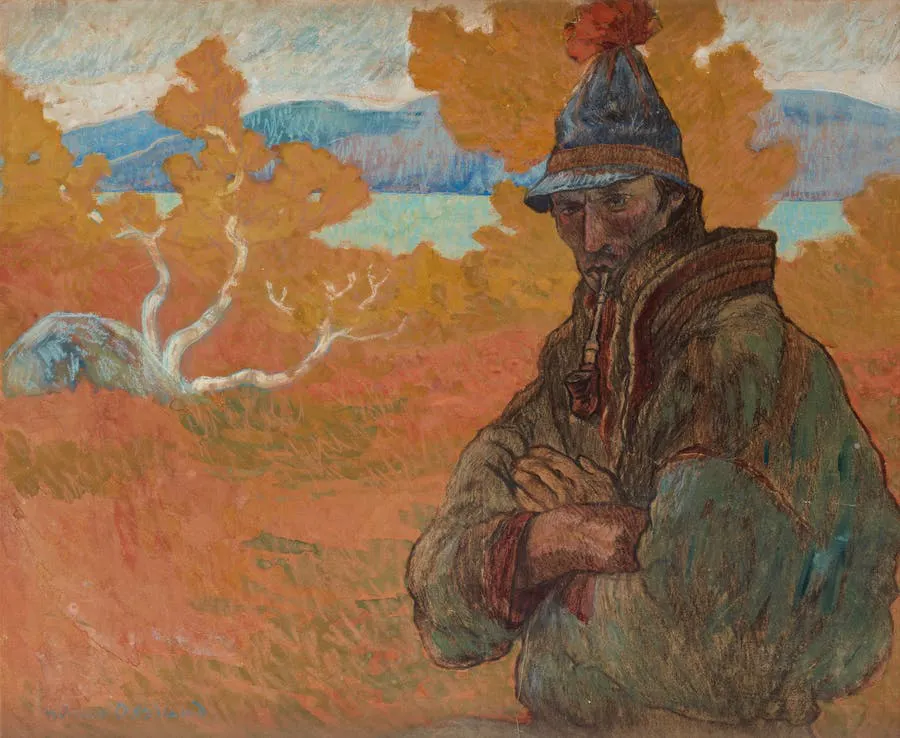
In 1905, Osslund travelled for the first time to Abisko and Lapporten, from which he picked up some of his most magnificent motifs. Osslund also influenced the young Leander Engström, who, on one occasion, accompanied him on a painting walk. Engström, in turn, completed similar works of art as Osslund’s, with the northern wilderness as his main motive.
Related: Hans Wegner: Master of Nordic Design
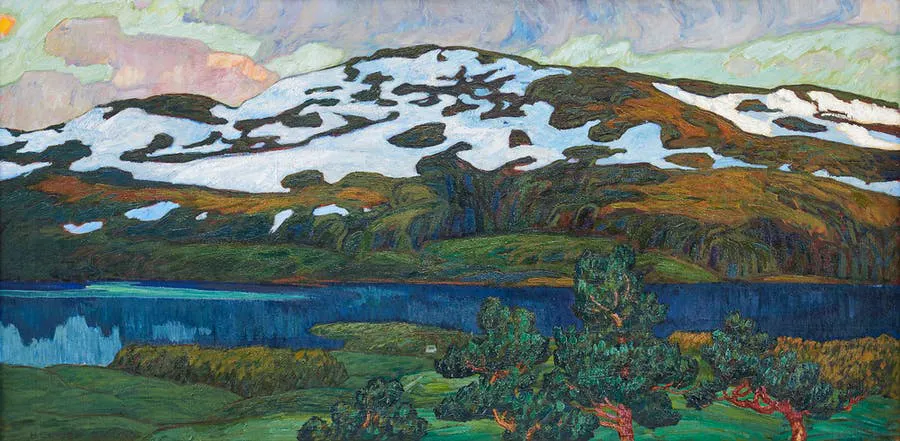
Osslund painted drying masses of clouds, blue ridges, rapids and rivers, glaciers, thin birches and distorted pines, in increasingly monumental, colorful painting.
The year of 1909 was Osslund's real breakthrough, as this is when he organized an exhibition at the Artists' House in Stockholm. The reviews were mixed – some didn’t appreciate what they called the ‘decorative element’ in Osslund's painting – while others called the painting atmospheric, poetic, personal and authentic.
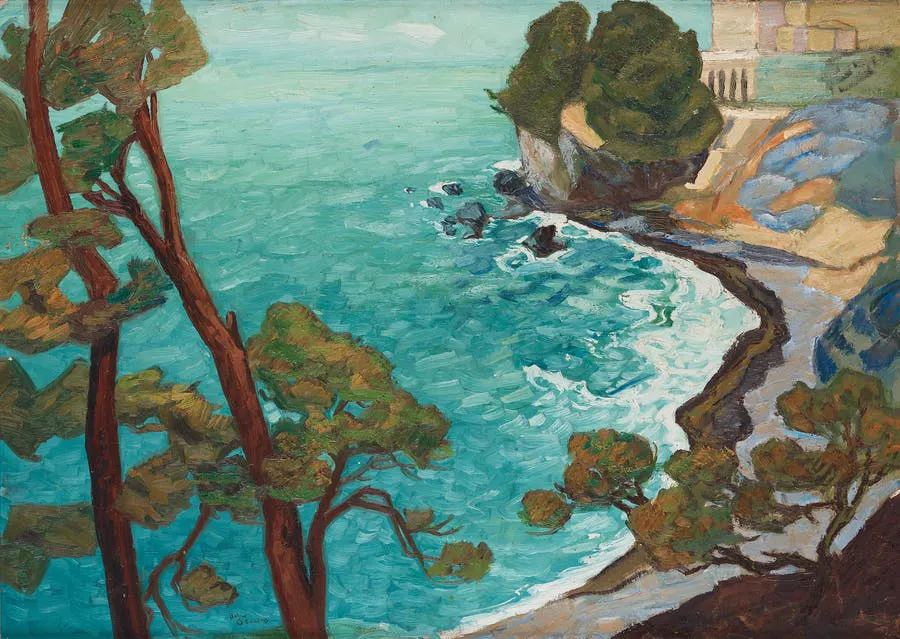
Yet his artistry wasn’t limited to the northern expanses. When the economy eventually allowed it, after the success of the exhibition, Osslund travelled abroad every six months and painted again in countries such as Germany, France, England and Belgium, and also in Italy, Spain, Tunisia and Algeria.
Related: The Art of Plein Air Painting
In 1914, Osslund was awarded the bronze medal at the Baltic exhibition in Stockholm and was commissioned to paint a large mural for the Vasaskolan school auditorium (then called Gävle högre allmänna läroverk). The mural was named Höstafton at Stora Sjöfallet and is still there today.
After being seriously ill with Parkinson's disease for many years, Osslund passed away in 1938 in Stockholm. Earlier that same year, an extensive retrospective exhibition of his work had been held at the Academy of Fine Arts in Stockholm, where his artwork perhaps for the first time received the recognition it deserved. The exhibition comprised over three-hundred works and, despite his illness, Osslund was able to attend.
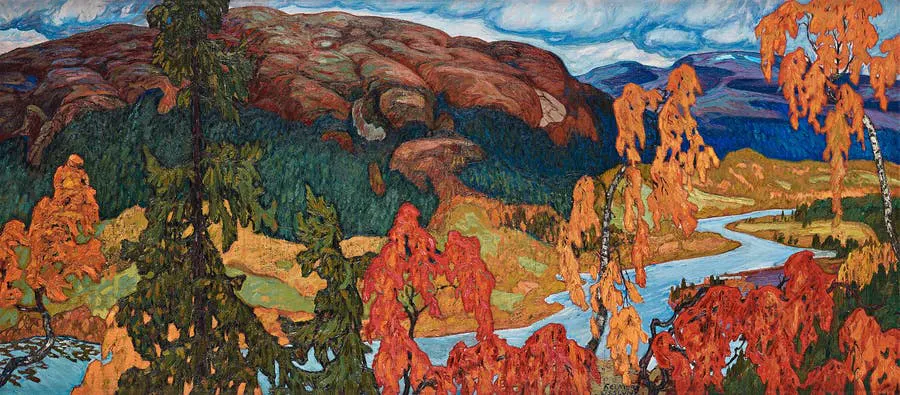
Today, Osslund's work can sell for hundreds of thousands and he is an obvious part of the Swedish artistic canon. However, this wasn’t the case during Osslund's own life – for most of his life, the artist lived on very limited means. In the summer of 2020, Osslund's painting Mullfjället from 1913 was sold at Bukowski's for SEK 7,300,000, equivalent to $773,800.