
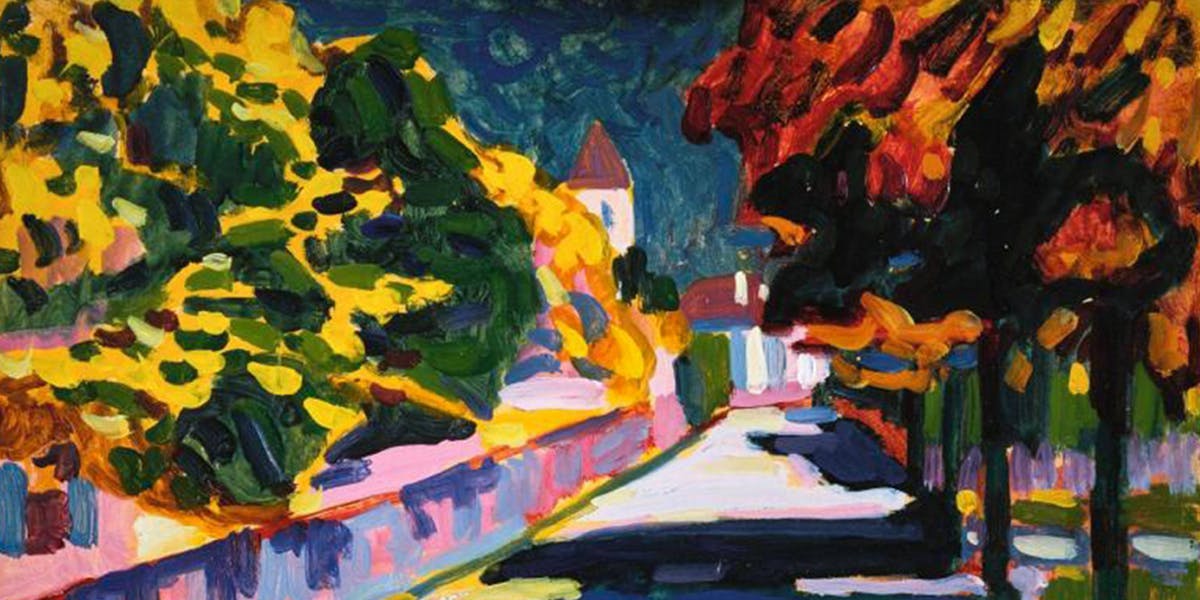
Life starts all over again when it gets crisp in the fall
The fall season is marked by cooling temperatures, vibrant trees, pumpkin and apple picking and back-to-school routines. In honor of this beloved season, here are five paintings that summarize the peace and beauty of the fall.
Claude Monet, Autumn on the Seine, Argenteuil, 1873
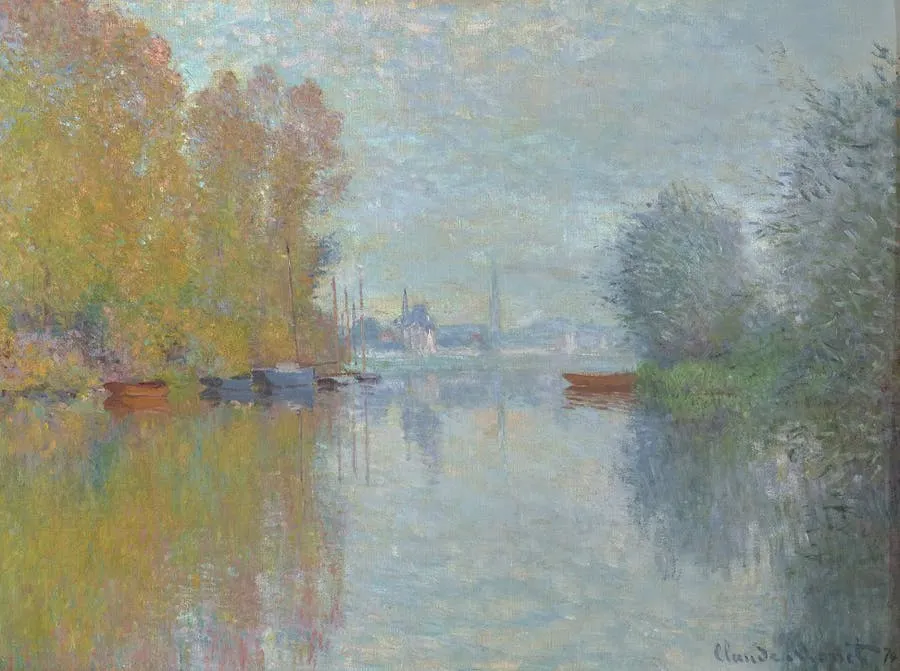
The point of view suggests that Claude Monet painted on water, most likely thanks to this famous workshop boat that he has often depicted in his paintings. The brilliant colors are reflected in such a level of detail that it is almost difficult to perceive the bank of the Seine. In the distance is the Château Michelet, built the year of Monet's arrival in Argenteuil, in 1871. On the left of the composition, the trees are still clad in golden leaves, while on the right the colors are already evidently cold and more wintery ... After all, didn't Henri Toulouse-Lautrec say that “autumn is the spring of winter?"
Related: The First Known Works by 10 Famous Artists
Vincent Van Gogh, Avenue of Poplars in Autumn, 1884

This painting was made while Vincent Van Gogh was residing in Nuenen in the Netherlands and in October 1884 described the painting to his brother Theo in a letter: “The last thing I did is a fairly large study of a poplar alley with yellow autumn leaves, the fading light and, here and there, the sparkling dots of fallen leaves on the ground, contrasting with the shadows of the slender trees. At the end of the alley is a small chalet, beyond which you can see the blue sky through the autumn leaves."
Gustav Klimt, Birch Forest in Autumn (Birkenwald I), 1903
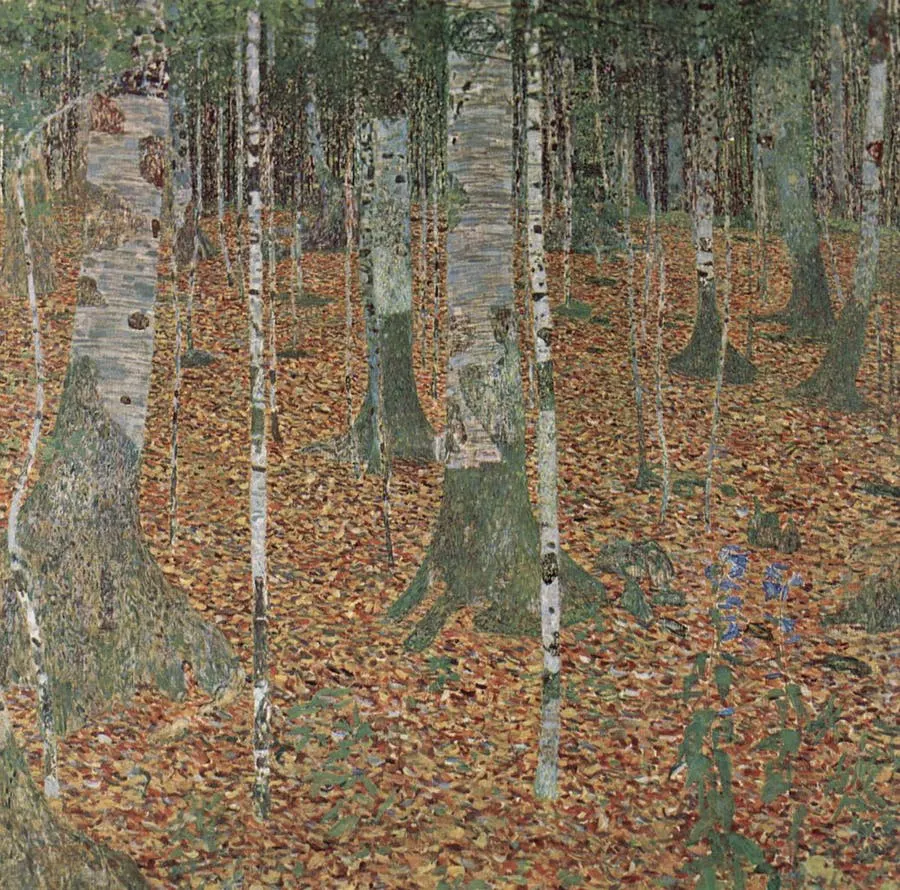
For Gustav Klimt, the blue sky has no place in autumn. In Birch Forest in Autumn, the silvery trunks rise from a carpet of glowing leaves, completely absorbing the viewer in this undergrowth which, as very often in Klimt's landscapes, is not crossed by any animal or person. Time seems to have stopped, and the atmosphere is almost claustrophobic, as Klimt invites us to contemplate the forest as he himself has contemplated it. Yes, the artist is the one who, alone, knows how to read the mysteries of nature and can offer an image of them to the viewer.
Related: The 12 Most Expensive Paintings Ever Auctioned
Konrad Alexander Müller-Kurzwelly, Bachlauf im Herbstwald , circa 1914
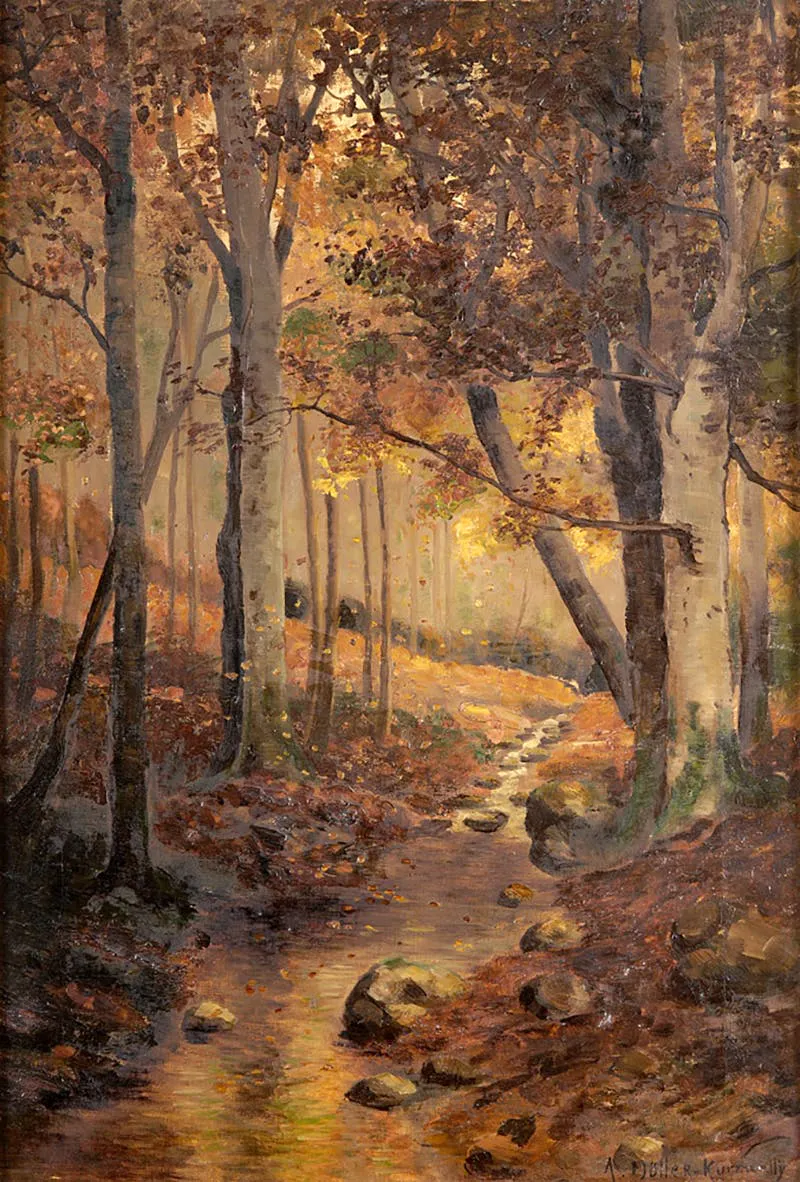
"And how I love O season how I love your rumbling The falling fruits that no one gathers The wind the forest that are tumbling All their tears in autumn leaf by leaf"
What image could better suit this excerpt from Autumn Ill (Apollinaire, Alcools, 1913) than this painting by Konrad Alexander Müller-Kurzwelly? In Bachlauf im Waldinneren (Stream in the forest), the gold leaves stand out from the trees, and twirl, sparkle and end their course in the stream. It is all the magic of autumn that is captured by this German naturalist painter of the early 20th century, most of whose work was unfortunately destroyed during the Second World War.
Wassily Kandinsky, Autumn in Bavaria, 1908
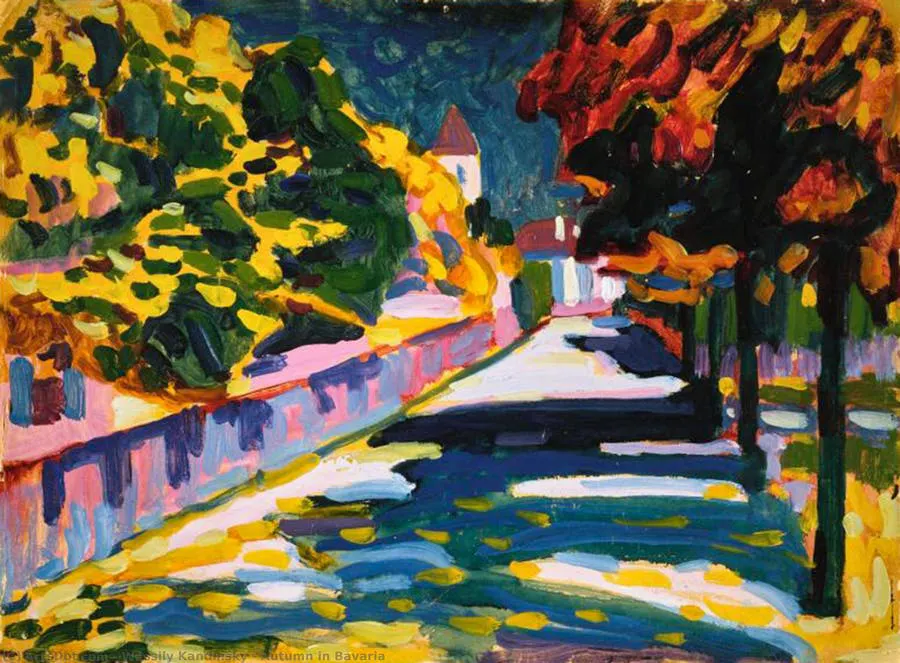
Red, orange, yellow, pink, purple ... Wassily Kandinsky, through his characteristic lively palette, offers us his re-energized version of autumn. His colorful, sun-dappled autumn scene reflects a departure from the more peaceful and subdued landscapes above. The yellow spots that bud on the Bavarian street are there to remind you that, as Camus so aptly put it, “autumn is a second spring where every leaf is a flower."
Find more articles on the history of art on Barnebys Magazine!