Many children's first foray into art is a hand-made card for a parent's birthday, which is of course admired and celebrated – because everything is beautiful if looked at with love.
For the great masters of art history, too, there was a time when they first picked up a pen or brush to try to capture what they saw, and this often showed a peek into their illustrious careers to come. We have rounded up some of these early works by artistic legends, from Claude Monet to Pablo Picasso.
Though these are not necessarily the very first artworks by an artist, they are the earliest surviving ones.
10. Leonardo da Vinci (1452-1519), Landscape for Santa Maria Della Neve, 1473
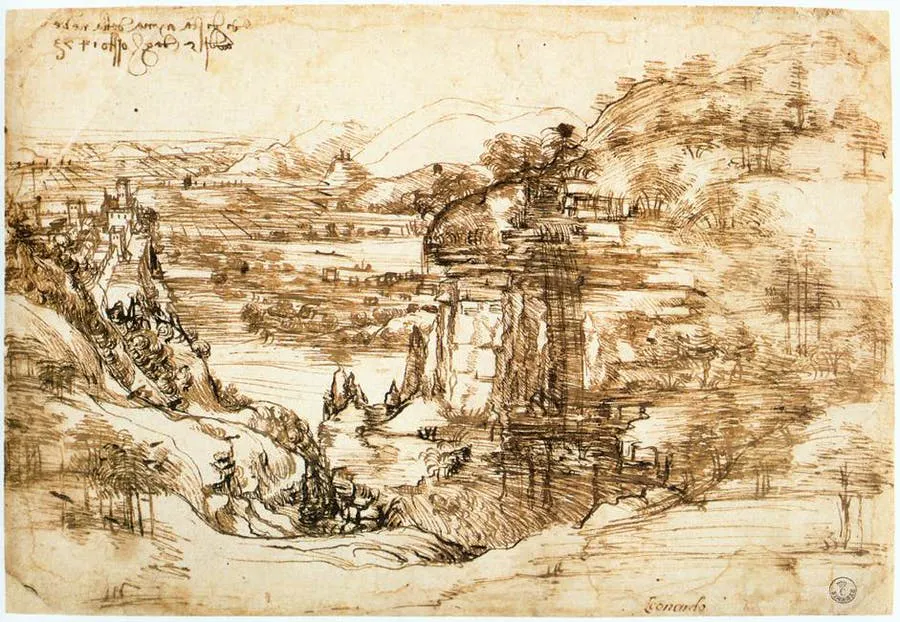
Leonardo da Vinci's earliest surviving work is around 550 years old. The drawing, executed in pencil and ink, shows the valley of the Arno River in great detail and the Montelupo Castle in Tuscany, not far from Leonardo's eponymous hometown Vinci.
Thanks to the date on the sheet, this drawing was made on 5 August 1473 when Leonardo was 21 years old and had been a student of the Florentine sculptor and painter Andrea del Verrocchio for four years. At that time he repeatedly worked on sections or individual figures in his master's paintings in his workshop. However, the sketch is the first work that da Vinci carried out on his own and that has survived to this day.
In 2018, however, a majolica tile was presented to the public, which dates back to 1471 and is said to represent an even earlier work by Leonardo da Vinci.
9. Albrecht Dürer (1471-1528), Self-Portrait, 1484
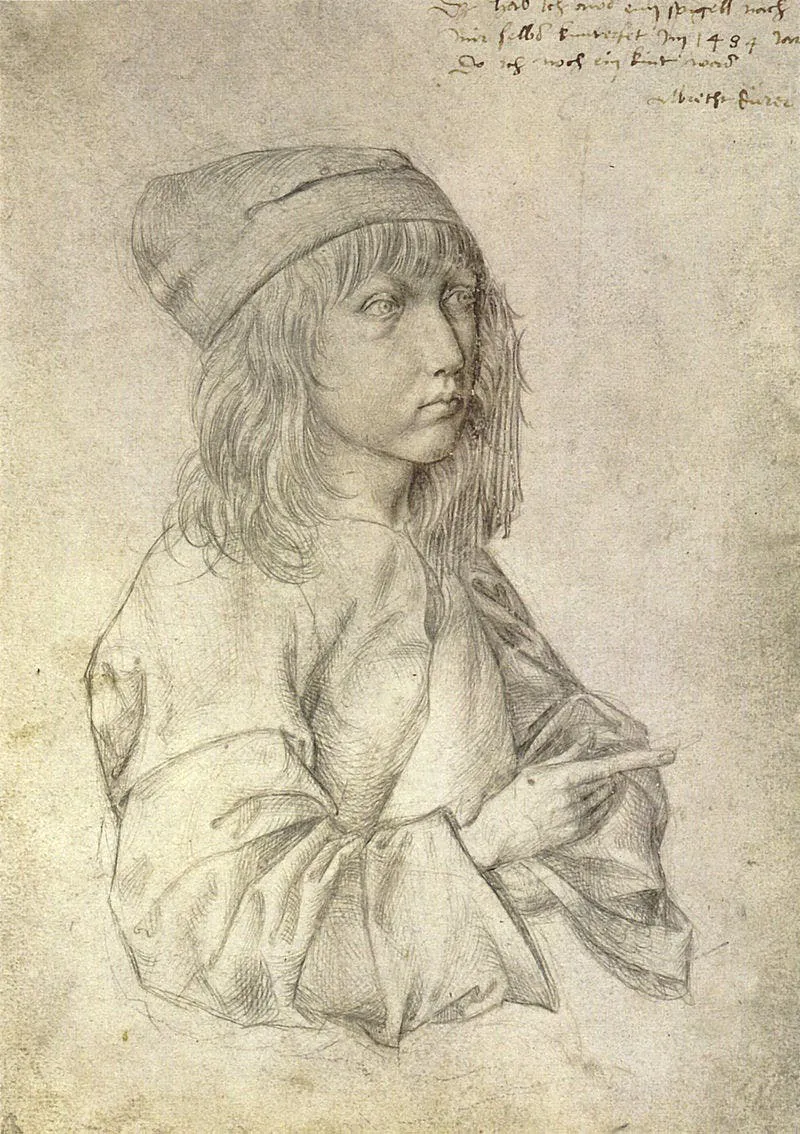
One can confidently speak of youthful genius when it comes to Albrecht Dürer's first (of many) self-portraits. It is a silver pen drawing that Albrecht, then thirteen, made in 1484 on white primed paper.
Related: Is This Albrecht Dürer's Last Existing Fresco?
At that time, Albrecht Dürer was an apprentice in his father's goldsmith's workshop in Nuremberg. He was supposed to follow in the footsteps of his father, but perhaps it was this outstanding self-portrait and the Madonna with two Angels completed the following year that prompted Albrecht Dürer Senior to release his son from his own workshop and put him in the studio of the painter and woodcut master Michael Wolgemut.
8. Artemisia Gentileschi (1593-1654), Susanna and the Elders, 1610
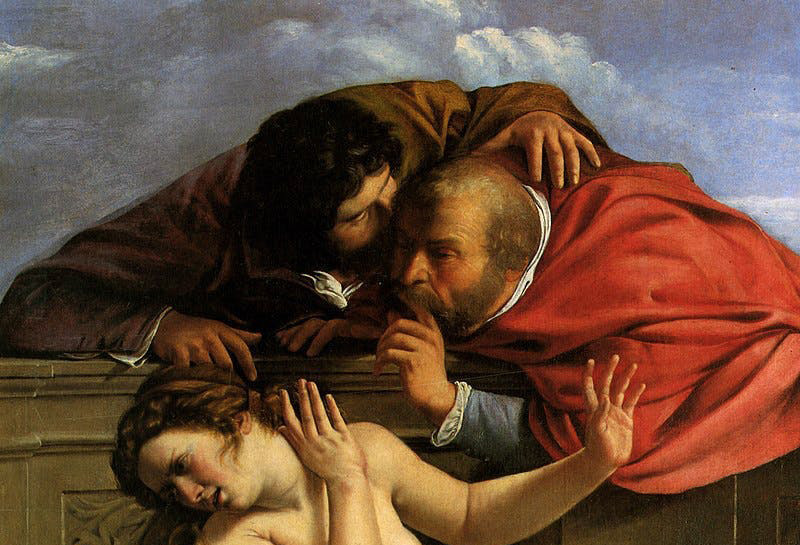
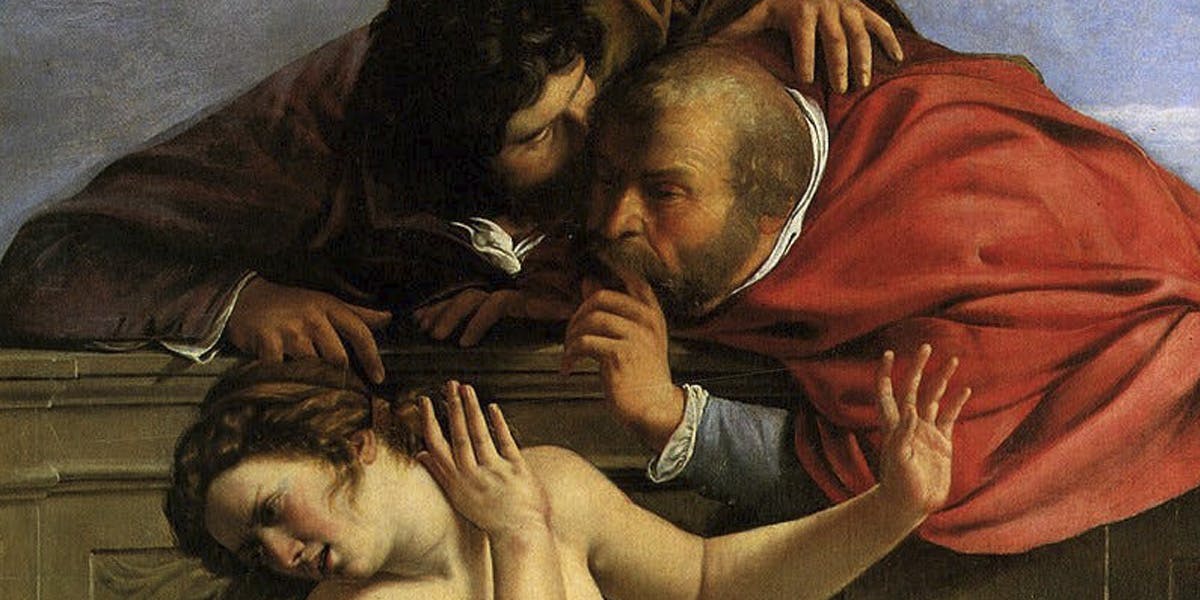
The earliest known work by Artemisia Gentileschi shows the oppression of beautiful Susanna by two old men, a scene from the Old Testament book of Daniel that was popular with painters in the Baroque era. After a long period of uncertainty, the date on the picture was determined by an X-ray examination to be 1610.
Related: A Record-breaking Day for Artemisia Gentileschi
Artemisia Gentileschi was then 17 years old and worked as a pupil of her father, the painter Orazio Gentileschi, in his workshop in Rome. In 1611, the painter Agostino Tassi raped Artemisia in his studio where Artemisia had been sent by her father to perfect her technique. After the sexual assault, Artemisia painted works like Judith and Holofernes, depicting strong female figures.
Even though Susanna and the Elders had been painted before the rape, Artemisia was already familiar with the curious, and at times lascivious, advances from customers and colleagues in her father's workshop.
7. Claude Monet (1840-1926), Vue prize à Rouelles, 1858
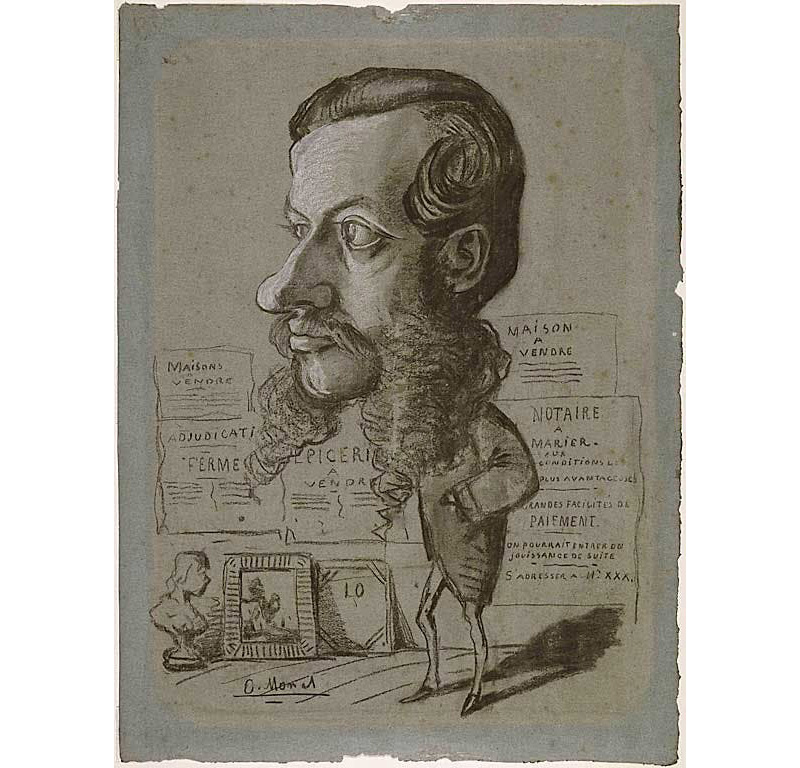
When the young Claude Monet was growing up in Le Havre, he drew caricatures of his teachers and classmates at school.
His drawing teacher at school, painter Jacques-François Ochard, saw his talent and organized commissions for his caricatures. Monet signed them with O. Monet, as his full name was Oscar-Claude Monet.
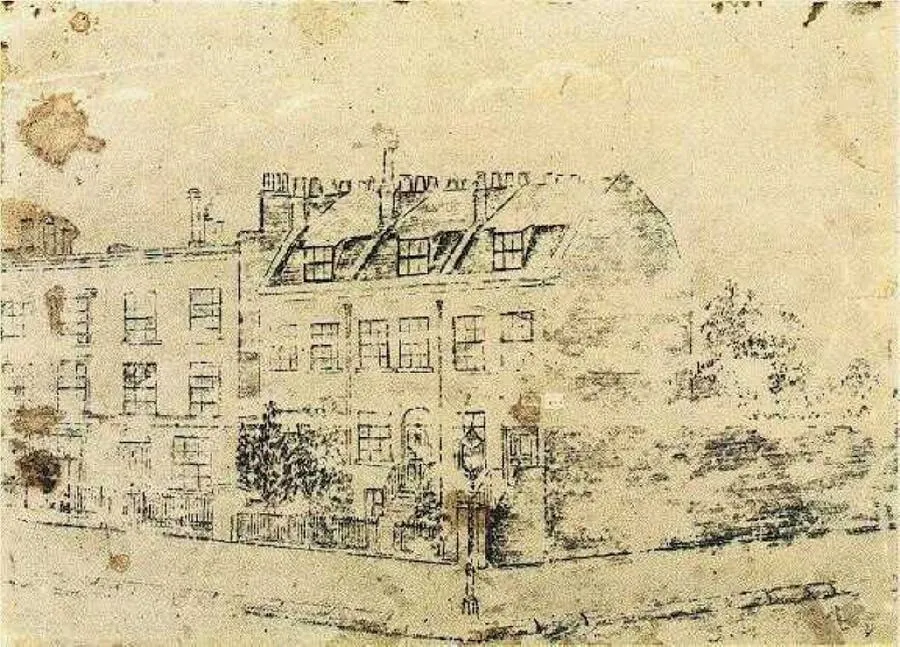
6. Vincent van Gogh (1853-1890), 87 Hackford Road, 1873/74
Vincent van Gogh is known to be one of the 'late bloomers' among artists. It wasn't until 1880 that he decided to become a painter, when he was already 27 years old. Ten extremely productive and innovative artistic years followed, which ended abruptly in 1890 when the tortured artist committed suicide.
If 1880 was the official beginning of Vincent van Gogh's artistic career, he did seem to have experimented in the field beforehand, as evidenced by a drawing that was found in a house on Hackford Road in London.
But how did it get there? In fact, van Gogh's first career was in art dealing. At the age of 16, he began working in the international art trade with his uncle, a job that led him to London in 1873, where he moved into a flat on Hackford Road and presumably drew a sketch of his home.
5. Pablo Picasso (1881-1973), Picador, 1889/90
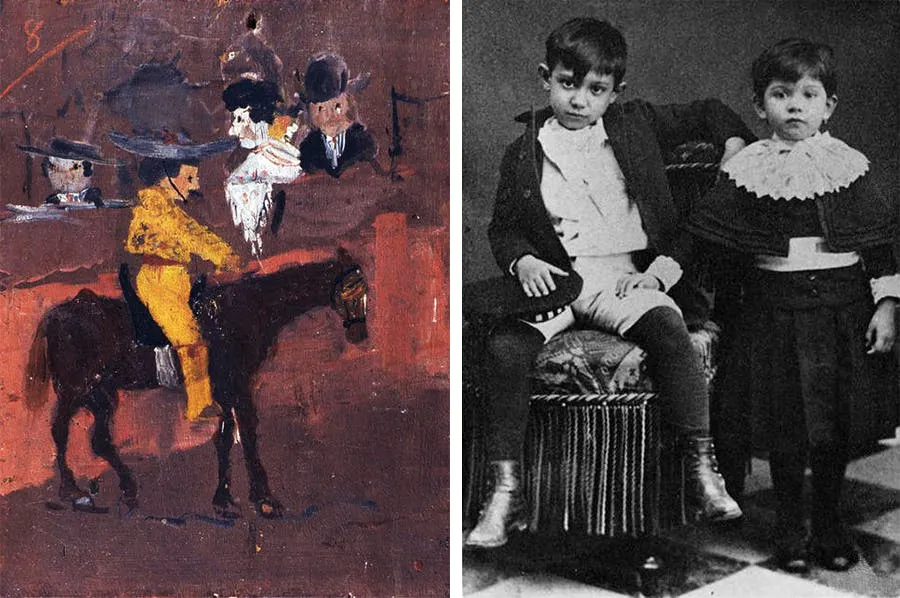
Pablo Picasso grew up with two younger sisters in Málaga, Andalusia, where he started drawing and painting at the tender age of three. When he was eight years old, his father, the painter and art teacher José Ruiz Blasco, took him to a corrida, a bull fight. The boy was so impressed by the event that he made a small oil painting at home depicting a Picador, a type of bullfighter.
Related: How Cubism Changed the World
The subject of bullfighting kept Picasso busy throughout his career. His 26 aquatints, which he made in 1956 as an illustration of a new edition of the textbook for matadors, La Tauromaquia, created in 1796, are particularly well known.
4. Edward Hopper (1881-1967), Little Boy Looking at the Sea, 1891
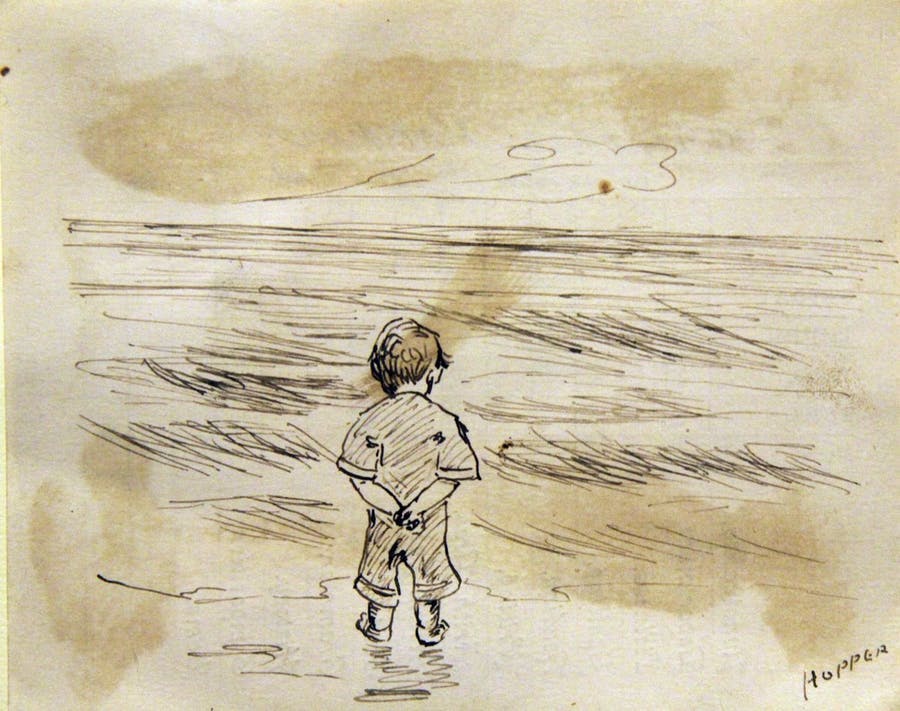
Melancholy, loneliness and perhaps the longing for faraway lands seems to be expressed in this drawing of a little boy by the sea, which ten-year-old Edward Hopper made in 1891.
Edward Hopper grew up in Nyack, New York. From the window of his room he could see the Hudson River at the end of the street. He was particularly taken with the boats there and became an enthusiastic sailor himself. Today, though he is known primarily for his urban pictures, Hopper remained true to the maritime theme throughout his life. The surroundings of his summer house on Cape Cod, Massachusetts, were perfect for artistic inspiration.
3. Paul Klee (1879-1940), Lady with a Parasol, 1883-85
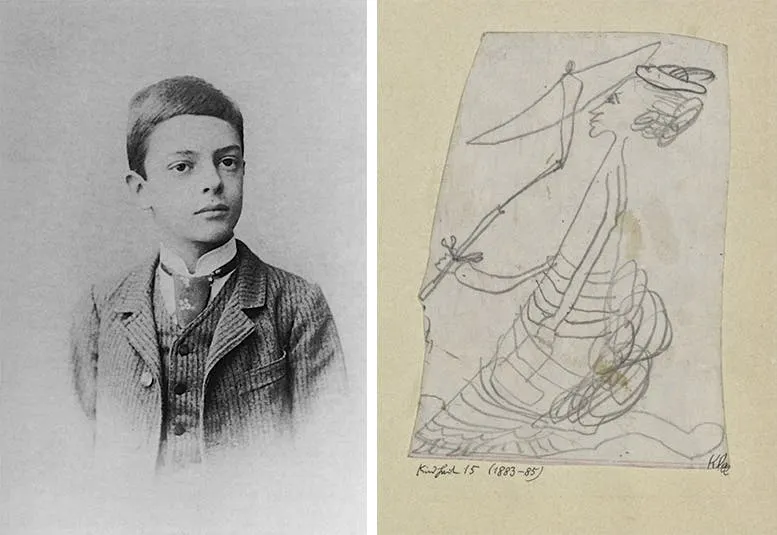
The drawing of an elegant lady with a parasol by Paul Klee was made when the future Expressionist was only between four and six years old. In those years, young Klee sketched his surroundings in countless drawings, and a career as a painter seemed imminent.
Related: 100 Years of Bauhaus
However, his parents had other plans for him. Both were musicians, his father Hans Wilhelm worked as a music teacher, his mother Ida was a singer, and they also had a musical career in mind for their son. Klee received violin lessons and mastered the string instrument at the age of ten and played throughout his life. Nevertheless, he was more drawn to painting, and went to Munich after graduating from high school to study art.
2. Georgia O'Keeffe (1887-1986), Untitled, 1901/02
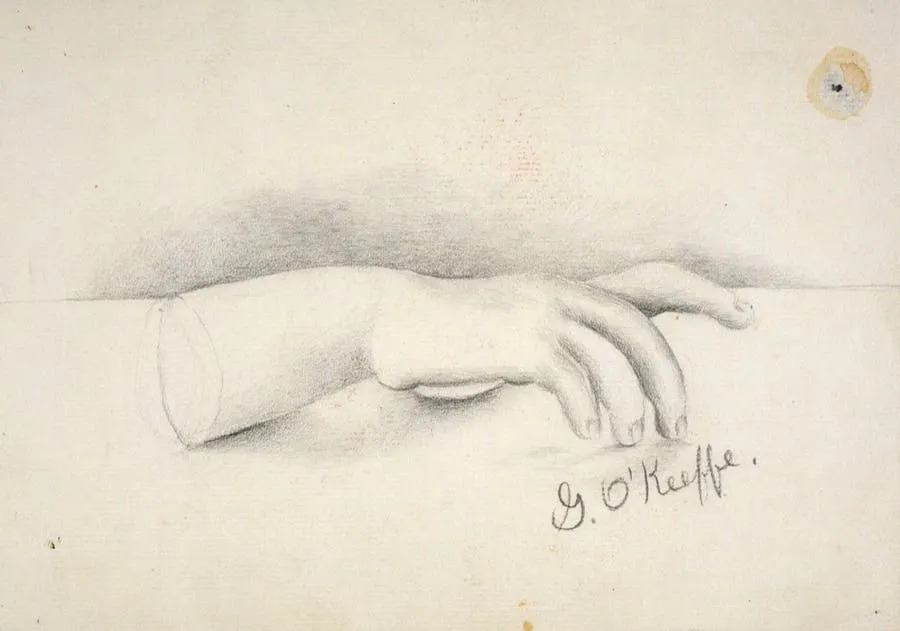
In the course of his long relationship and marriage to Georgia O'Keeffe, photographer Alfred Stieglitz was fascinated by the beautiful hands of the painter, which he repeatedly staged in his pictures. Interestingly, a hand is the subject of O'Keefe's earliest surviving drawing.
Related: The 15 Most Expensive Female Artists
The drawing was made at the Sacred Heart Academy in Madison, Wisconsin, which 14-year-old Georgia O'Keeffe attended at the time. Drawing lessons were also on the curriculum of the Catholic school and the first task was to draw a doll's hand. For her first attempt, the future artist received such severe criticism that she worked tirelessly on the second version. Her teacher was so enthusiastic about this drawing that he wrote O'Keeffe's name on it and stuck the sheet on the wall of the classroom.
1. Salvador Dalí (1904-1989), Landscape near Figueres, 1910
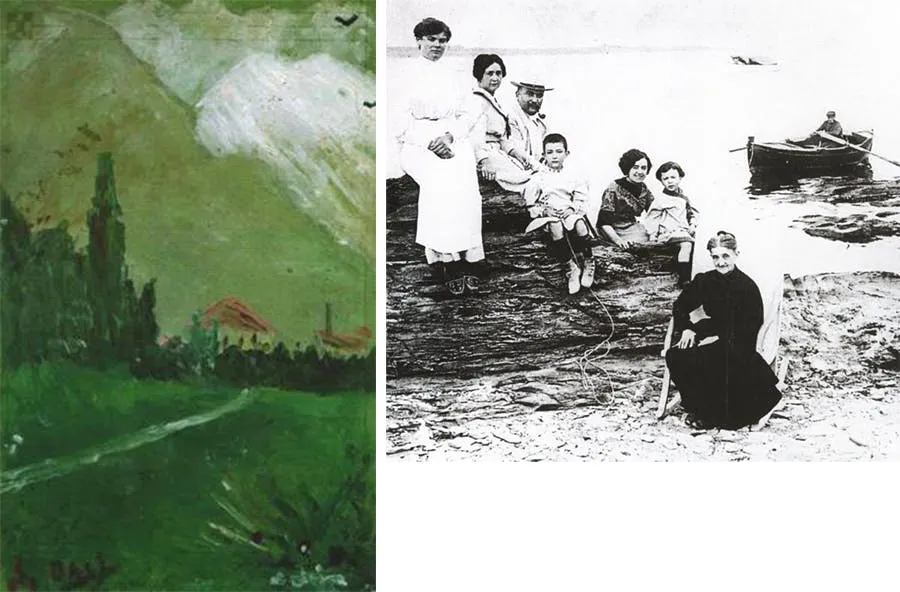
The future master of surrealism Salvador Dalí was born in Figueres, Catalonia. He knew from a young age that he wanted to do great things: "I wanted to be a cook at the age of six. I wanted to be Napoleon when I was seven," he confessed in his autobiography.
In addition to his culinary ambitions, Dalí was also artistically active at the age of six, as evidenced by his first oil painting showing the landscape near his hometown. At that time he was inspired by the Impressionists and Cézanne's work.