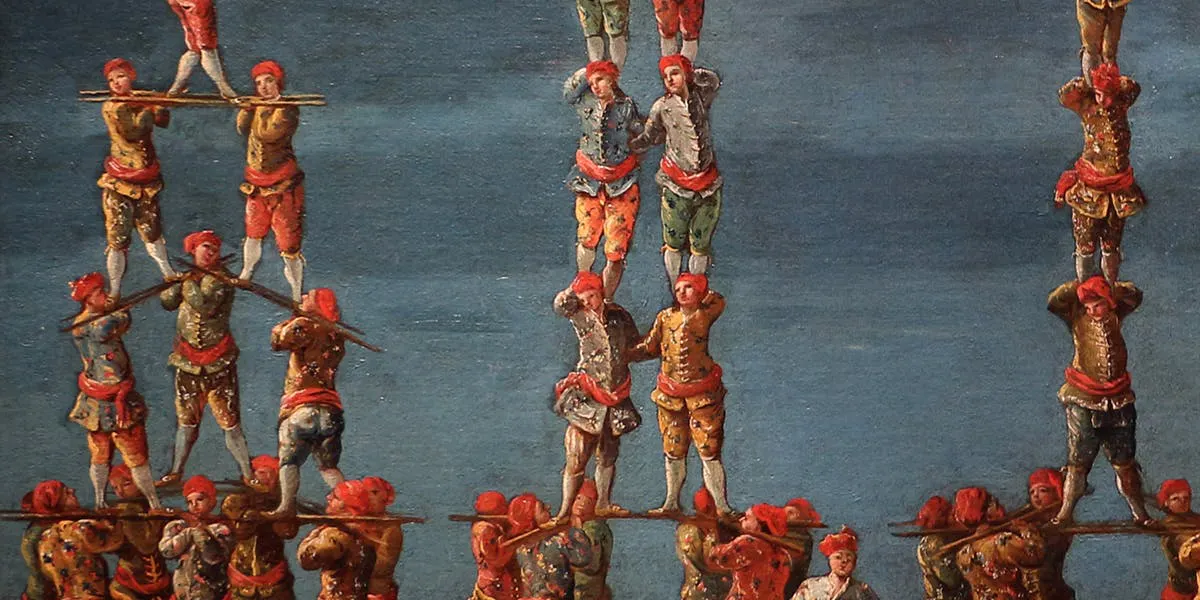
While frequently found in art history, many still do not know where these incredible scenes of characters were stacked on top of each other originated. In fact, these paintings are neither invented nor taken from mythological writings. They represent Le Forze d'Ercole, a real tradition that took place at the Venice carnival centuries ago.
Related: Canaletto: The Spirit of Venice
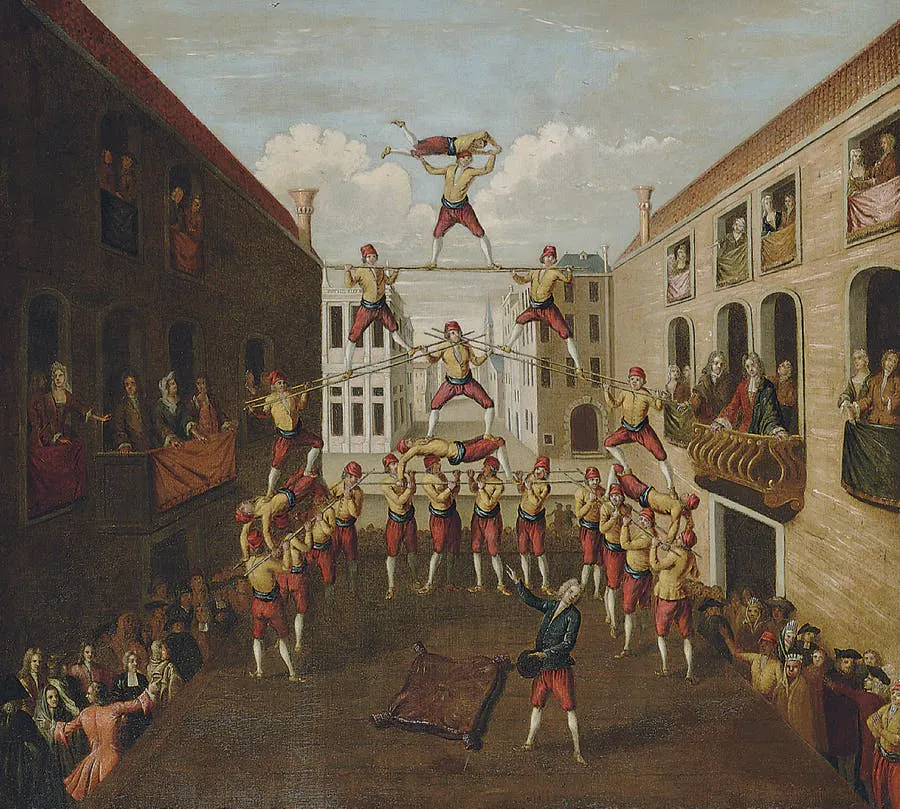
The origins of the Venice carnival are difficult to establish precisely. It is estimated that the celebration began in the 12th century and lasted until the 18th century when it was outlawed by Francis II, the Holy Roman Emperor. At certain points in history, carnival would end up being celebrated for almost six months. From October to Christmas, from St. Stephen's Day (December 26) to Lent, on St. Mark's Day (April 25), all these occasions were a pretext for masked disguises and grandiose celebrations.
Great attractions emerged to entertain an increasingly demanding public, such as the Flight of the Angel (an acrobatic act over San Marco Square), the bull and bear races, and the puppet theaters. Among them, Le Forze d'Ercole (which translates to the forces of Hercules) consisted of incredible human pyramids made up of the two rival clans of the Serenissima, the Nicolotti and the Castellani.
Related: The Oldest Drawing of Venice is Discovered
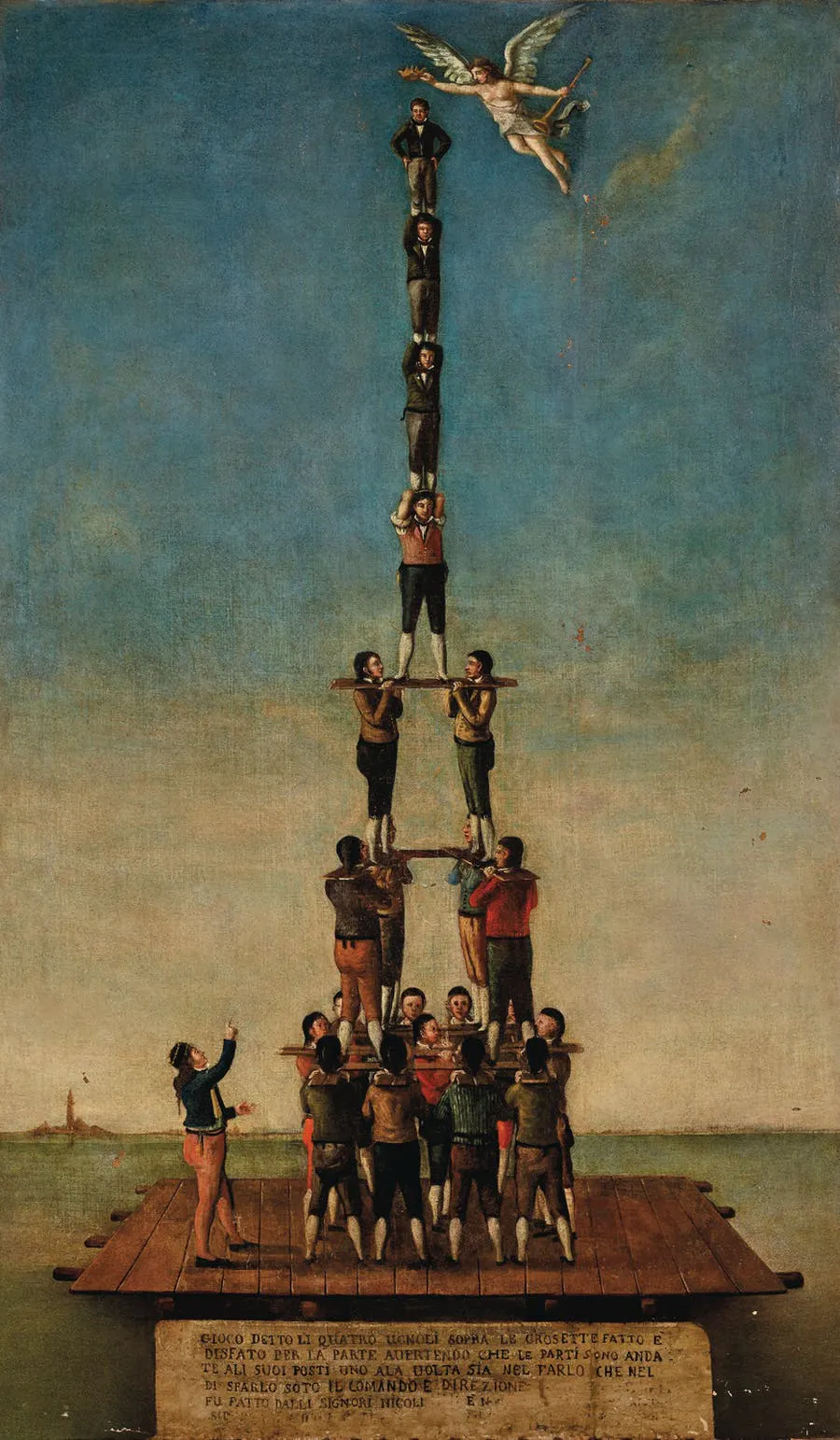
These impressive acts had names like Fondamenta dei Pensieri (the Quay of Thoughts), or Allegoria della fama (Allegory of Glory). The two Venetian factions thus attempted to outdo each other in public displays of strength and skill. The Castellani (inhabitants of the districts of Sestiere di Castello, San Marco and Dorsoduro), wore red caps, and the Nicolotti (inhabitants of Dorsoduro, near the church of San Nicolo dei Mendicoli), black.
Le Forze d'Ercole celebrated the dexterity and the Venetian prowess that was celebrated during the whole of Carnival, which honored the victory in 1162 by the doge Vitale Michiel II, the head of the Venetian Republic, over Ulrico, Patriarch of Aquileia. Today, you can attend street performances inspired by ancient ceremonies like Le Forze d'Ercole, but without the dangerous feats.
Related: Tintoretto: The Venetian Virtuoso
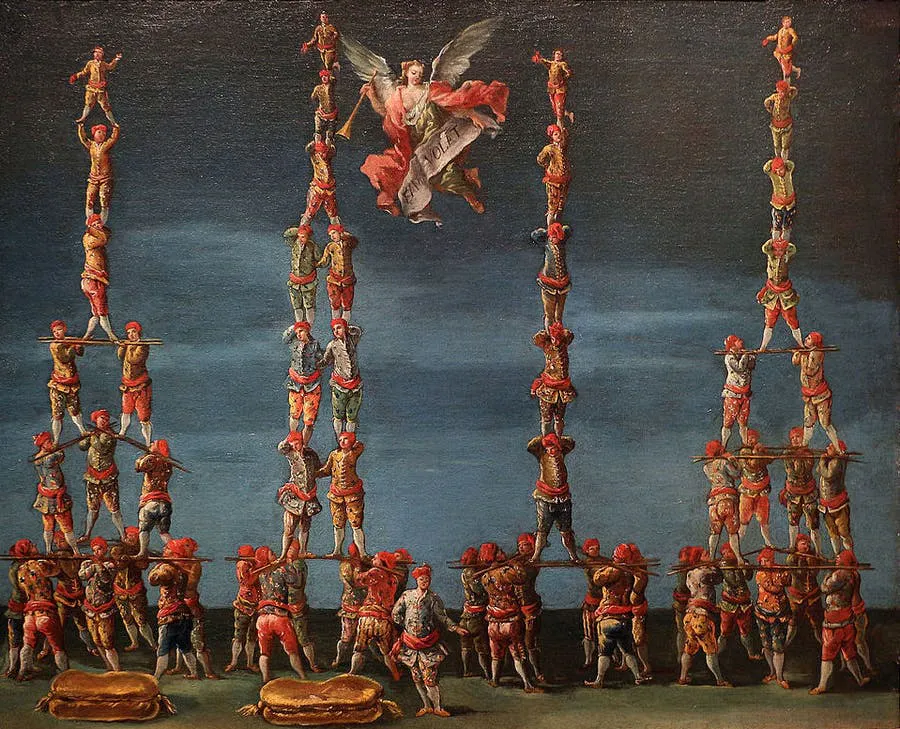
These remarkable competitions became popular themes among the painters of the 18th century. In addition to works of the Venetian School, Le Forze d'Ercole was also depicted in paintings by artists such as Balthasar Nebot (active between 1729 and 1765) and Francesco Guardi (1712-1793).