The outstanding German-Austrian craftsman Michael Thonet turned out to be a great entrepreneur, at the forefront of industrialization, even before the term was invented in the sense that we know it today. On its own, Thonet’s chair has built itself as a legend, having conquered all the bistros of Vienna and the Austro-Hungarian Empire.

Legend has it that in 1867, on the occasion of the Universal Exhibition in Paris, a wooden chair presented by the designer and manufacturer Thonet accidentally fell from the first floor of the Eiffel Tower without suffering the slightest damage after the impact some 56 meters below. If it hadn’t already been established, the reputation of the solidity of this flying chair, the concept which Thonet imagined some fifteen years ago in Vienna for the Liechtenstein Palace, came out even stronger from this PR stunt, even if it wasn’t premeditated…
Related: A Brief History of Furniture Design
In any case, it’s not out there to think that he inspired, almost a century later, Gio Ponti to in turn drop his Superleggera into the void from the fourth floor of a building to test its resistance, and obtain the same promotional results (the Italian’s chair, however, did not weigh over 3 lbs).
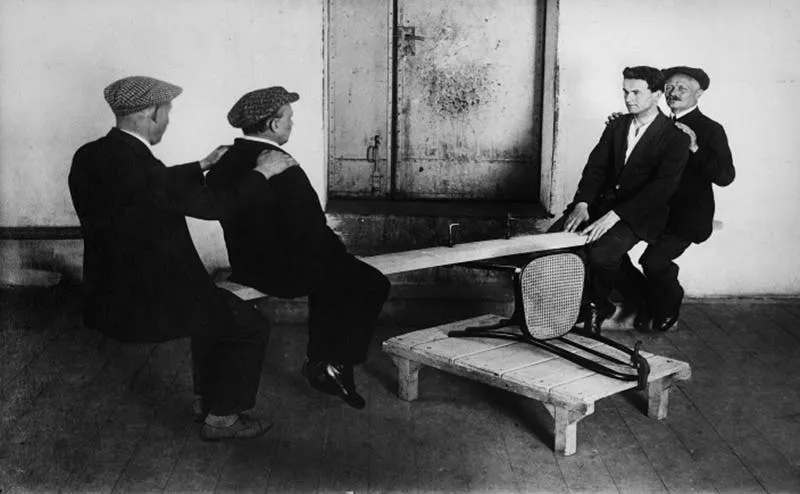
In Paris at the time, the cabinetmaker, born July 2, 1796 in Boppard, south of Koblenz, obtained the gold medal for his aforementioned No. 14 chair, which had already received bronze at the World's Fair in London five years earlier. Its success didn’t stop there: this iconic piece of furniture, mass-produced in its factories in Moravia, then went on to sell more than 50 million copies before the advent of the First World War.
Thonet was a regular at world exhibitions and awards. From the premiere in the British capital in 1851, his furniture won international admiration. It must be said that, at his point, the man was already a master in the art of assembling and curving wood and that, from a simple craftsman parquetier, he acquired the status of ‘designer’ before the popularization of the term. Under the recommendations of Austrian Chancellor Clemens Metternich and Emperor Ferdinand, the Prince of Liechtenstein entrusted Thonet with the parquet floor and the furniture of his Viennese palace, in particular his ‘flying’ chairs.

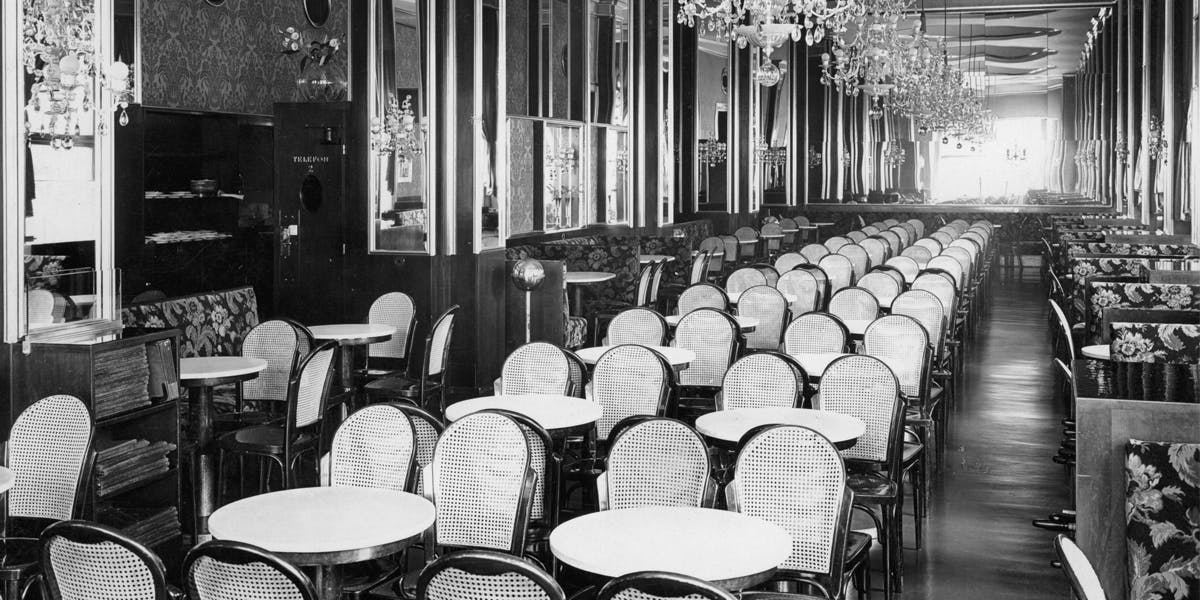
First employed by Clemens List when he arrived in Vienna in 1842, Thonet opened his own business less than ten years later, where he applied the most innovative techniques in cabinetmaking. He used steam in particular, an idea developed in his No. 4 chair. This chair proved practical and inexpensive, and orders, boosted by the advertising of the universal exhibitions, soon exploded. The first came from Anna Daum, owner of the eponymous Café Daum, and the chair was soon fitted in nearly all Viennese breweries and cafes.
Related: Forget Ikea. Buy Antique Furniture and Revive It
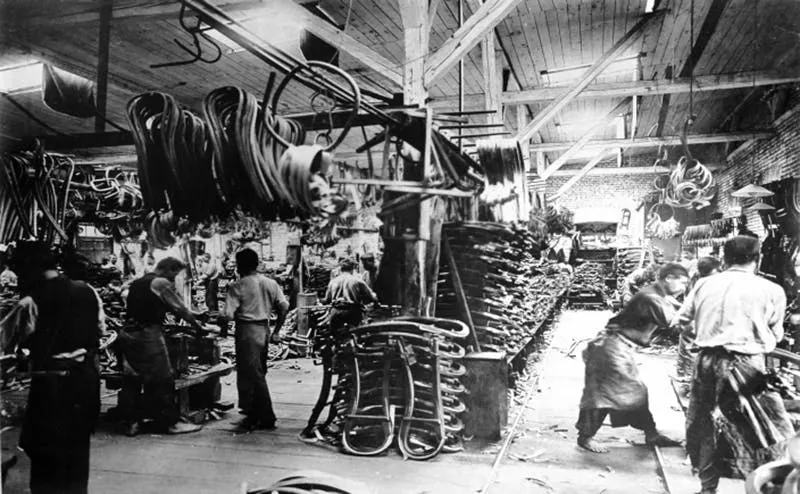
From the end of the 1850s, The No. 14 chair followed suit, and propelled the company into a truly industrial era, with the opening of workshops in Eastern Europe (what is now the Czech Republic, Hungary, etc.). Most were set near forests with raw materials (beech trees, in particular) and employed low-cost labour. At the end of the decade, the Korischtan factory in Moravia, for example, employed 300 workers, who produced 200 pieces of furniture a day.
Related: The 10 Most Popular Furniture Designers
World War I marked a halt in the development of the furniture company, with the collapse of the bourgeois ideals of the 19th century and people’s new aspiration for simple and refined forms. If the Thonet brand was to embrace this, and the spirit of the Bauhaus of the 1920s, tubular steel dictating the new laws of design, the inventor of the bistro chair needed to evolve his operation.

Related: 6 Giants of Mid-Century Modern Design
And so this happened, under the impetus of the businessman Leopold Pilzer who in 1922 created Konzern Kohn-Mundus-Thonet from the merger of several previously competing companies. World War II was even more painful, however, with the destruction of several Thonet sales and production sites, then its expropriation of factories in Eastern Europe. Pilzer had to flee Nazi Germany in 1937 and, in 1945, the Thonet brand was able to resume the activity under its own name with, at its head, Georg Thonet, Michael’s great-grandson.
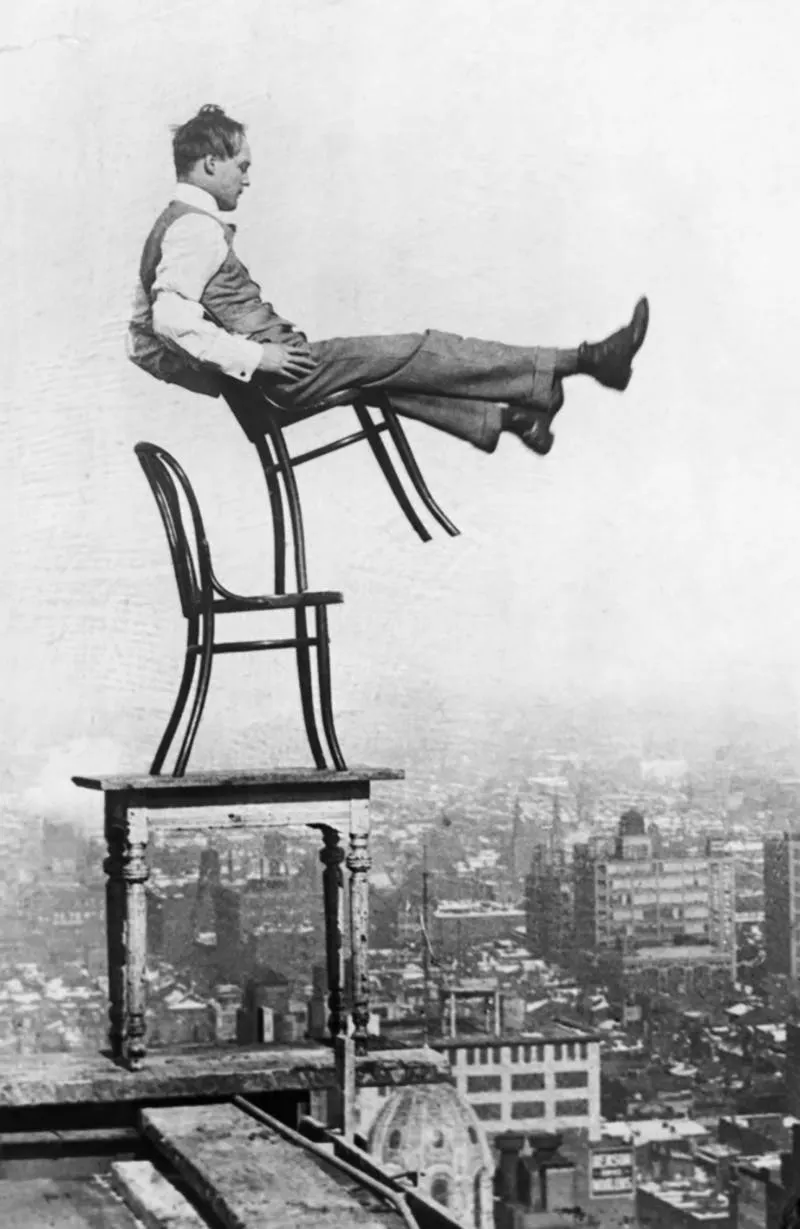
The cabinetmaker can thus be considered one of the pioneers of offshoring, as well as a very organized system of subcontracting. His five sons inherited his business and industrial acumen even before he handed over the reins of the company to them, although he remained in charge until his death in 1871. When he passed away, the Gebrüder Thonet company had six factories in Europe and about fifteen distribution stores around the world, including one in New York and another in Chicago.
Related: 10 Reasons to Buy Vintage
This success grew until 1914, the Thonet brothers using for the concept of their furniture the great names of the Viennese Secession (Josef Hoffmann, Otto Wagner, Adolf Loss), for what is akin to the alliance of curved wood and Art Nouveau.

A sixth generation is now in business, although the family business is divided into several distinct and independent branches. Renowned creators and designers are involved in the development of contemporary collections. The No. 14 chair, which celebrated its 160th anniversary in 2019, is still in production. If it cost less than a bottle of wine in the 19th century, it is currently necessary to hand over at least $580 to acquire a new one… And it is not every day that it falls from the first floor of the Eiffel Tower.
Find more articles on furniture and design with Barnebys Magazine