
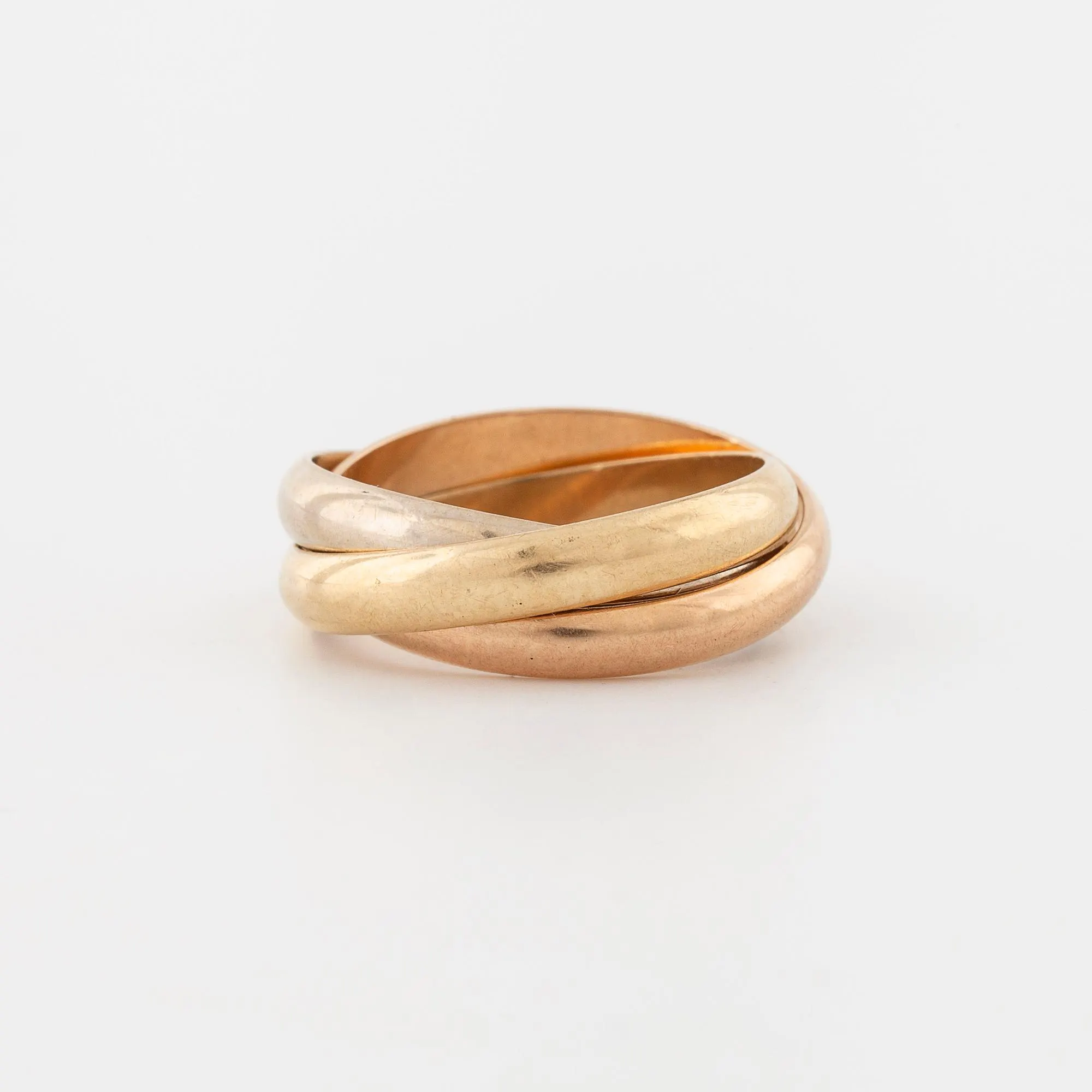
Few pieces of jewellery have acquired as many meanings as Cartier’s Trinity ring. Designed in 1924 as a simple composition of three interlocking bands in rose, yellow and white gold, it was originally meant to symbolise love, fidelity and friendship. Over time, however, the ring has taken on another, less conventional association: that of an “anti-engagement ring”.
See also: Barnebys' Guide to Buying an Engagement Ring at Auction
Part of that reputation stems from one of the most famous and ill-fated relationships in European cinema.
In the autumn of 1958, audiences in Germany and Austria were taken by surprise when Romy Schneider left her homeland and moved to Paris to be with Alain Delon. At the time Schneider, then twenty years old, was adored across Europe for her role as the young empress in the Sissi trilogy, while Delon was still at the beginning of his career.
The two had met earlier that year on the set of Christine, where they played a couple in love. Their on-screen romance soon continued in real life. When filming ended, Schneider made the unexpected decision to move to Paris. She hoped to leave behind the princess image that had made her famous and establish herself as a serious actress.
Their relationship, closely followed by the press, initially seemed promising. In 1959 the couple became engaged. Instead of a traditional diamond ring, however, Delon chose something far less conventional: Cartier’s Trinity ring, a design he admired so much that he wore one himself on his little finger.
See also: History's Most Famous Engagement Rings

The engagement, however, did not last. In 1963 Schneider returned to Paris after filming in the United States to find that Delon had already left their shared apartment, reportedly leaving only a note behind. Shortly afterwards he married someone else. Despite the painful separation, the two never completely lost touch and later appeared together in two films, The Swimming Pool (1969) and The Girl and the Murderer (1972). When Schneider died in 1982 at the age of forty-three, Delon was deeply shaken and helped organise her funeral.
The story has since become closely associated with the Trinity ring. For some couples it represents commitment without the formal promise of marriage. In that sense the design has acquired the reputation of an “anti-engagement ring”, even though Cartier itself never intended the piece to carry that meaning.
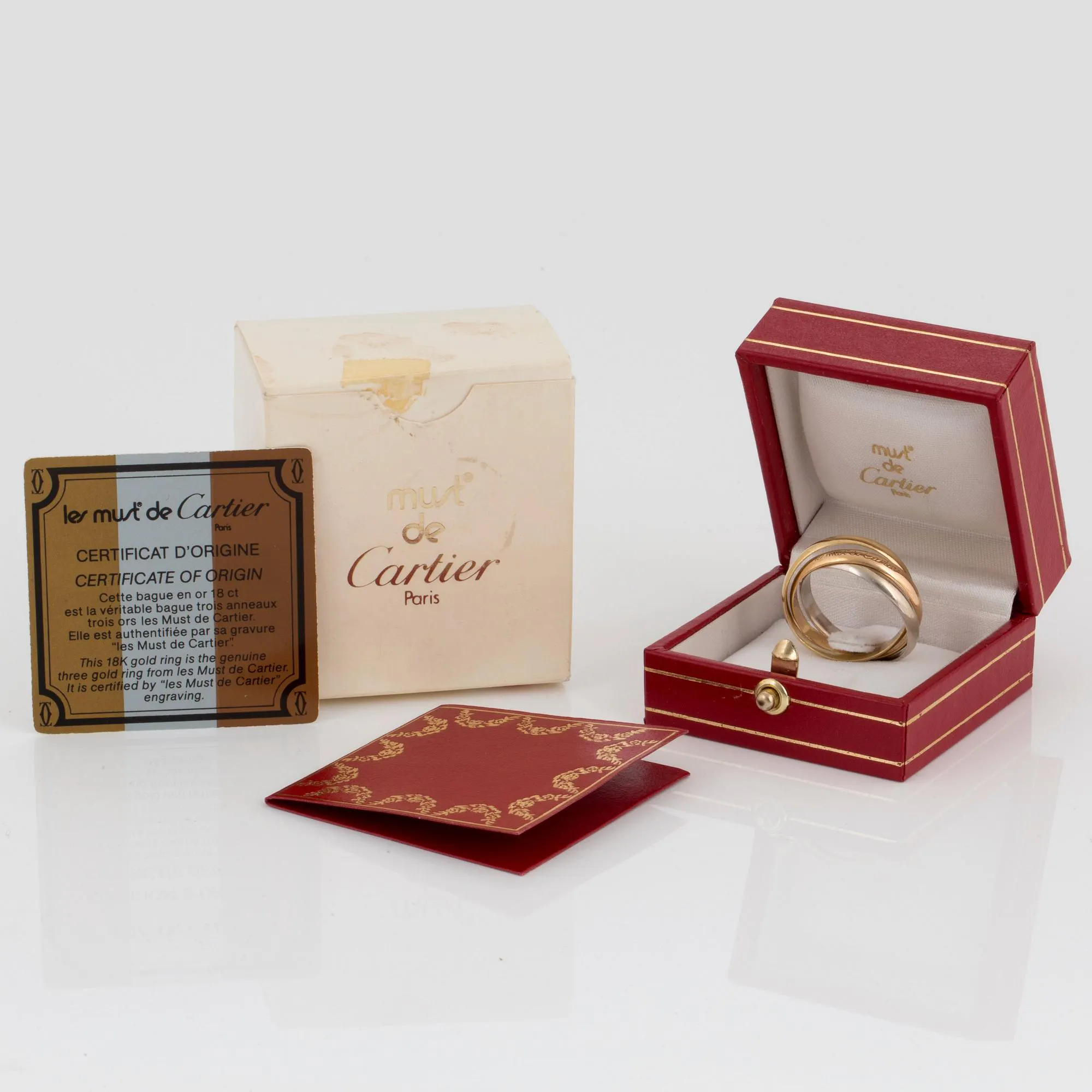
By the time Schneider and Delon became engaged, the Trinity ring had already existed for more than three decades. Cartier introduced the design in 1924 as a radical departure from traditional jewellery. Instead of highlighting gemstones, the ring relied entirely on its form, a simple but distinctive design that could be worn by both women and men. Its understated elegance quickly set it apart from the more decorative styles that dominated jewellery at the time.
See also: How Cartier Got Its Spots
The design was quickly embraced by the Parisian avant-garde, who appreciated its playful construction and restrained elegance. One of its earliest and most famous admirers was the poet and artist Jean Cocteau, who often wore two Trinity rings on the same finger. Over the decades the design has also appeared on figures such as Gary Cooper, Grace Kelly, Princess Diana, her daughter-in-law Catherine, Princess of Wales, and more recently Kylie Jenner.
See also: The Surprising Inspiration for the Cartier Love Bracelet
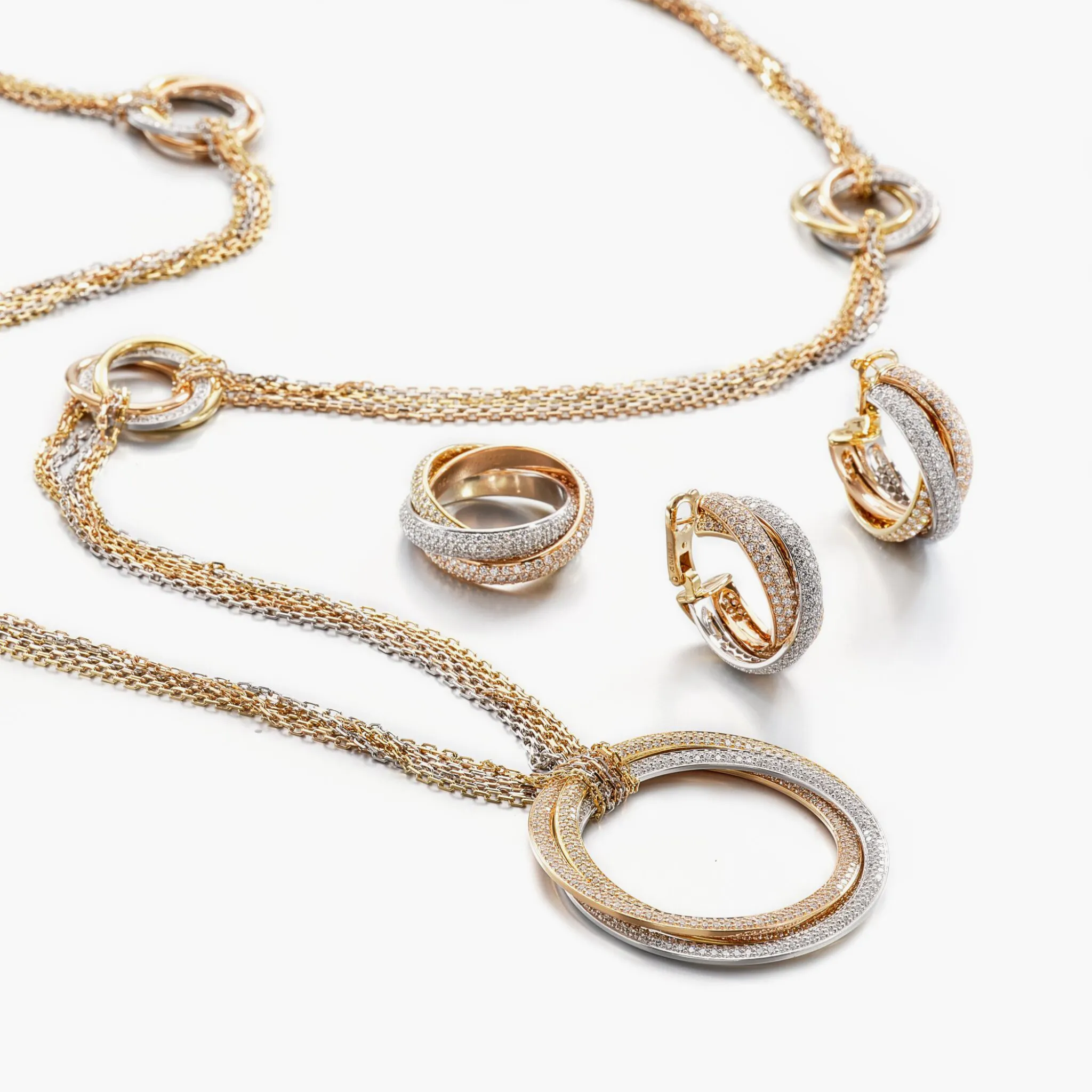
For Cartier, the Trinity ring has become one of its most enduring creations. The design has remained in production for more than a century. A bracelet followed in 1925, and over time the house expanded the line to include necklaces, pendants and earrings. While the three interlocking bands in rose, yellow and white gold have remained unchanged, Cartier has introduced variations, including wider bands, versions with black enamel “panther spots”, and more recently a square interpretation of the ring. For those who prefer a more traditional look, diamond-set versions are also available.
Want more articles like this straight to your inbox? Subscribe to our free newsletter!
Today a classic Trinity ring purchased directly from Cartier costs more than $2,000. At auction, however, examples often appear for considerably less. Signs of wear are common, but they also reflect the life the ring has lived. In a piece built around the symbolism of love, loyalty and friendship, that history can become part of its appeal.