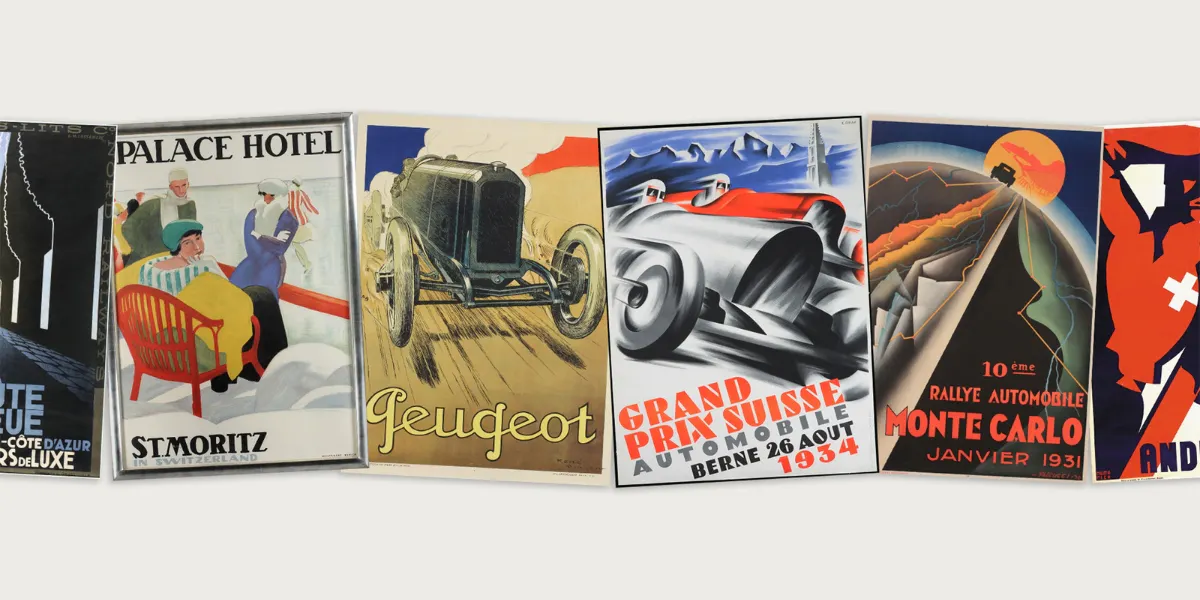
Long before the age of Instagram and TikTok travel influencers, artists designed travel posters to entice travelers to different parts of the globe. One of the most successful marketing efforts was for the European Alps, where winter tourism emerged in the mid-19th century. In 1864, Swiss hotelier Caspar Badrutt invited four English guests to visit his hotel in St. Moritz, Switzerland in the winter. Prior to this, St. Moritz was known as a popular summer destination due to its natural springs, which were the pilgrimage site of St. Maurice. It quickly developed into the epicenter of winter sports tourism, where athletes came for bobsledding, tobogganing, ice skating, cross country skiing, curling, ice hockey and snow polo in the late 19th and early 20th centuries.
Related: Winter in 10 Artworks

With St. Moritz as the Alpine pioneer and host of the first official Winter Olympics games in 1928, throughout the 20th century, more ski resorts were designed and built throughout the European Alps. In order to market these destinations, travel companies and developers such as the Montreux–Oberland Bernois Railway (MOB) and the Bernese Oberland Railway (BOB) called upon top graphic artists of the time. These artists created eye-catching posters showcasing the beauty of the region and the winter sports offered, with bold text inscribing the destination's name. While earlier posters portrayed all types of winter sports, like ski jumping, ice hockey, or tobogganing, later posters mostly depicted skiing, which became the dominant sport of the Alps.

The trend at the beginning of the 20th century was plakatstil, a modern poster style geared towards symbols and shapes that originated in pre-war Germany. In Switzerland, the Basel graphic art group was known especially for its Art Deco posters. The most famous and successful poster Swiss artists included Emil Cardinaux, Johannes Handschin, Walter Herdeg, Carl Moos, Hugo Laubi and Alex Diggelmann. The latter artist actually won three Olympic medals for his poster art in 1936 and 1948 as part of the Applied Arts category of the Olympic Games.
Related: More Than Just Sports: The Art of the Olympic Games

With large budgets for poster production in Switzerland, these posters were more than just marketing tools, they were true works of art. Expensive, richly colored inks were used to create cinematic scenes set against magnificent Alpine landscapes. Flawless typography boldly showcased the names of Alpine resorts that became legendary, such as St. Moritz, Gstaad, Zermatt and Chamonix. Walter Herdeg worked exclusively for the St. Moritz tourist board in the 1930s and was the designer behind the iconic St. Moritz red script and sun logo, which was the first tourist trademark in the world.
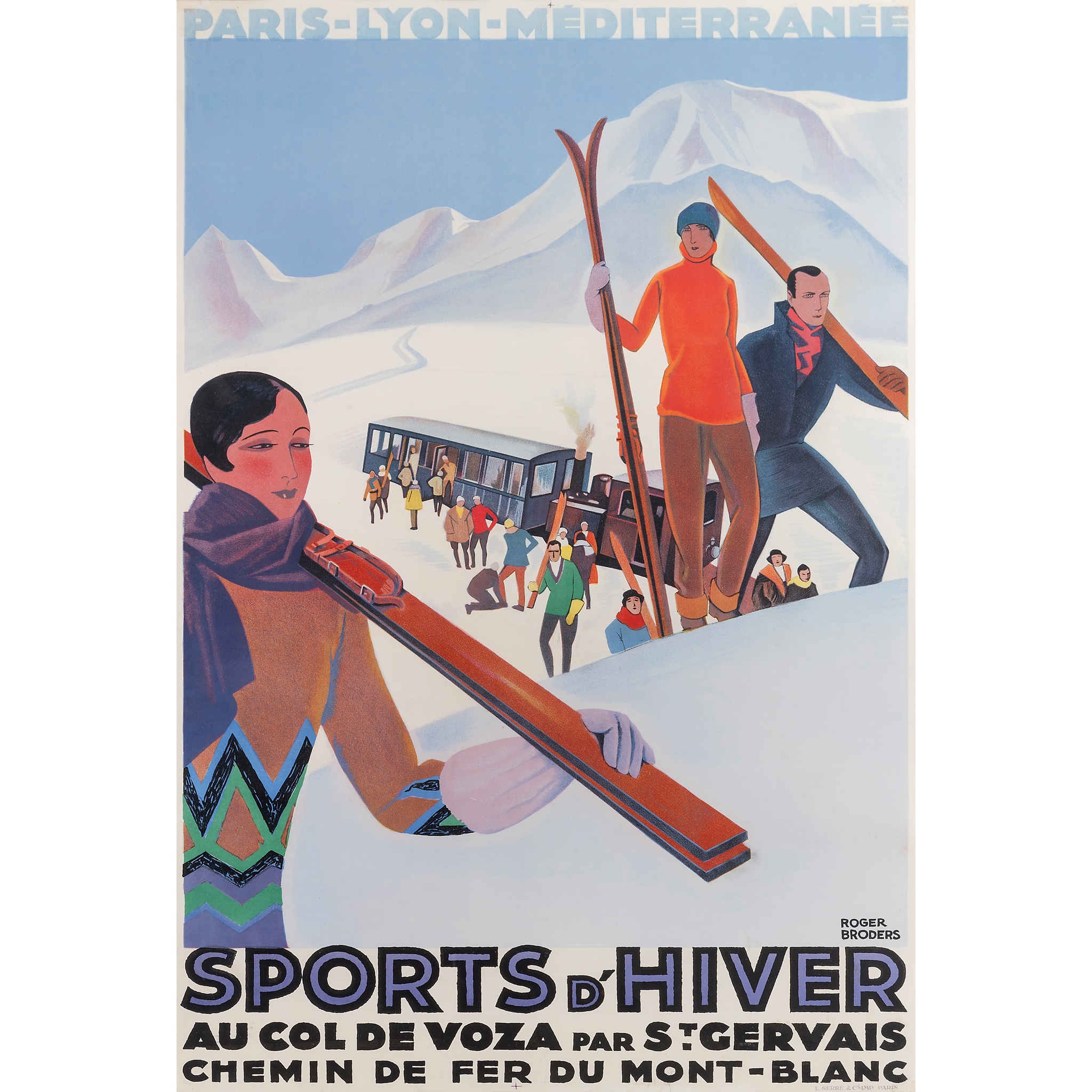
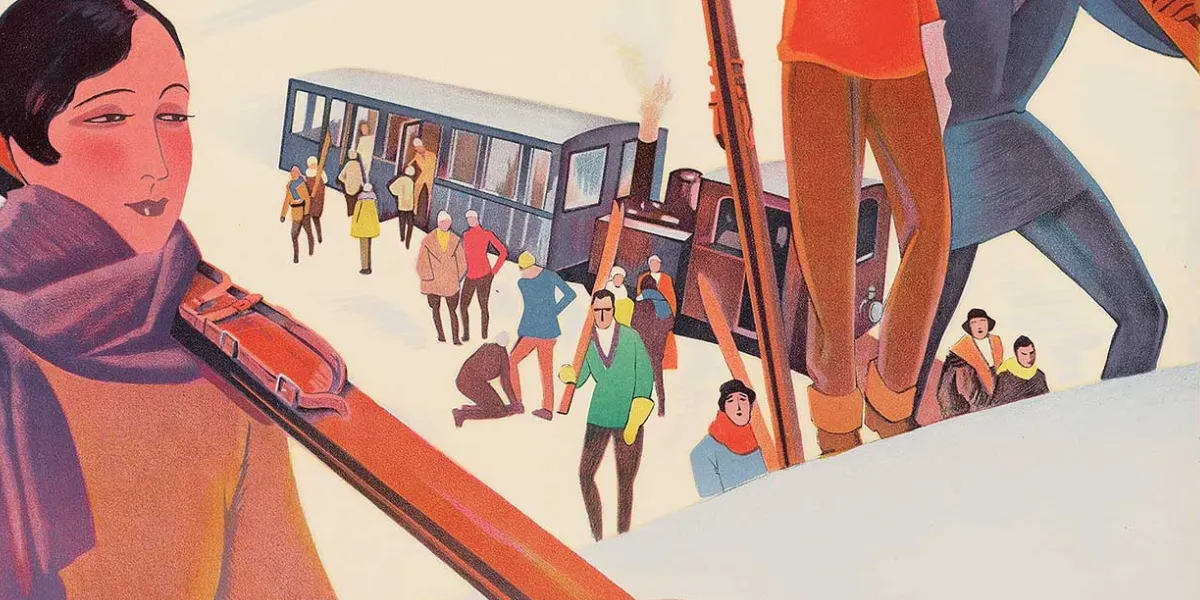
In France, Roger Broders was the most sought-after poster artist, who was commissioned by the PLM (Railway Company of Paris to Lyon and the Mediterranean) to create posters for the French Alps and Cote d'Azur between 1922 and 1932.
"He epitomized the Art Deco style that has consistently appealed to buyers, as much today as it did when it first emerged in the Art Deco period," said Nicolette Tomkinson, Consultant Specialist for Vintage Posters at Lyon & Turnbull. "He cultivated a distinct personal style: strong lines, natural color palettes, and simple lettering. His posters that depict figures more so than landscapes attract the most attention and the highest prices."
Related: 1925: The Height of Art Deco
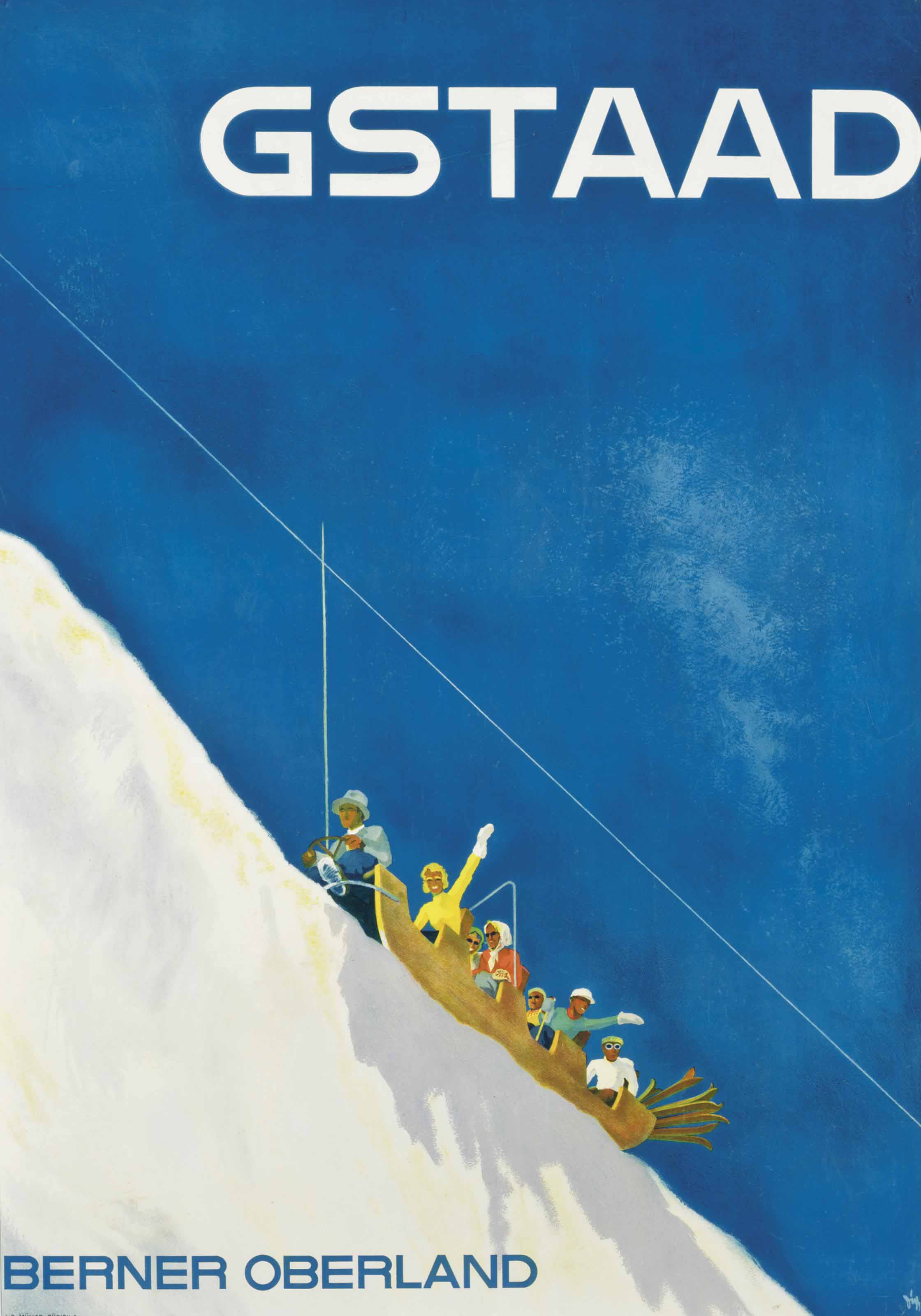
These posters were first made using stone lithography, an intensive process where a design is carved into a limestone and then copied. By the 1930s, offset lithography, using metal sheets to print the graphics, was a faster method to produce posters.
Related: The Golden Age of Travel and the History of Luggage Tags
In the 1960s, the traditional graphic posters were replaced by photography, with images from the likes of Slim Aarons capturing the snowy glamour of the Alps. Now the original ski posters from the first half of the 20th century are coveted collector's items, true works of art steeped in travel nostalgia.
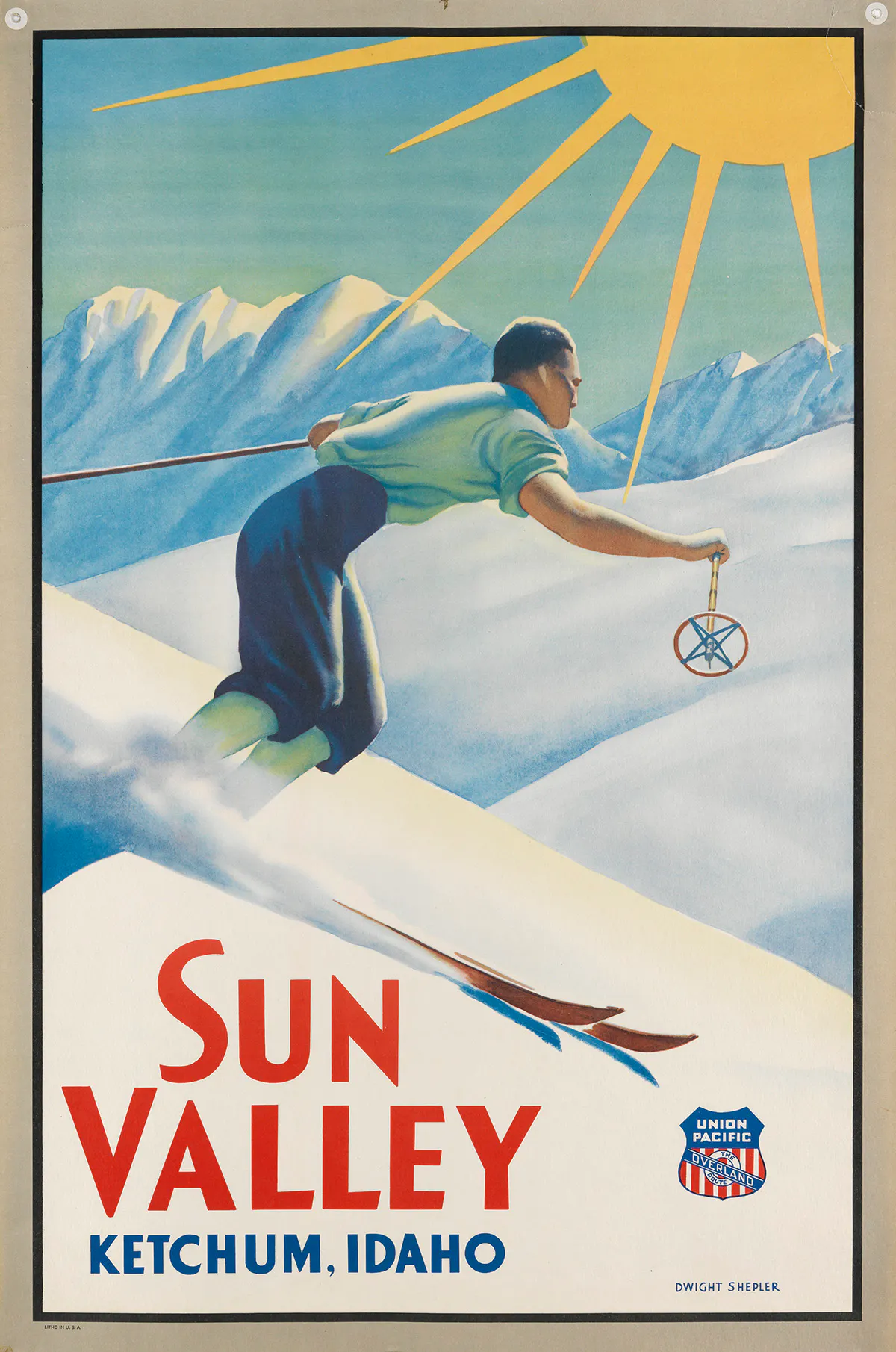
Beyond the Alps, poster marketing was later also used for ski resorts in the United States. In 1936, the first chairlift for downhill skiing in America was constructed in Sun Valley, Idaho. The Union Pacific Railroad, which was owned by Averell Harriman, the prominent developer behind Sun Valley, commissioned art for the mountain resort similar to European posters to draw in winter sports travelers. Posters were also later designed for other American ski resorts like Aspen, Vail and Park City.
Want more articles like this straight to your inbox? Subscribe to our free newsletter!
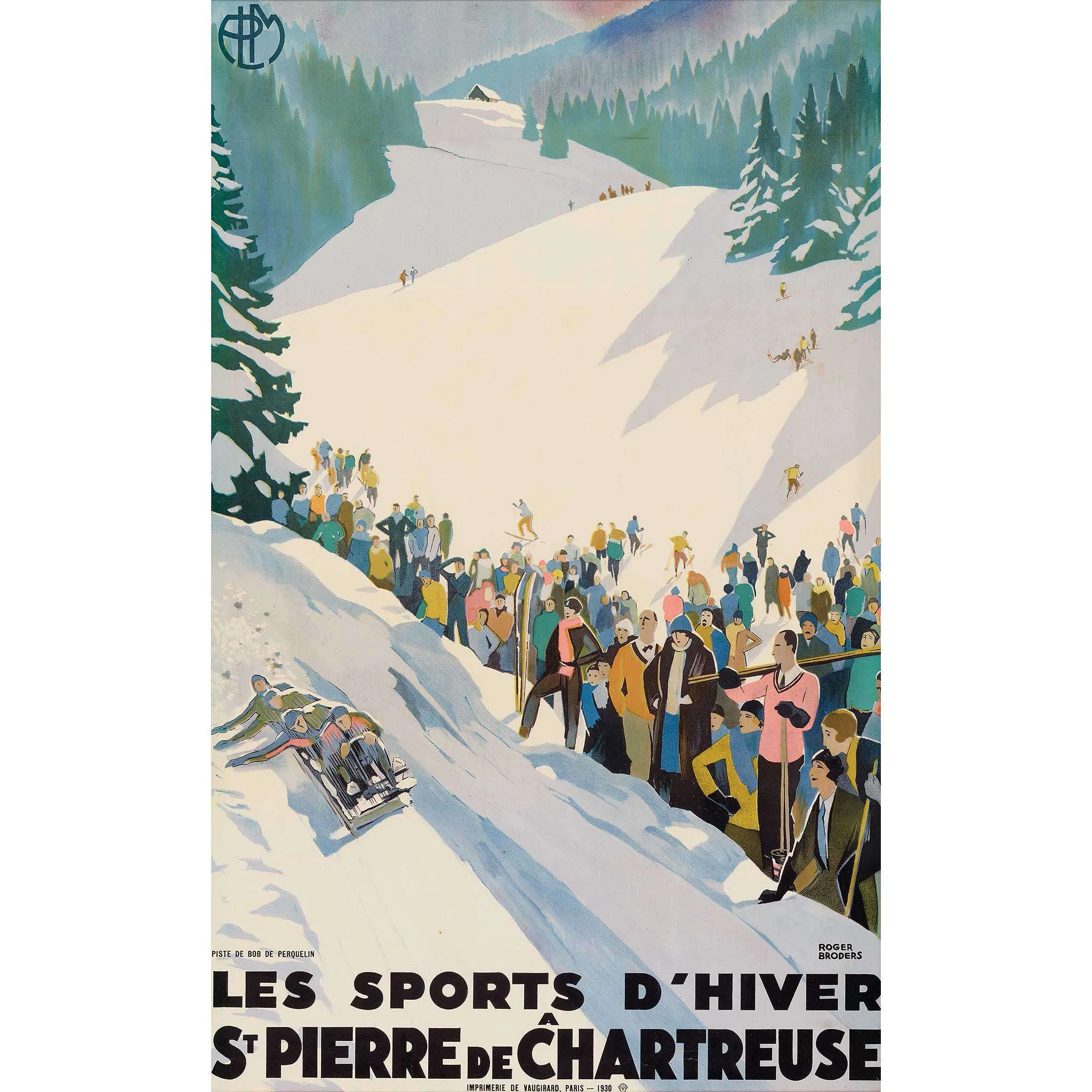
Today, original copies of vintage winter sports posters are highly sought after at auction, with renowned houses like Christie's, Lyon & Turnbull and Swann Auction Galleries hosting dedicated ski poster sales. First editions can easily fetch $10,000 or even top $20,000.
Related: The Art of Advertising: Collecting Memorabilia
"Passionate skiers are attracted to posters advertising travel to resorts or regions that they have a particular attachment to, particularly those with a strong graphic appeal," said Tomkinson. "Resorts in Switzerland, France, Italy, Austria and key ski hotspots in the US and Canada command the highest prices."
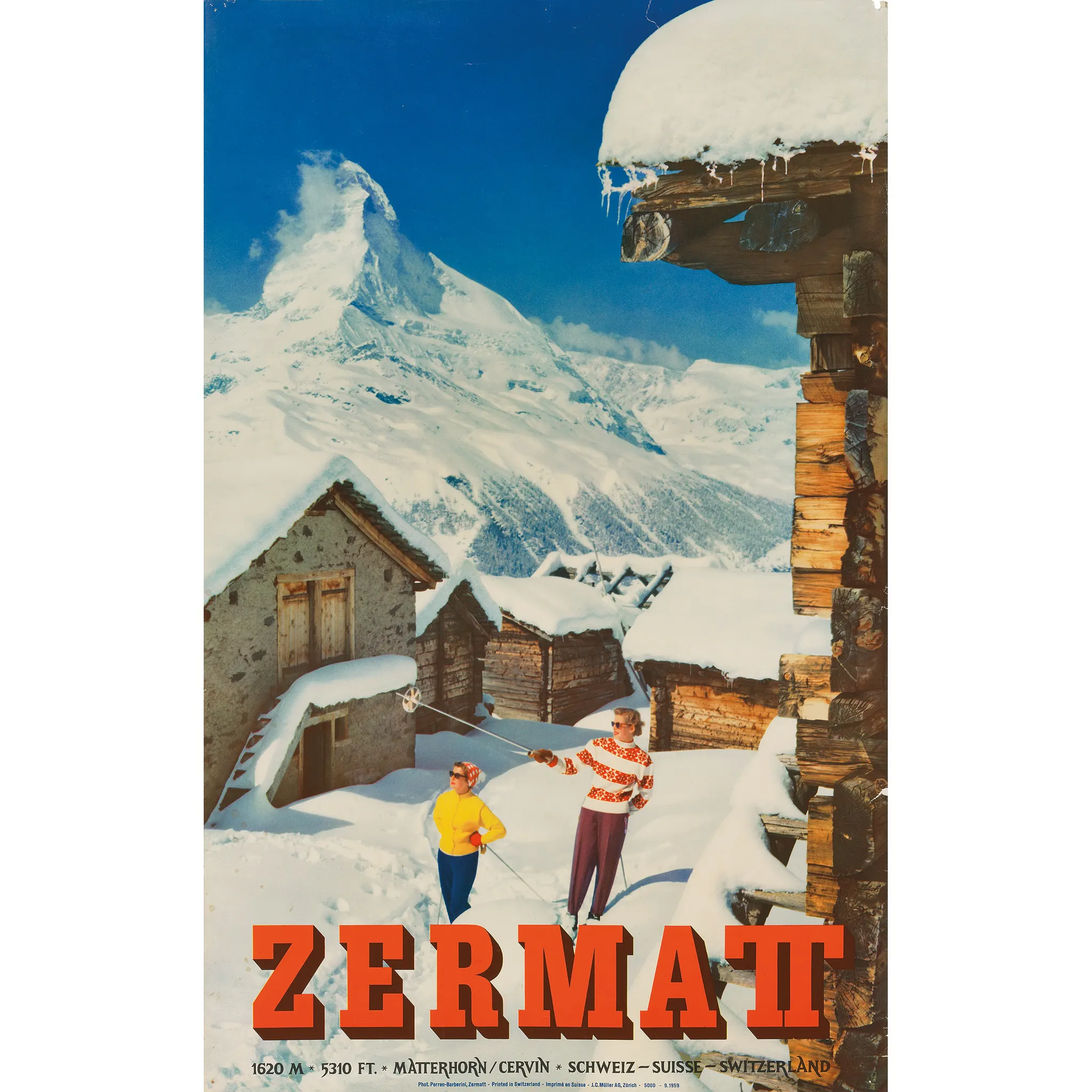
And more recently, collectors' tastes have changed to the more modern, hyperrealist posters.
"Over the last thirty years interest has grown in the posters depicting travel in the 1950s," continues Tomkinson. "Strong images of popular resorts have been increasingly difficult to source and prices have remained strong for sought after regions and artists." And what makes a poster particularly valuable? "A combination of a successful artist, a sought after resort, a strong compelling design and the rarity of the work."