Four hundred years after her death, here are seven things to know about Sofonisba Anguissola.
1. She had four sisters who also became painters
Sofonisba Anguissola was born in 1532 in Cremona, Lombardy, the eldest child of Amilcare Anguissola and his wife Bianca Ponzoni. The family belonged to the old nobility, although their means were modest. Sofonisba had six siblings, one brother called Asdrubale and five sisters. In line with the humanist spirit of the time, Amilcare Anguissola ensured that all his children received a solid education. Five of his daughters became artists: Sofonisba, Elena, Lucia, Europa and Anna Maria. Elena later entered a convent. Minerva, the remaining sister, preferred Italian and Latin literature.

2. Michelangelo was her unofficial teacher
Sofonisba proved the most gifted and ultimately the most successful of the Anguissola sisters. Her father arranged for the Cremonese painter Bernardino Campi, known among other things for his portraits, to take the eleven-year-old Sofonisba as a pupil. In 1550 she continued her training with Bernardino Gatti. At the age of 22 she travelled to Rome, where she met Michelangelo Buonarroti, who at the time was overseeing the construction of the new St Peter's Basilica. Michelangelo recognised her talent and, over the course of two years, offered her repeated artistic guidance.
See also: Michelangelo: From Man to Genius

3. She was lady-in-waiting to the Spanish queen
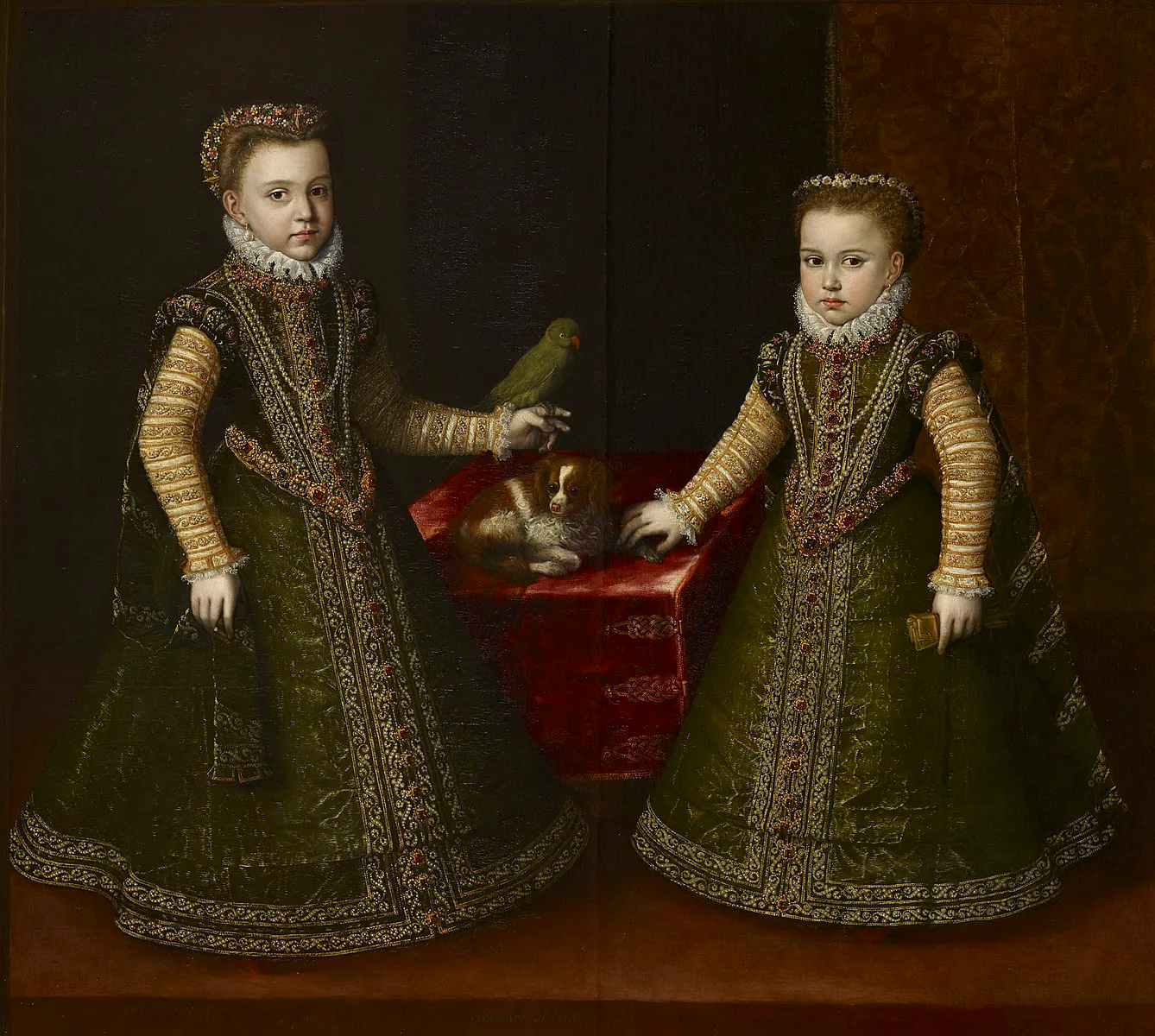
In 1558 Sofonisba Anguissola went to Milan, where the influential Spanish statesman Fernando Álvarez de Toledo, Duke of Alba, had his portrait painted by her. She was already well known in Italy and the commission had far-reaching results. The following year Alba suggested to King Philip II of Spain that Anguissola should be brought to Madrid as court painter to teach the new queen, the fourteen-year-old French princess Elisabeth of Valois. At the same time she would serve as a lady-in-waiting, which would place her, as an unmarried woman without connections in Spain, under the king’s protection. Sofonisba accepted and travelled to Madrid in the winter of 1559 to 1560. There she painted portraits of members of the royal family, including, several times, Philip II and Elisabeth’s two daughters, Catalina Micaela and Isabella Clara Eugenia. Isabella would later become an important patron of the arts as governor of the Netherlands.
See also: Peter Paul Rubens: Court Painter and Diplomat
4. Philip II helped her find a partner
Queen Elisabeth died in 1568 at the age of only 23 following a premature birth. Philip II, who had been devoted to his young wife, now took an interest in the future of her lady-in-waiting and close friend Sofonisba Anguissola. He arranged a marriage for the almost forty-year-old painter and provided her with a dowry and a life annuity. Her husband was the Sicilian nobleman Fabrizio Moncada Pignatelli. The Kingdom of Naples-Sicily was ruled from Spain at the time. The financial stability and support she received allowed her to continue working and teaching. Fabrizio died in 1579, but Sofonisba did not remain alone. On a sea voyage to northern Italy she and the ship’s captain, Orazio Lomellini, fell in love. They married in 1584 and settled in Lomellini’s home city of Genoa, where Sofonisba continued her work as a leading painter.
See also: Artemisia Gentileschi: The Passionate Feminist Artist

5. She was portrayed by Anthony van Dyck
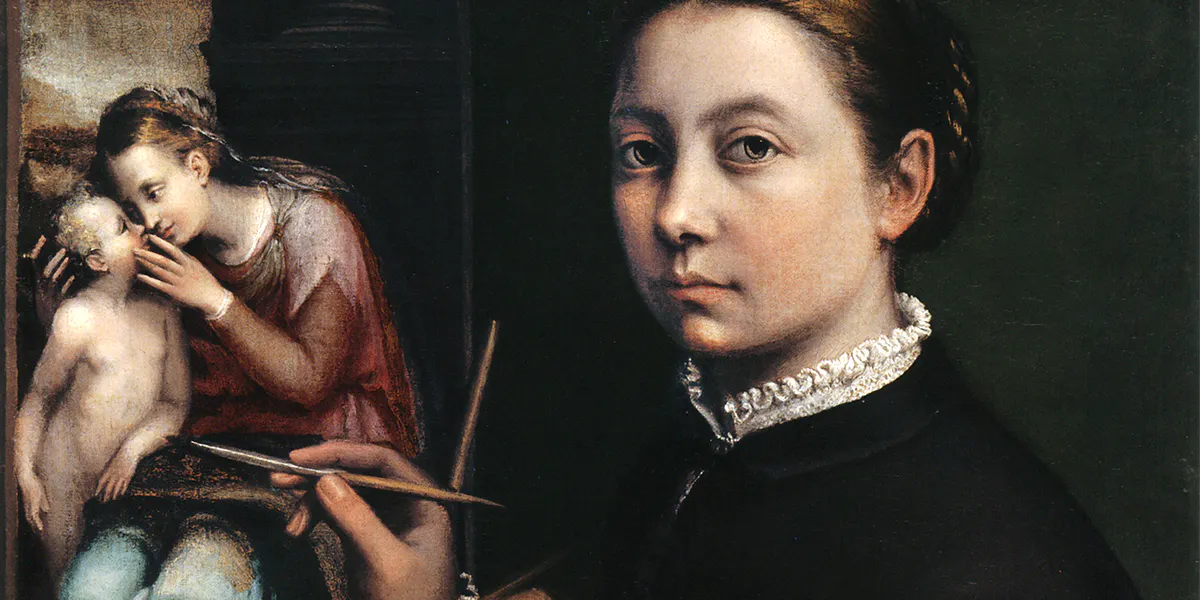
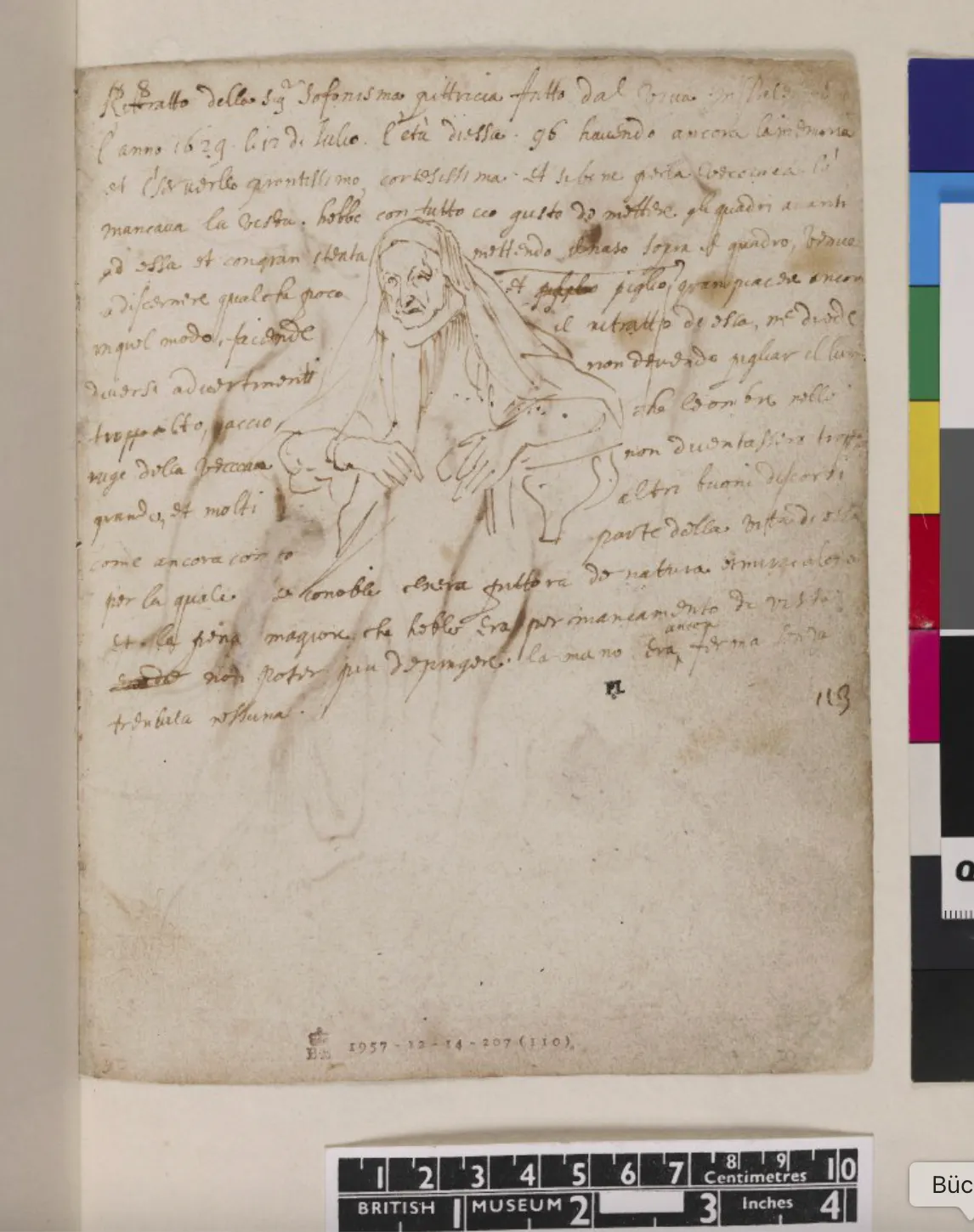
Sofonisba Anguissola, a sought-after portraitist, created many self-portraits throughout her long career, the last in 1610. Ten years later she moved to Sicily. In the summer of 1624 the 92-year-old artist, whose eyesight was failing, received a visit from the young Flemish painter Anthony van Dyck. He was struck by the clarity of her mind and the inspiration she was able to give him. Van Dyck made a sketch of her, which he later developed into a portrait. After learning of her death the following year, on November 16, 1625 in Palermo, he produced another portrait showing Sofonisba Anguissola on her deathbed.
Want more articles like this straight to your inbox? Subscribe to our free newsletter!
6. She painted the first depiction of schadenfreude
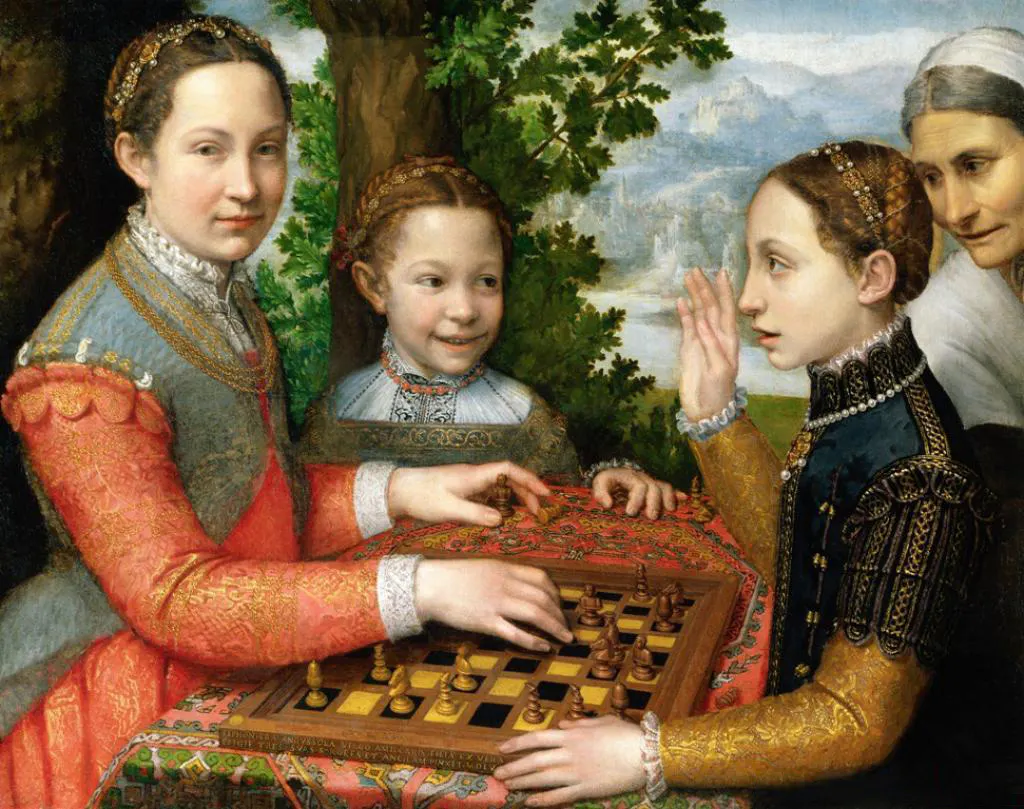
Sofonisba Anguissola established herself as a painter of individual and group portraits noted for their natural character and fine detail. Her portraits of her family are considered particularly strong examples of her work. These include her best-known painting, Three Sisters Playing Chess from 1555. Set in a garden overlooking a wide landscape, the scene shows her sisters Lucia, Minerva and Europa, along with a governess. Lucia, looking towards the viewer, appears to have just made a decisive move that annoys her opponent Minerva. Europa’s laughter is regarded as the earliest depiction of schadenfreude in art history. The painting remained in the Anguissola family home in Cremona for many years and was admired by Giorgio Vasari. Among its later owners was Lucien Bonaparte, Napoleon’s younger brother.
See also: A History of the Smile in Art
7. She had a major influence on other artists
Sofonisba Anguissola was highly regarded in her own lifetime. Her admirers included Michelangelo Buonarroti, Giorgio Vasari and Anthony van Dyck. Peter Paul Rubens copied some of her works, and her drawing Child Bitten by a Lobster is said to have inspired Caravaggio’s Boy Bitten by a Lizard. Her talent, success and professionalism encouraged other young women to pursue art. This is especially clear in the case of Lavinia Fontana, who wrote that it was a portrait by Sofonisba that inspired her to become a painter.