The painter known in art history as Sandro Botticelli was (presumably) born in Florence on 1 March 1445 as the eighth child and youngest of four sons of the tanner Mariano di Vanni Filipepi and his wife, Smeralda. The family lived in the Santa Maria Novella district, where Botticelli would spend most of his life. The name Botticelli, meaning "little barrel," was originally given to the eldest son, Giovanni, possibly due to his chubby appearance or fondness for alcohol. Although the name was somewhat unflattering, it gradually came to be adopted by other members of the Filipepi family, including the youngest son, Alessandro.
See also: Cimabue: Late Medieval Genius
Little is known about Sandro Botticelli’s early training, particularly whether he initially intended to become a goldsmith. However, it is highly likely that he apprenticed under Filippo Lippi. This is suggested by the stylistic similarities between their work and perhaps also by the fact that Lippi’s illegitimate son, Filippino, became Botticelli’s pupil in 1472.
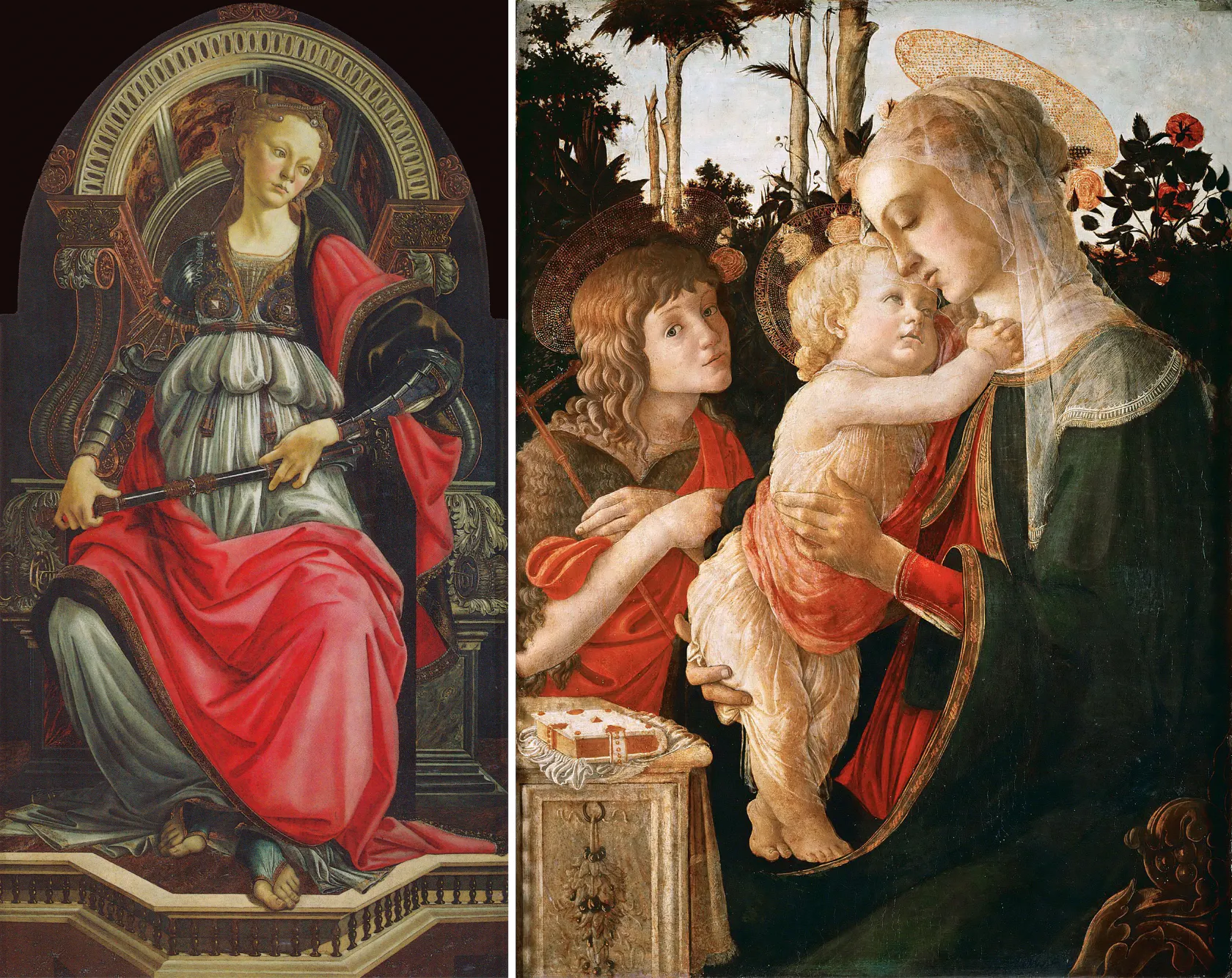
By 1470 at the latest, Botticelli had established his own workshop in his family home. That year marked his first documented commission: he was to assist Piero del Pollaiuolo in creating seven panels depicting personifications of the seven virtues for the courtroom of Florence’s commercial court. He was originally meant to paint two of the panels, but in the end, only one—Fortezza ("Strength")—was completed by his hand.
In the early years of his independent career, Botticelli primarily focused on the highly popular Madonna paintings of the time, including Madonna and Child with St. John the Baptist, now housed in the Louvre.
See also: 5 Famous Women in Red
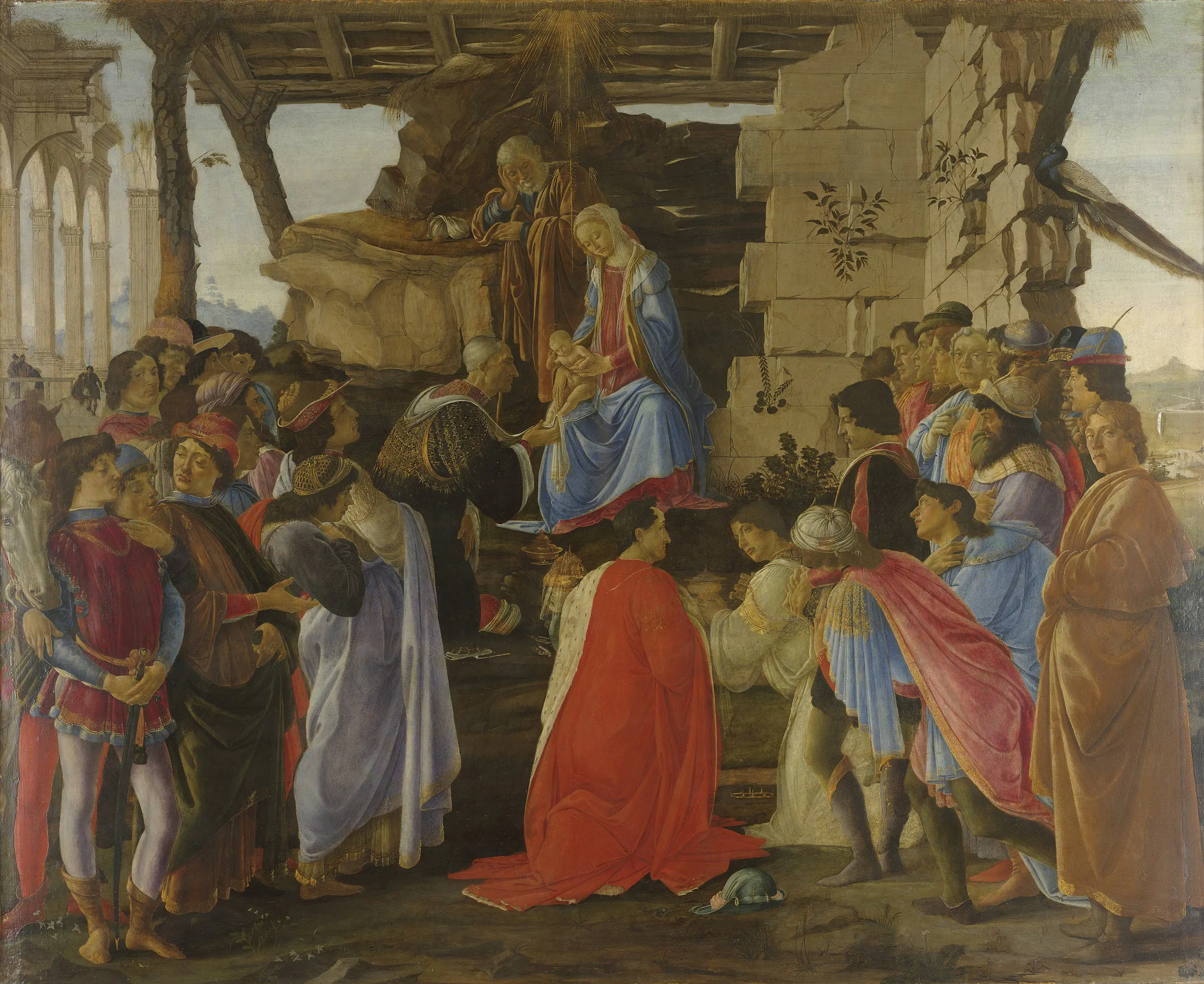
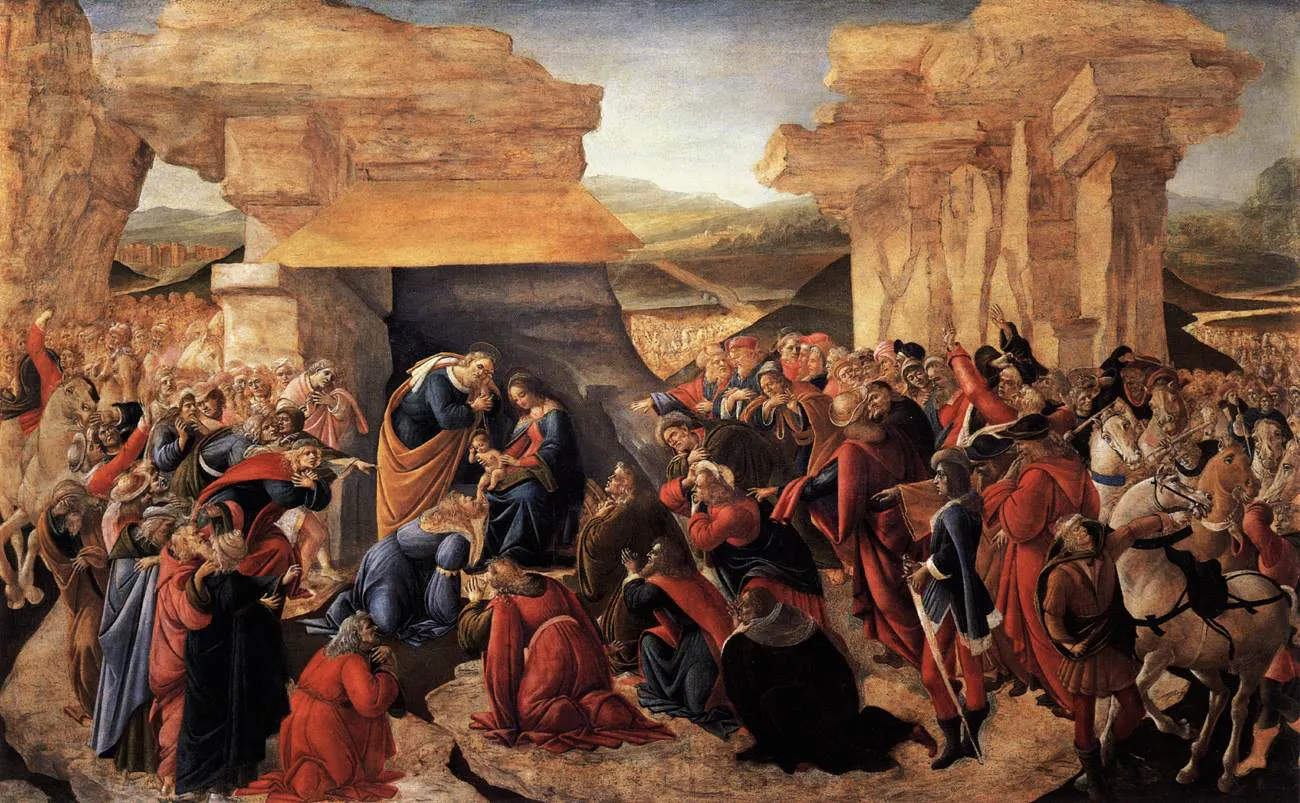
By the mid-1470s, Botticelli's connection to the powerful Medici family—the more or less undisputed rulers of Florence—was already well established. This is evident from The Adoration of the Magi, painted around 1476. The work was commissioned by the banker Guaspare di Zanobi del Lama, a friend of the Medici, as an altarpiece for his family’s burial chapel in the church of Santa Maria Novella.
Many of the figures in the painting can be identified as prominent Florentine personalities. These include, of course, the patron himself, as well as male members of three generations of the Medici family, some of whom had already passed away by that time. Botticelli, who is believed to have portrayed himself on the far right of the painting, was very likely working within the Medici’s immediate circle for this commission.
See also: How the Medici Family Influenced Renaissance Florence
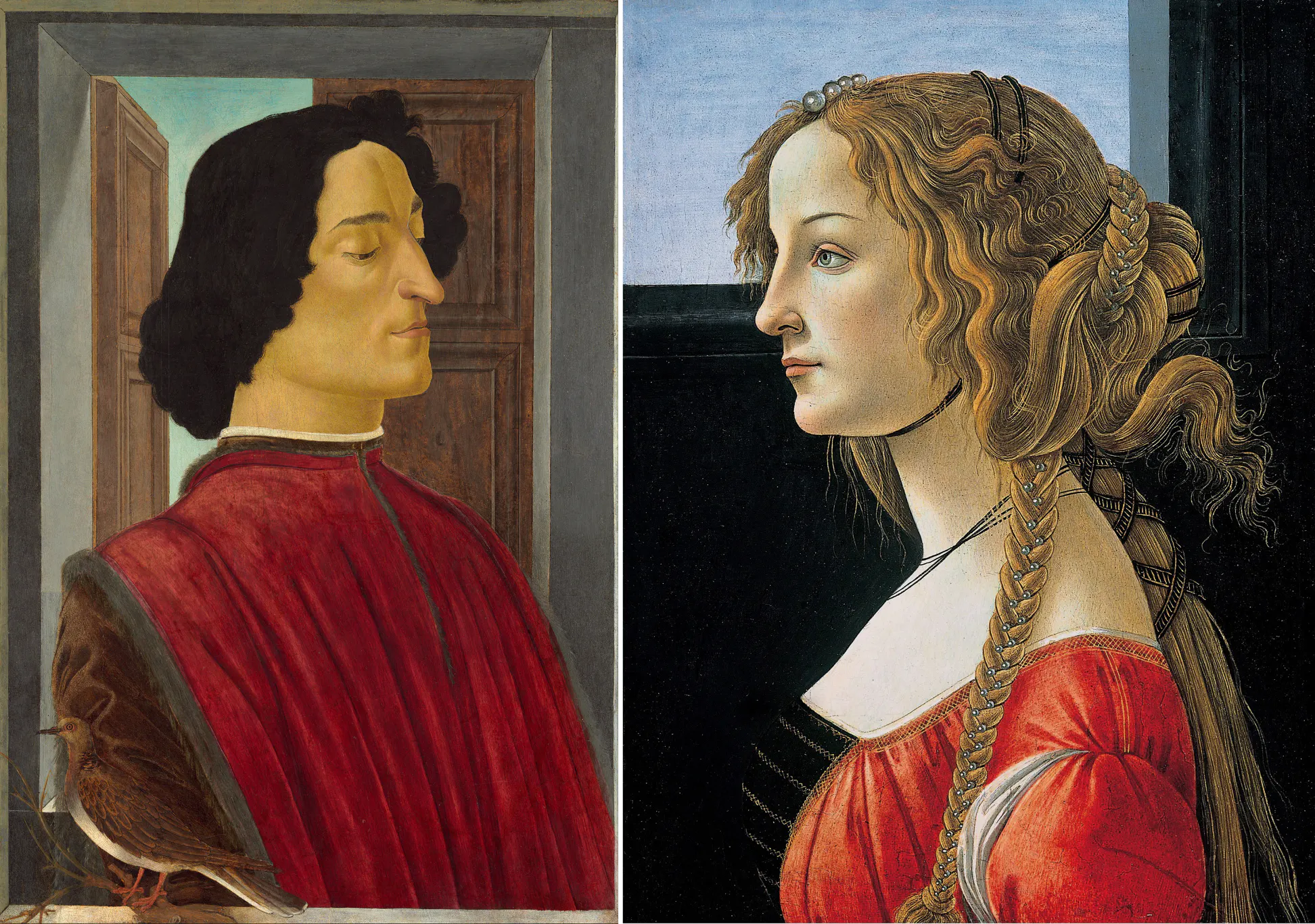
A few years later, Botticelli received a special commission from the head of the Medici family at the time, Lorenzo di Piero de’ Medici—known as the Magnificent. In April 1478, Lorenzo’s younger brother, Giuliano de’ Medici, fell victim to the Pazzi conspiracy. In an attempt to overthrow Medici rule, the rival Pazzi and Salviati families, with the backing of Pope Sixtus IV, orchestrated an attack in which Giuliano was stabbed to death inside the cathedral of Santa Maria del Fiore. Lorenzo was also targeted but managed to escape.
In the aftermath, the conspirators were publicly hanged, and Botticelli was commissioned to depict this in a so-called disgrace painting, which has since been lost. One of his portraits of Giuliano, painted either shortly before or after the assassination, was later copied multiple times.
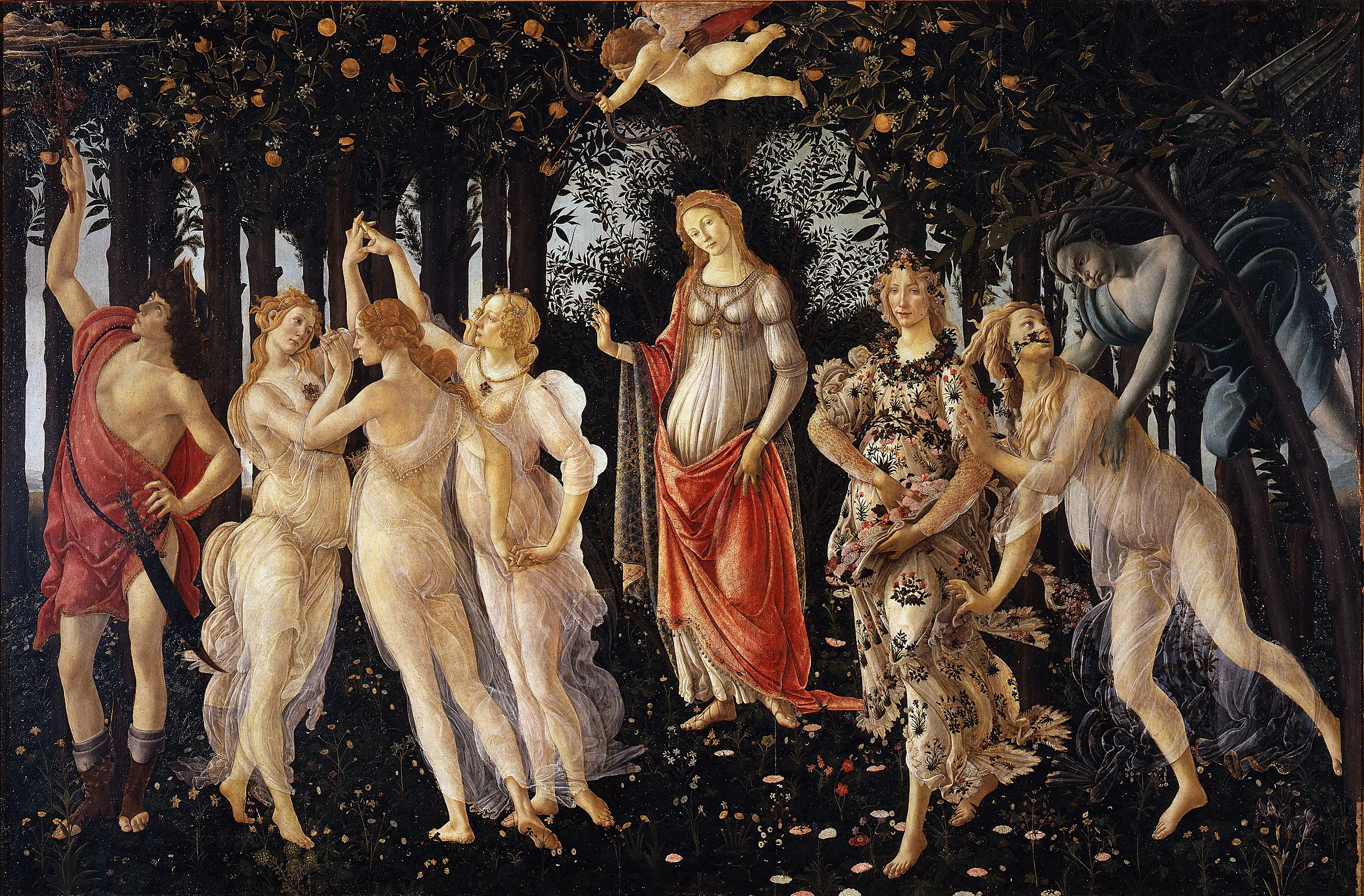
After Florence and Pope Sixtus IV reached a reconciliation, Botticelli, along with other painters, was summoned to Rome in 1481 to fresco the walls of the newly completed Sistine Chapel. Upon his return to Florence, he became a sought-after interior designer for the city’s upper classes. This work primarily involved the decoration of private spaces, particularly bedrooms and bridal chambers. Unlike the predominantly religious commissions of the time, these projects allowed artists to explore entirely new themes, inspired by the humanist circle cultivated by Lorenzo the Magnificent.
See also: The Tales Behind Art History's Most Important Muses
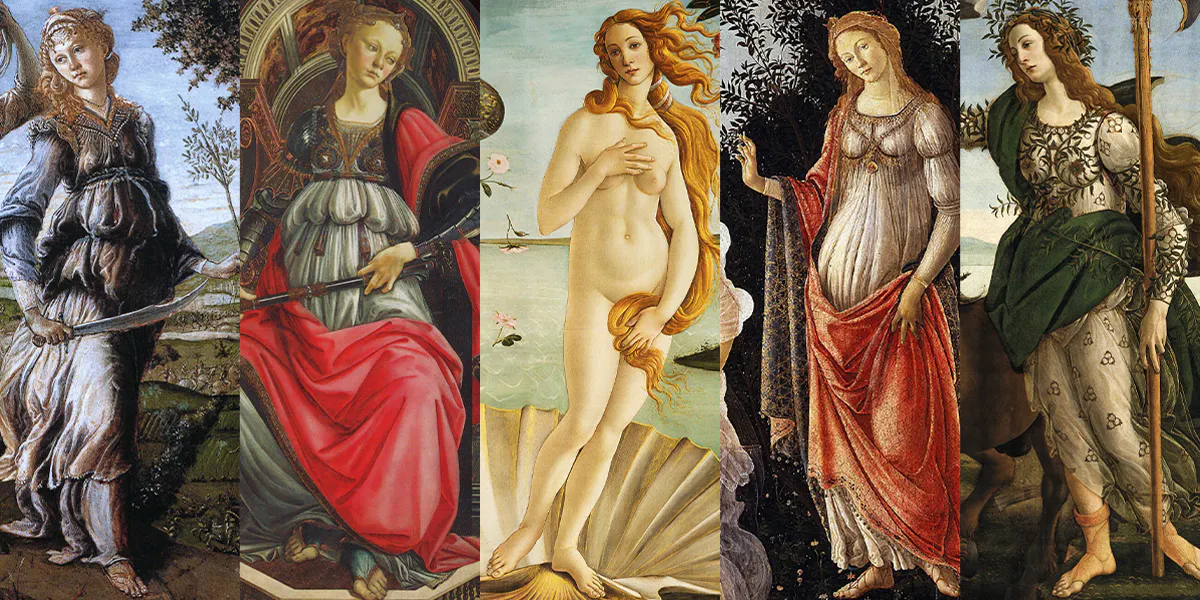
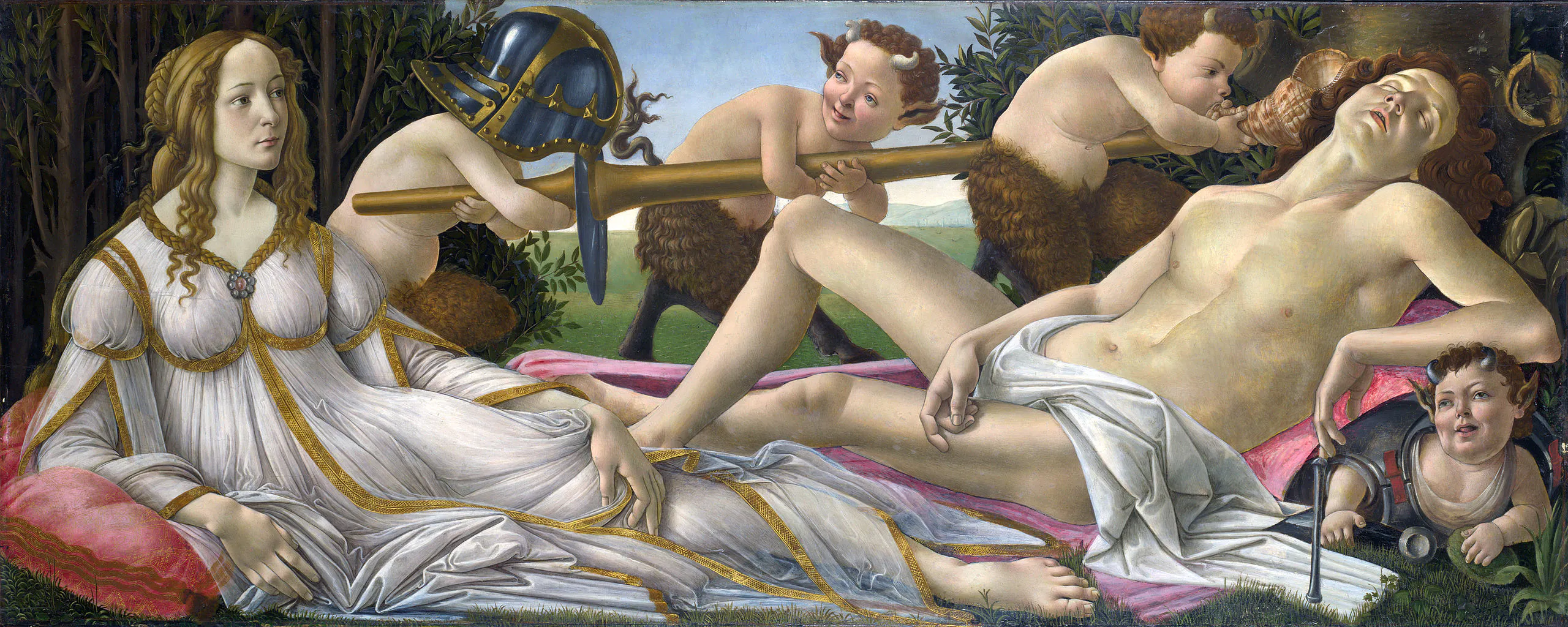
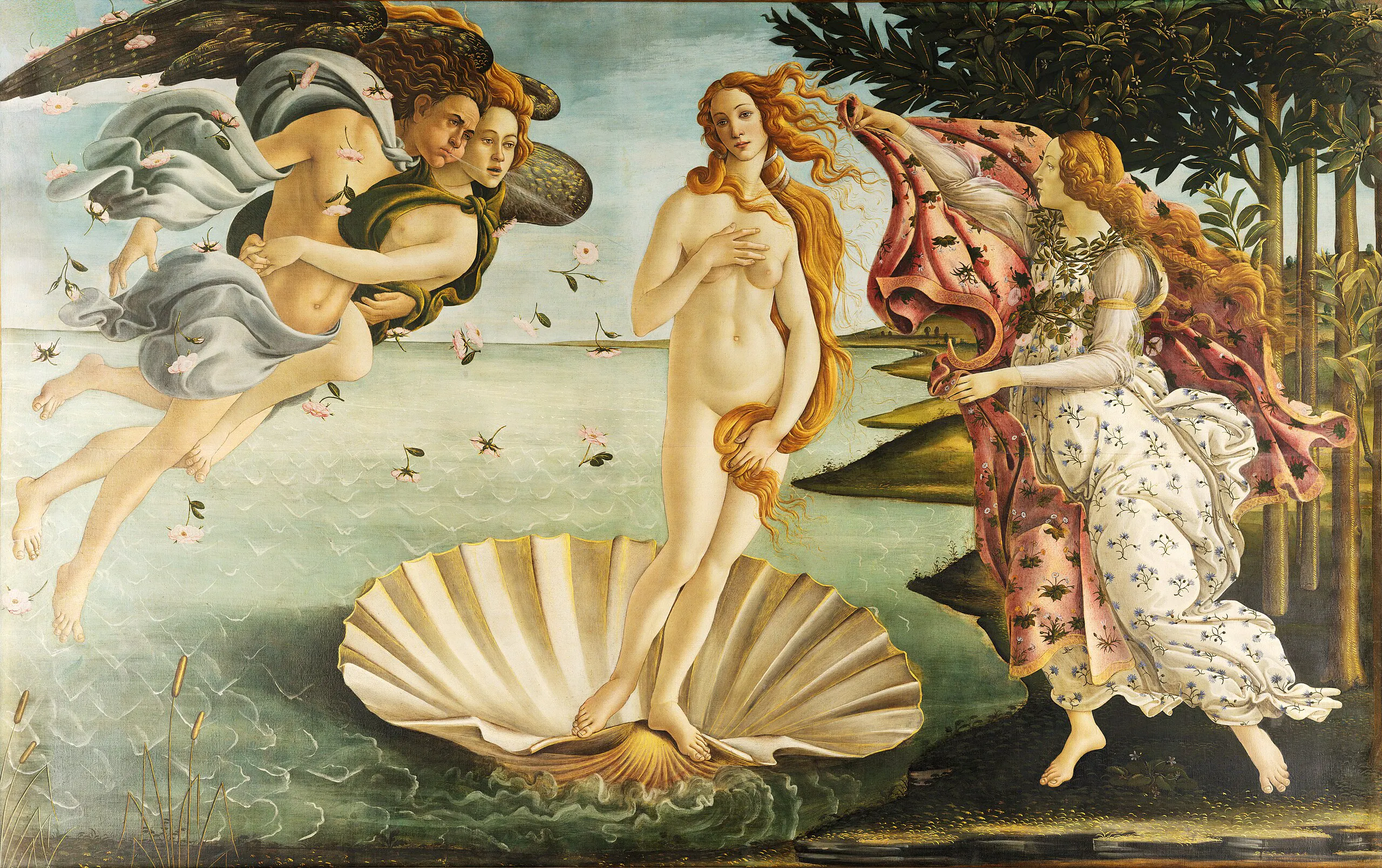
It was in this context that Botticelli created his two most famous paintings, The Birth of Venus and Spring (Primavera), both of which once adorned the walls of Medici estates and are now displayed in the Uffizi Gallery. Another work, Mars and Venus, was also originally intended for a bridal chamber, likely as a decorative panel for a dowry chest (cassone).
Of course, only a few people had the privilege of seeing these paintings during Botticelli’s lifetime. The general public had to make do with works displayed above altars and on the walls of Florentine churches and other public buildings. However, this should not be seen as a source of dissatisfaction, as the commissions were numerous and, in terms of artistry and quality, in no way inferior to the works created for private clients.
Botticelli, however, never overworked himself or the employees in his workshop, which he had set up in his family home. He preferred to focus on quality rather than quantity, always striving to deliver commissioned works reliably and to the highest standards. By comparison, Leonardo da Vinci’s clients sometimes had to wait years for their orders, and occasionally, they received nothing at all.
See also: Leonardo da Vinci: Universal Genius
It is also worth noting that Botticelli and Leonardo—who was seven years younger—held little admiration for each other’s art, likely due to their starkly different styles. While Botticelli focused on clear contours in his compositions, Leonardo favoured the soft, blurred technique of sfumato.
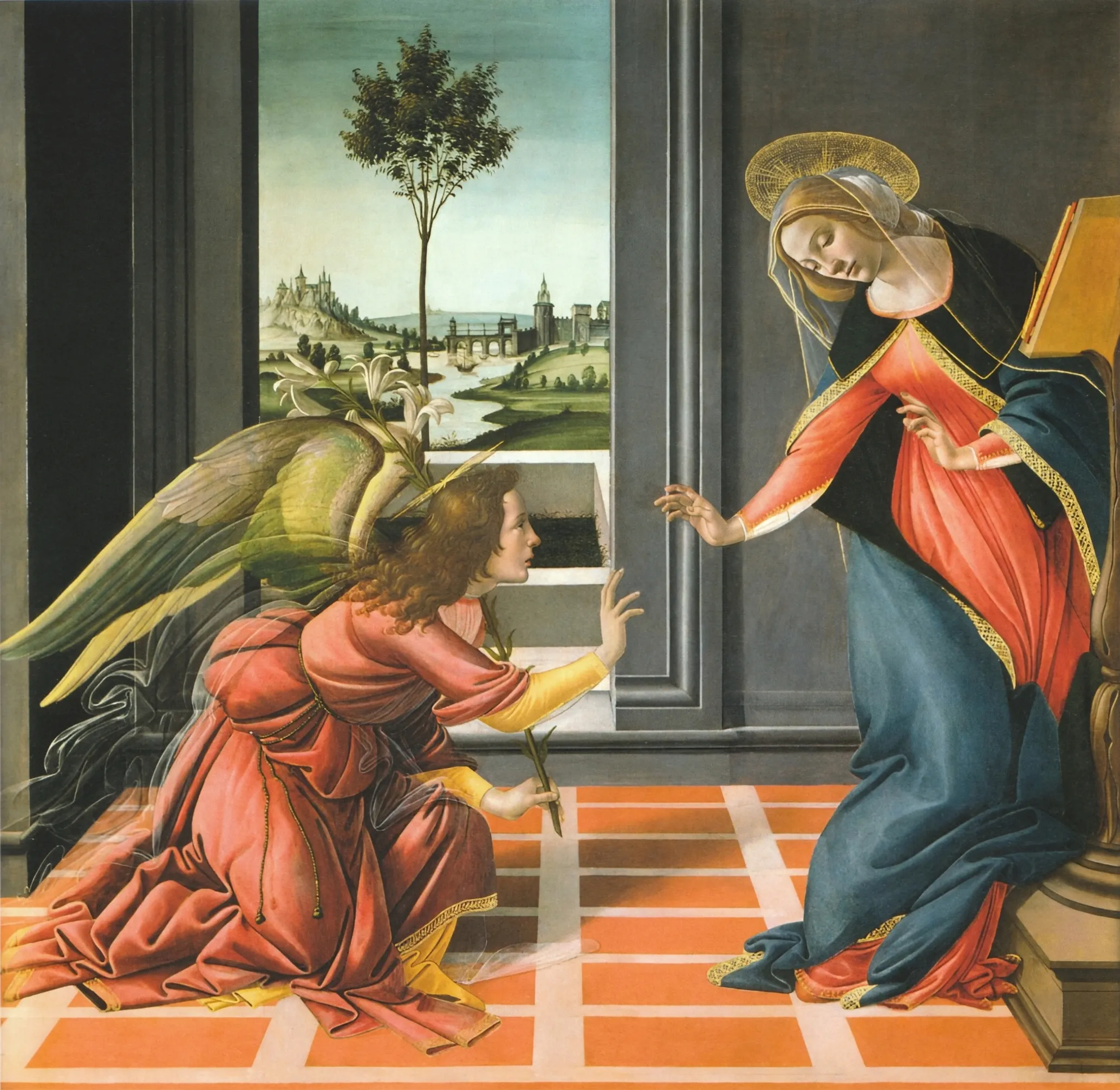
In 1492, the death of Lorenzo the Magnificent meant that Botticelli lost an important patron, but his connection to the Medici family did not come to an end. He continued to have a significant patron in Lorenzo di Pierfrancesco de' Medici, a member of the younger branch of the family. Meanwhile, Piero di Lorenzo de' Medici, the son and successor of Lorenzo the Magnificent, demonstrated little political skill during the turbulent times, which ultimately led to his exile, along with his family, from Florence in 1494.
A new ruler took power, albeit only indirectly: the Dominican monk Girolamo Savonarola from Ferrara. In his sermons, Savonarola denounced the corruption of the Church and the lifestyle of the upper classes, which he believed was marked by worldly vanity and blasphemy. He quickly gathered a following, though it is uncertain whether Botticelli was among them. However, his next older brother, Simone, certainly was.
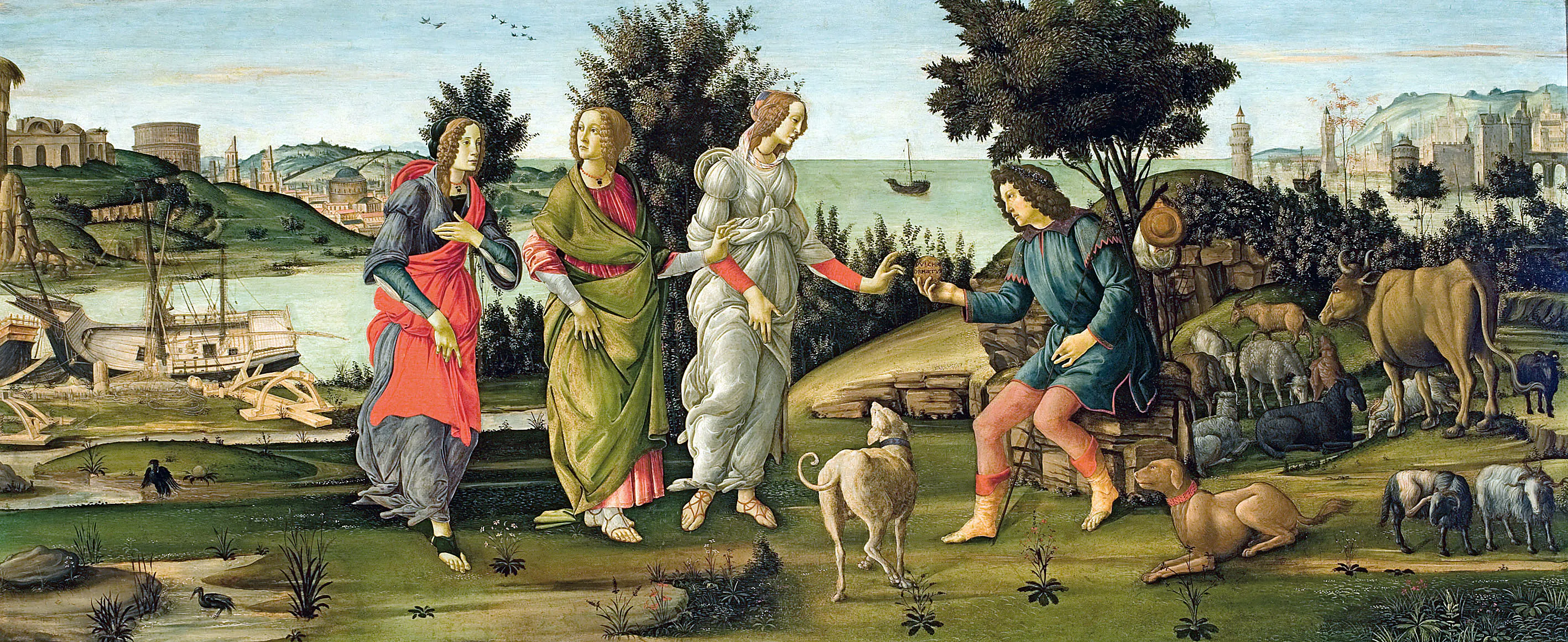
Savonarola's reign lasted four years and ended in 1498 with his execution by hanging and subsequent burning, after he had already been excommunicated by the Pope. During this period, Botticelli often spent time outside Florence, where, in 1492, he and his two eldest brothers, Giovanni and Antonio, had acquired a country house. He preferred to focus on decorating the rural residences of wealthy Florentine families who continued to maintain their lifestyle despite Savonarola's sermons.
Want more articles like this straight to your inbox? Subscribe to our free newsletter!
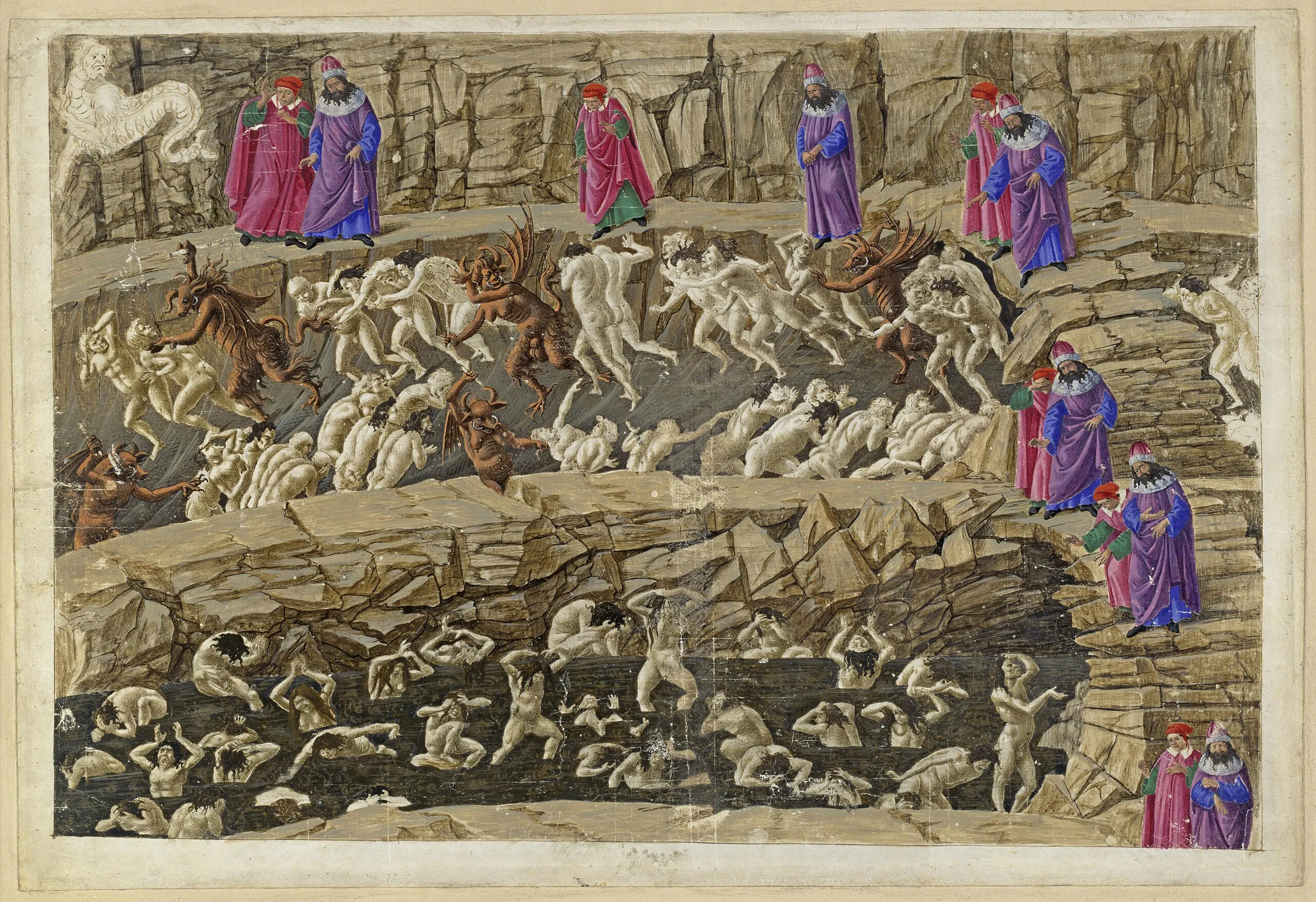
During these years, Botticelli completed two notable works. One was an extensive series of illustrations for Dante Alighieri's Divine Comedy, and the other was the tempera painting The Slander of Apelles. The illustrations, of which 93 sheets of parchment have survived, are among the few unequivocal testimonies to Botticelli's exceptional talent as a draughtsman. The series, with individual pictures at various stages of completion, was commissioned by Lorenzo di Pierfrancesco de' Medici, whose untimely death in 1503 may have prevented its completion.
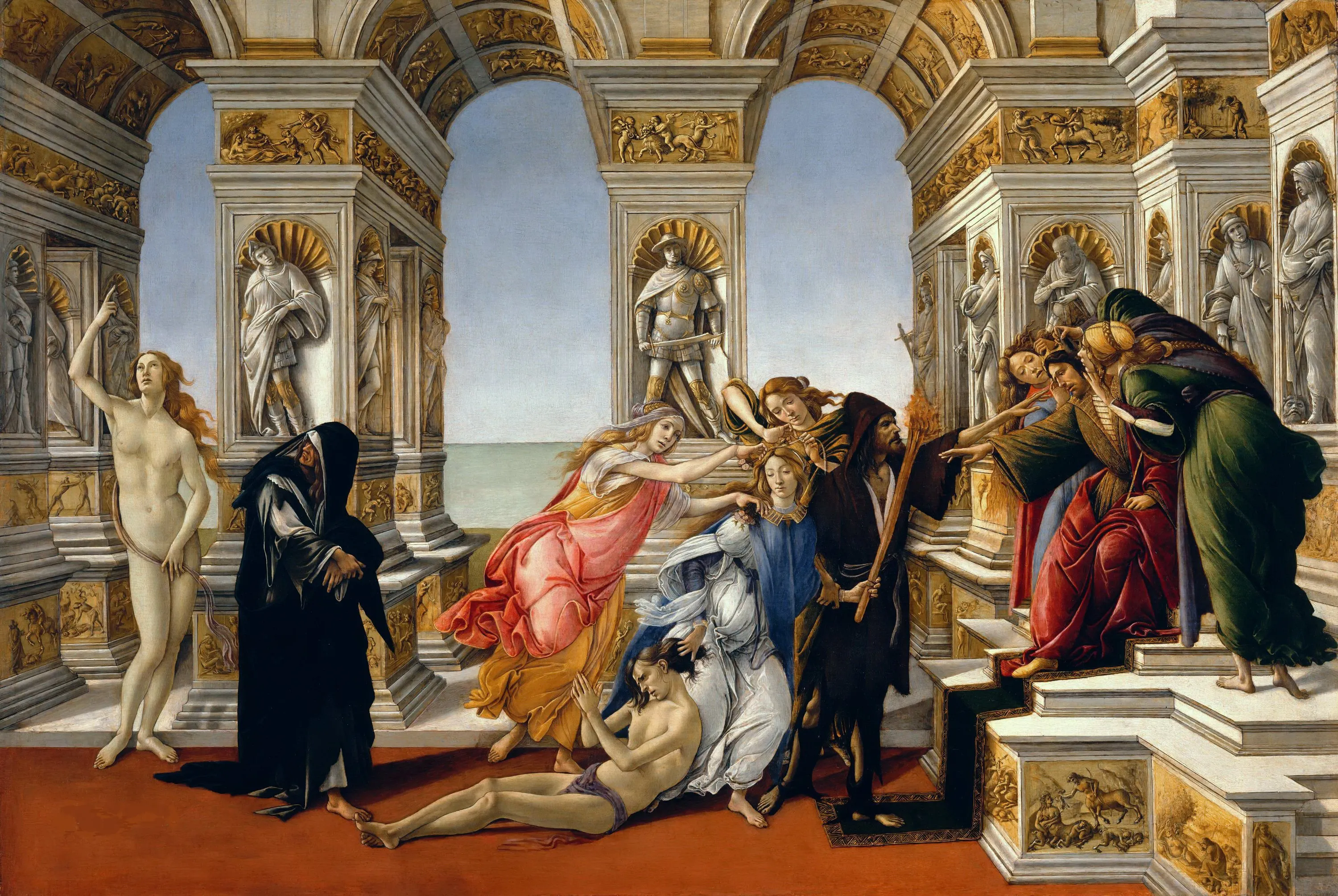
In The Slander of Apelles, Botticelli drew inspiration from a painting by the renowned ancient artist Apelles, which has only survived through descriptions. According to these accounts, Apelles had presented his work to the Egyptian king Ptolemy I as a gift after being falsely accused. The painting depicts Apelles being dragged by his hair before the king, who, wearing the donkey ears of King Midas, listens to the false whispers of slander.
The work brings together personifications of many negative qualities, which are contrasted with the "naked truth" that resembles the protagonist in The Birth of Venus. It remains unclear whether Botticelli executed the painting as a commission, or for whom, though he was frequently compared to Apelles during his lifetime.
See also: 6 Facts You Didn’t Know About Masaccio
In his later years, Botticelli focused primarily on religious painting, which was naturally influenced by the commissions he received. Florence was experiencing a period of crisis at the time. In addition to political and clerical difficulties, the city faced frequent famines due to poor weather conditions, and plague and other epidemics repeatedly flared up.
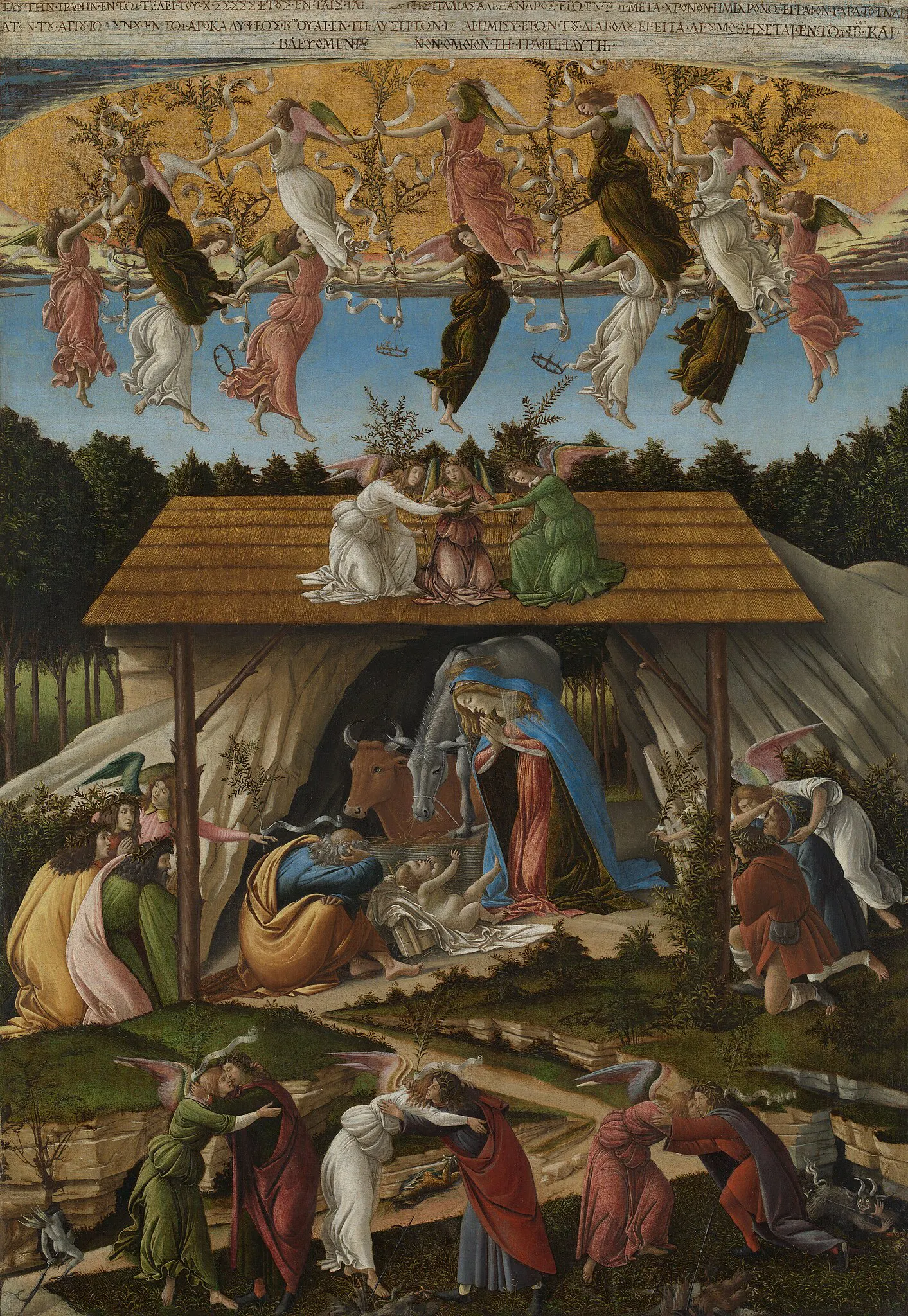
It is interesting to note that Botticelli was one of the first painters to speak directly through one of his works. In Mystical Nativity (also known as Adoration of the Child), painted around 1500-1501, a message from the artist can be read at the top of the painting in Greek script and language. With both the motif and the inscription, Botticelli expressed his hope for imminent redemption following the troubled times, which he equated with the Apocalypse.
In the last ten years of his life, Botticelli made very few appearances, possibly due to illness, and only a handful of works can be attributed to this period. The unfinished Adoration of the Magi may well be considered his final work. The fact that he was still held in high regard in his hometown is evidenced by his inclusion, in 1504, in a commission of artists tasked with deciding where Michelangelo's monumental David should be placed.
See also: 5 Must-See Sculptures in Italy
Sandro Botticelli died on 17 May 1510 at the age of 65 in his hometown of Florence. While he was a highly acclaimed artist during his lifetime, he became increasingly forgotten in the years that followed. This began to change in the 19th century, when artist groups such as the Pre-Raphaelites rediscovered his work. The transfer of his pieces to public collections also played a significant role in his resurgence. Above all, The Birth of Venus, which has been on display in the Uffizi since 1815, became one of the greatest icons in art history.
Works by Botticelli now fetch prices in the double-digit millions on the auction market. The current record was set in 2021, when Portrait of a Young Man Holding a Medallion (circa 1470-80) was sold at Christie's in New York for $92.2 million.