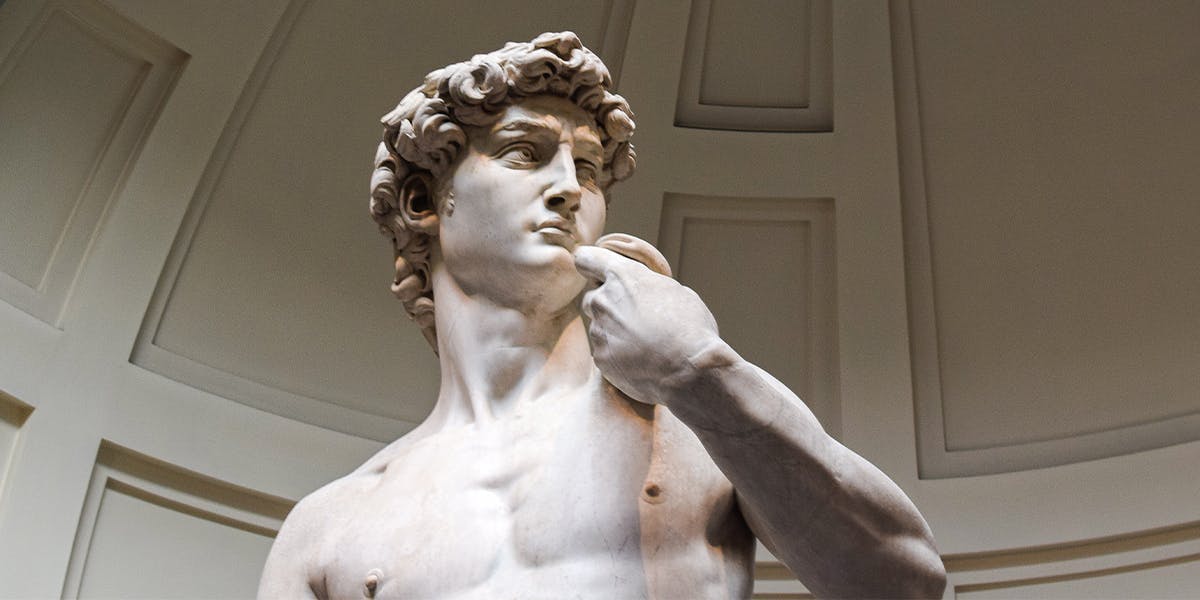
Together we embark on a virtual tour of Italy, in search of five particularly significant sculptures. We will stop in four well-known cities to admire them up close.
David by Michelangelo
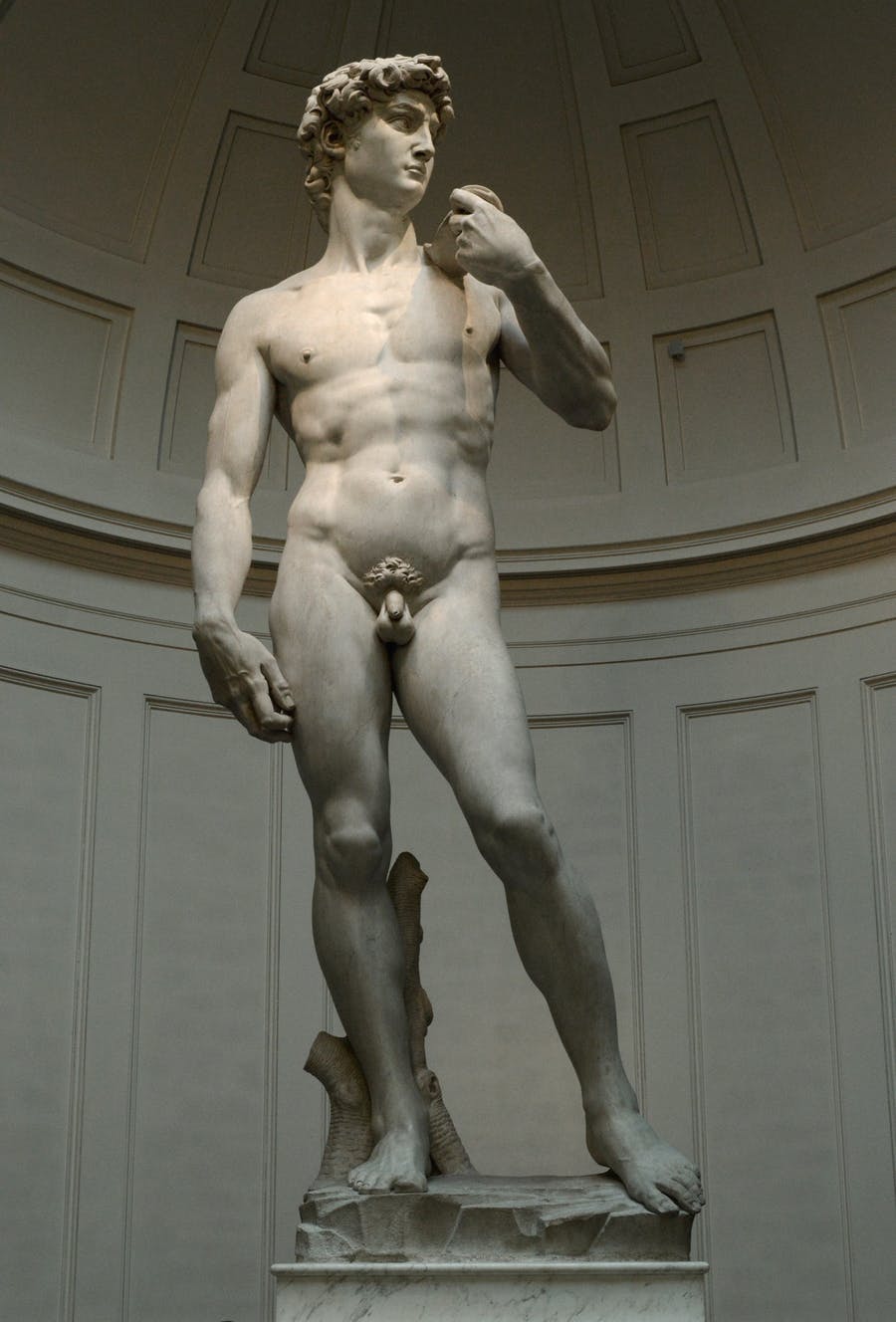
Our little journey begins in Florence, the cradle of the Renaissance and hometown to the father of the Italian language, the poet Dante Alighieri. Here, at the Galleria dell'Accademia, we raise our eyes to the enchanted David of Michelangelo, a symbol of the Renaissance and emblem of the Tuscan city and Italy in general. The work depicts the Biblical character who found himself facing the tyrannical giant Goliath. Inspired by the aesthetic canons of classical culture, David encapsulates the ideal of male beauty in art and the Renaissance man-hero. The apparently disproportionate size of the right hand and head is a conscious choice for two reasons: first, some parts of the statue necessarily had to be larger in order to be seen from below; secondly, the right hand represents the powerful man, with a strong grip, while the head represents intellect and reason, which elevates the human being from the animal.
Related: Travel the World Through Art
Pietà by Michelangelo
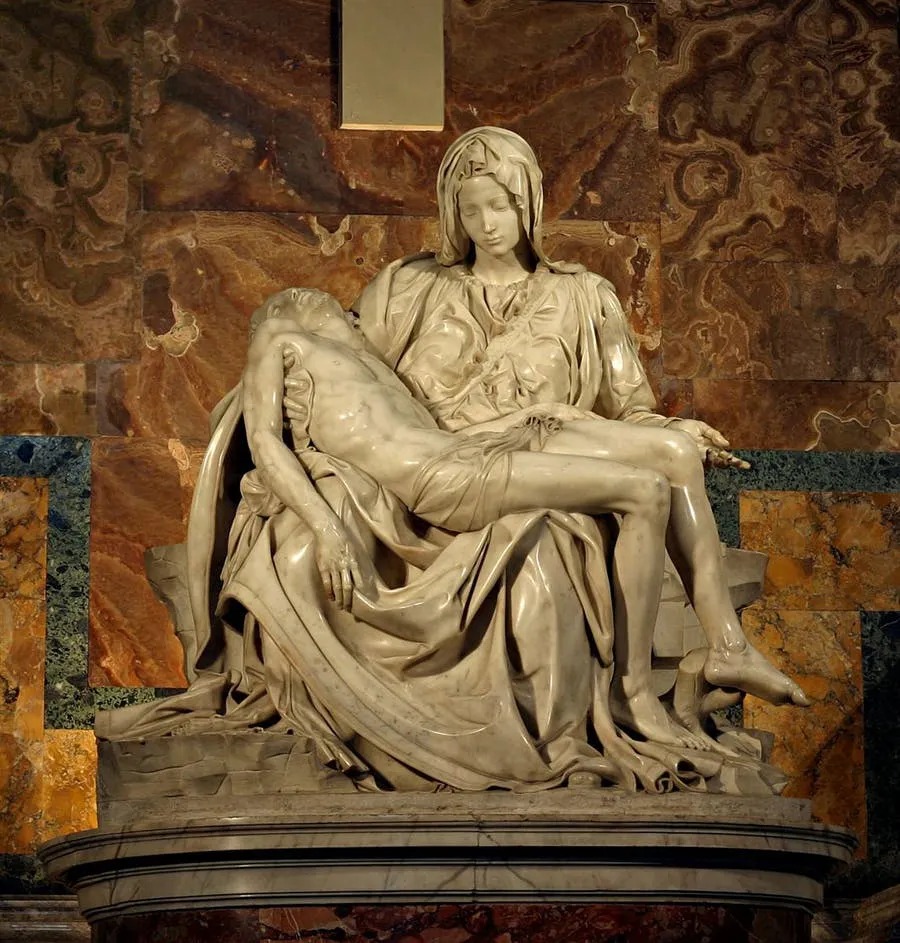
From Florence we move to the Italian capital, Rome, nicknamed the Eternal City. Here, in St. Peter's Basilica in the Vatican, we are amazed by another Michelangelo masterpiece, the Pietà, which, in addition to being one of the most beautiful works in the history of art, is also the only one that bears the signature of the master (on the shoulder that holds the mantle of the Virgin). Made of white Carrara marble when the artist was in his early twenties and commissioned by the French cardinal Jean Bilhères, the sculpture was the subject of some criticisms concerning the youthfulness of the depiction of the Virgin. It seems that this was a conscious choice by Michelangelo: the very young Virgin is the symbol of the Immaculate Conception and infinite purity. Another peculiarity, which can only be noticed by looking at the work from above: Christ has an extra tooth, to be precise a fifth incisor. In Renaissance works this tooth was nicknamed "the tooth of sin" and was ascribed to infamous subjects. However, its presence in the case of the Pietà seems to be due to the fact that, with his death, Christ bears all the sins of the world.
Related: 10 Famous Sculptures in Art History
Apollo and Daphne by Gian Lorenzo Bernini
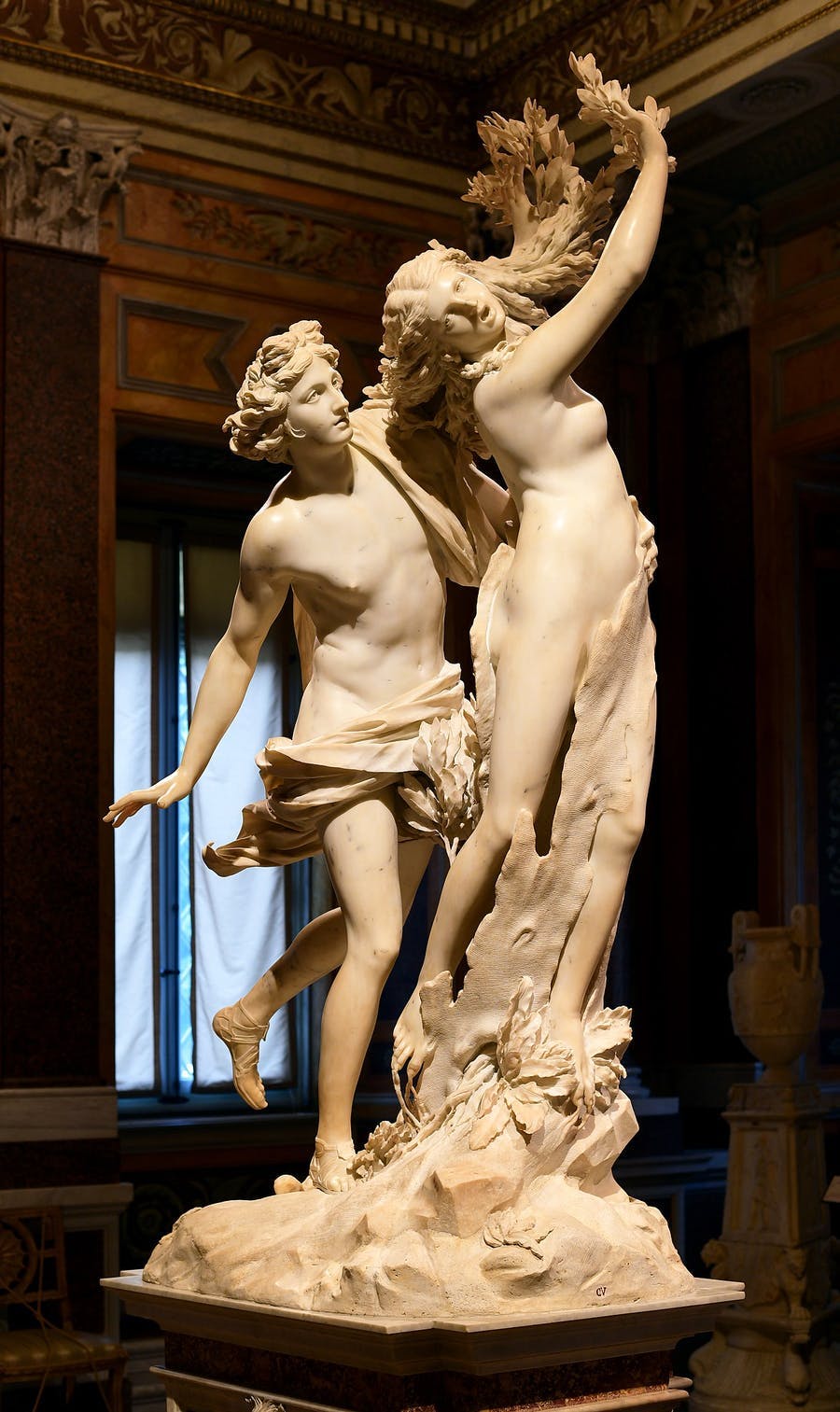
Also in Rome, in the Galleria Borghese, we also admire the sculptural pair Apollo and Daphne, created by Gian Lorenzo Bernini and commissioned by Cardinal Scipione Borghese. The work refers to the myth of Apollo and Daphne: Cupid, god of Love, angry with Apollo who had mocked him, shoots two arrows, one destined to make one fall madly in love, the other destined to reject the love received. The first arrow hits Apollo who, seeing Daphne in the woods, begins to chase her in the throes of an overwhelming passion. The nymph, hit by the second arrow, feels an immediate contempt towards Apollo, runs away and invokes the help of the gods, asking to be transformed to escape her suitor. The deities welcome her prayers and turn her into a laurel tree. Bernini's work depicts this myth precisely at the moment of the transformation of the nymph into a tree.
Related: An Artistic Representation of Breasts Throughout the Centuries
The Veiled Christ by Giuseppe Sanmartino
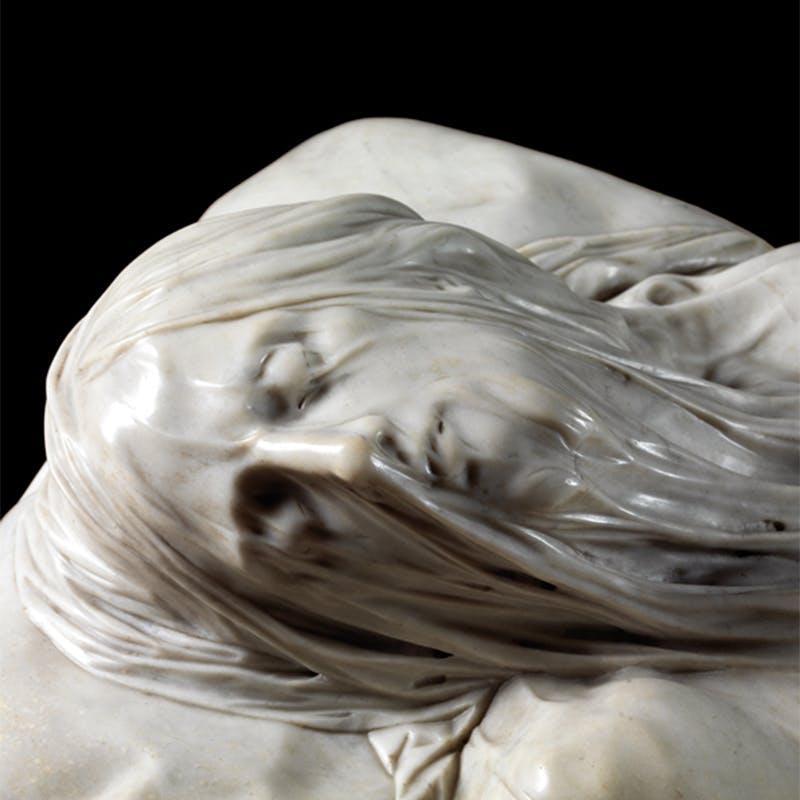
For the fourth sculpture we move to Naples. The city of a thousand churches, in addition its excellent cuisine, enjoys an inestimable artistic, historical and cultural wealth. Among these, the Veiled Christ by Giuseppe Sanmartino certainly deserves to be mentioned as a symbol of the Neapolitan city. This marble sculpture immediately had numerous admirers; among these was Antonio Canova, who declared that he would have gladly given up ten years of his life to be the sculptor of such a masterpiece. The veil that covers the face of Christ is made in such a masterly way that it was said that Raimondo di Sangro, the noble scientist and alchemist who had commissioned the work, taught Giuseppe Sanmartino "alchemical" marbling, where an actual veil would have been placed on the statue and then calcified in marble crystals. In reality the work was made entirely of marble, but the realism of the veil has perpetrated this myth.
Related: How the Medici Family Influenced Renaissance Florence
The Sphere by Arnaldo Pomodoro
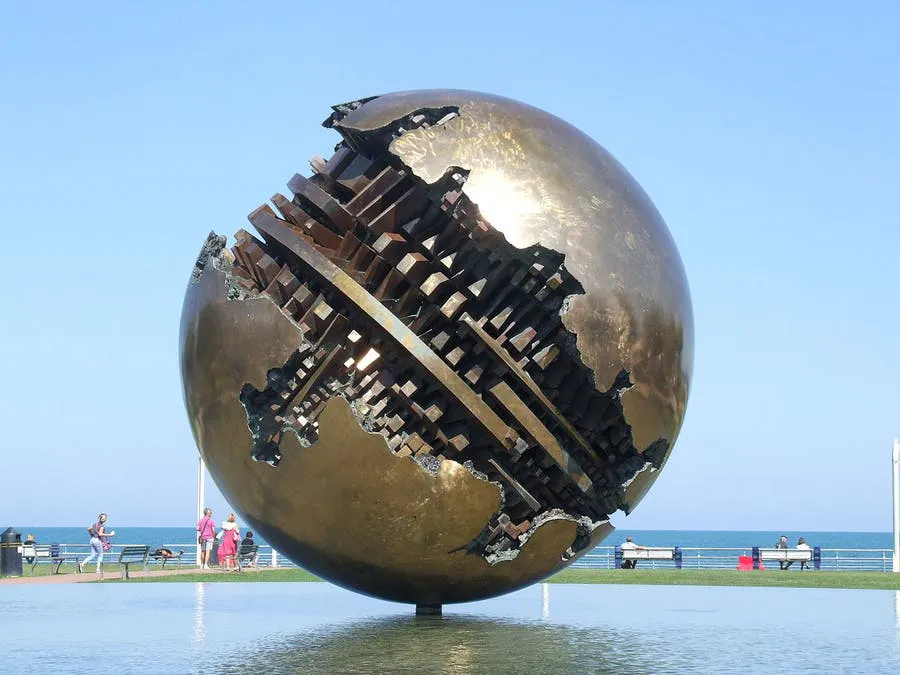
From the Tyrrhenian Sea on which Naples overlooks, we sail with our minds towards the Adriatic Sea, to the picturesque coastal town of Pesaro, where we find the Grand Sphere of Arnaldo Pomodoro (brother of Giò Pomodoro) on the Piazzale della Libertà. The bronze casting, also familiarly known as the "Pomodoro Ball", is placed on the surface of a fountain facing the sea. It was created by the artist in 1998, based off a a polyester model of the Sphere Grande - created for the Montreal Expo in 1967 - which arrived in Pesaro in 1971. The original is now in Rome in front of the Ministry of Foreign Affairs. An important feature of this work is its smooth and polished surface, which "splits" in the center revealing an internal mechanism, symbolizing the contrast between external perfection and hidden complications, as a metaphor for the complexity of the unknown.
Travel the art world with more articles on Barnebys Magazine