The five-generation family-owned optical business Moscot is a staple of New York City, particularly the Lower East Side. Since its inception 105 years ago the brand has built quite a name for itself, given the family patriarch started with only a wooden pushcart filled with ready-made eyeglasses.
The story of Moscot embodies the American Dream. At the turn of the century, Hyman Moschot, a young, twenty-something Belarusian emigrant, was standing on deck as the ship he’d spent the past two weeks on made its way to Ellis Island, New York. He’d fled his previous life in Eastern Europe in search of something new and great in the promised land — America.
Related: The Iconic Shades of Elvis
At the customs hall of Ellis Island, an officer eyed Moschot's passport and then gave Hyman a new last name, Moscot, that would, a hundred years later, be one of the world’s most famous brand names. Hyman Moscot then took the last ferry and arrived on Manhattan to begin his new American life.
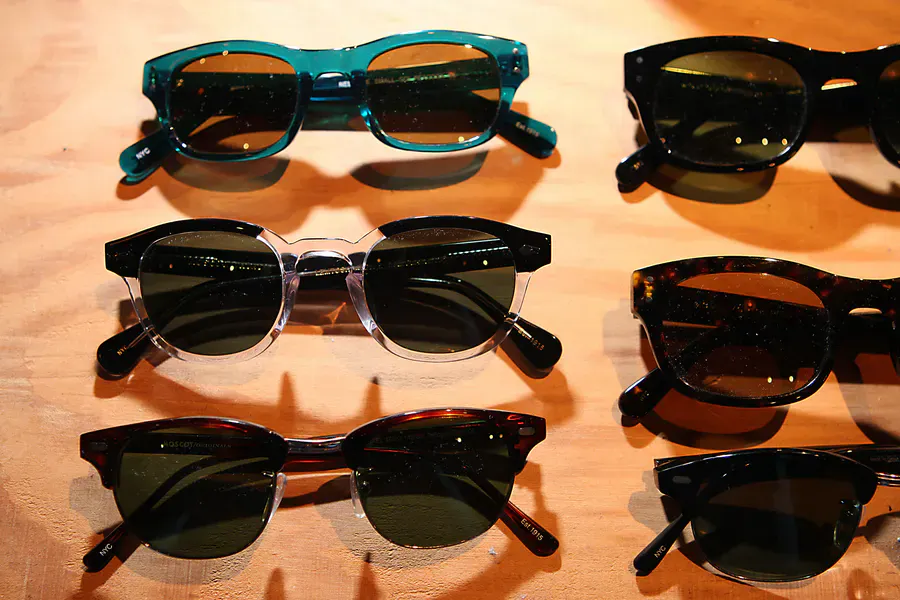
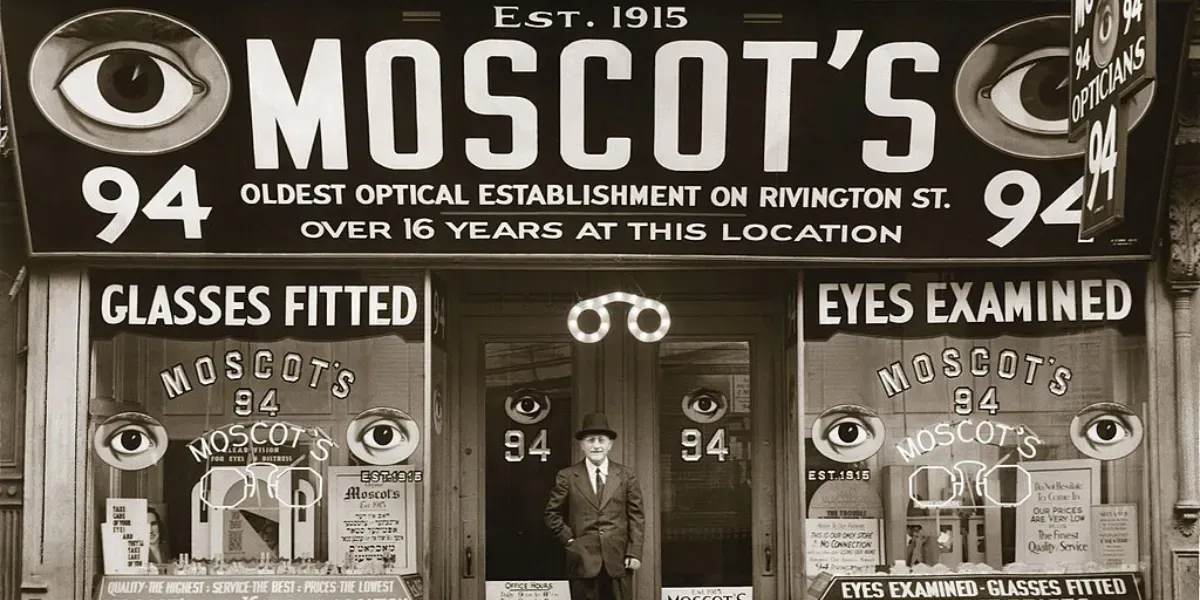
Since Hyman Moscot had been in the optical business back in Belarus, he decided to do the same in his new country. Moscot got his hands on a wooden pushcart and began selling ready-made eyeglasses up and down Orchard Street on the Lower East Side. With his linguistic capabilities being limited to Yiddish, his clientele was mostly immigrants coming into the city, just like himself. New York City, and particularly the Lower East Side, was an extraordinarily exciting place at the turn of the century with people from all over the world. In 1915, the first-ever Moscot eyeglasses and optician store opened on 94 Rivington Street.
Related: The Cocktails that Inspired History’s Creatives
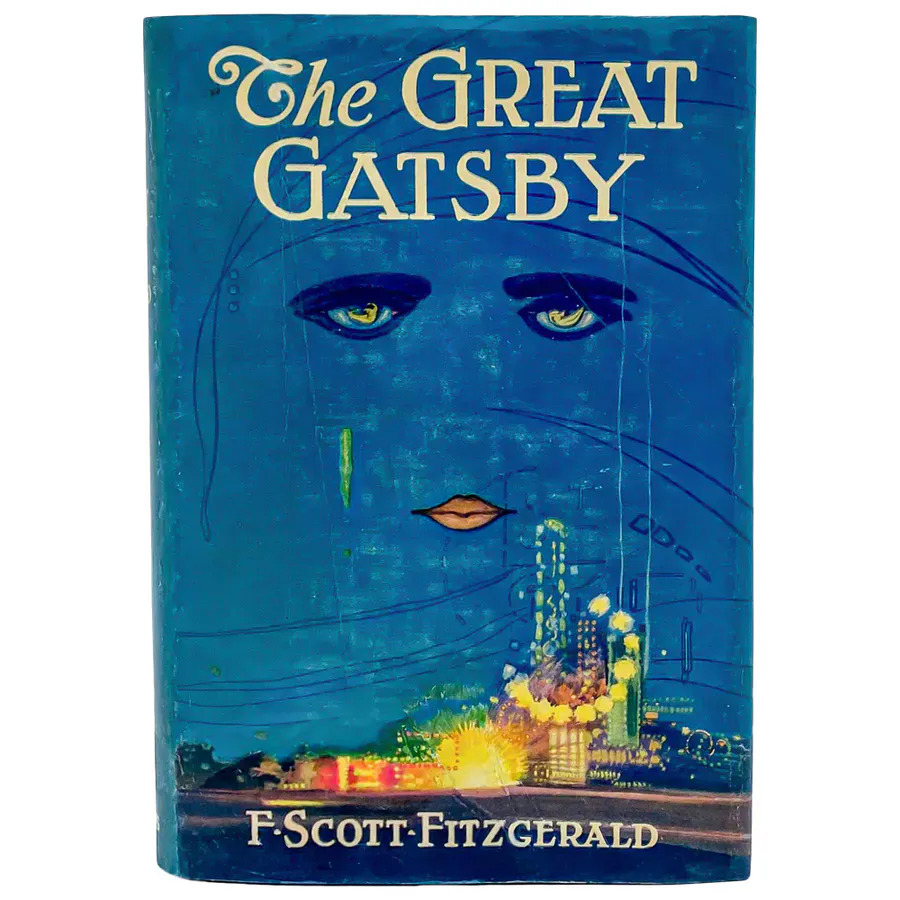
Literary buffs might be interested in knowing that the windows of the 94 Rivington Street store were filled with posters, signs and cut outs of giant eyes and glasses. Author F. Scott Fitzgerald was writing his novel ”The Great Gatsby” during this time, and people believe Mr. Fitzgerald was inspired by the Moscot store window when he created the Doctor T.J. Eckleburg billboard for the novel, which also decorated the first edition cover of the book.
Do you know what your glasses are worth? Start the appraisal process with ValueMyStuff!
By 1936, Hyman’s son Sol Moscot who had been an active part of the family business for eleven years, moved the flagship store to the corner of Orchard and Delancey. He also changed the company name to Sol Moscot.
The Moscot family and brand has been on Orchard and Delancey on the Lower East Side for over 100 years now, only recently moving to a new space just across the street. Since Hyman first started lugging around a pushcart selling optics, five generations have been invested in the brand and its evolution, with family members being active in all different aspects of the business such as optometry, finance, and design.
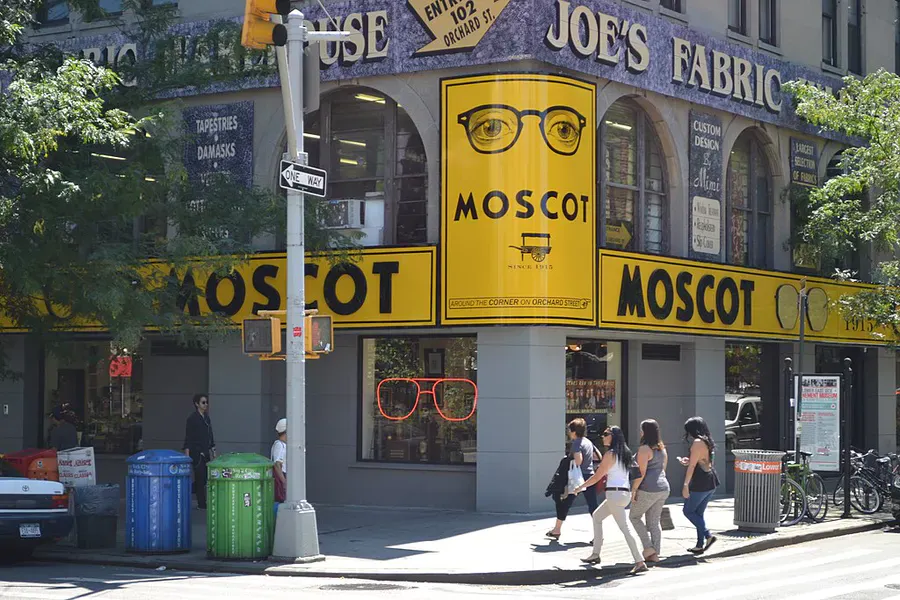
Since Moscot’s founding over 100 years ago, the craftsmanship behind each pair of frames has unmistakably been perfected. The company is run by several family members: optometrist Dr. Harvey Moscot, his brother Kenny Moscot, and Harvey’s young son, Zack Moscot, who is now leading the brand into a new era with digital advancements and innovative ways of designing optic frames. Zack Moscot has collaborated with Mr. Porter, Common Projects, and Freemans Sporting Club, keeping Moscot’s history and experience in tact, while venturing into modern trends.
Related: Summer in the Sixties
Moscot offers up two different categories of frames: the Originals and the Spirit collections. The Originals take inspiration from the eyewear design of the 1930s-1960s, while the Spirit collection has a much more modern touch while maintaining the Moscot DNA.
Want more articles like this straight to your inbox? Subscribe to our free newsletter!
Here are the most iconic frames that have come out of the shop on the Lower East Side:
Lemtosh
Arguably Moscot’s most famous frame, though they are far from the oldest of the bunch. Actor Johnny Depp has become synonymous with the Moscot Lemtosh, particularly wearing them in the film Secret Window (2004), but these were not designed for Depp. Moscot will for sure continue to perfect the frame for as long as the company exists.

The Theroux
These are an exact replica of the pair of glasses actor Justin Theroux wore in the timeless David Lynch classic Mulholland Drive. Theroux is a long-time customer of the brand, so it only made sense they made these limited frames based on the vintage, French-style glasses Theroux wore in the film. The Theroux were released in 2009, eight years after Mulholland Drive came out, and were limited to just 300 pairs.
Yente
Famously named after an Aunt Etta in the Moscot family, these square, granny frames are actually quite fun. They look like they’ve been yanked out of an episode of Golden Girls, but still have a modern touch and could be pulled off by any given hip lady between the age of 2 and 102.
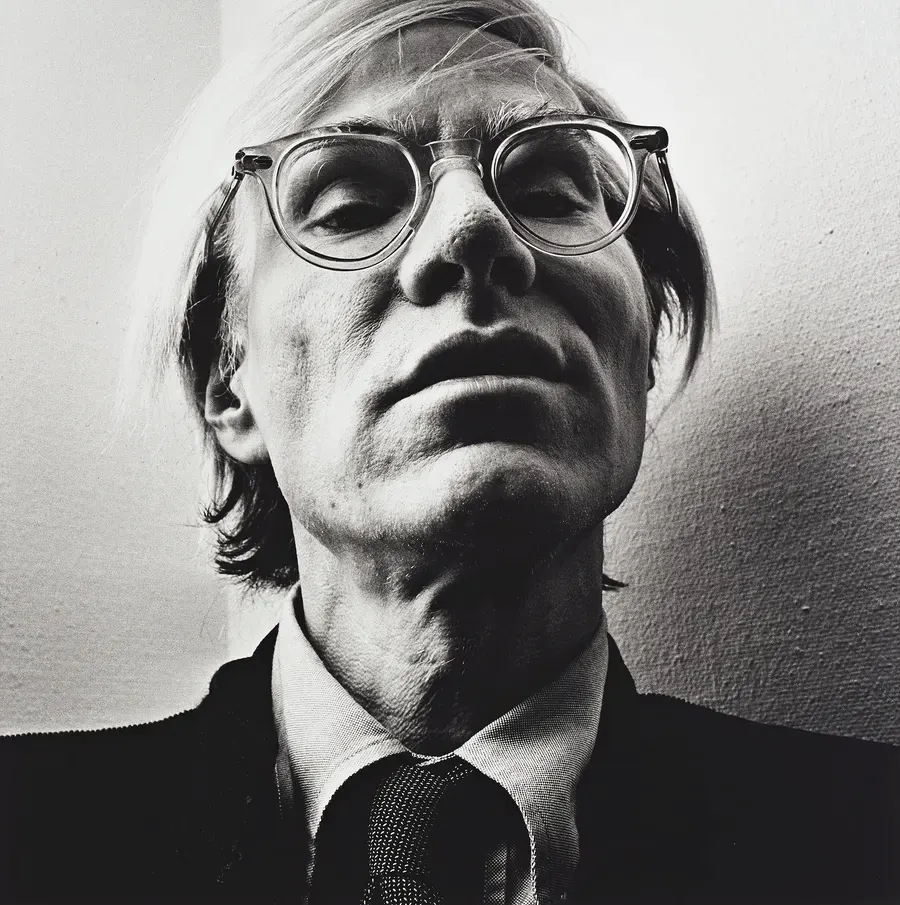
Miltzen
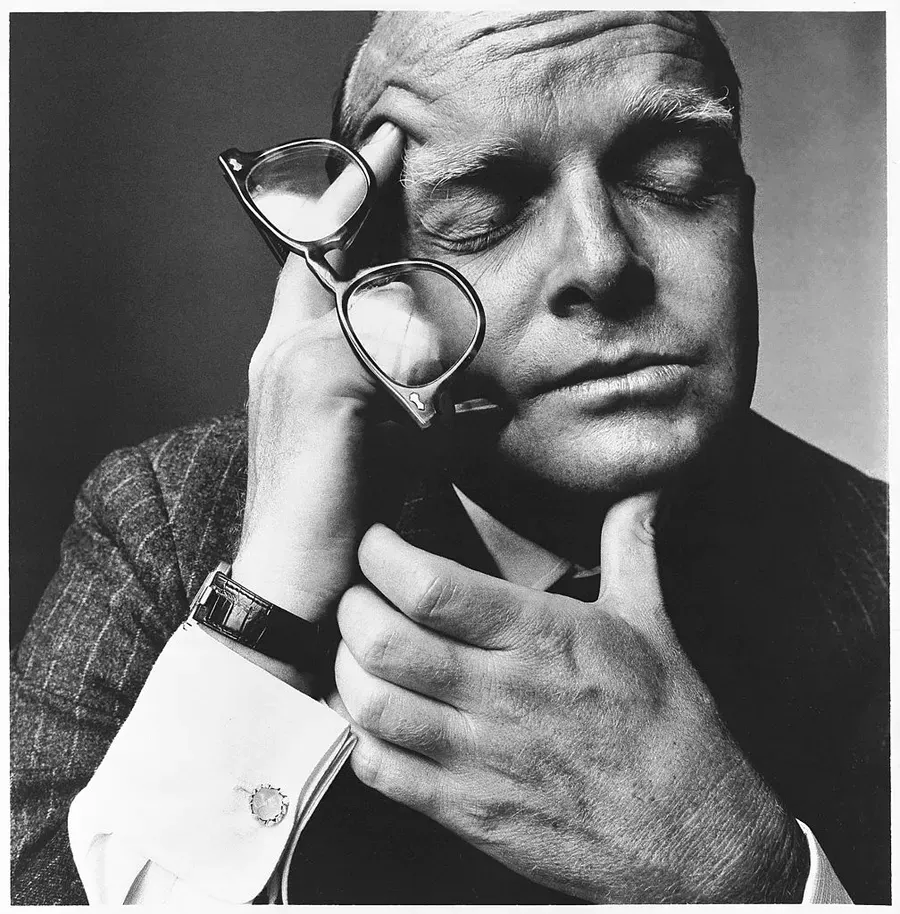
Worn by Truman Capote and Andy Warhol, the Miltzen has been around since the 1930s and serves as one of the staple models of the Moscot brand. These have a similar story regarding the name as the Yente; the Moscots had an Uncle named Heshy, ”who everyone inexplicably called Uncle Miltzen,” as the Moscots explain on their website.
Yukel
The Yukel is probably one of Moscot’s most timeless frames ever made, along with the Lemtosh. The Yukel has that 1950s-era vibe that is effortlessly classic. They’re basically a pair of horn-rimmed eyeglasses, but stylized and crafted in a way rarely seen anywhere else than with Moscot.
This is an updated version of the article originally published on April 17, 2020.
Find more articles on Barnebys Magazine
Text by David Johansson