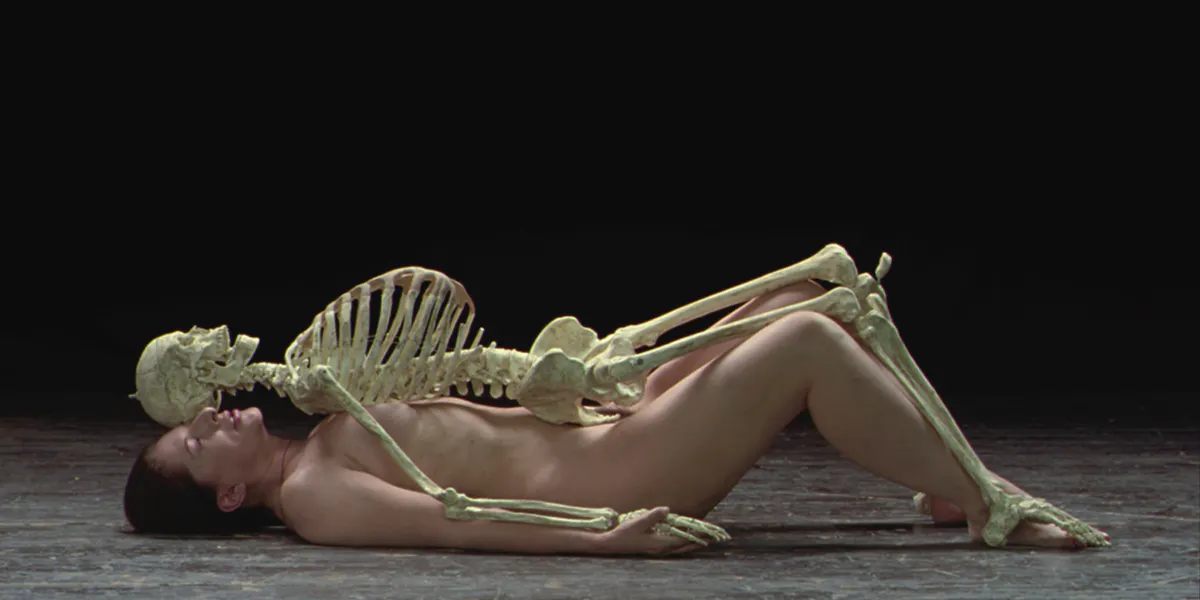
Born on November 30, 1946 in Belgrade, Serbia, Marina Abramović was first raised by her Orthodox grandmother until she returned, at the age of six, to live with her parents. They had a conflicting, violent relationship, and this spread over into their treatment of the young Marina. The atmosphere of tension and violence fashioned Abramović’s character from early on, and she learned to push back her physical limits as a survival technique.
Related: An Interview with Marina Abramović
She studied at the Academy of Fine Arts in Belgrade at the end of the 1960s, and very quickly drew attention for her use of dangerous accessories to damage her body (by flagellation or laceration, for example), as well as various psychoactive products to test her resistance. She would take herself to the fainting point regularly, and she went as far as freezing herself and suffocating herself in flames. Her extremist tendencies won her widespread popularity, and she appeared at European festivals alongside the likes of Gina Pane and members of Viennese Actionism groups, who also advocated for radical art.

Related: 10 Women Who Rocked the Art World
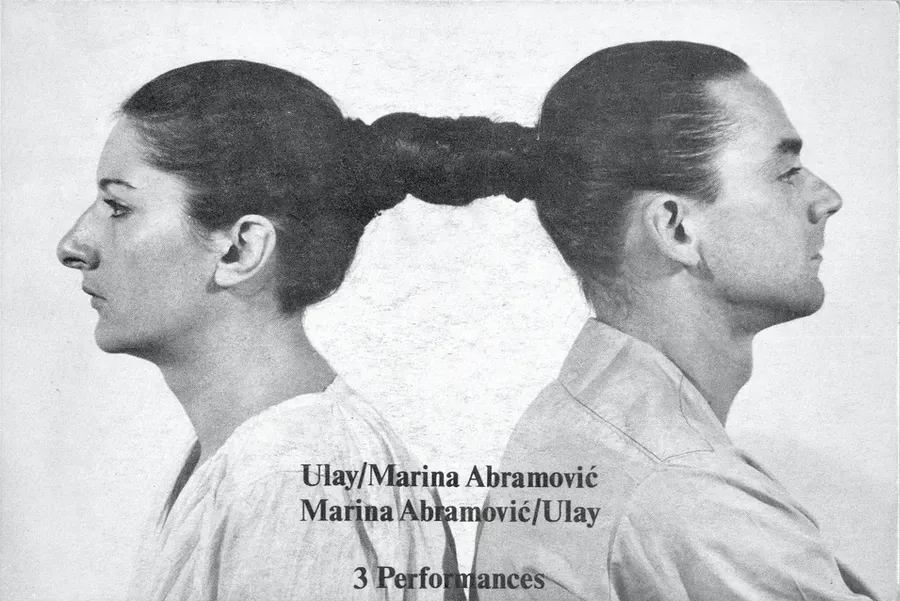
In the early 1970s, Abramović moved to Amsterdam. She took part in the Biennale de Paris in 1975, the same year in which she started her artistic collaboration and personal involvement with Ulay, a German performer whose skillful mise-en-scéne and documentation would boost her international renown. Their fruitful partnership lasted over twelve years, with notable performances such as exhibiting themselves like living tableaux in museums, or breathing the air in one another’s lungs until they suffocated. They ended their relationship stylistically during The Lovers in 1988, when they each started at opposite ends of the Great Wall of China, and walked some 2,500 kilometers over several months to meet halfway and say goodbye.
Related: The Provocative Art and Cryptic Death of Ana Mendieta
Abramović approaches her art less as a series of spectacular performances and more as a deep reflection on the conventional limits of her body and mind, with the goal of freeing herself from or overcoming them, almost in a rite of purification. True bodily liberty comes at this price, even if this type of art is difficult to sell to collectors. Although performance art is not really commodifiable, sponsorship and the sale of derivative products enable her to cover her needs. Every performance requires meticulous preparation as well as stringent discipline for both body and mind. To this end, Abramović has consulted Nepalese monks, Oceanic aboriginals, and South American shamans. Since the end of the 1980s, she has extended her artistic ambitions by teaching, acting as a guest lecturer in art schools and academies in Paris, Berlin, Hamburg, and Brunswick. Germany is particularly receptive to her work, as seen by her success at the various Documenta events in Cassel. However, she has followers all over the world who are willing to come thousands of kilometers to participate in or view her performances.

Related: 5 Feminist Masterpieces
In 1997, Abramović was awarded the Golden Lion at the Venice Biennale for the Best Installation. In 2005 she presented her video installation Balkan Erotic, a commission combining pornography and central and eastern European folklore, in Milan. The same year, she directed or re-performed a series of seven famous performances at the Guggenheim Museum in New York for archiving purposes. In 2010, the MoMA opened its doors to her for 512 hours of performance in The Artist is Present, which drew a whopping 750,000 visitors and resulted in a documentary of the same name. In 2011, the Garage Center for Contemporary Culture in Moscow put on a huge retrospective celebrating the artist.

Related: Marina Abramović to Lecture at the Folkwang University of the Arts
In recent years, the woman who is considered the ‘grandmother of performance art’ has continued working, and even featured as the main character of the play The Life and Death of Marina Abramović, directed by Bob Wilson. In a way, it has given her a type of immortal status, without any harm to herself.