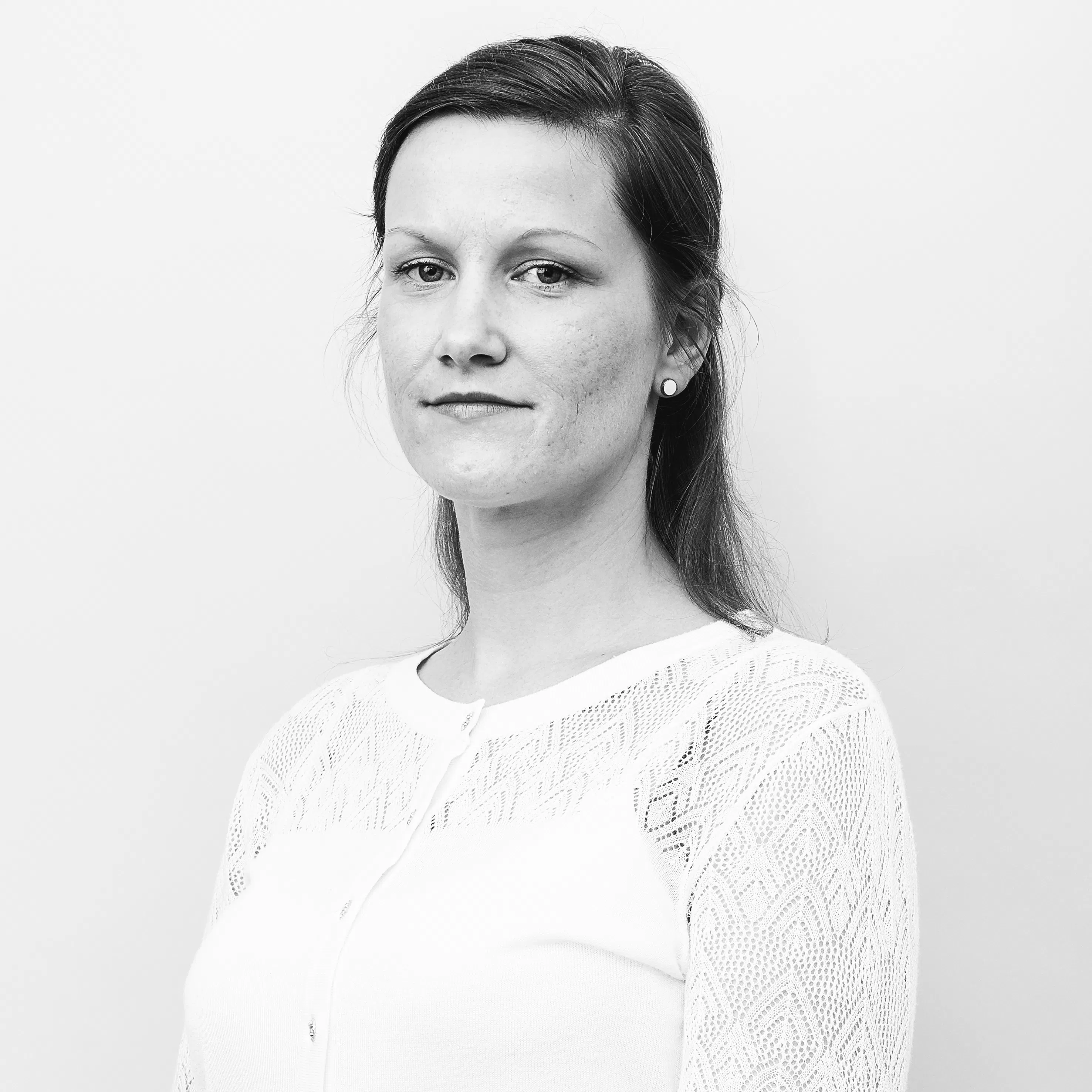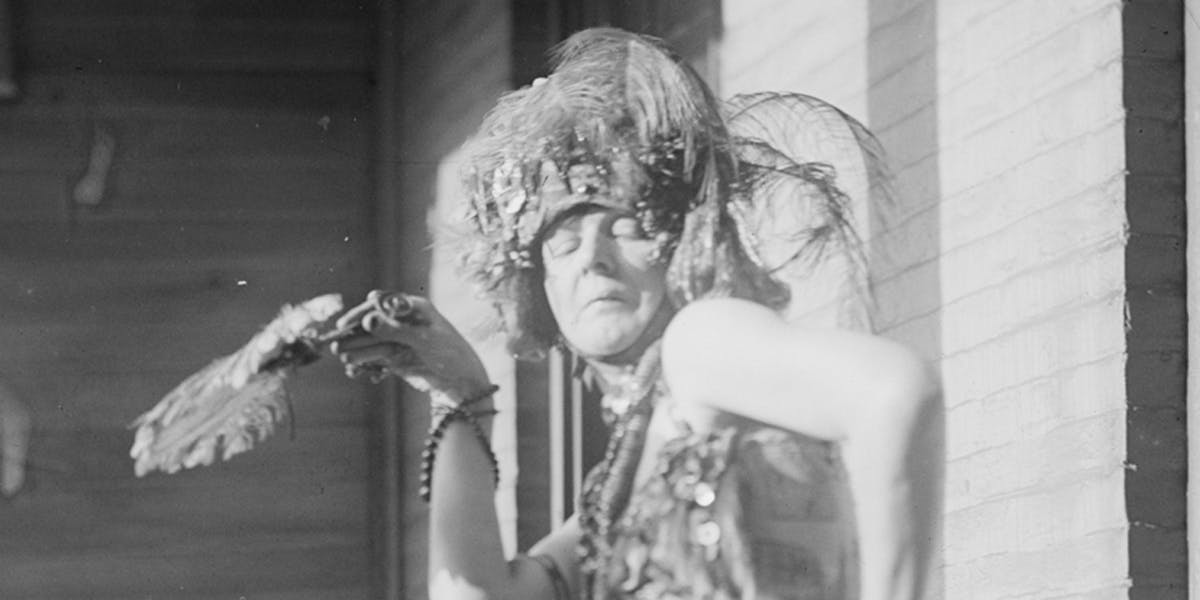
My form of expression is to protest against everything conventional.
Rebel youth
The later ‘dadaist Baroness’ arrived into the world on 12 July 1874 as Elsa Hildegard Plötz in the Prussian Baltic of Swinoujscie (today Świnoujście in Poland). Her father Adolf Julius was a master bricklayer, her mother Ida-Marie a pianist. As a child of economically well-off parents, Elsa attended the secondary school for girls in her hometown, where she only ever brought home poor grades. At the same time, she wrote her first poems, which already showed a tendency towards obscene humor.
Related: The 10 Most Scandalous Artworks
At the age of 16, Elsa began studying at the Royal Prussian Art School in Berlin. While she received support from her mother, her father was against this. Her parents' marriage became increasingly unhappy, and Ida-Marie abandoned a suicide attempt at the last minute.
In 1893, Ida-Marie died of cancer and shortly afterwards her father married the middle-class conservative Berta Schulz. Soon, Elsa began to rebel against all the imposed decency.
Early career and two husbands
In Berlin, Elsa immersed herself in the world of artists and variety shows: she stood as a model, posed naked for tableaux vivants and took acting lessons. Eventually, she became a show girl in the Berlin Central Theatre and appeared in Friedrich Schiller's play Don Carlos as Marchioness de Mondecar.
Elsa continued to throw herself into ever-changing affairs with painters and writers, and finally traveled to Italy with Richard Schmitz, a student from a wealthy family, where she stayed for a year and a half. Back in Germany, she first studied painting in Dachau and became the muse of the cosmopolitan circle of intellectuals in Munich.
Related: 12 Women Who Rocked the Art World
In Berlin, she first became the lover of Art Nouveau architect August Endell, whom she married in August 1901. On the return trip from her honeymoon to Italy, she met the student Felix Greve, who moved from Munich to Berlin the following year, where a ménage-à-trois between Elsa, Felix and August was established. However, the latter wasn’t happy with the situation and tried to commit suicide. In 1904, Elsa and August divorced.
Elsa and Felix, who worked as translators, initially lived in Zurich and France, where Felix wrote the Elsa-inspired novel Fanny Essler in 1905, and returned to Berlin in 1906, where they married a year later.
Embarkation for America
In the summer of 1909 another suicide occurred – this time, however, it was a faked one, as Felix wants to escape his creditors. His real goal was not the afterlife, but America. Elsa followed him a year later. The couple lived in Pittsburgh and Kentucky, but were no longer happy together. They split up in 1911, Felix heading to Canada, where he lived under the name Frederick Philip Grove, Elsa, meanwhile, worked again as an artist model in various places.
In 1912 she finally moved to New York City. Here, she met the Prussian officer's son Leopold Baron von Freytag-Loringhoven and, having never divorced from Felix Greve, became a bigamist the following year when she married him. Husband number three was eleven years younger than Elsa. This didn’t worry Elsa, however, who simply deducted eleven years from her actual age on paper. On the way to the registry office, Elsa incidentally declared an iron ring found by chance as an art object and thus probably held the first ready-made in art history in her hands.
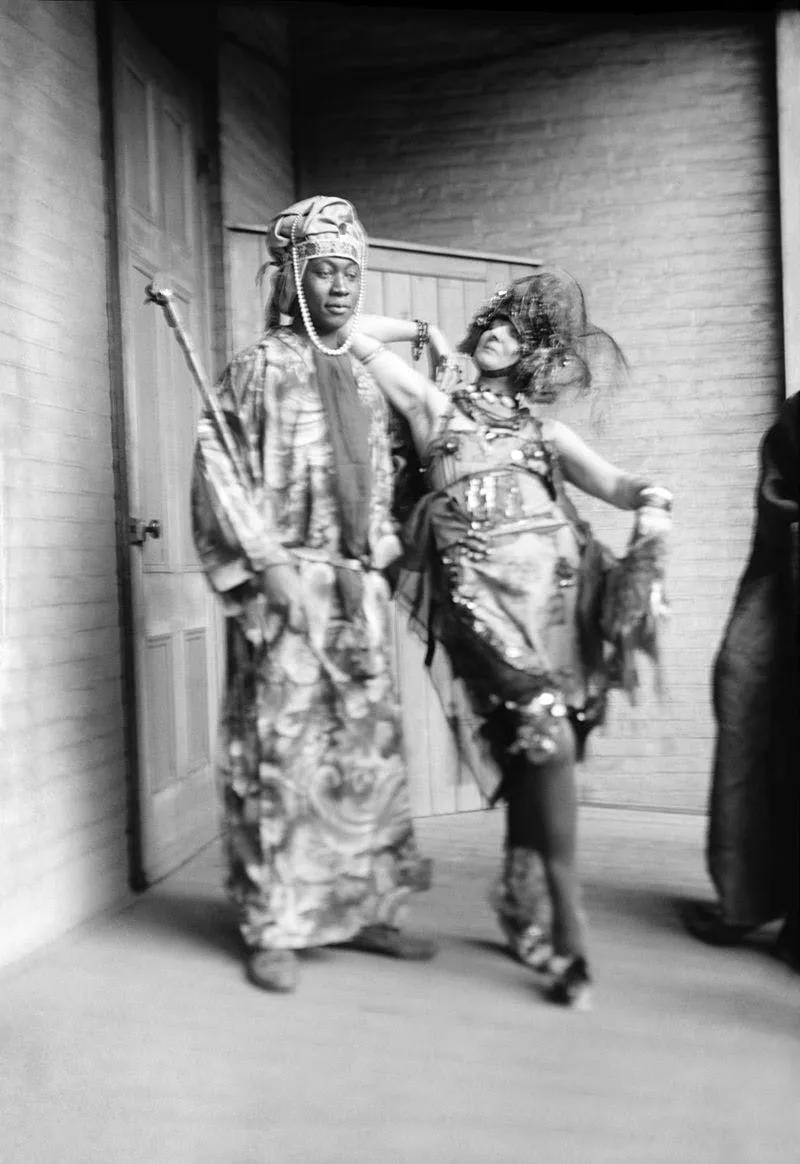
Leopold had also fled his home country because of debts. In order to restore his honor, he went back to serve his country as a soldier when the First World War broke out. On this occasion, he relieved Elsa of all her savings.
The dadaist Baroness
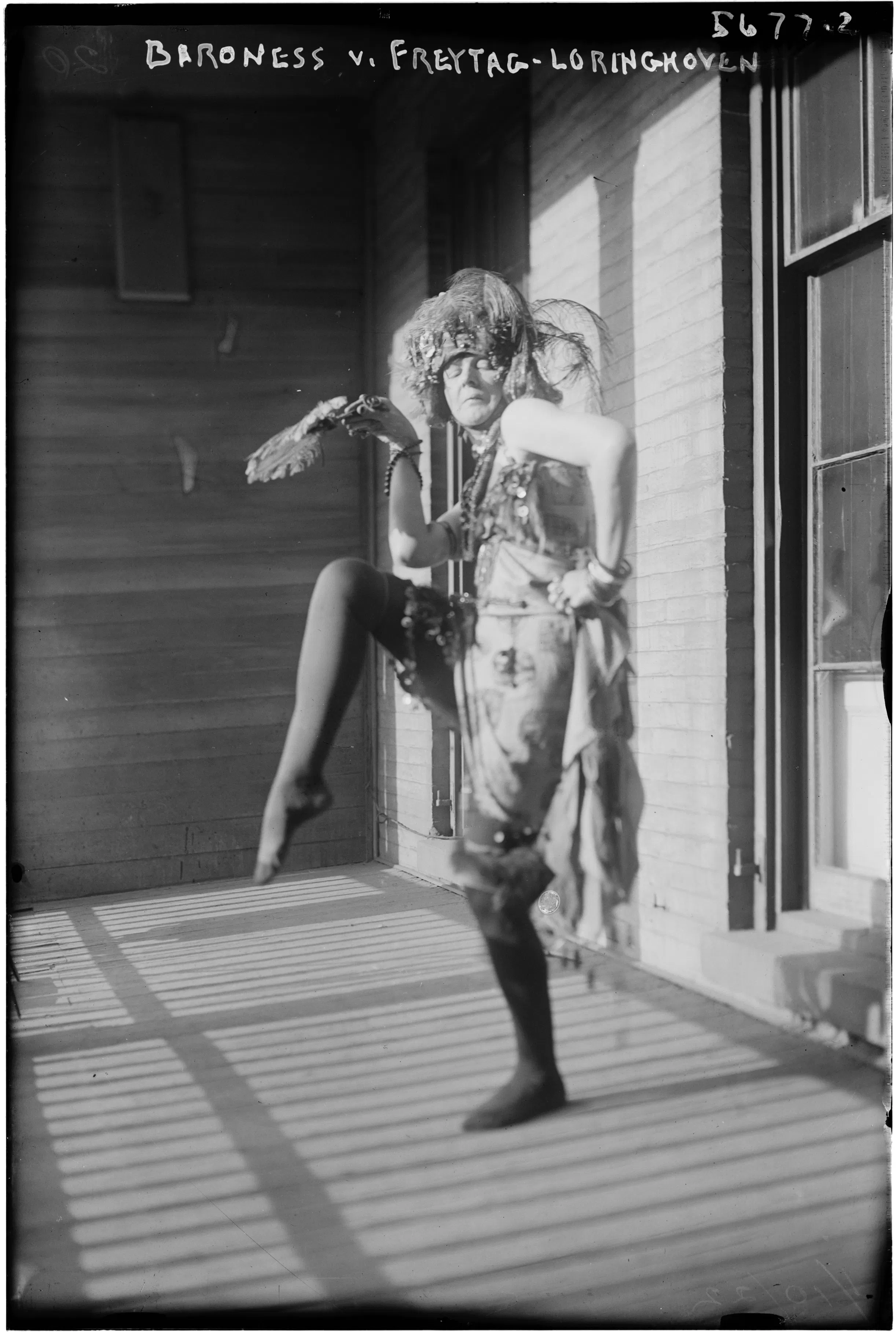
Far from burying her head in the sand, Elsa worked as a model and poet and designed eccentric costumes, which she also wore on the street herself, including a bra made of tomato paste cans, curtain rings, gilded carrots, lips painted black and stamps glued to the cheeks. She soon became known in New York as the ‘dadaist Baroness’ and the New York Times published an article about her in which Elsa declared: "My form of expression is to protest against everything conventional".
Enjoying this article? Sign up to our newsletter and get more biographies straight to your inbox
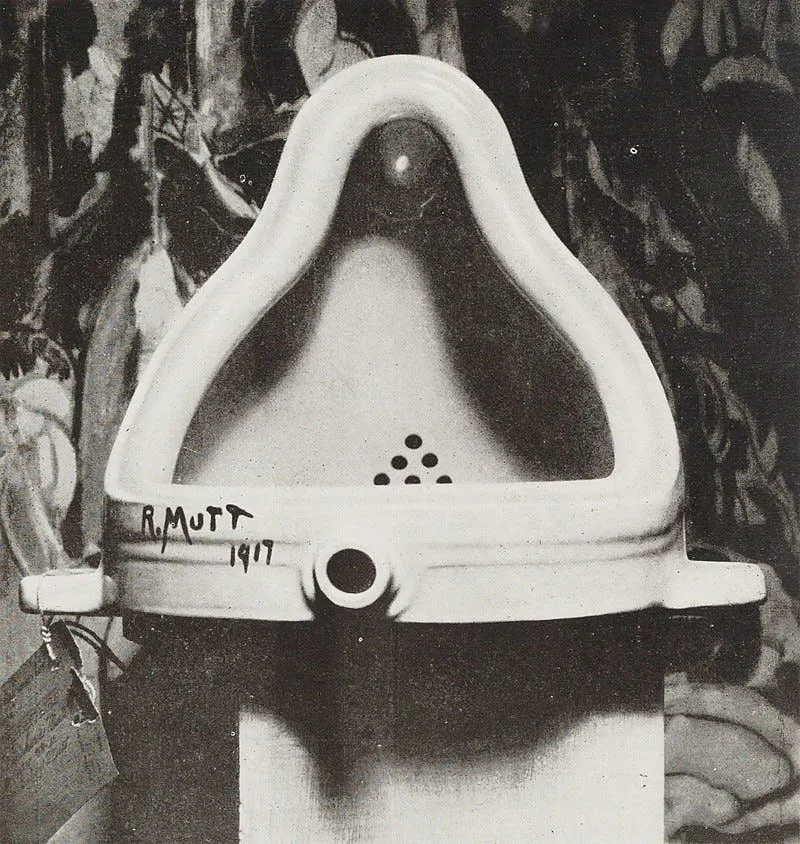
For a while, Elsa lived in the same house as the artist Marcel Duchamp, who, although rejecting her advances, liked to discuss art with her. One of these conversations probably brought Duchamp to the idea of a urinal as a work of art, which Duchamp implemented a year later with the title Fountain, which he exhibited at the Society of Independent Artists. Duchamp wrote to his sister that a friend inspired him to do so, most likely Elsa.
Elsa continued to publish poems, some of which were so offensive that they fell victim to censorship. The writings appeared most frequently in the New York Dada, which was published by Duchamp and Man Ray. The trio also shot the film Elsa, Baroness von Freytag-Loringhoven, shaving her pubic hair, which was also offensive and largely rejected.
In 1923, Elsa turned her back on New York and went back to Berlin. She got by with smaller jobs and relied on the support of friends, including the writer Djuna Barnes and Peggy Guggenheim.
Elsa spent the last two years of her extraordinary life in Paris, where she ran a school for nude models with relatively little success. On December 15, 1927, the life of the ‘dadaist Baroness’ and her favorite dog Pinky finally ended in their apartment in Paris, due to suffocation from a broken gas pipe.