Michelangelo Buonarroti spent the winter of 1505/1506 in the quarries of Carrara, selecting blocks of marble for his latest commission. The client was Pope Julius II, who called the then 30-year-old artist to Rome on the recommendation of his architect Giuliano da Sangallo. He was planning his own tomb, the splendor of which was to surpass everything that had previously existed. Michelangelo, who had already created admired masterpieces such as the Pietà and the gigantic David at a young age, seemed the right choice to execute his vision.
Related: Michelangelo: From Man to Genius
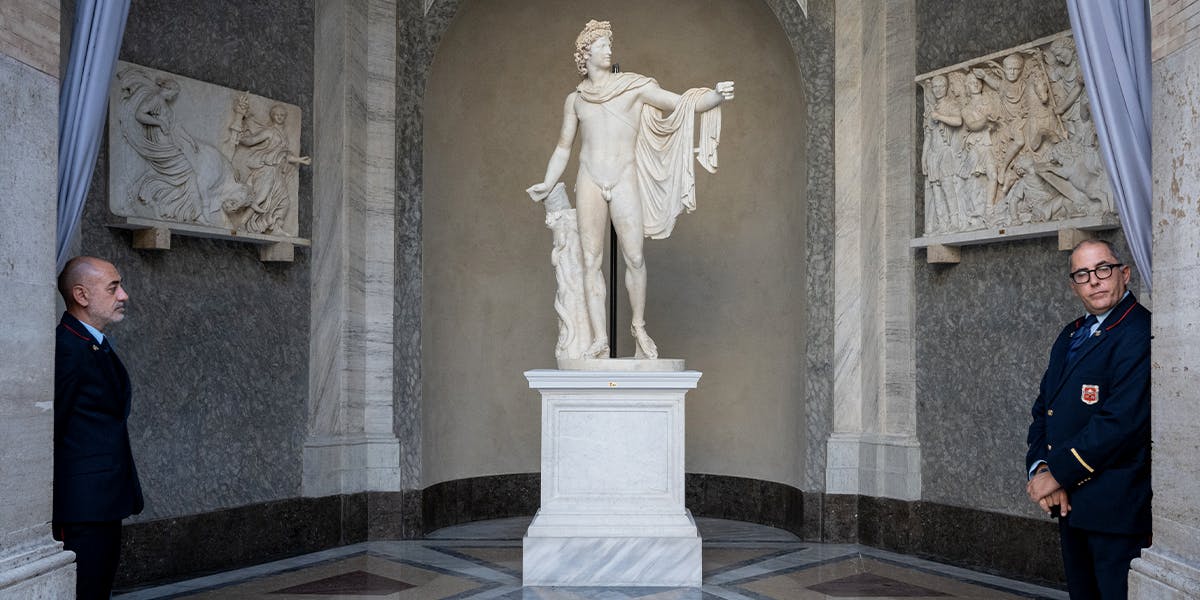
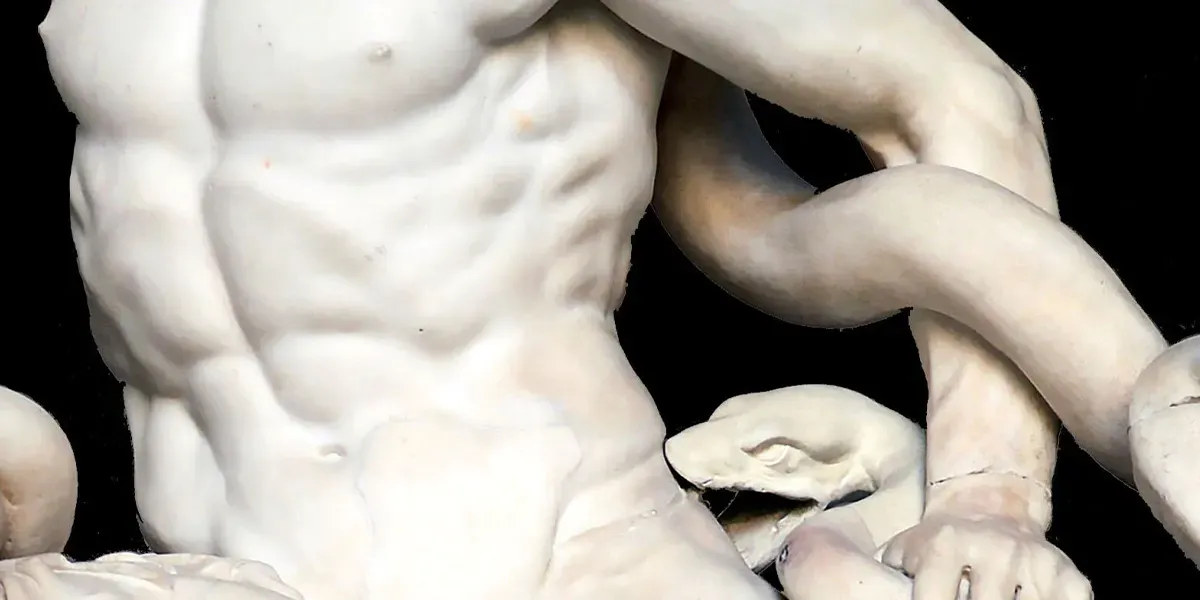
When Michelangelo returned to Rome from Carrara, a very unusual find was the talk of the day. On January 14, 1506, Felice de Fredis discovered an ancient statue in an underground chamber in his vineyards on the Esquiline. Of course, the news was also brought to Pope Julius II, who was a great admirer of ancient art and already owned the Apollo Belvedere sculpture. Now, however, one was not dealing with a single figure, but with a group consisting of an athletically built man with a wild beard and two boys who were in mortal agony with two huge snakes. Julius II commissioned the two best artists he had at hand, Giuliano da Sangallo and Michelangelo, to appraise the find. Sangallo knew immediately what he was dealing with: the Laocoön group, already identified by Pliny the Elder in his Naturalis historia. He had praised and described the work of three artists from Rhodes: Hagesandros, Polydoros and Athanadoros. At that time, the 8-foot-high marble sculpture was in the palace of Emperor Titus, as Pliny also revealed.
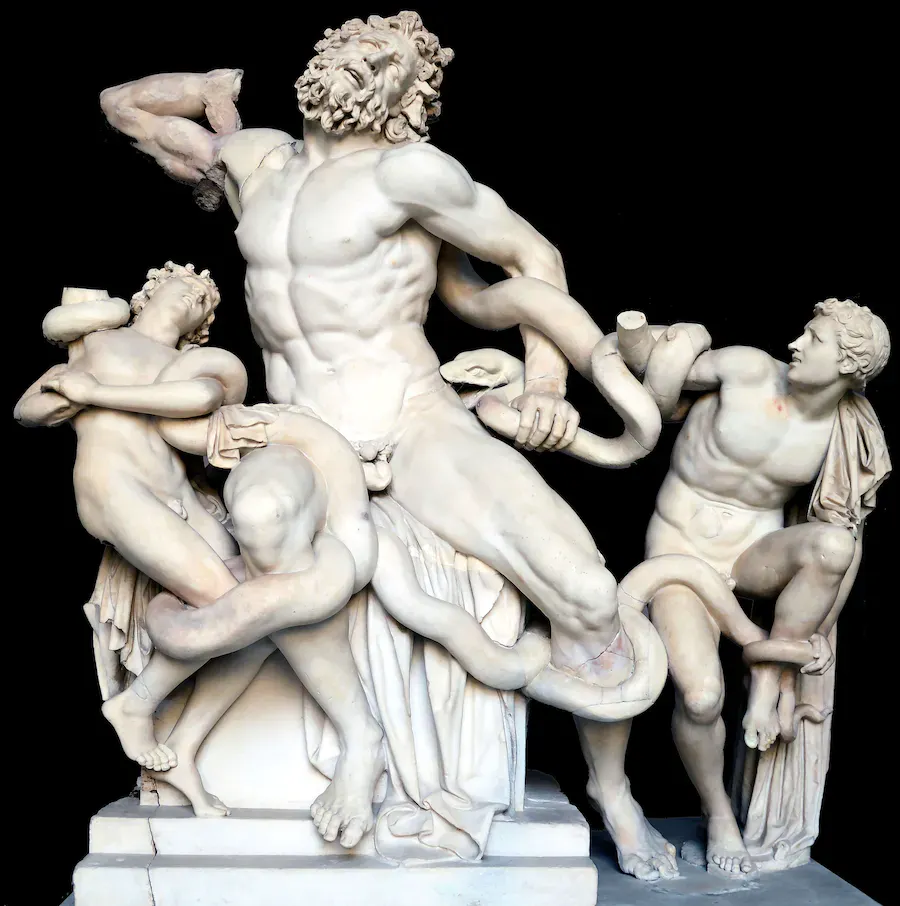
The myth of Laocoon is mainly handed down through the Aeneid by the Roman poet Virgil. According to this, Laocoön, a relative of the Trojan royal house and a priest of Apollo, is said to have warned his fellow citizens about the Greek gift, the famous Trojan horse, and even hurled a spear at it. But it didn't help; the Trojans took the horse to their city and celebrated the (apparent) departure of the Greeks. Meanwhile, however, Laocoon angered the goddess Athena, who sent two mighty serpents across the sea, killing Laocoon and his two sons.
Related: 10 Famous Sculptures in Art History
Pope Julius II naturally included the sculpture in his collection of antiquities, which would later become the Vatican Museums, where the Laocoon group is still located today. As an artist busy completing an important commission for the pontiff, the doors to Julius' collection were naturally open to Michelangelo and he immediately fell in love with the sensational group, which defies all classical standards such as the symmetria or the contrapposto (which Michelangelo himself had applied with his David). Instead of cool beauty and harmony, here was an exceedingly athletic body in a twisted pose and a face scarred by terror; the sculpture inspired not just deferential admiration, but an emotional reaction as well.
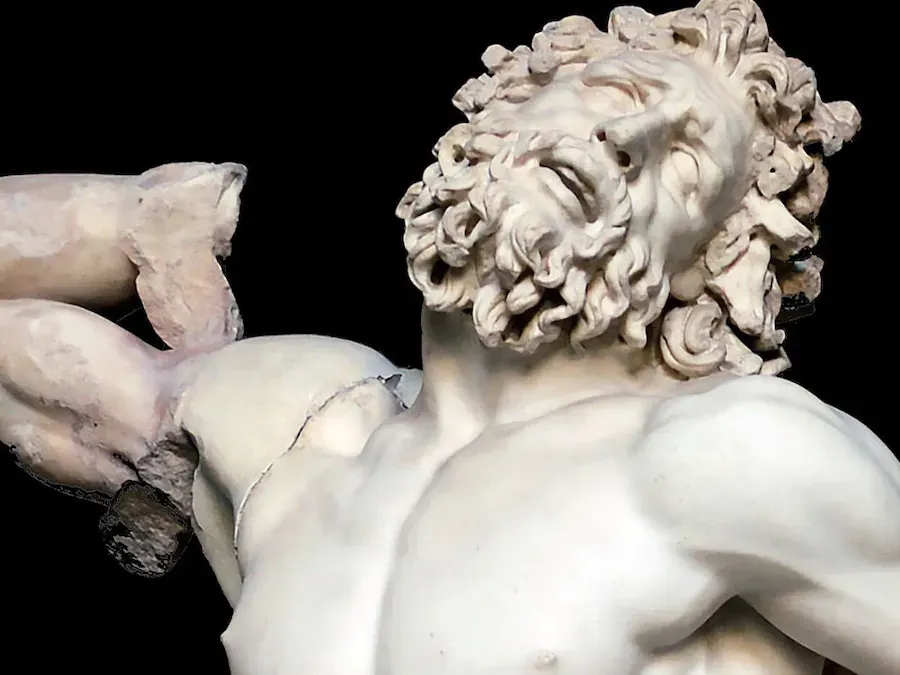
Fascinated and inspired, Michelangelo immediately wanted to incorporate what he had just discovered into his current monumental project. But then Julius II suddenly asked him to paint the ceiling of the Sistine Chapel and ended the original commission. A dispute ensued between the Pope and the artist, so that the latter returned to his native Florence in April 1506. After reconciliation, Michelangelo resumed work on the funerary monument and ceiling painting, but only the latter was completed during the lifetime of Julius II, who died in April 1513. In the period that followed, there was a decades-long dispute between Michelangelo and the Della Rovere from Urbino, the family of the former Pope, who demanded that the artist complete the tomb. This finally happened in 1545 in a far smaller version than originally planned. The modest wall grave is located in the church of San Pietro in Vincoli and not in the newly built St. Peter's Basilica, as Julius II originally intended.
Related: The 5 Most Important Sculptures in Italy
From the original project, only the impressive Moses sculpture made it into the final version. Other figures from discarded phases of the project, some of which are incomplete, are now in Florence and in the Louvre. They mainly depict slaves, but also depict a youthful victor triumphing over an older opponent. Almost all of these marble figures share an athletic aesthetic with a pronounced twisting of the torso, suggesting direct Laocoon influence. This can also be seen in bodies in the frescoes of the Sistine Chapel.

In fact, the change in Michelangelo's design is considered to be the harbinger of a new epoch in art history, which followed the High Renaissance phase and finally transitioned into the Baroque: Mannerism, which developed between 1520 and 1590. It expanded beyond Italy into a pan-European phenomenon, found in France in the School of Fontainebleau, as well as in the Dutch Romanists and the artists at the court of Rudolf II in Prague. The term maniera was used until then to describe the style of a certain epoch; in the 15th century it was used to describe the changes in art, which gradually began to break away from the classic models of the Renaissance, with painters and sculptors adopting a personal style. In his Vite, for example, art history pioneer Giorgio Vasari used the term maniera moderna to describe Michelangelo's new style of depiction.
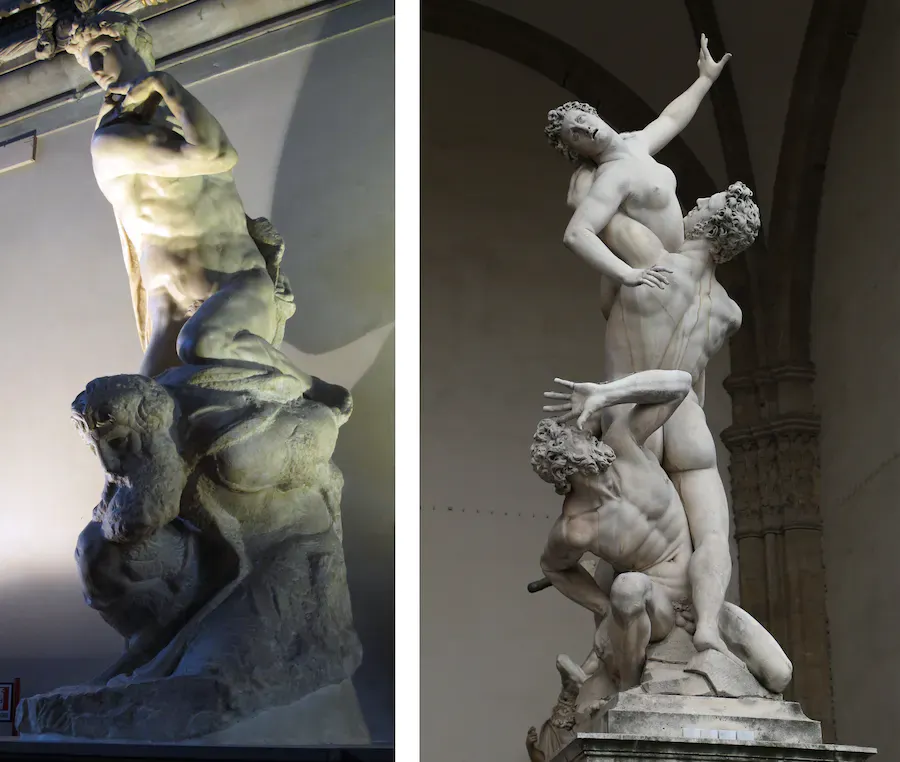
However, attributing sole responsibility for the emergence of Mannerism to the Laocoön group and Michelangelo would be too simplistic. Although his figura serpentinata, a figure in the form of a spiral, was attributed to the rediscovered sculpture and is an important stylistic feature of Mannerism, it is not its only feature.
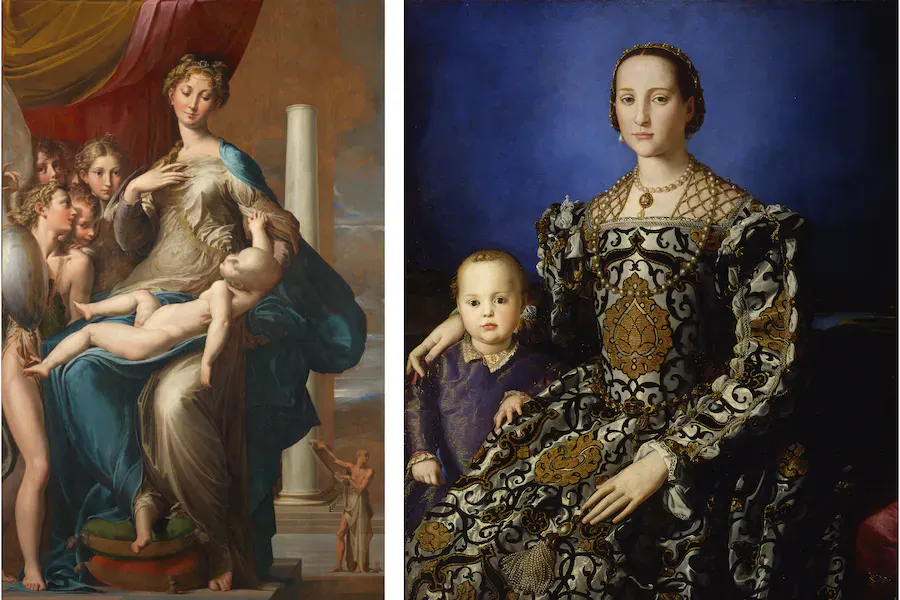
The early 16th century was a time of upheaval with developments that shook the European world view, which had been shaped by classical antiquity. It was the time after the discovery of America and the beginning of the Reformation with the ensuing Wars of Religion and Counter-Reformation. The self-image of both the rulers and artists also changed, who no longer saw themselves as pure craftsmen, but as artists who were gifted with a creative spirit. As in other countries, courts were formed in northern Italy, which was the cradle of Mannerist art. The former signori of the city-states had risen to the position of dukes, and the landed gentry was tied to their courts. In order to keep this status, it was necessary to develop codes that were not understood by outsiders (a principle that was carried to extremes in the Baroque age, especially at Versailles). This is where the artists came into play, creating works in their respective mannera that sometimes seem incomprehensible.
Related: El Greco: A Meeting of East and West
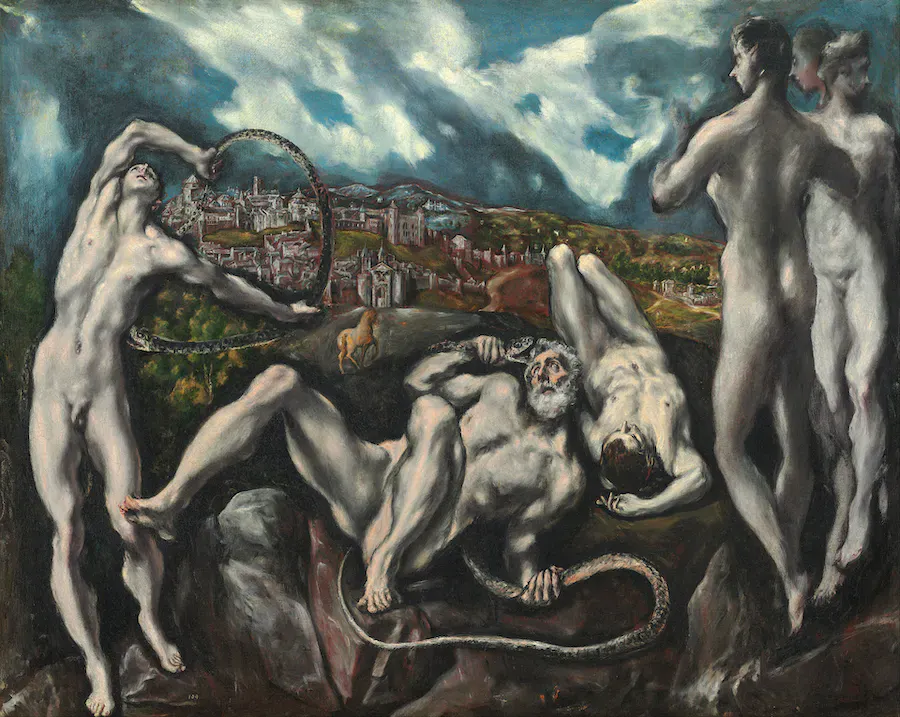
Many stylistic features such as an unnatural combination of colors, portraits with unique color choices and athletic bodies with strongly elongated limbs appeared. Very impressive examples of the extended limb style come from the late Mannerist El Greco, whose overall style was abstract enough to attract the admiration of modernist artists who rejected classical standards. Logical spatial contexts were also dissolved; for example, Michelangelo's Last Judgment completed in 1541 on the altar wall of the Sistine Chapel has an extremely athletically built Christ as the judge of the world. Everything seemed exaggerated and artificial, so that subsequent artists, who had devoted themselves again to classicism and realism, did not understand Mannerism.
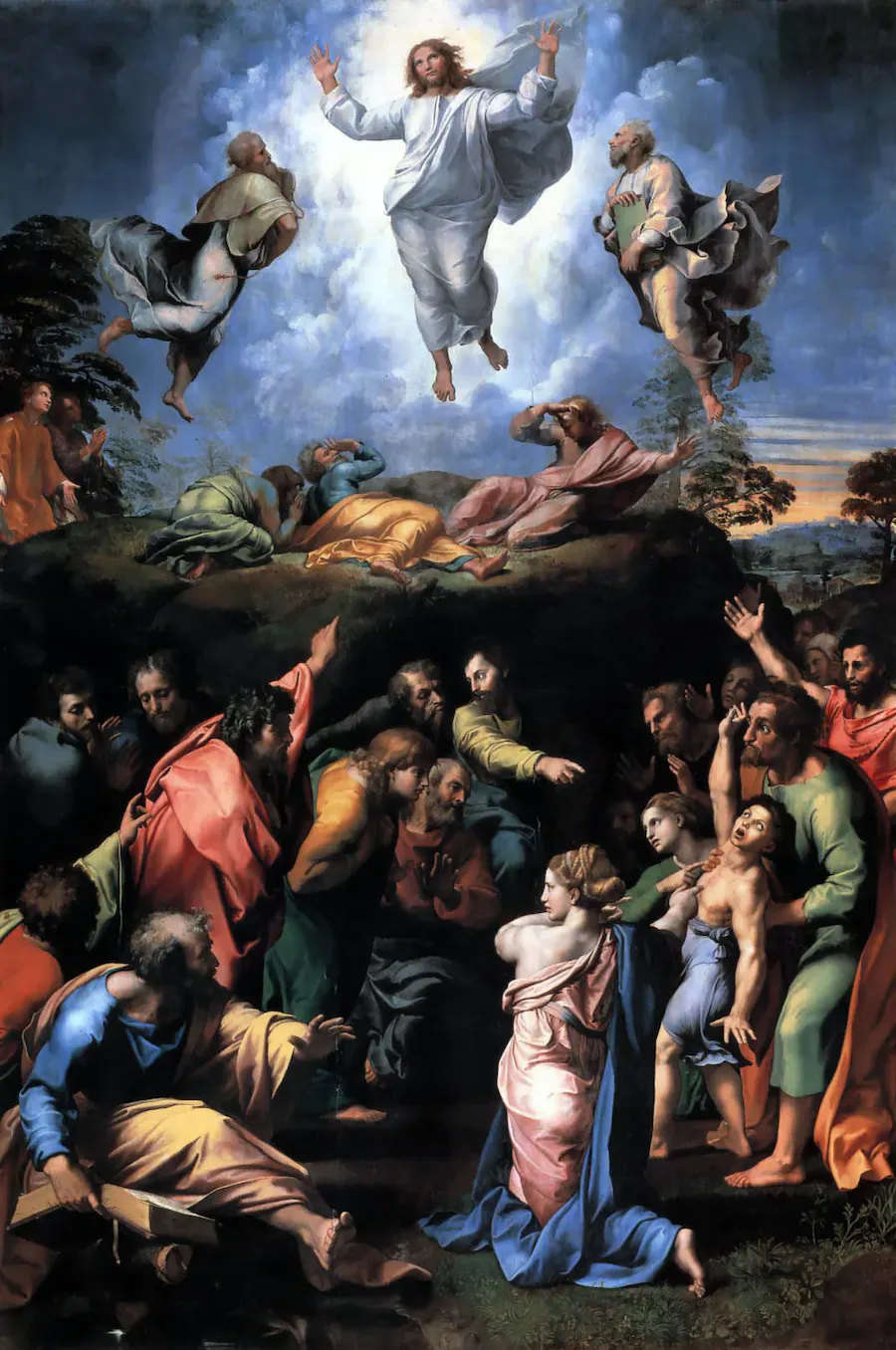
The beginning of Mannerism, a term that only came into use in the 19th/20th century, is identified as 1520, the year of Raphael's death. The death of the 37-year-old painter, who was highly acclaimed during his lifetime, caused much mourning, as Raphael was considered the most gifted painter of all. He was posthumously honored as the greatest representative of the High Renaissance, but there are also Mannerist tendencies and even early heralds of the Baroque era in his late work, such as his last painting the two-part Transfiguration. While the upper part of the painting shows the classical style of the master, the lower part with the large number of people in different postures (especially the woman presented to the viewer from the back), the chiaroscuro and the emotional composition bear witness to Raphael's turn to the maniera moderna.
Want to discover articles like this straight to your inbox? Then register today for our free newsletter!
Mannerism can be seen as art's reflection on its changing environment. The laws of nature were at least questioned, often even completely overcome. The increasing self-image of artists, who saw themselves as masters of creative power, contributed to the development of specific stylistic features that focused on art itself. The fact that the accidental discovery of an ancient group of sculptures played such a part in all of this makes this epoch between the High Renaissance and the Baroque all the more fascinating.