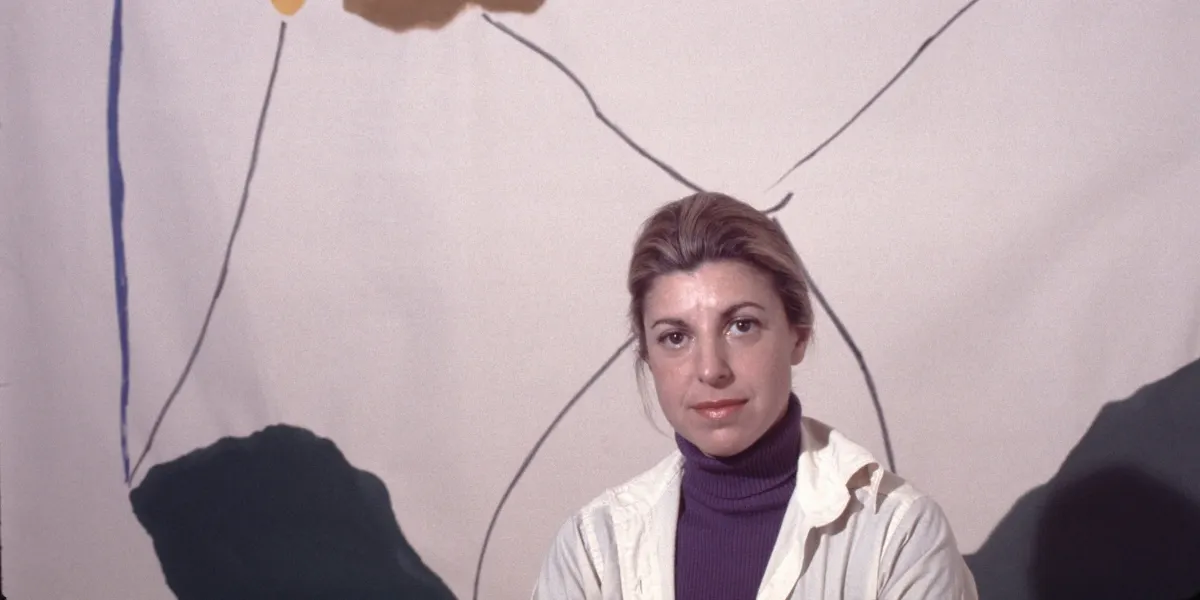
A really good picture looks as if it's happened at once. It's an immediate image.
Helen Frankenthaler (1928-2011) was a pioneer of American Abstract Expressionism in the decades following World War II, energizing the mid-century art scene with her "soak stained" canvases that embraced vivid color and amorphous shape. Based in New York City and its suburbs for nearly all of her life, Frankenthaler sought inspiration from the beauty of nature rather than the energy of the city. Her abstract canvases ushered in a new era of the possibilities of painting, color theory and freedom from figuration. Today, her works regularly fetch in the seven-figure range at auction.
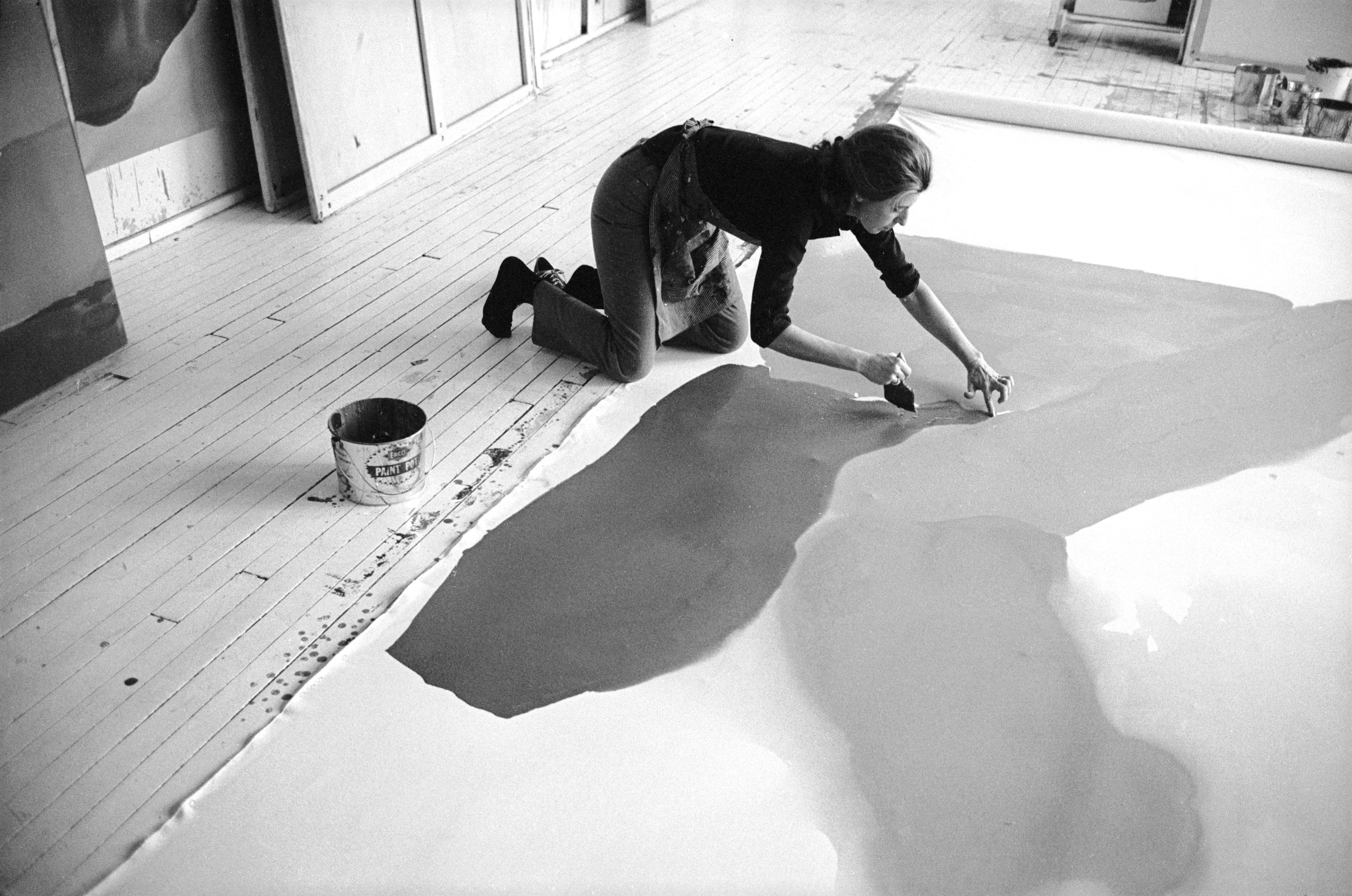
Here are five facts about the artist:
1. She was a founder of the Color Field movement
The Color Field movement was born in the United States in the post-war period, as seen in the vast artworks of color blocking by Mark Rothko, Clyfford Still, Hans Hofmann and Barnett Newman and was first identified by critic Clement Greenberg. Drawing influence from European movements like Fauvism, Orphism and Expressionism, Color Field painting celebrated the power of colors and their relationships to each other with abstract shapes that seeped together and a flat planar canvas. Frankenthaler was one of the few women who gave rise to this movement and arguably the best known. She studied under Hans Hofmann in 1950, whose invented concept of 'push and pull, force and counterforce' of color undeniably inspired her work.
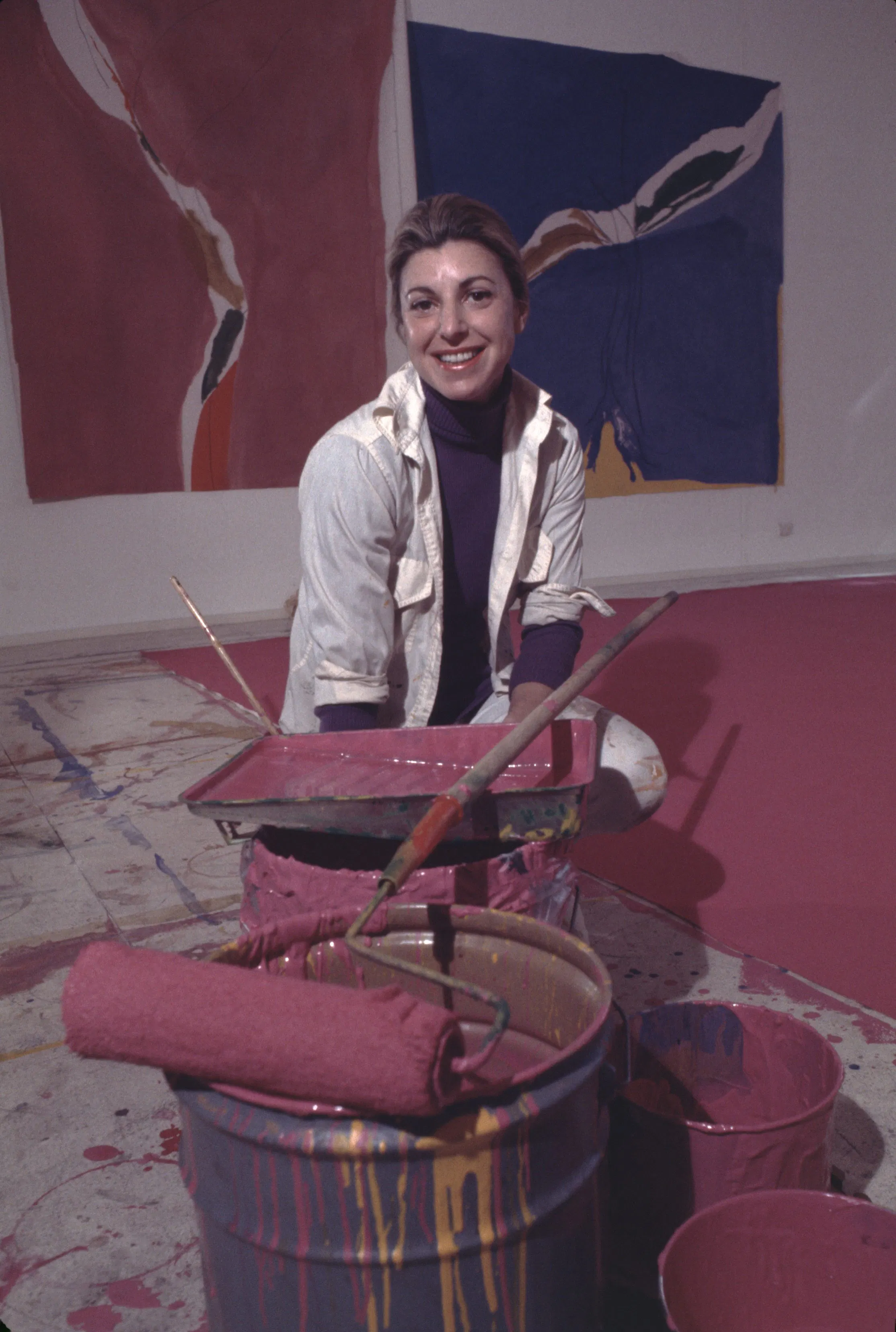
Related: Abstract Art: From Genre to Movement
2. "Soak Stain" was her signature technique
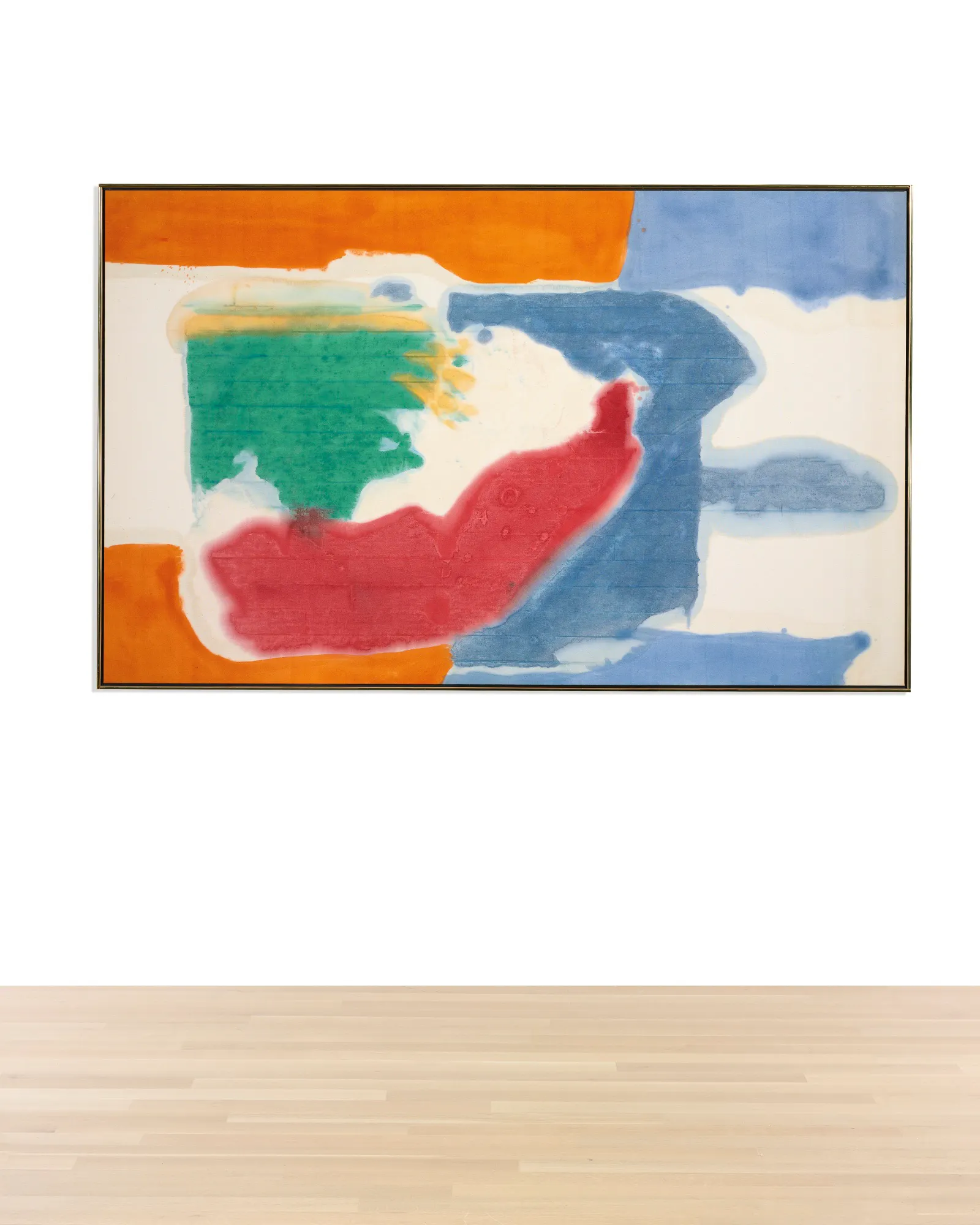
Her signature style was her "soak stains," which she achieved by mixing oil with turpentine to make the paint more translucent, resembling watercolors. She introduced the soak stains in 1952 with her painting Mountains and Sea, which was exhibited when she was just 23 and inspired by a trip to Nova Scotia. It was described decades later as one of the “landmark paintings in the history of contemporary art.” Though the work was not well-received by the public at the time, Frankenthaler continued to work on her vibrant, soak-stained canvases throughout her career, which would become her identifier, influencing other artists like Kenneth Nolan and Morris Louis.
Related: The 15 Most Expensive Female Artists
3. She and Robert Motherwell were considered the artistic golden couple
In 1958, Frankenthaler married fellow Abstract Expressionist artist Robert Motherwell after a brief courtship. Prior to her marriage, Frankenthaler been in a five-year relationship with critic Clement Greenberg, who was an early supporter of her work. Despite their 13 year age difference, Frankenthaler and Motherwell bonded over their mutual love of art, travel and entertaining. The two both came from wealthy, educated backgrounds and frequently hosted parties at their New York residence. Though the first few years of marriage were blissful, the couple ultimately divorced after 13 years of marriage in 1971. The couple never had children, but Frankenthaler became stepmother to Motherwell's two daughters from a previous marriage. Both artists later remarried.
Related: 10 Artist Couples You Should Know
4. Besides painting, woodcuts also fascinated her
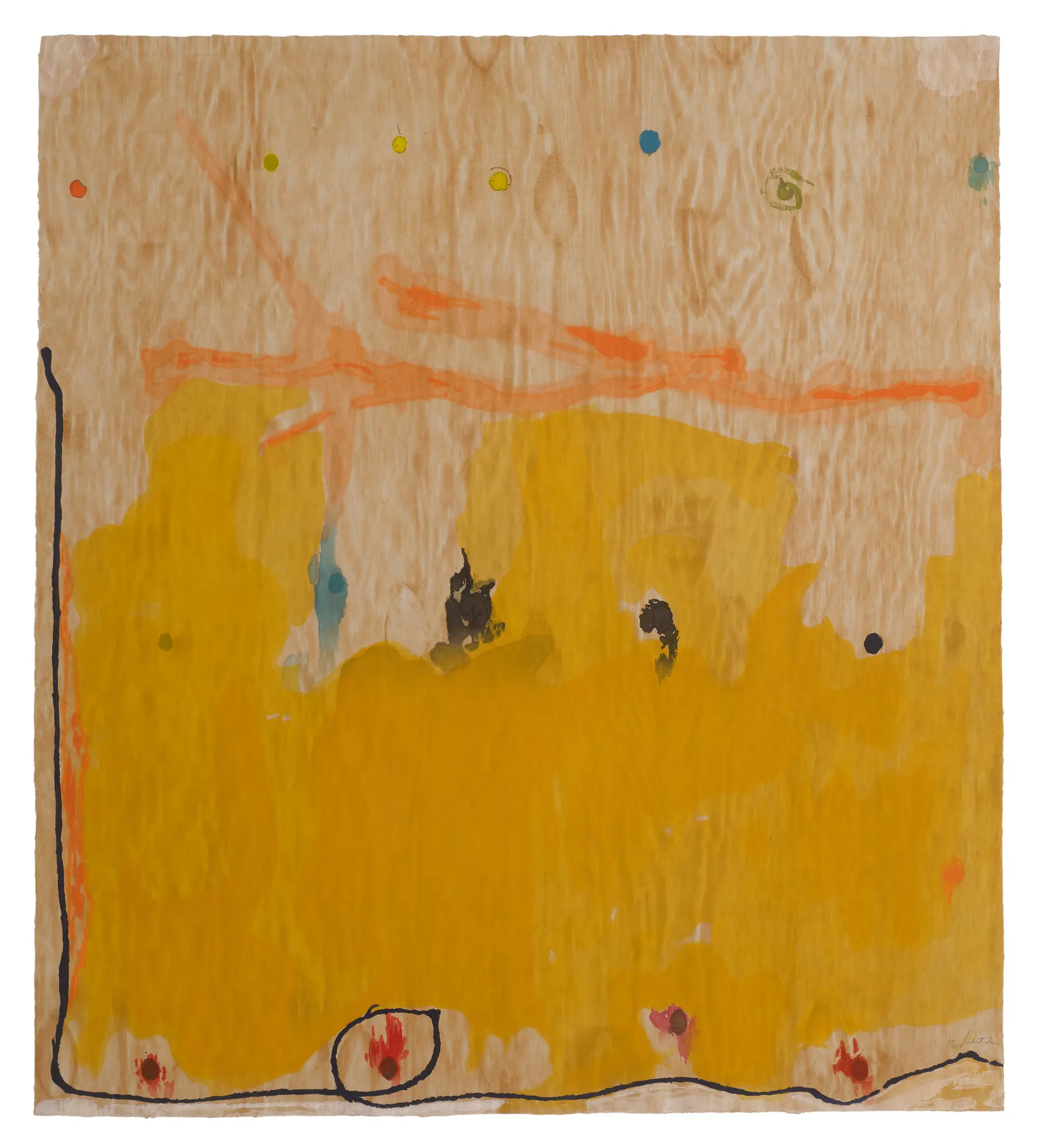
Throughout her career, Frankenthaler wanted to challenge herself beyond just painting. She experimented with lithography int the 1960s and turned to woodcuts in the mid-1970s. She was influenced by the Japanese woodblock prints of ukiyo-e artist Utagawa Hiroshige, whose work she herself owned. In her woodcuts, she sought to reveal the grain of the wood, employ a rich use of layered colors and reinterpret the traditional medium in the perspective of abstraction as in her series Tales of Genji, inspired by the antique Japanese scroll, and Madame Butterfly, her take on the Japanese screen.
5. She disliked the feminist label
Though one of the most famous Abstract Expressionist female artists, Frankenthaler disliked the idea that she would be set apart from other artists simply because she was a woman, a sentiment also echoed by Georgia O'Keeffe. In a 1962 interview, she said, "'looking at my paintings as if they were painted by a woman is superficial, a side issue.... The making of serious paintings is difficult and complicated for all serious painters." Though some critics, in fact, didn't take her work seriously, calling it too beautiful or poetic, she was defiant in her vision, which has established her legacy as a pioneer of Abstract Expressionism.

Her work continues to inspire and fascinate and frequently achieves large sums at auction. In June 2020 her auction record was set with Royal Fireworks (1975) when it sold at Sotheby's for $7.9 million (more than doubling the high estimate).