
![Jackson Pollock, ‘Number 32, 1949’ [detail], oil, enamel, and aluminium paint on paper mounted on Masonite. Photo: Sotheby’s](https://images.prismic.io/barnebys/358c6808-c352-4bdf-a75e-7fa94052a522_203N09858_9SJPZ_silo_dropshadow_web.jpg?auto=compress,format)
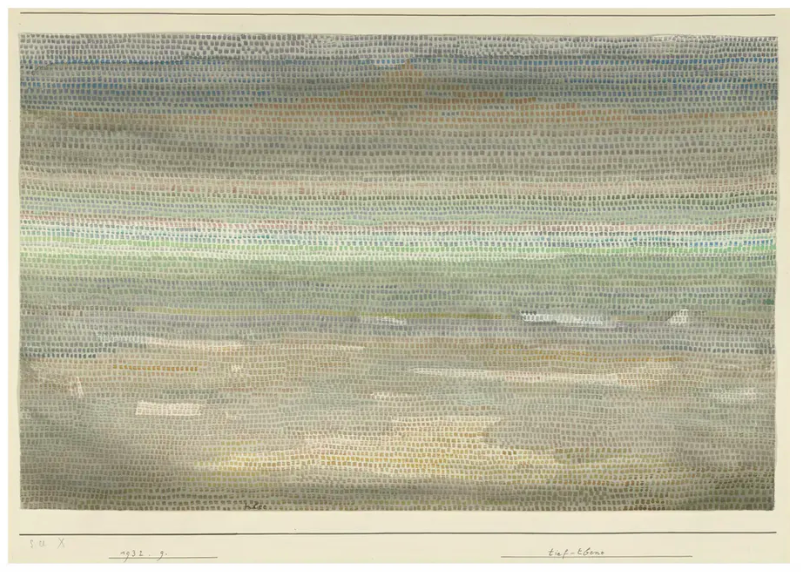
Abstract art, while emerging as an emblematic 20th-century movement, also remains the most poorly defined one. According to art critic Michel Seuphor, art is abstract when it contains “no evocations of observable reality”. But can abstraction be defined as the opposite of reality? Or does it refer instead to the primacy of the perceptible over the visible? We prefer the statement put forward by Swiss artist Paul Klee: “The artist does not recreate the visible, he makes things visible.” But perhaps the warrior among us will side with artist Maurice Denis, for whom a painting is nothing more than a flat surface covered with colors “assembled in a certain order”.
As a genre, contemporary abstract art was born in the 19th century. In 1882, the satirical group Arts Incohérents (‘Incoherent Arts’) was established in Paris. This pseudo-art circle, drawing together Jules Lévy, Alphonse Allais and Henri Toulouse-Lautrec, organized exhibitions of works painted “by people who don’t know how to draw”.
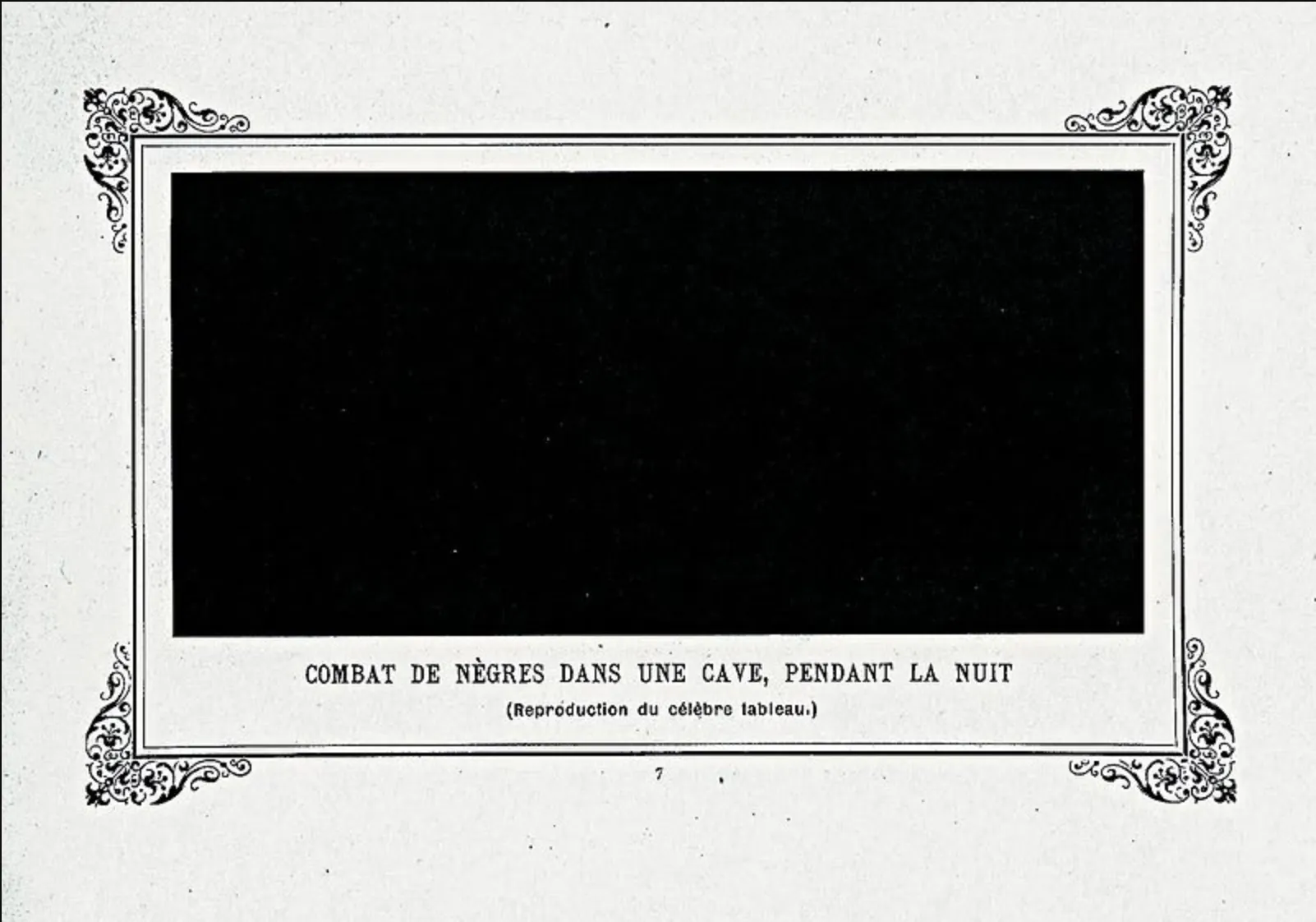
The aim was to poke fun at the work of modern painters like James Abbott McNeill Whistler or Claude Monet, accused of artistic fraud. In this way, Paul Bilhaud presented, in 1882, the black monochrome Combat de nègres dans un tunnel ('Negroes Fighting in a Tunnel'). Allais followed this example by coming up with a series of monochromes that he gave zany and provocative titles. The caper earned both supporters and detractors.
See also: Impressionism: Between Shadow and Light
As a movement, abstract art was a 20th-century innovation. In the first decade of the 1900s, a particular type of aesthetic emerged, heralded by Eastern European artists. The Rayonism (a style of abstract art that developed in Russia in 1911) of Mikhail Larionov and Nathalie Gontcharova played a forerunning role in the trend, as well as paintings by Mikalojus Konstantinas Čiurlionis.
In 1909, Francis Picabia produced the watercolor Rubber as a reflection of the new artistic tendencies. Even the Cubism of Georges Braque and Pablo Picasso gradually fell in line with the emerging codes. But it was Wassily Kandinsky who first developed the pictorial language of modern abstraction. His first works conjured up the universe of music, an approach already taken by Čiurlionis. Kandinsky’s Abstract Watercolor (c. 1910) came forward as the movement’s pioneering masterpiece.
See also: How Cubism Changed the World

Abstraction then spread throughout Europe, seducing creators like František Kupka (Verticals, 1912), Piet Mondrian (Composition VII, 1913) and Kazimir Malevich (White on White, 1918) – and let’s not forget Sonia Delaunay, Paul Klee, Hilma af Klint, Gustav Klimt, and sculptors Constantin Brâncuși, Henry Moore and Jean Arp. From the outset, the term ‘abstraction’ applied to different artistic tendencies that sometimes had no relationship to one another beyond the formal aspect.
See also: 8 Facts to Know About Henry Moore
A myth of abstract art gradually swept across the whole of the 20th century. Initially, its establishment spawned a series of movements in Europe, primarily Paris. There was talk of Geometric Abstraction, more-or-less Abstract Impressionism, Suprematism, Vorticism and Constructivism. At the same time, other artistic movements also sprouted up elsewhere, as at Walter Gropius’ Bauhaus school in Germany.

This was an era branded by decisive milestones. In 1926, Brâncuși showed pedestals without sculptures in New York. Two years later, he launched a famous lawsuit against US customs authorities when they failed to recognize some of his sculptures as modern art. Also memorable is the Degenerate Art Exhibition organized by the Nazis in 1933, which showed works accused of ‘artistic crimes’.
See Also: Peggy Guggenheim: 7 Fascinating Facts
World War II triggered a shift, with the nerve centre of creation migrating to New York. A new generation of American painters burst onto the world scene. Lyrical abstraction, a fairly broad movement, encompassed Jackson Pollock’s action painting, Mark Rothko’s color field painting, as well as the tachisme of Hans Hartung and Pierre Soulages. The Cobra group explored new paths in the persons of Pierre Alechinsky and Karen Appel, while Robert Rauschenberg produced his ‘combine’ paintings. Meanwhile, Frank Stella succumbed to the charms of hard-edge painting.
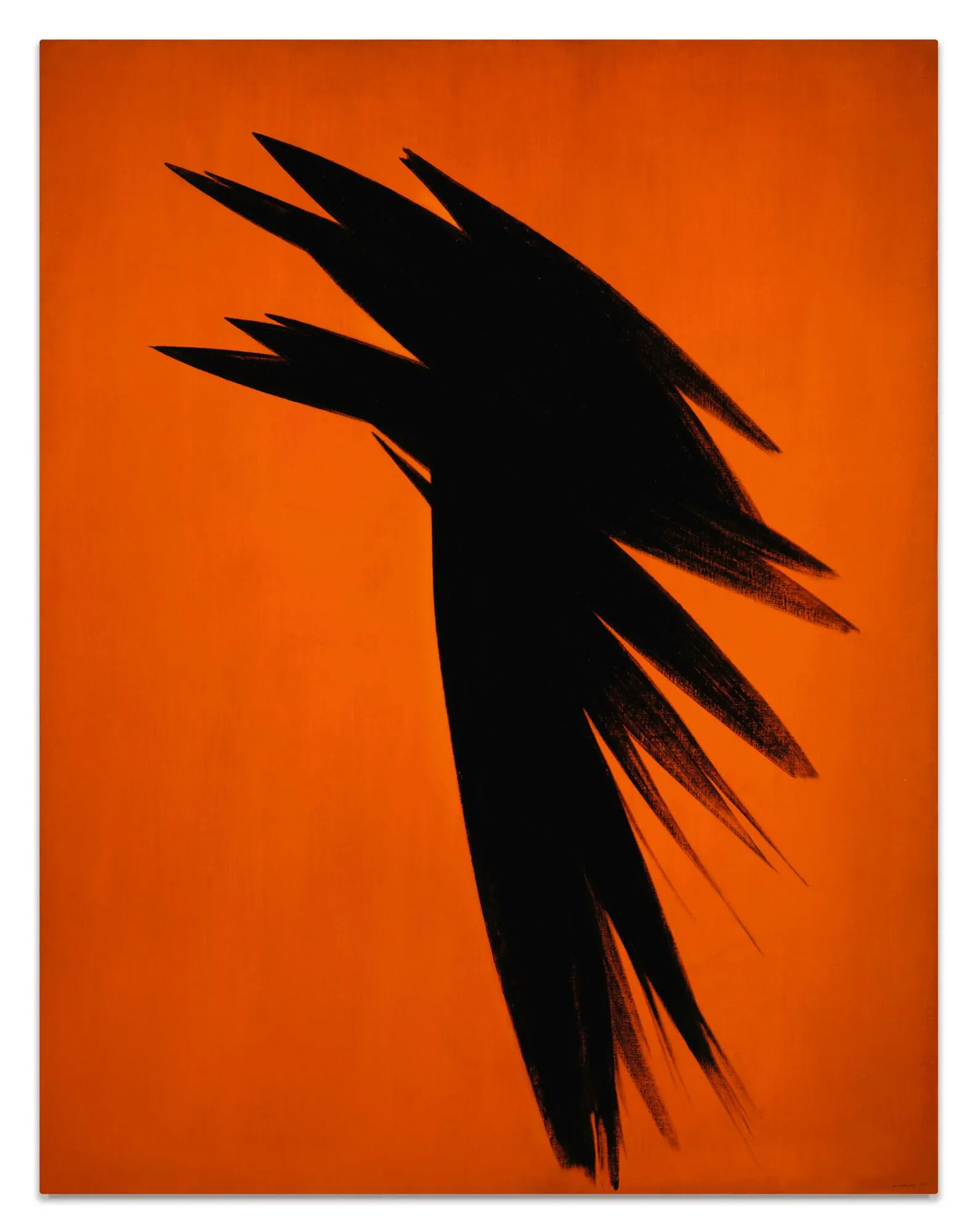
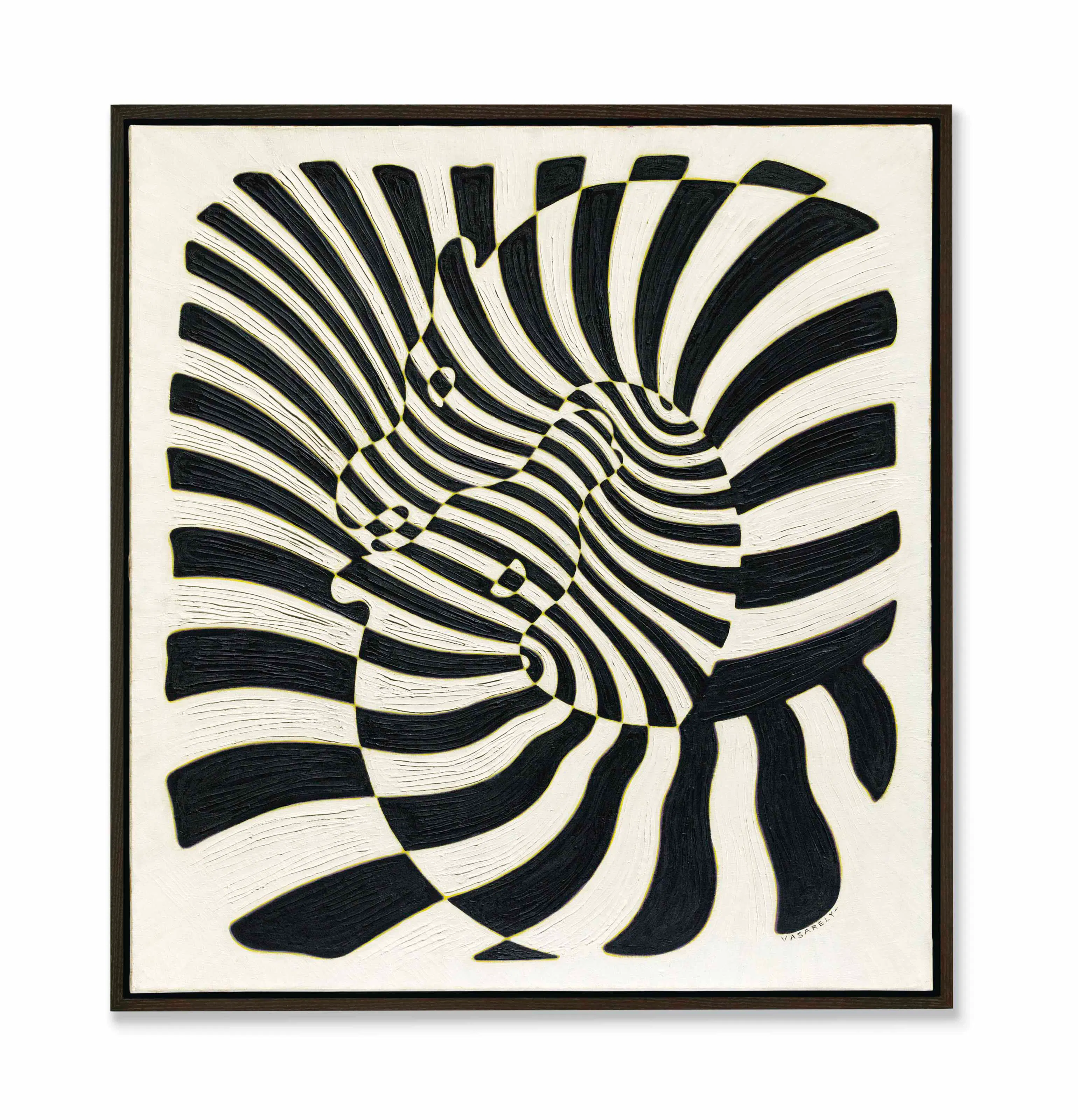
In this way, the second half of the 20th century ushered in a myriad of trends, from the enigmatic École de Paris to arte povera or Victor Vasarely’s kinetic art. The success of abstract art spread to the planetary scale, and even seduced Chinese painters, including Zao Wou-Ki.
The artist does not recreate the visible, he makes things visible.
Yet, this historical linearity is not spared of a few shadowy areas. Who, for example, still remembers Georges Mathieu, Janet Sobel or Wolfgang Schulze? These were the true inventors of action painting before Jackson Pollock came along – in fact, Mathieu was the first artist to employ the expression ‘lyrical abstraction’ in 1947. But the law of the market is such that many figures have sunk into oblivion.
See also: Sam Francis: Ode to Color
Be that as it may, the main thing to bear in mind regarding abstract art is the refusal of many artists to get trapped in the sterile logic of endless debates. Rothko in the States and Nicolas de Staël in France were among those who understood that essential matters lay elsewhere. Abstract art aims to overcome all contradictions and open up, like a window, to spontaneous creation. The precise opposite, in short, of the lines pushed by one artistic school or another.