Come quickly, I am tasting the stars!
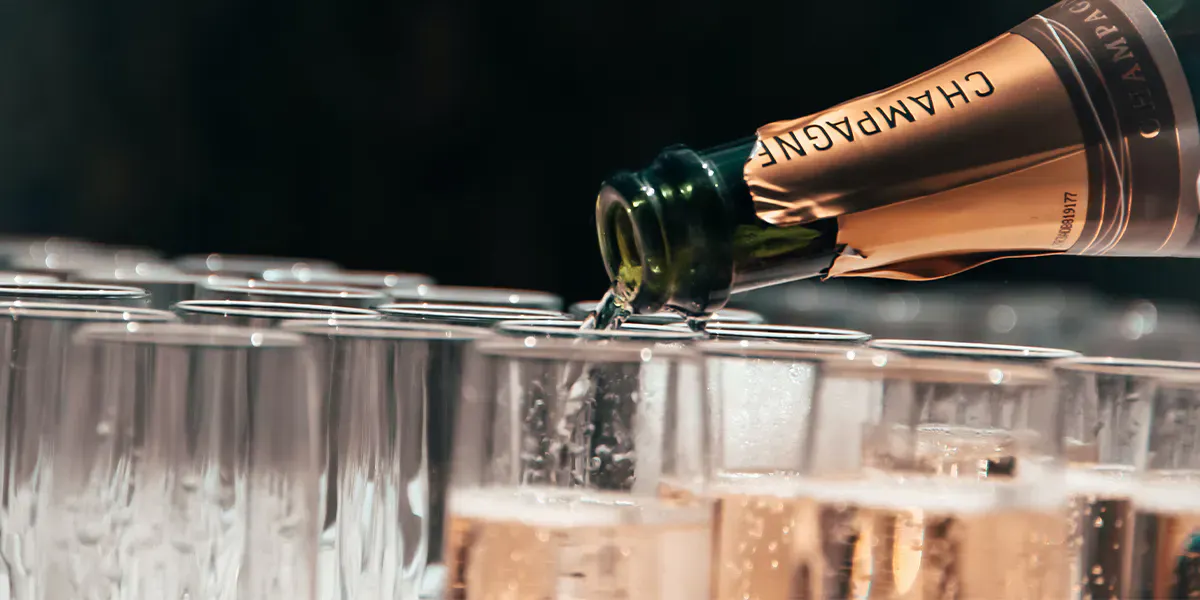
Champagne is one of the most famous and prized sparkling wines, produced in the Champagne region in France and known throughout the world for its unique flavor and elegance. This particular nectar is obtained by the champenoise method, which essentially consists of carrying out a double fermentation. The grapes are harvested manually and delicately pressed. The wine obtained from the first fermentation in the vat is fermented in the bottle with the addition of sugar and yeast. Thanks to this particular fermentation process, the champagne acquires its characteristic bubbliness. The amount of added sugar determines whether the champagne will be Pas dosé (or Nature), Extra brut, Brut, Extra dry, Dry or Sec, Demi sec, or Doux.
Related: The Cocktails that Inspired History’s Creatives
The main authorized grape varieties are Chardonnay, Pinot Noir and Pinot Meunier. Chardonnay is a white grape variety that adds elegance, freshness and citrus notes to champagne. Pinot Noir and Pinot Meunier are both red grape varieties that add body, depth and red fruit flavors. Some of the most common champagne aromas and flavors are citrus, apple, pear, almond, brioche, and honey.
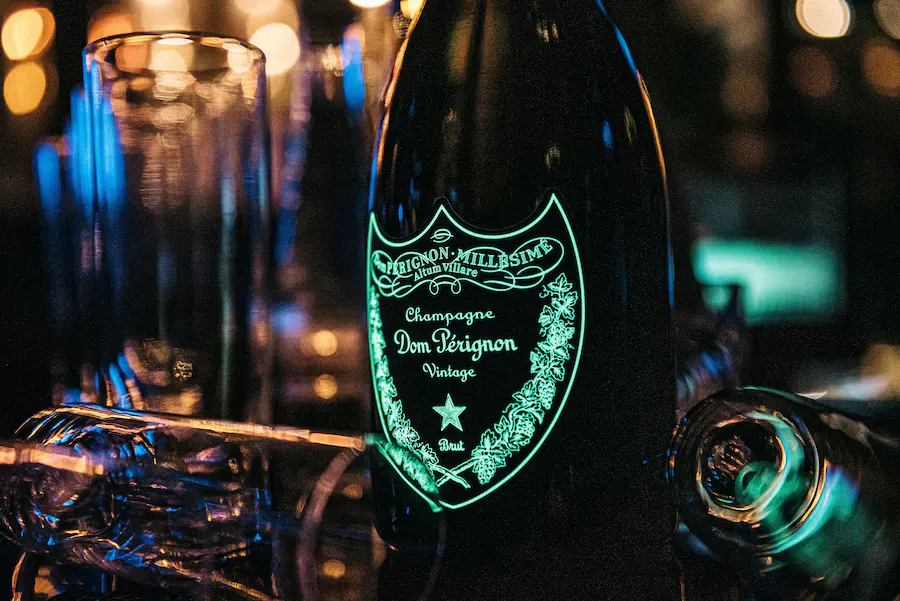
The birth of champagne is surrounded by numerous hypotheses. Among the best known legends is the one starring the Benedictine monk Pierre Pérignon. On August 4, 1693, the monk is said to have "invented" the method of producing champagne, sealing the discovery with the exclamation, "Come quickly, I'm tasting the stars!"
Related: Super Tuscan Wines: The Top 5 in the World
However, there is no historical evidence to confirm this anecdote, and some scholars believe that it is a story invented to increase the fascination around the figure of Pérignon and the creation of the drink. It seems certain, however, that Pérignon contributed significantly to the development of champagne as we know it today. The Dom Pérignon brand was created in the mid-20th century as a prestige cuvée to honor the monk's heritage, and it is considered one of the best champagnes in the world.
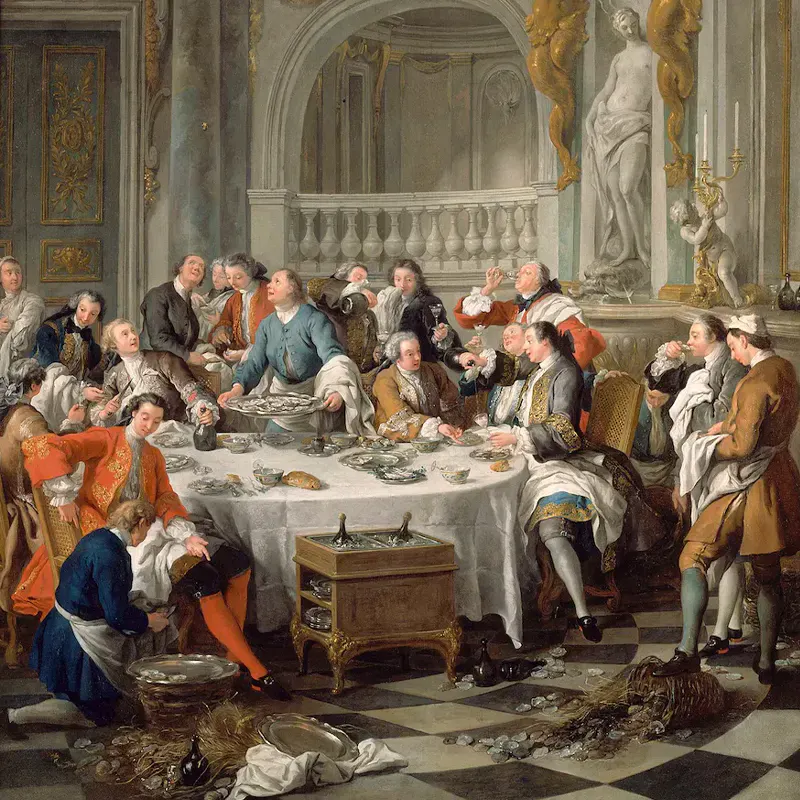
From the mid-1600s champagne became popular as a luxury drink in Europe, prized by the French nobility and aristocracy. This also happened thanks to Philip of Orléans, known for his legendary parties based on magnificence, opulence .... and bubbles. An important name often associated with champagne is that of Napoleon Bonaparte who, despite being a teetotaler, could not say no to this wine and contributed to its internationalization. One of his most famous mottos was: "In victory you deserve champagne. In defeat you need it."
Related: An Artistic Walk in the Footsteps of Bacchus
During the 19th century, the production of champagne became more efficient, thanks to the expansion of vineyards and the adoption of new technologies. This made it possible to produce it in greater quantities and at more accessible prices, making it a less elitist drink and widespread among the middle class and the bourgeoisie.
The drink's popularity increased further in the 1920s, when it became associated with the Jazz Age and the lavish lifestyle of that era, immortalized by writer F. Scott Fitzgerald and his novel The Great Gatsby. Since that time, champagne has become the drink of celebration and sophistication and is often associated with important events such as weddings, anniversaries and New Year's Eve parties.
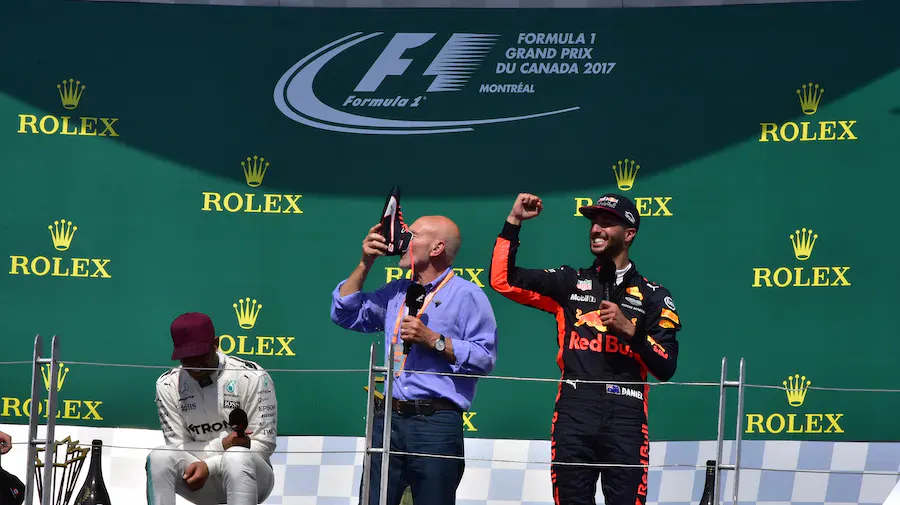
Staying on the theme of celebrations, the combination between champagne and Formula 1 has been a winning combination for several decades, and it is now a well-established tradition for the winners of a race to spray champagne on the podium. It seems that the first to start this custom was the American driver Dan Gurney, who won the 24 Hours of Le Mans in 1967 and celebrated by spraying champagne on the podium.
Do you want to read interesting articles by receiving them directly via email? Sign up for our free newsletter!
In 2016, the Italian-Australian driver Daniel Ricciardo also introduced the so-called "champagne shoey" to Formula 1: the act of celebrating by drinking champagne from the shoe. The shoey is particularly popular in Australia, but the custom of drinking from a shoe has very ancient origins and seems to date back to the Middle Ages, as a symbol of good luck. Drinking champagne from a woman's shoe became a symbol of sophistication in the early 20th century and is said to have originated in an upper class brothel in Chicago.
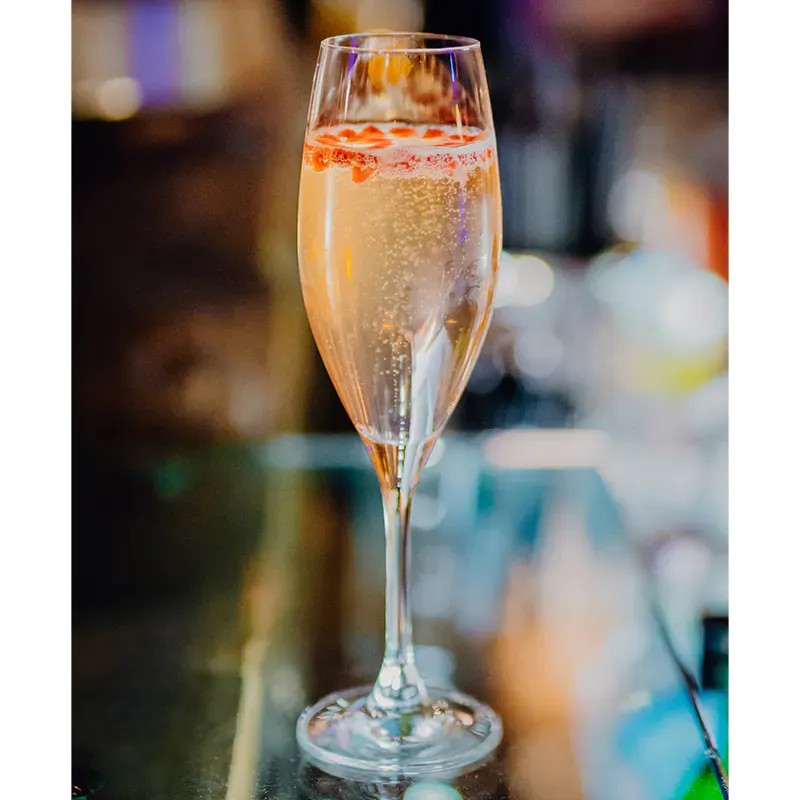
In addition to its popularity as a toast drink for special occasions – inside shoes, stemware or any other glass – champagne is also a versatile ingredient for preparing delicious cocktails. Among the most famous champagne cocktails is the Kir Royale, which adds crème de cassis to champagne; the Mimosa, made with equal parts orange juice and champagne; the French 75, invented during the First World War, which mixes champagne, gin, lemon juice and sugar syrup; the Bellini, which consists of a combination of champagne and peach puree, and the Champagne Cocktail, which includes the addition of champagne, cognac, sugar and angostura.
Related: Brandy and Cognac: Divine Spirits
Champagne is generally very versatile in the kitchen; in addition to cocktails, it can be used to flavor sauces and desserts or to prepare particular dishes such as champagne chicken, champagne zabaglione and huîtres au champagne (oysters in champagne).
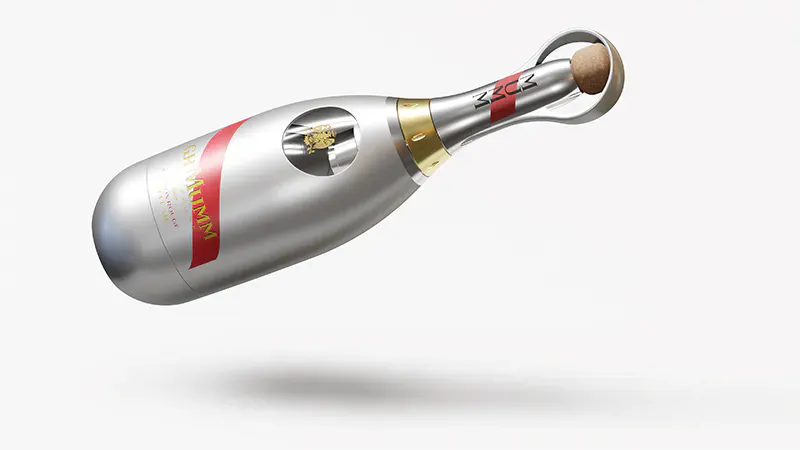
Since its inception, champagne' success has spanned the centuries. In the future, it will also cross space, thanks to the Mumm house. In fact, the well-known company has created a special bottle, the Cordon Rouge Stellar, the first champagne that can be tasted in space. The precious liquid is secured by a stainless steel opening and closing device. An aeronautical aluminum shell protects the glass bottle, the neck of which is surmounted by a cork stopper and a ring, which holds the stopper and blocks the bottle's stainless steel mechanism. The project, which began in 2017 in collaboration with Axiom Space, aims to create a unique experience for astronauts, who will be able to celebrate by recreating an emblematic ritual of celebration and conviviality even in microgravity conditions. A decidedly out-of-this-world experience!
Related: For Sake's Sake: A Japanese Nectar
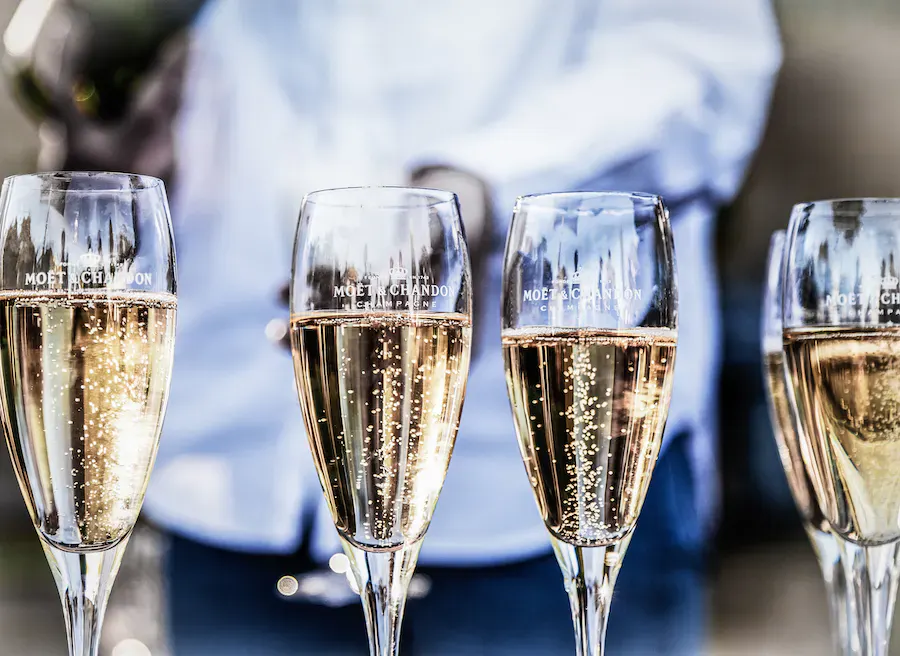
Champagne prices are skyrocketing as well. The cost is generally influenced by various factors: the limited territory of the region from which it comes, an expensive production process and the prestige of the drink.
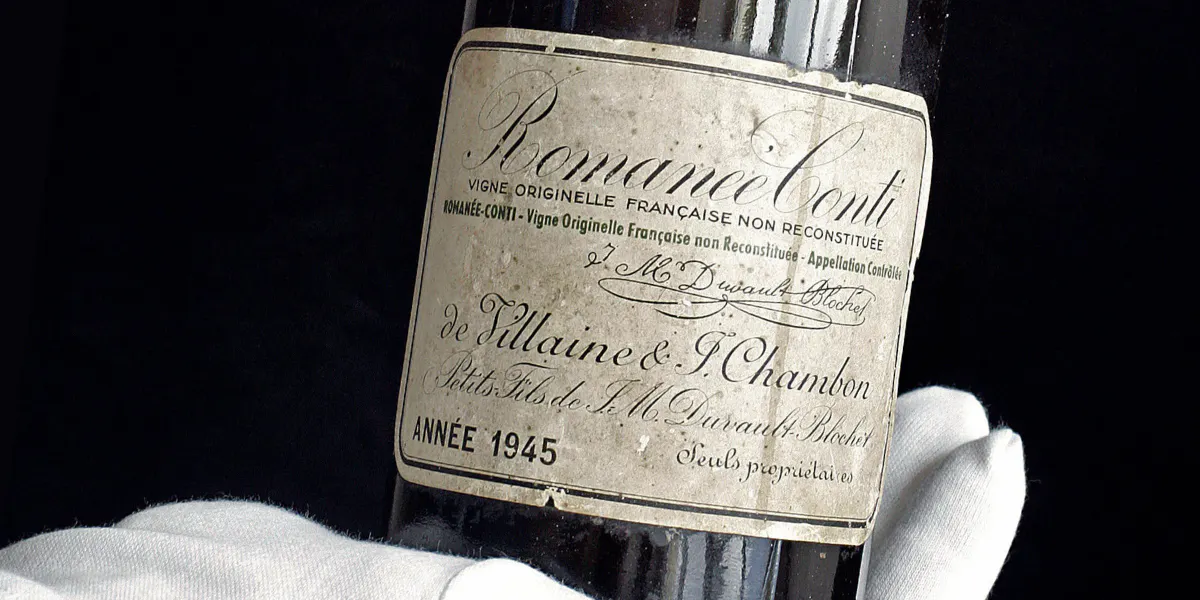
Champagne auctions are highly anticipated events, where collectors and wine lovers come together to buy fine and unique bottles. There are several reasons why certain bottles of champagne fetch high prices at auction, but it is often due to their rarity. Auctions can also be a way for collectors to acquire old vintages that are no longer available on the market. In some cases, the champagne has been kept in ideal storage conditions, making it even more valuable to collectors. Auctions can also be an opportunity for producers to present limited edition blends.
Do you have an old bottle of champagne and want to know how much it's worth? Ask our experts!
Synonymous with luxury and celebration, champagne reveals itself as a wine with a thousand facets and many secrets. This phrase by the entrepreneur Madame Bollinger has become famous and sums up the fascination with this precious liquid: "I drink Champagne when I’m happy and when I’m sad. Sometimes I drink it when I’m alone. When I have company I consider it obligatory. I trifle with it if I’m not hungry and drink it when I am. Otherwise, I never touch it―unless I’m thirsty."