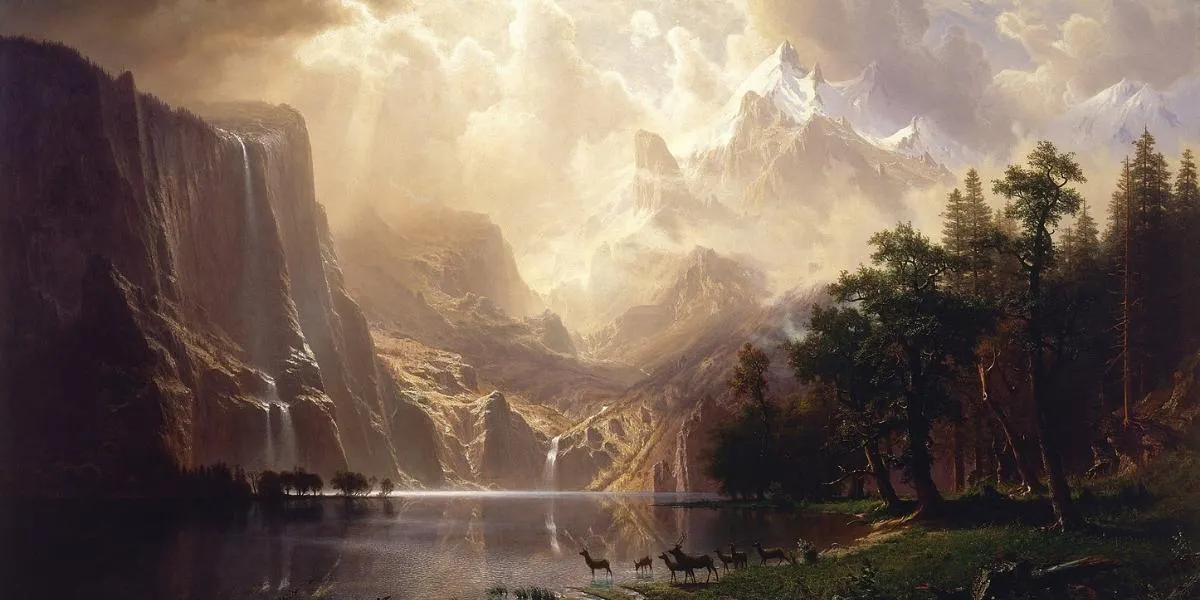
No other artist has captured America's dramatic landscape quite as majestically or dramatically as Albert Bierstadt. His work was popularized during the late 1860s and 1870s, as the Civil War ended and industrialism boomed. As the country's landscape changed, Bierstadt's work depicted the romantic, sweeping scenes of the West, from craggy mountain peaks to pristine coves edged by pine trees.
Related: 6 Iconic American Paintings
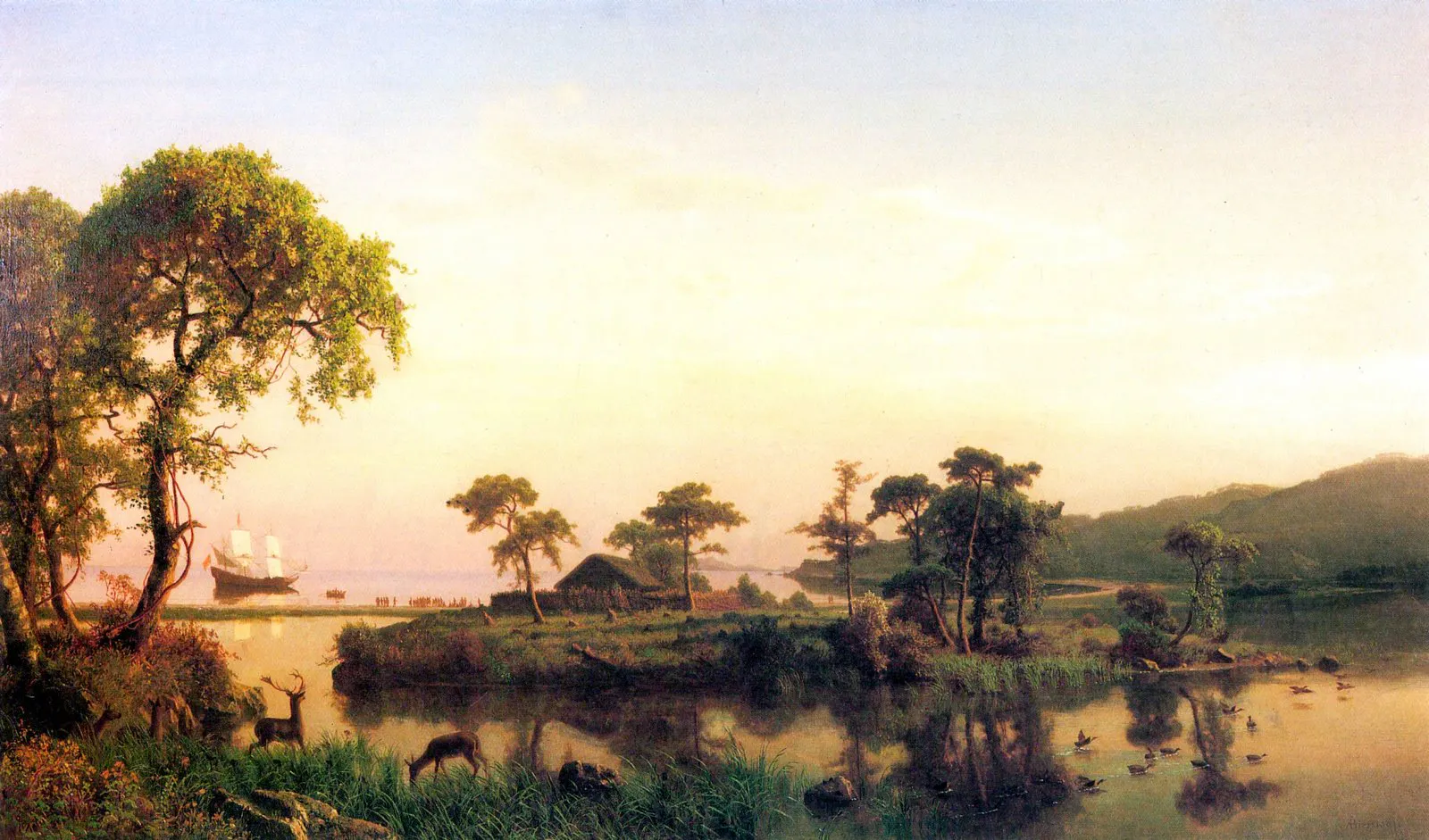
Bierstadt was born in 1830 in Solingen, originally Prussia and now part of Germany, but grew up in the whaling city of New Bedford, Massachusetts. He always had a penchant for art beginning at a young age and was inspired by the coastal landscapes near his home. When he was 23, he moved back to Europe and studied at the Dusseldorf Academy, where he learned the techniques of plein air painting, fine detail and grand landscapes. Upon his return to Massachusetts four years later, he became an art instructor and a full-time painter.
Related: Impressionism: Between Shadow and Light
He joined the Hudson River School, a group of painters based in New York's Hudson Valley, who depicted idyllic pastoral scenes of the natural landscape. Desiring more dramatic scenes, he traveled westward in the late 1850s and 1860s, and his paintings truly introduced a large swath of the unspoiled country to Americans.
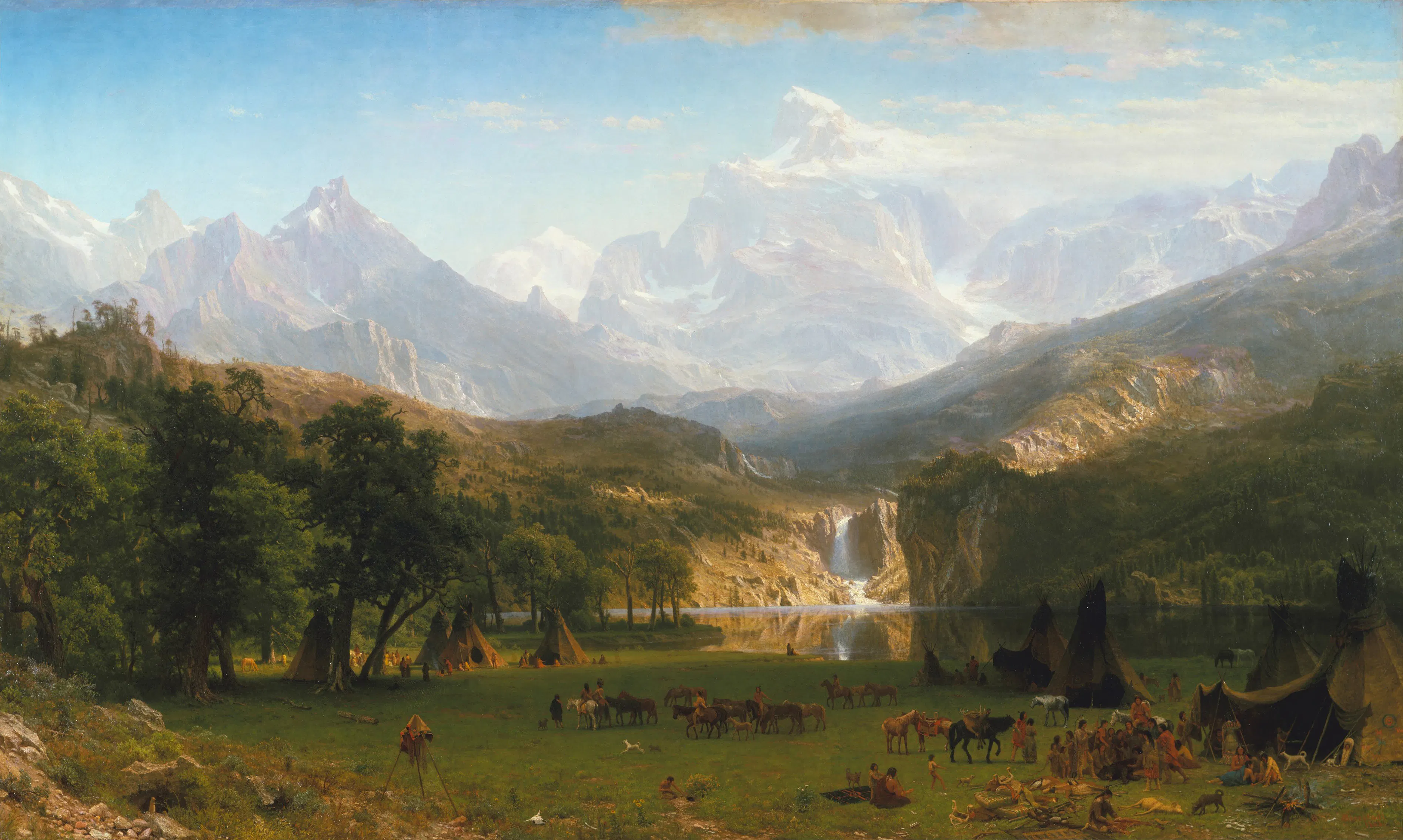
These vast landscapes earned him accolades, including election to the National Academy of Design and multiple solo exhibitions. In 1865, he sold The Rocky Mountains, Lander's Peak for $25,000 (over $300,000 today). His renown spread to Europe, and he exhibited works privately in London to Queen Victoria.
Related: The First Known Works by 10 Famous Artists

His works inspired interest in traveling to the American West, and Bierstadt was often sent on painting trips from Yosemite Valley to the Grand Canyon. His exhibitions were highly ticketed events through the 1860s and '70s, where his paintings showcased the Sierra Nevada mountains, Rocky Mountains, Yosemite national park, Lake Tahoe, as well as the New England coast and Swiss Alps.
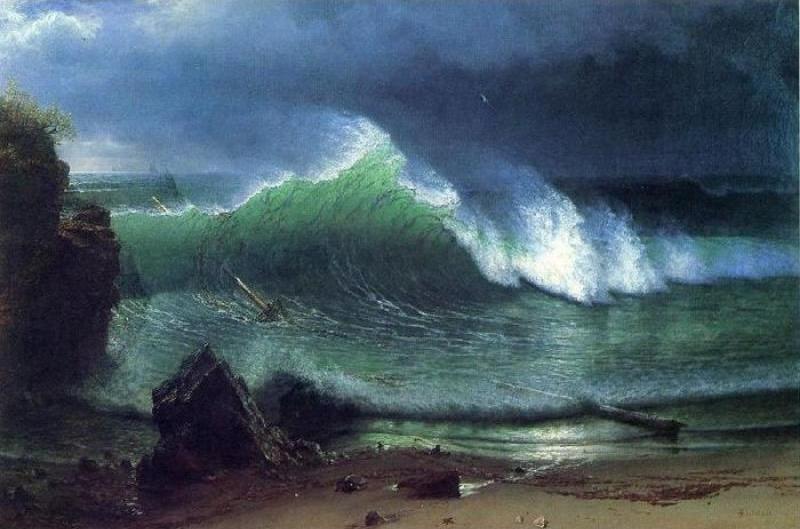
After his wife became ill in 1876, Bierstadt moved to the Bahamas with her for almost 20 years. He still traveled on painting trips, but his work began to decline in popularity. He was criticized for the increasingly dramatic nature of his landscapes, especially the exaggerated light effects and colors. He died in 1902, leaving behind a prolific oeuvre of hundreds of paintings.
Related: The Art of Plein Air Painting

It was only in the late 20th century that interest in his work revived, and today Bierstadt's paintings hang in some of the world's most prominent places, including the White House, Smithsonian Museum of American Art, The Met and the National Gallery of Art. At auction, his paintings achieve multimillion-dollar prices. His record was set at Christie's in 2008 when Indians Spear Fishing (1862) sold for $7.3 million.
Want to read more articles this one? Subscribe to our newsletter and get our latest articles straight to your inbox.
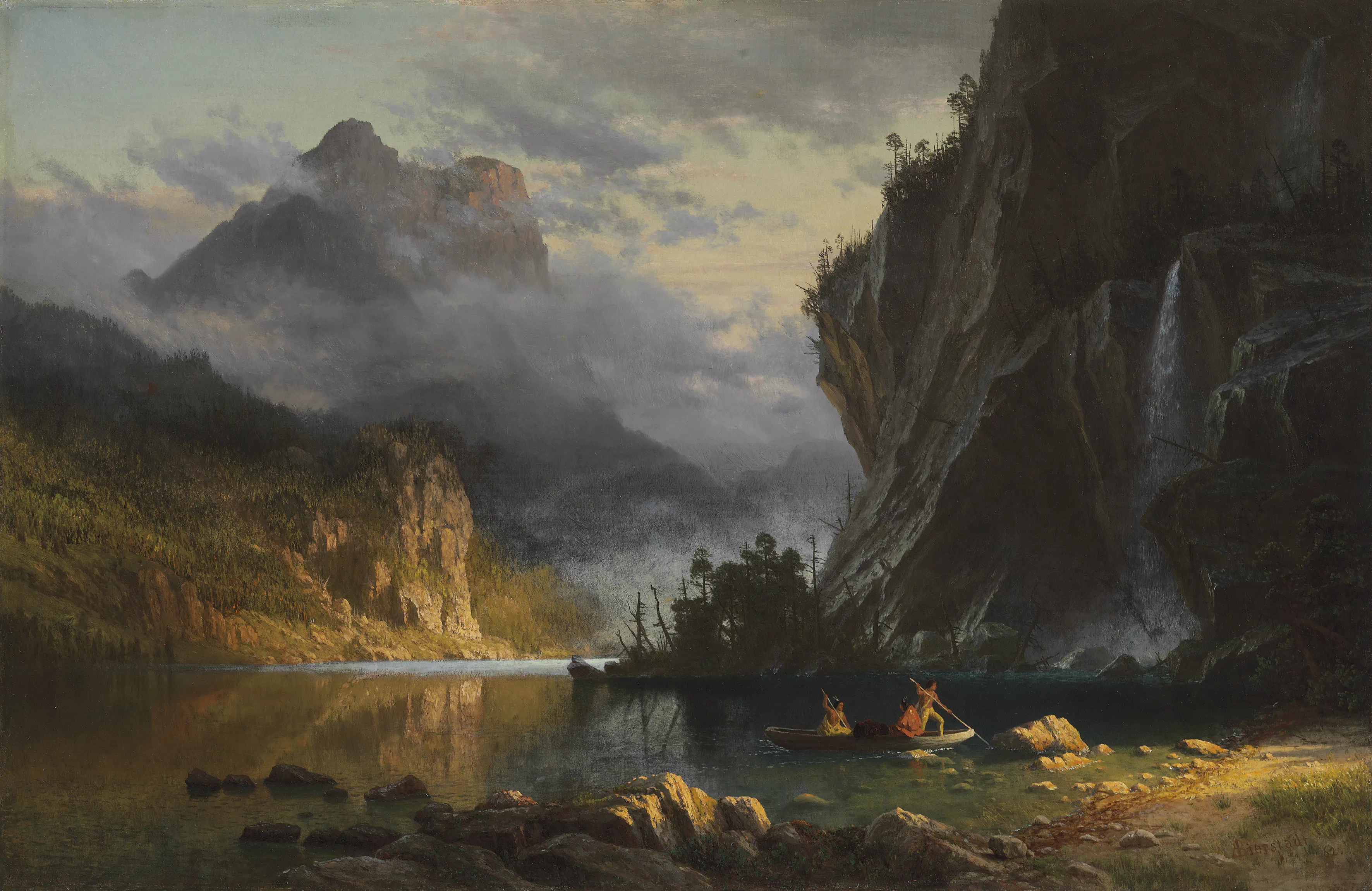
Albert Bierstadt's grandiose depictions of the American West captured a romantic vision of the country's vastly undeveloped natural beauty. At a time when travel to the American West wasn't readily available to the general public, Bierstadt inspired Americans with the diversity and majesty of their massive homeland.