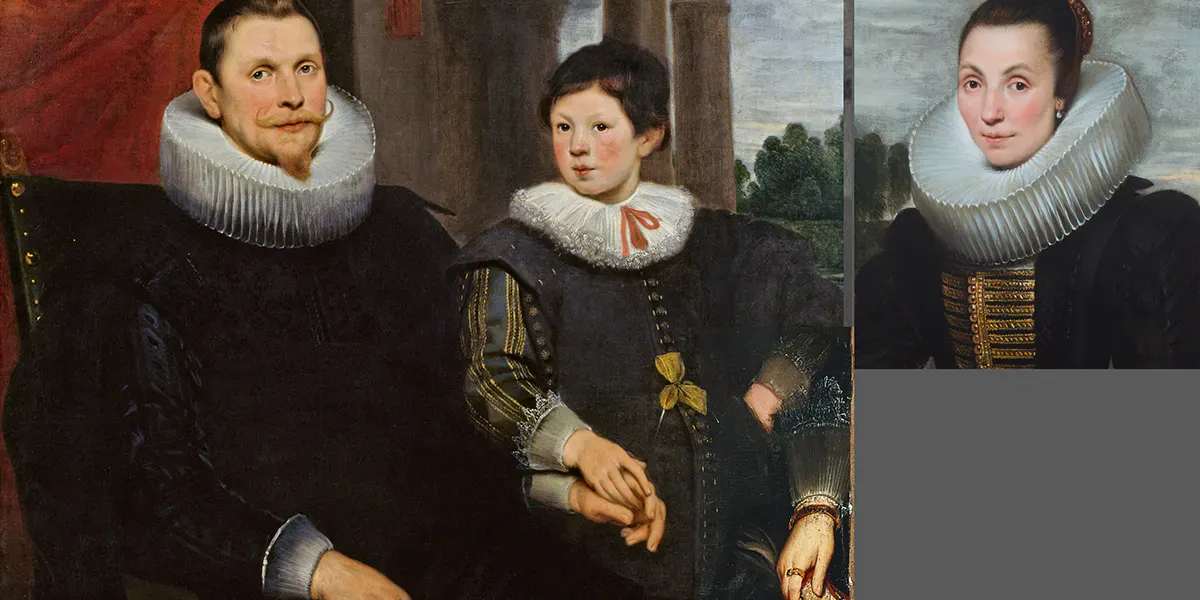
At the beginning of the 20th century, the Danish entrepreneur and philanthropist Johannes Hage had an art museum built on his estate in Nivå, north of Copenhagen. In 1908 he donated the collection, which includes works from the Italian Renaissance, Dutch Baroque and the Golden Age of Danish painting (first half of the 19th century) to the public at his house museum Nivaagaards Malerisamling. Double portrait of a father and son by the renowned Flemish painter Cornelis de Vos (1584-1651), executed in oil on canvas in 1626, is part of the esteemed collection. At the time, de Vos was one of the most renowned and sought-after portrait painters in Antwerp, and many members of the upper bourgeoisie were painted by him. He also frequently collaborated with Peter Paul Rubens.
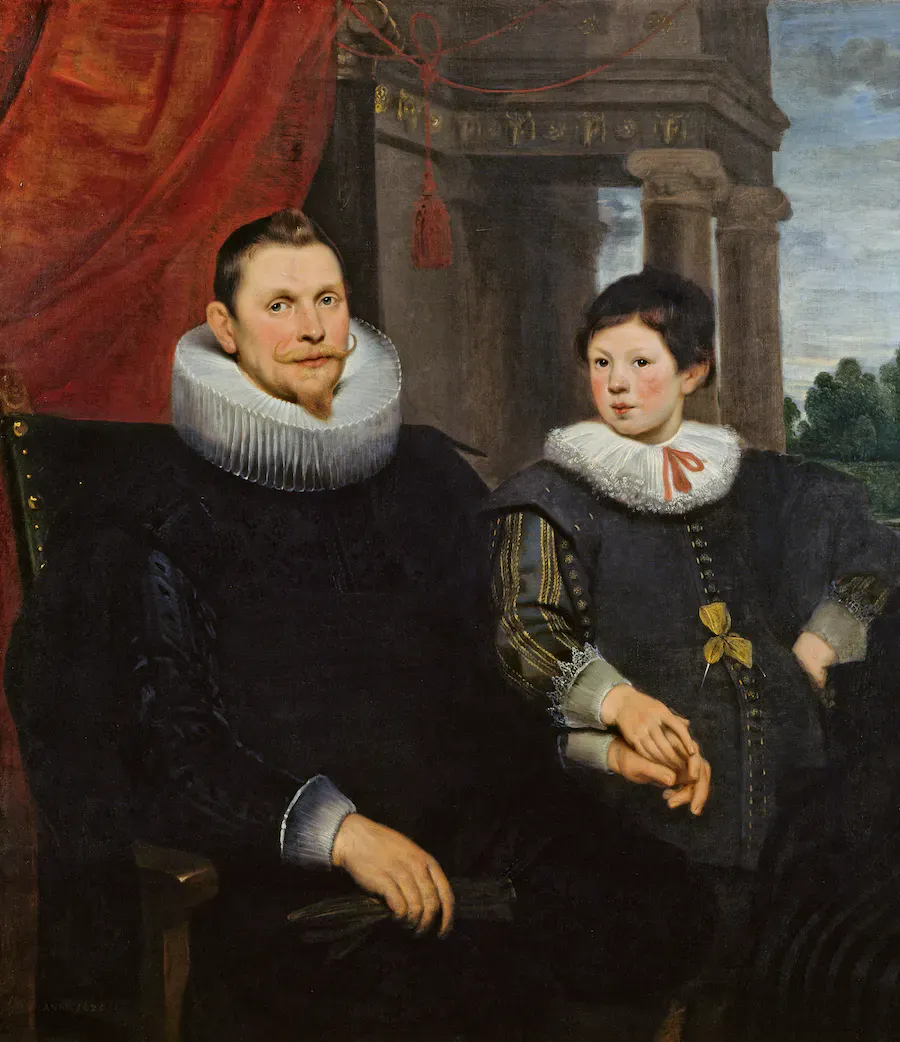
In the course of a research project on the museum's Dutch Baroque collection, the museum consultant Prof. Dr. Jørgen Wadum and Dutch art historian Dr. Angela Jager from the RKD (Dutch Institute for Art History) scrutinized the work of Cornelis de Vos last year. The lower right corner of the painting looked promising: remains of a black dress indicated that the painting originally had not just two, but three people included. The third person was likely the wife and mother of the family.
Related: Peter Paul Rubens: Court Painter and Diplomat
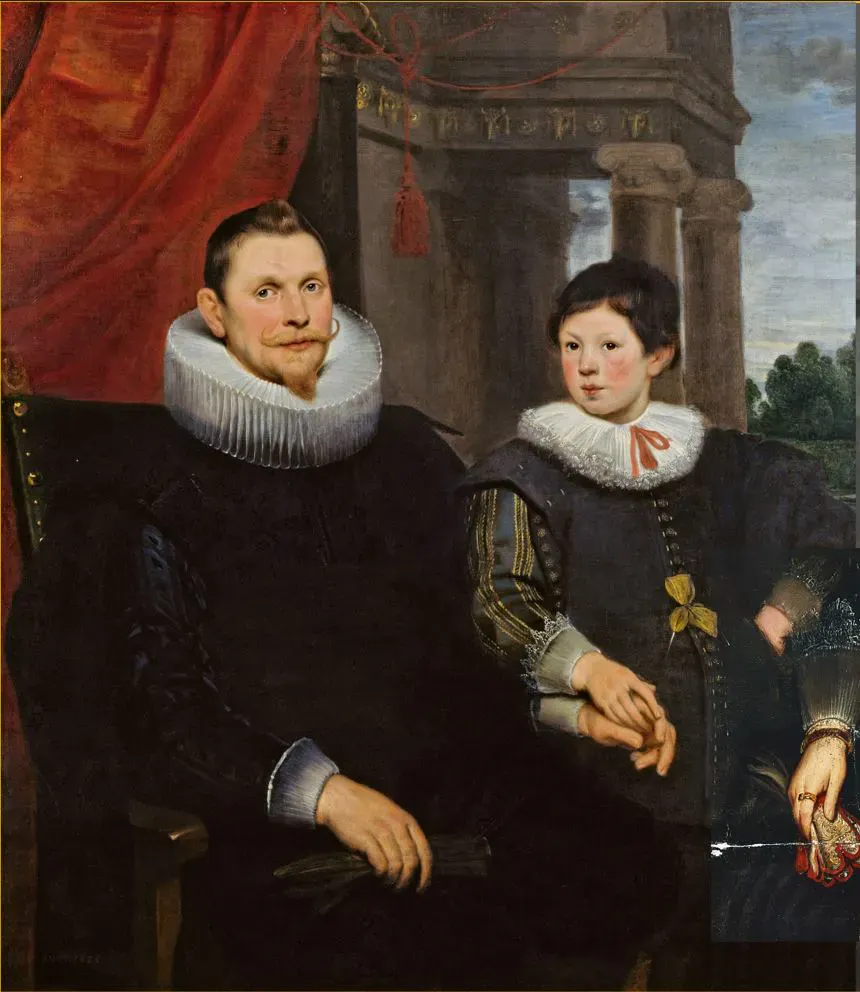
The first clue came from a 1966 conservation report from the Statens Museum for Kunst (Danish National Gallery), which was accompanied by a photograph showing the painting unframed and in a cleaned condition. It was easy to see from the photo that on the right side of the painting the dress was originally visible, as well as the woman's ringed hand holding a pair of elegant gloves.
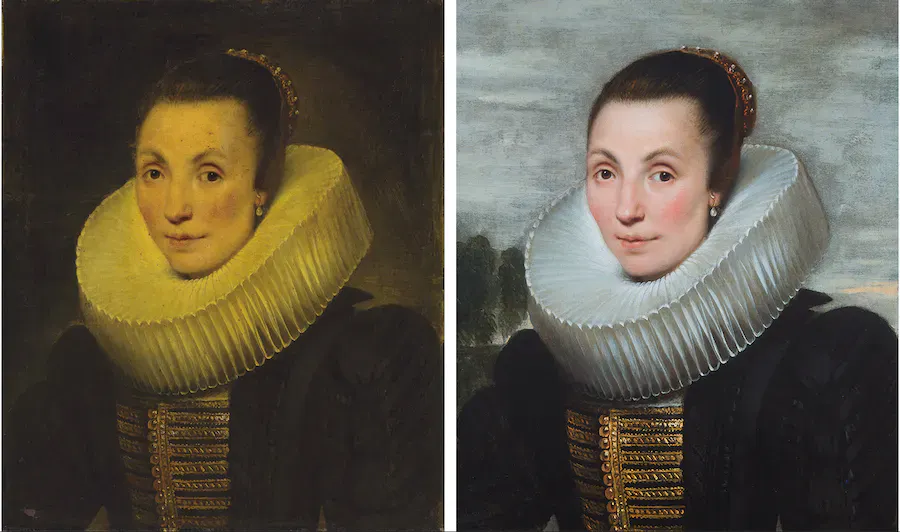
On this basis, the search continued. A portrait of a woman by Cornelis de Vos, which was auctioned off at Christie's in uncleaned condition in 2014, was finally identified as the successful end of the search.
Related: 6 Sensational Attic Finds
"First, we searched - against the background of the black-striped satin skirt that is faintly visible in the lower right corner of the painting - for comparisons among all seated women in de Vos' oeuvre, and here dozens of women turned up in the archives at RKD and at the Getty Research Institute," said Jørgen Wadum in a press release from Nivaagaards Malerisamling. "We therefore had a good idea of what the missing woman might look like. But it wasn't until I googled 'portrait of a woman' that I found her. And it was completely unexpected! Cornelis de Vos' portrait of a woman appeared as an illustration for an interview with Dutch art dealer Salomon Lilian, published online in 2016 in CODART eZine. In 2014 the de Vos woman turned up at auction with a dark brown background, but fortunately Lilian had the painting restored - otherwise we might have missed the link to our double portrait."
Want to discover articles like this straight to your inbox? Then register today for our free newsletter!
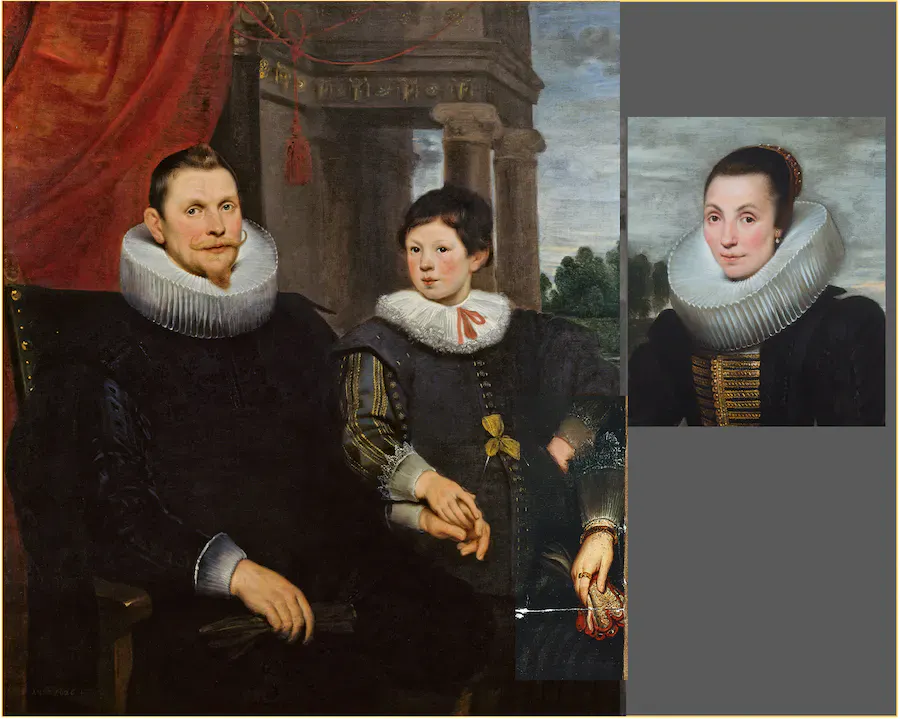
Thanks to a donation from the Ny Carlsberg Foundation, the lady's portrait was acquired and combined with the double portrait in the museum in Nivå. The separation probably took place between 1830 and 1859, probably after damage, due to which the original family portrait was split up and the resulting individual portrait of the lady was additionally shortened. Now, the research team wants to find out who the happily reunited family was.
![Peter Paul Rubens, ‘Rubens and Isabella Brant in the Honeysuckle Bower’, c. 1609, Alte Pinakothek, Munich [detail]. Photo via Wikipedia](https://images.prismic.io/barnebys/c6f686a2-ec80-464b-bbeb-5f9e87860bf7_Cover.jpeg?auto=compress,format)