The Netherlands occupies a very special place in art history. Perhaps best known is the Baroque era, when the wealth of the inhabitants, accumulated through a far-reaching trading network, was gladly invested in art, resulting in the Dutch Golden Age. From Vermeer to Van Gogh, here are the 6 most iconic Dutch paintings.
Jan Vermeer, The Girl with the Pearl Earring
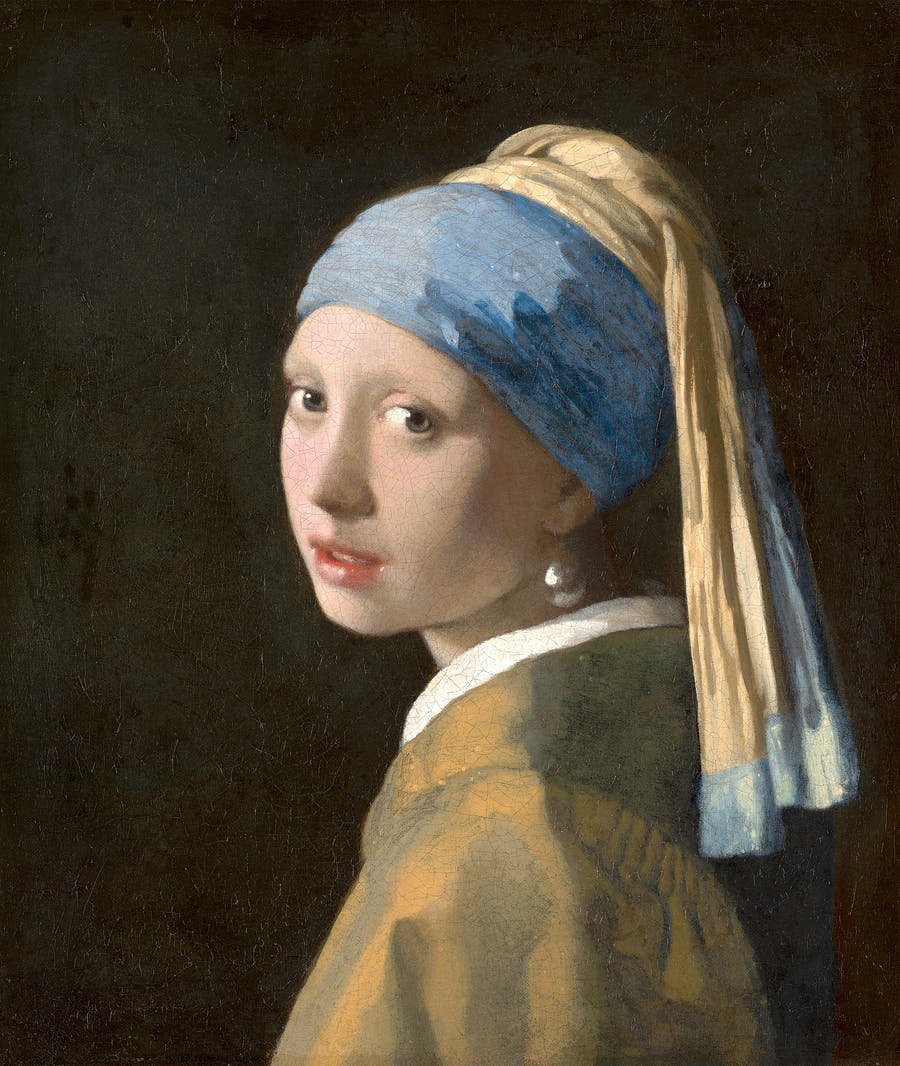
Jan Vermeer's painting The Girl with the Pearl Earring, created around 1665, is probably the most famous female portrait in art history after the Mona Lisa. In addition to their fame, the two portraits also have in common the fact there are questions over the identity of the portrayed. In the novel and film The Girl with the Pearl Earring, which revolves around Vermeer's best-known work, it is posited that the fictional maid Griet, played by Scarlett Johansson, is immortalized on a canvas by the painter. Other guesses range from a professional model to one of Vermeer's daughters. It is also noted that the pearl was not the focus of the painting from the beginning, but rather the woman's Turkish-style turban, which the original title The Girl with the Turban illustrates.
Related: The 10 Most Famous Works of Art and Where to Find Them
Rembrandt van Rijn, The Night Watch
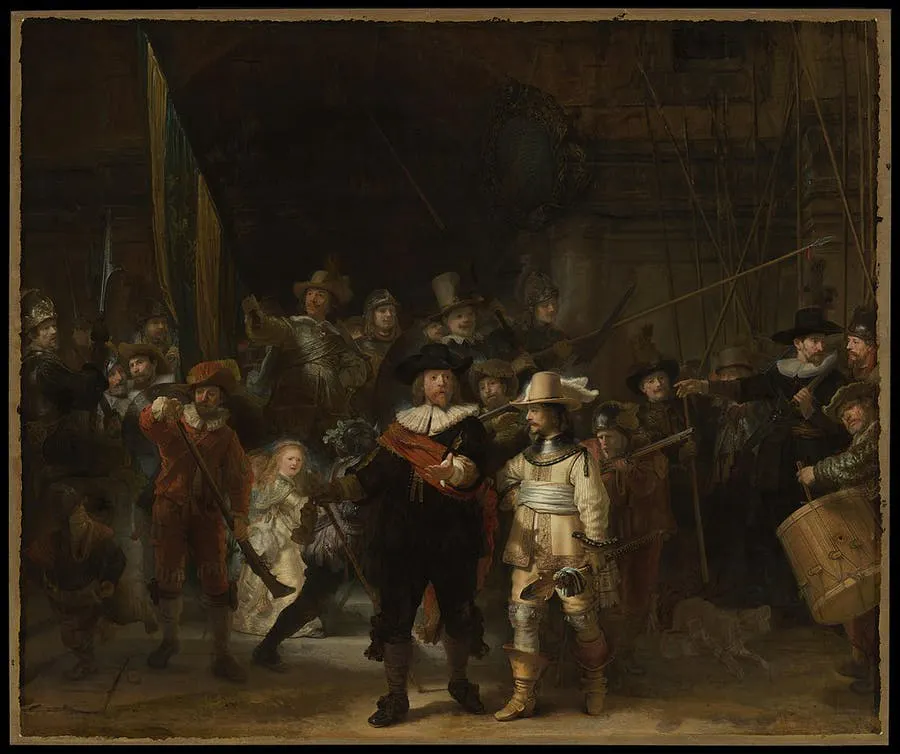
The work of the Dutch Baroque painter par excellence is the world famous Night Watch of Rembrandt, which is the gem of the collection of the Rijksmuseum in Amsterdam. The painting was a commissioned work and originally intended for the ballroom of the Amsterdam rifle guilds. It hung there from 1642 to 1715 and then came to the city hall. However, due to lack of space it had to be reduced to 363 × 437 cm. Around a hundred years later it became part of the collection of the Rijksmuseum, where it was recently restored.
Related: The Enduring Appeal of Old Masters
Piet Mondrian, Composition No. III, with red, blue, yellow and black
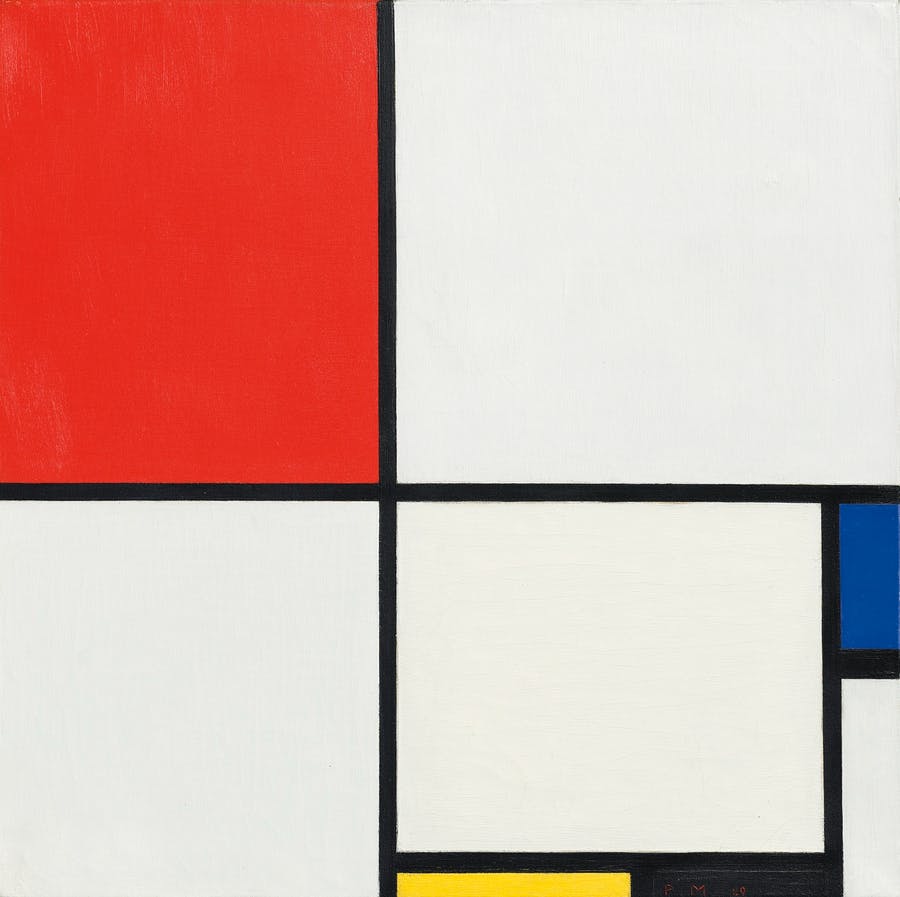
In search of the perfect harmony that would overcome any superfluous element, Piet Mondrian turned to various artistic movements, including Impressionism, Fauvism and Cubism. Finally, in 1917, together with other like-minded painters, he founded the artists' association De Stijl. Mondrian pursued an increasingly strict and reduced formal language, which he called neo-plasticism, limited to horizontal and vertical lines in black as well as primary colors. Mondrian's theories and works were a milestone in the direction of abstraction and actually each of these Compositions that emerged enjoyed a certain cult status. In 1965 Yves Saint Laurent, who owned one of these paintings himself, created the “Mondrian Collection” based on the designs of the Dutch painter.
Related: Yves Saint Laurent & Art: The Mondrian Collection
Vincent van Gogh, Starry Night
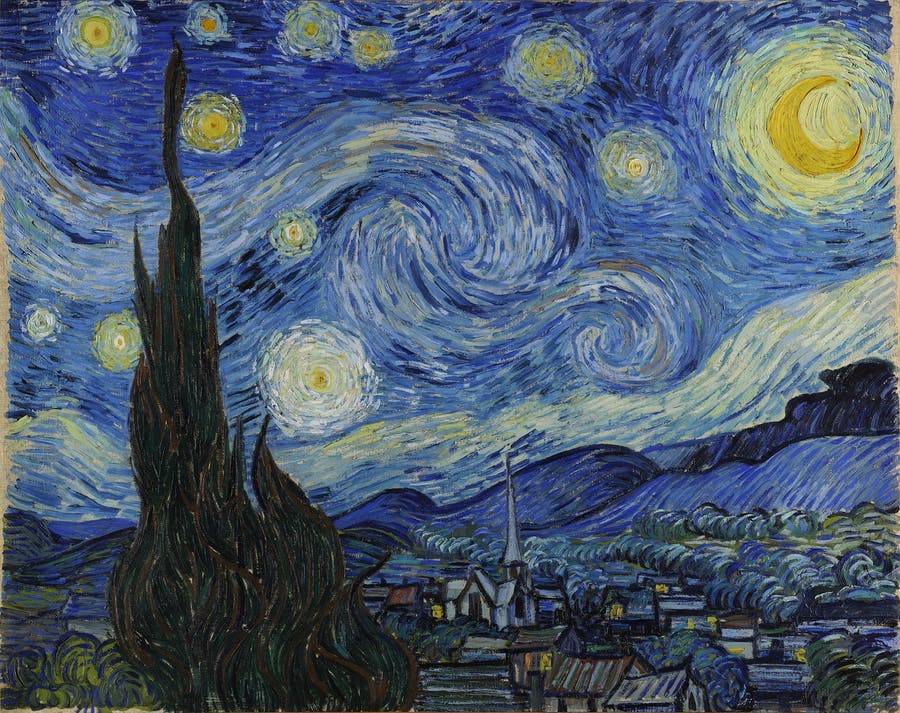
Vincent van Gogh has created many famous paintings, including his sunflower series, the view into his bedroom in Arles and his self-portraits. The best known, however, is Starry Night from June 1889 - a work that is one of the most reproduced paintings in the world. He had already repeatedly taken up the motif of the starry sky, including in the Café terrace in the evening and Starry night over the Rhône, both of which he carried out in Arles in September 1888. At that time, the painter was full of energy and hoped to attract many colleagues to the south of France, which he loved so much. The only one who moved, however, was Paul Gauguin with whom a violent argument broke out, in the course of which van Gogh cut off part of his left ear. Starry Night was completed during van Gogh's stay in a mental hospital in Saint-Rémy-de-Provence following this breakdown. The swirls with which he depicted the sky seem to reflect the troubled soul of the painter.
Related: 8 Artists Inspired by the South of the France
Carel Fabritius, The Goldfinch
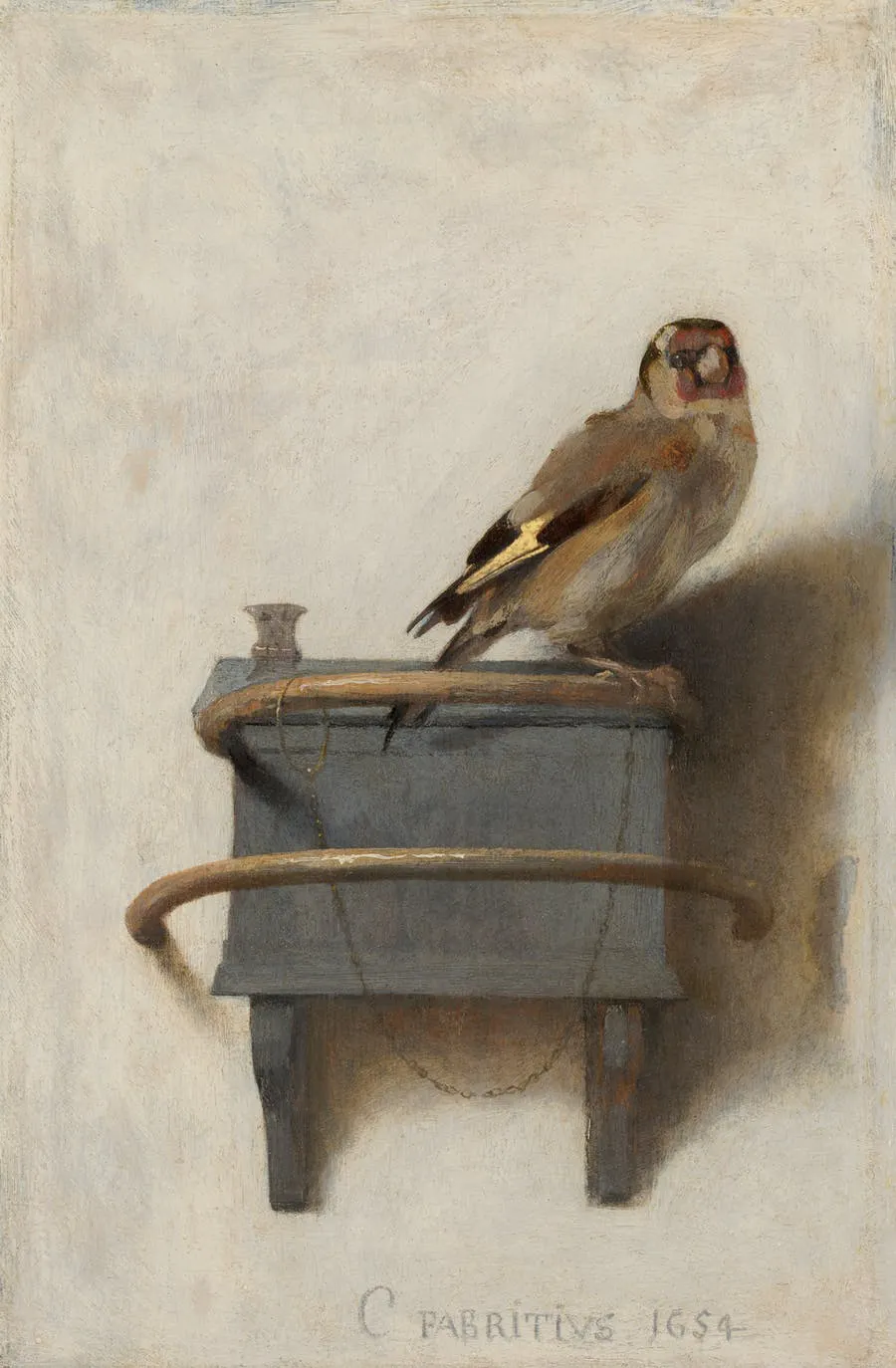
Like Vermeer's Girl with the Pearl Earring, the painting The Goldfinch by painter Carel Fabritius is an icon also found at the Mauritshuis in The Hague. And like Vermeer's work, a novel and Hollywood film have also contributed to the expansion of its already existing fame. The Goldfinch is one of the last completed works by Fabritius from 1654, the year in which the painter was killed in the explosion of a powder tower in Delft. The painting, executed as a trompe-l'oeil, shows a goldfinch sitting on its feeding box. Goldfinches were a popular pet in Holland at the time and were considered a good luck charm. The goldfinches lived their existence chained to the outer wall of the houses. Since Fabritius executed the painting on a wooden panel, it is possible that this was once part of a shutter, the painting of which was supposed to insinuate the presence of a real goldfnch.
Hieronymus Bosch, The Garden of Earthly Delights
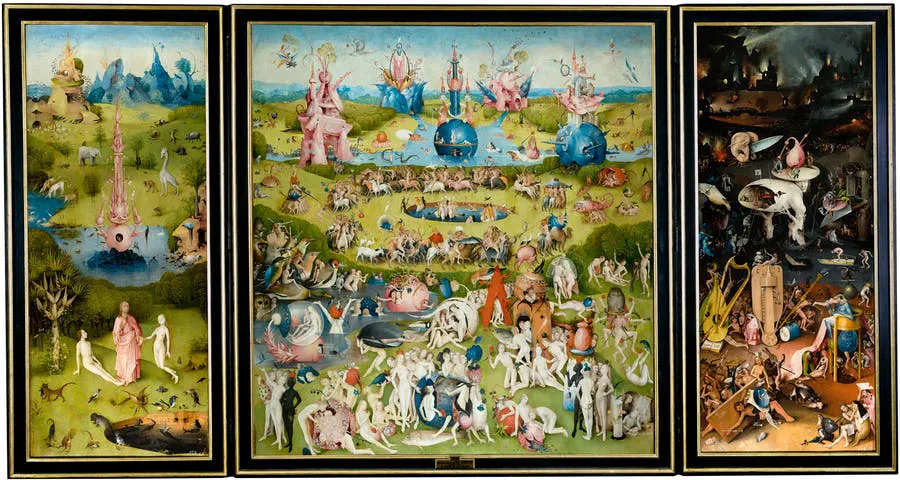
Before the Seven United Provinces declared themselves a republic in 1581, they were part of the Netherlands, ruled by the Spanish Habsburgs, along with what is now Belgium and Luxembourg. In the late 15th and early 16th centuries, the painter Hieronymus Bosch was based there and a favorite by many prominent clients. Bosch's most famous work, The Garden of Earthly Delights, was commissioned by Engelbert II, Count of Nassau-Breda, and once hung in his palace. The central image of the oak triptych shows the eponymous motif, the left wing the Garden of Eden with Adam and Eve and Christ. However, the triptych owes its cult status to the right wing of the picture, which depicts hell: here sinners are subjected to grotesque punishments by garish beings.