Numerous artists were involved in the Wiener Werkstätte production community, which was founded in 1903 by the architect Josef Hoffmann, the artist Koloman Moser and the industrialist Fritz Waerndorfer. Following the example of the English Arts and Crafts Movement, the aim was to counter industrial mass-produced goods with creativity and quality.
Here are 5 artists from the Wiener Werkstätte you should know:
Josef Hoffmann (1870-1956)
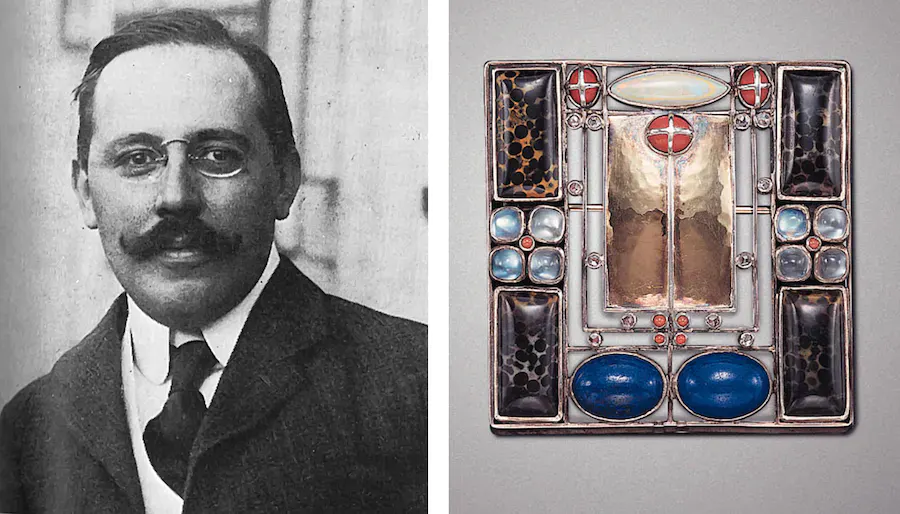
The Moravia-born architect and designer Josef Hoffmann was a founding member of both the Vienna Secession and the Wiener Werkstätte. His goal was not only to give new impetus to art, but also to give handicrafts a higher quality that would match the exuberant splendor of the historicism that prevailed in the second half of the 19th century (especially in Vienna in the Ringstrasse architecture).
Hoffmann was involved in many areas of the Wiener Werkstätte and designed jewelry, as well as silver objects and furniture. He also designed the Palais Stoclet in Brussels, which was designed entirely by members of the Wiener Werkstätte and is now a UNESCO World Heritage Site. Hoffman's other important works included the furnishing of the Cabaret Fledermaus and the Sanatorium Purkersdorf and the very modern Kubus armchair.
Related: 10 Ingenious Chairs: Design Classics of the 20th Century
Koloman Moser (1868-1918)
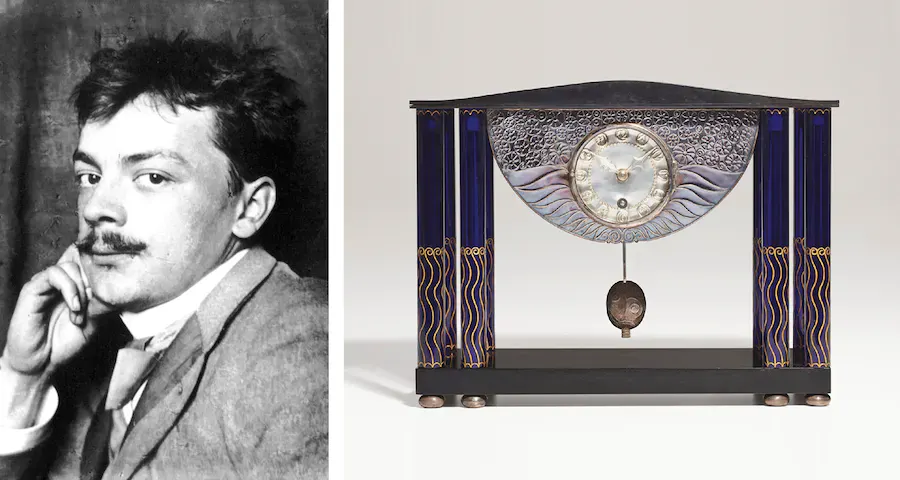
Koloman Moser was another founding member of the Wiener Werkstätte and the Vienna Secession. His many travels took him to various places in Italy, France, Germany and the Netherlands. In 1904 he designed the first exhibition of the Wiener Werkstätte in Berlin.
Related: One Capital and Four Deaths: The Year 1918 in Vienna
Koloman Moser was a very versatile artist who worked both as a painter (he belonged to the circle around Gustav Klimt, who left the Vienna Secession in 1905) and as a graphic artist and craftsman. His creations can be seen in Vienna in the stained glass windows of the Vienna Secession building, the stained glass windows and high altar of the Church at Steinhof and on the facade of the house at Linke Wienzeile 38.
Dagobert Peche (1887-1923)
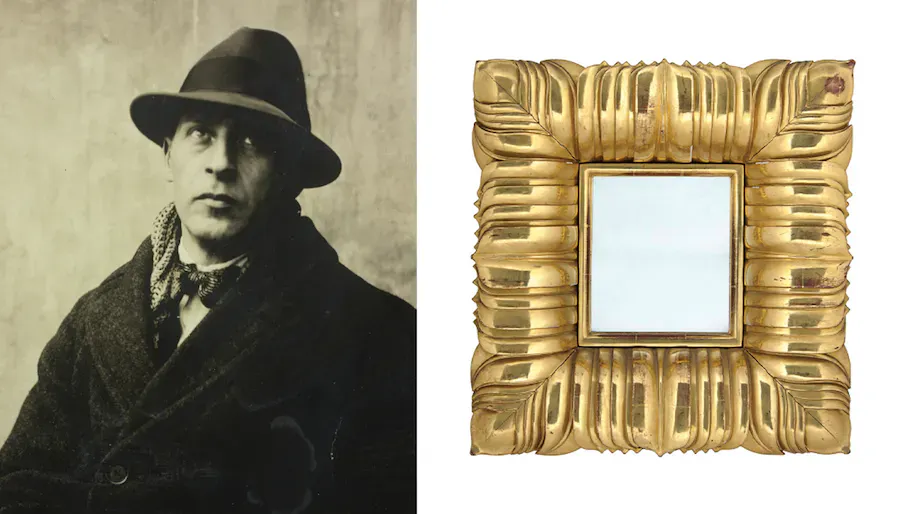
In 1915, Josef Hoffmann convinced the talented artist Dagobert Peche to join the Wiener Werkstätte. Peche, whose designs for wallpaper, fabric patterns, mirror frames, furniture, gold and even fashion focused on floral ornamentation, was a great asset to the artistic community with his imaginative designs.
Peche's extraordinary talent led to him being put in charge of the newly founded Zurich branch of the Wiener Werkstätte from 1916 to 1920, on whose products he put his own stamp with elements borrowed from the Rococo.
Want to discover articles like this straight to your inbox? Register for our free newsletter today!
Vally Wieselthier (1895-1945)
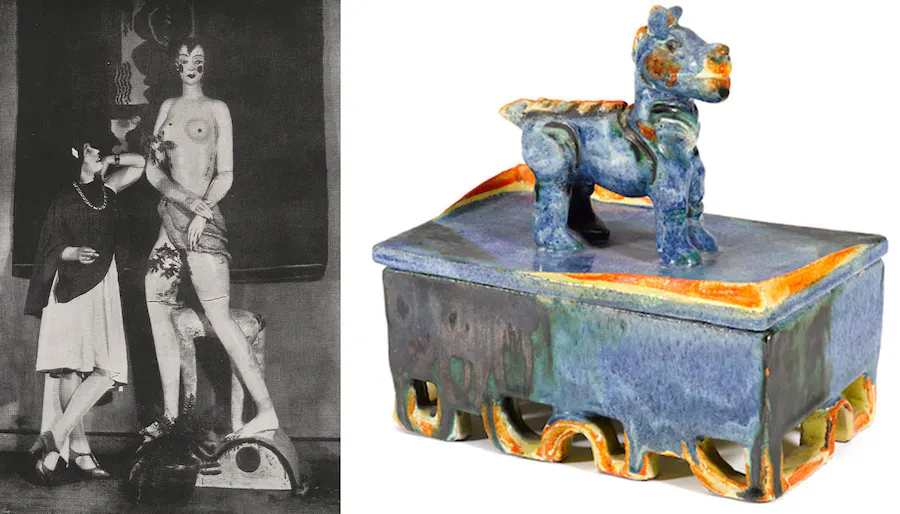
Vally Wieselthier was one of the about 180 women who worked for the Wiener Werkstätte, though the women were often not treated as equals to the male members. She worked there during and after her studies at the Vienna School of Applied Arts (including with Josef Hoffmann and Michael Powolny).
Related: Emilie Flöge: The Visionary Fashion Designer Who Inspired Gustav Klimt
Vally Wieselthier is best known for her ceramics. After leaving the Wiener Werkstätte in 1922, she founded her own ceramics workshop, but sold it to the Wiener Werkstätte just five years later, retaining the role of workshop manager. After emigrating to the USA, she founded the Contempora association there together with American and European artists.
Carl Otto Czeschka (1878-1960)
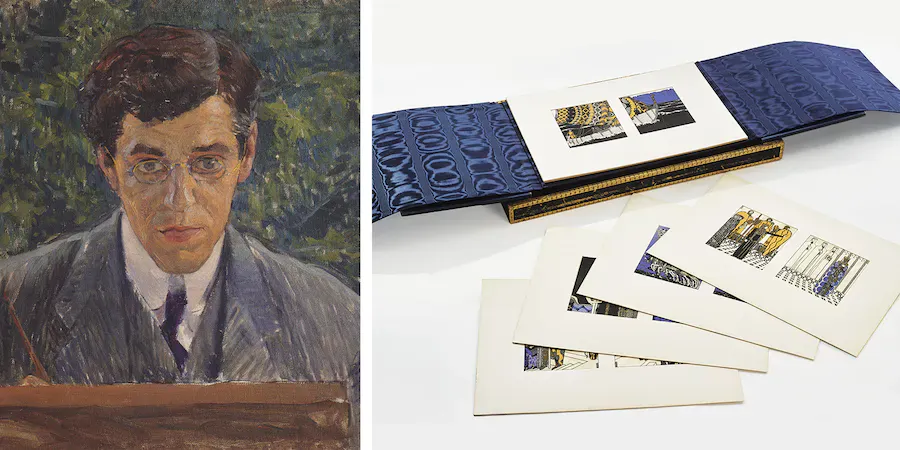
Carl Otto Czeschka came to the Wiener Werkstätte in 1905 through his old friend Koloman Moser, after teaching at the School of Applied Arts. In fact, one of his students there was the Viennese Expressionist Oskar Kokoschka.
Czeschka developed into one of the most important designers of the Wiener Werkstätte and remained associated with it even after he was appointed to the Hamburg School of Applied Arts in 1907. Czeschka left behind a wide-ranging body of work, from which his graphic works particularly stand out. His 1908 illustrations for the children's version of the German medieval epic poem The Song of the Nibelungs are among the most beautiful book illustrations ever.