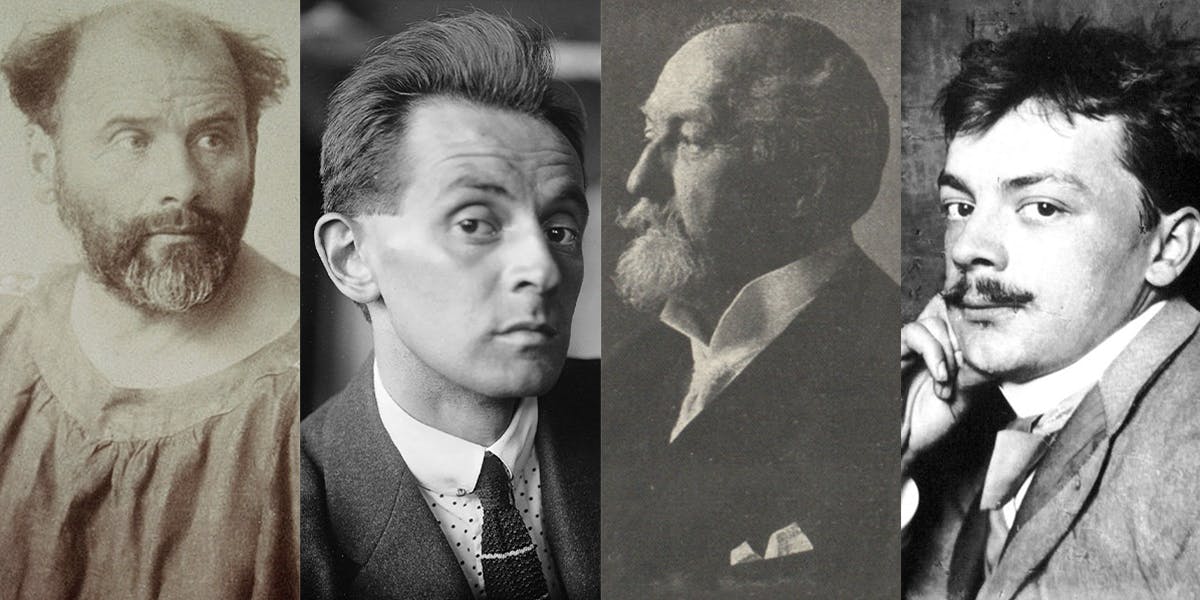
For the Viennese art scene, 1918 got off to the worst possible start when Gustav Klimt (born in 1862), one of the great artists of the Vienna Secession, died of a stroke on February 6, at the age of 55. His paintings and decorations are among the most famous works of Art Nouveau created in the Austrian capital during the Belle Époque.
Related: Jugend: The Birth of an Artistic 'Youth' Movement
Klimt founded the Vienna Secession in 1897, together with other artists, including Koloman Moser, Josef Hoffmann and Joseph Maria Olbrich. The movement aimed to renew Vienna's art scene, which the artists thought was too dominated by turgid historicism. Just one year after its foundation, the movement was given its own exhibition hall in the Vienna Secession building designed by Olbrich. In 1902, Klimt's controversial Beethoven Frieze was presented there.

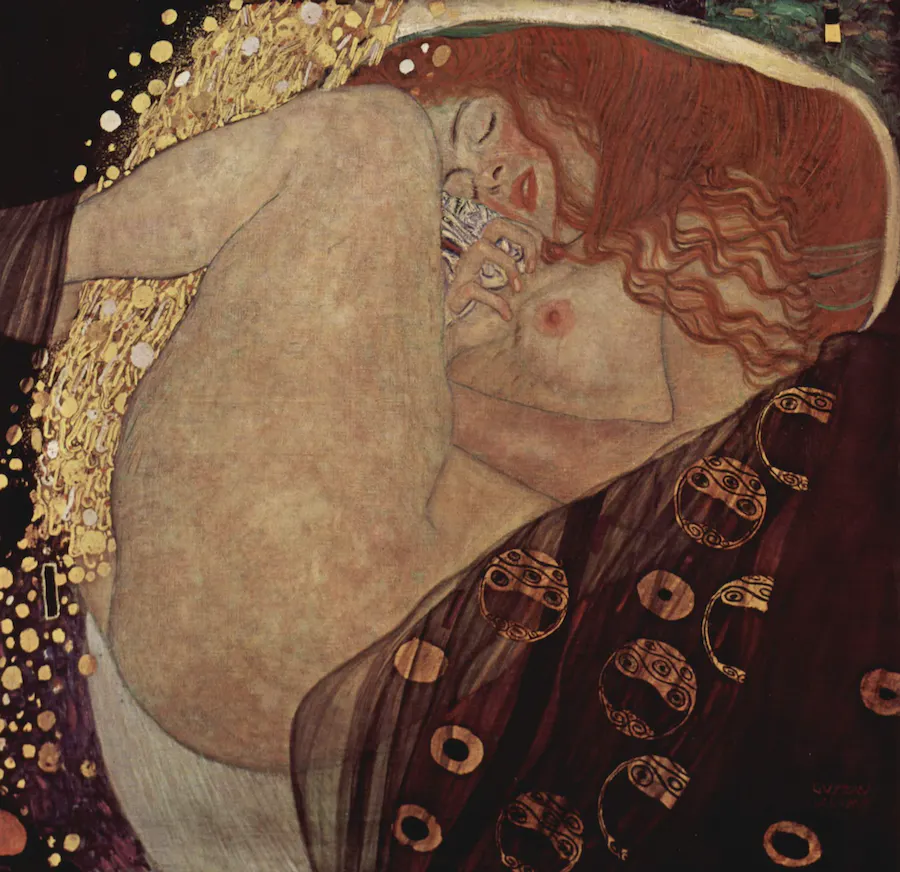
Gustav Klimt and the Secession movement parted ways in 1905 and Klimt joined the Deutscher Künstlerbund (the 'Association of German Artists'). Many of his best-known works were created in the following years, including The Kiss, Danaë and the portraits of Adele Bloch-Bauer. As a prominent and polarizing figure in the Viennese art scene, his death on February 6, 1918 was met with a mix of emotions.
Related: Were Gustav Klimt and Adele Bloch-Bauer Lovers?
As soon as April 11, Vienna had to cope with its next loss with the death of the architect and urban planner Otto Wagner (born in 1841). Wagner had made a significant contribution to the renewal of Vienna's cityscape with his buildings in the Art Nouveau style.
Related: Bauhaus: A New Guild of Craftsmen
At the beginning of his career in the 1860s, Vienna was dominated by historicism, particularly evident in the magnificent buildings on the Ringstrasse. Wagner's designs from this period and the following decades were also characterized by this eclectic style.
Want more articles like this delivered straight to your inbox? Subscribe to our free newsletter!

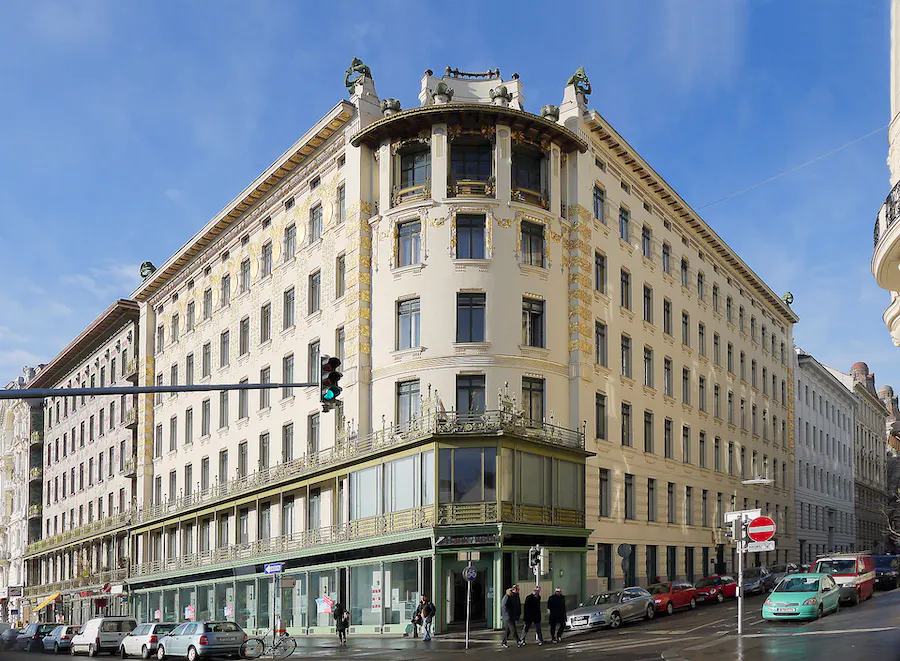
By 1890s, his style changed. He increasingly incorporated elements of Art Nouveau into his designs, as shown in the Linke Wienzeile Buildings of 1898-99. In the early 20th century, Wagner's buildings finally showed clear traits of modern architecture. An example of this is the Vienna Postal Savings Bank of 1906.

Some of the decorations on Wagner's Linke Wienzeile Buildings were made by Koloman Moser (born on 1868), who died in his home town of Vienna on October 18, 1918 at the age of 50. In addition to his work as a painter and graphic artist, his work as craftsman was of great importance to Vienna at the turn of the century.
Related: William Morris: Unravelling the Legacy
Moser was also one of the founding members of the Vienna Secession in 1897. He designed the façade decoration for the exhibition building of the artists' association. Two years later he accepted a teaching position at the Vienna School of Applied Arts.

Arts and crafts were his primary passion, and he wanted to replicate the pioneering Arts & Crafts Movement of England in Austria. For Moser, the quality of the designs and the materials used for their execution were paramount. In 1903, he founded the Wiener Werkstätte (the 'Vienna Workshop') together with Josef Hoffmann and Fritz Waerndorfer, who worked closely with the Secession and the School of Applied Arts.

After the death of Gustav Klimt on February 6, 1918, Vienna's next most important painter was Egon Schiele. The 27-year-old artist (born on 1890), was at that time doing his military service at the Army Museum, which left him enough time to paint on the side.
Related: Egon Schiele: A Singular Style
Schiele, however, did not have much time to claim his success, as he died young on October 31, 1918 from the Spanish flu that was rampant in Europe at the time. He left behind numerous drawings, sketches and paintings.

At the time of his death, Schiele had undergone a major development. At the beginning of his career, his style was still very much oriented towards that of Gustav Klimt, who was his role model and mentor. Later, however, he turned more towards Expressionism. In the drawings of that time, which often showed scantily clad or naked women in unambiguous positions, Schiele's genius finally came to light. A few years before his death, after he got married, a greater gentleness of treatment emerged in his works, foreshadowing the kind of the mature painter he might have been.