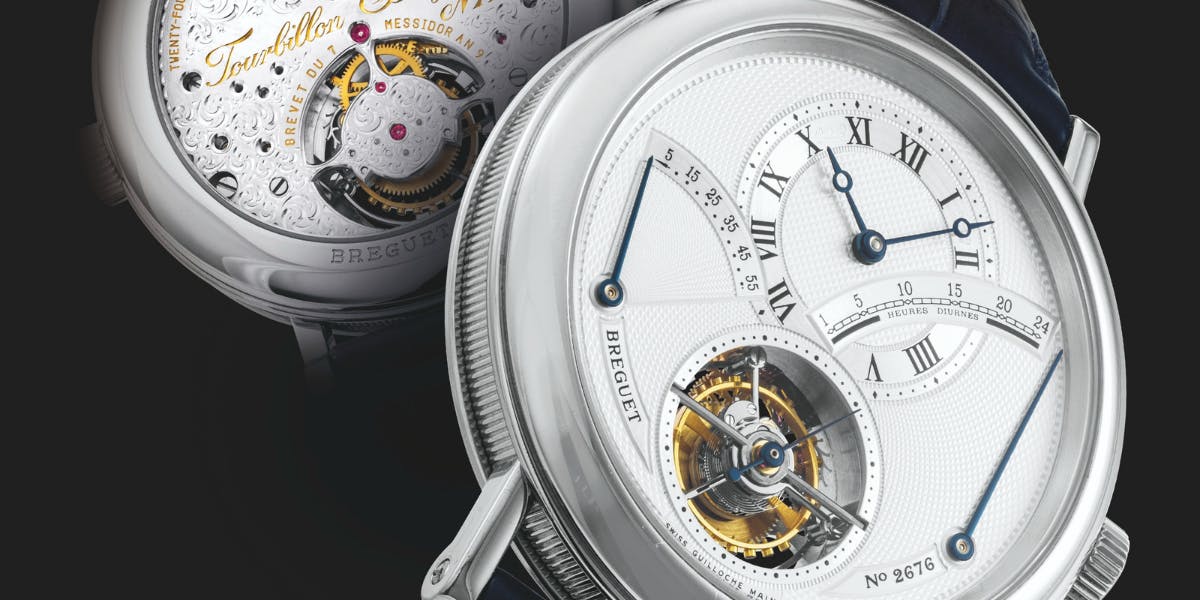
The tourbillon, one of the most ingenious inventions in watchmaking, was created by the Swiss-French watchmaker Abraham-Louis Breguet, who founded his company in Paris in 1775. Conceived by British watchmaker John Arnold, the tourbillon was refined and developed by Breguet in 1795. By 1801, Breguet had patented this revolutionary mechanism, forever transforming the world of horology.
See also: The 10 Most Expensive Watches Ever Auctioned
Derived from the French word for 'whirlwind,' the tourbillon was designed to counteract gravity’s effects on a watch’s movement, which can lead to inaccuracies when a watch remains stationary. Breguet’s innovation involved mounting the escapement and balance wheel in a rotating cage, which continuously moves to average out positional errors and enhance precision.
Want to know what your watch is worth? Have it valued with Value My Stuff!
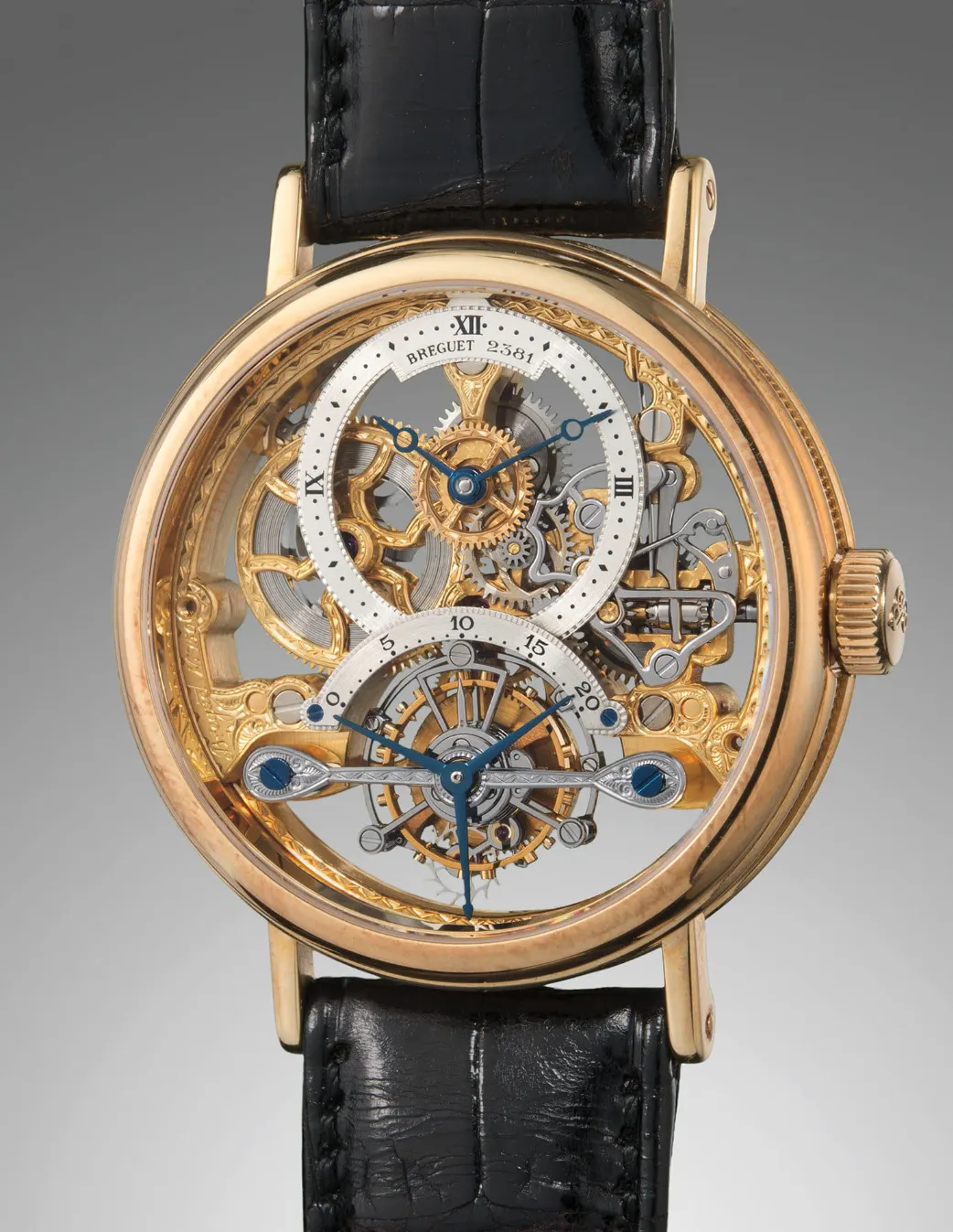
Breguet’s tourbillon solidified his legacy as a pioneering watchmaker. Beyond the tourbillon, he introduced other major innovations, including the world’s first self-winding watch, the Perpétuelle, in 1780, and the first wristwatch in 1810 for Caroline Bonaparte, Queen of Naples (the Breguet No. 2639).
See also: The Royal History of the World's Most Expensive Clock
In the 21st century, the tourbillon remains a highly sought-after feature in luxury watches. Despite modern quartz technology offering superior accuracy, the tourbillon is prized for its complex engineering. High-quality tourbillon watches, especially those from Swiss makers, often start in the tens of thousands of dollars and can reach into the millions.
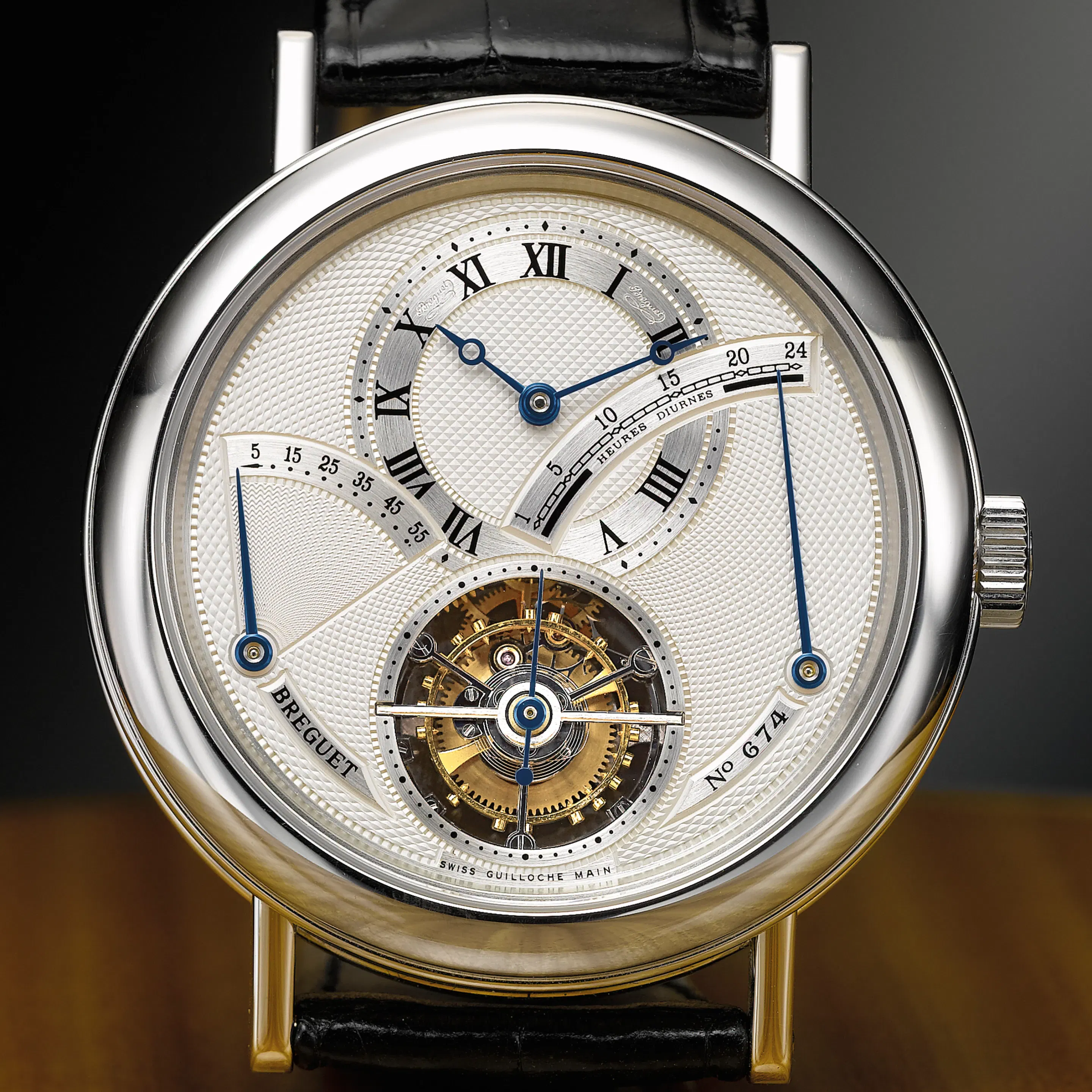
Today, Breguet is a leading name in luxury watchmaking. The brand continues to produce technically advanced and aesthetically stunning timepieces, frequently featuring the iconic tourbillon.