In May 1840, a small sticker marked a turning point in the history of human communication and opened the door to a new world of exchange of ideas and information. Called the Penny Black, the stamp pioneered a revolutionary system of prepaid postage that allowed the entire British nation of over eight million people to communicate for the price of one penny. The black and white stamp, which depicts the young Queen Victoria in profile, will be in the spotlight on February 2, 2024 when it goes up for auction at Sotheby's New York as part of The One sale. The stamp is accompanied by an equally important envelope, bearing the name of the artist who illustrated the paper, William Mulready. The estimated total value is between $1.5 and 2.5 million.
Related: Record Set for Most Expensive Envelope and Stamp

According to some, the ambitious estimate could even be exceeded since this is one of the most significant innovations in human history, which anticipated global mass communications and represented the foundation for one of the most beloved forms of collecting in the world: philately.
The recipient of this historic missive was a certain William Blenkinsop Jr., a 35-year-old manager of the Bedlington Iron Works, a steel mill in the north of England. The original sender is unknown because the attached letter has long since disappeared, but we know that it was sent from London on the evening of May 2, 1840.
Related: The Red and Blue Mauritius: The World's Most Famous Stamps
Before the introduction of prepaid envelopes and postage stamps, the recipient was responsible for paying for their mail. This system involved a major problem: when recipients could not or did not want to pay, the costs were irrecoverable for the postal service. The prepayment system also eliminated the need for postmen to handle money, thus mitigating the risks of theft and forgery.
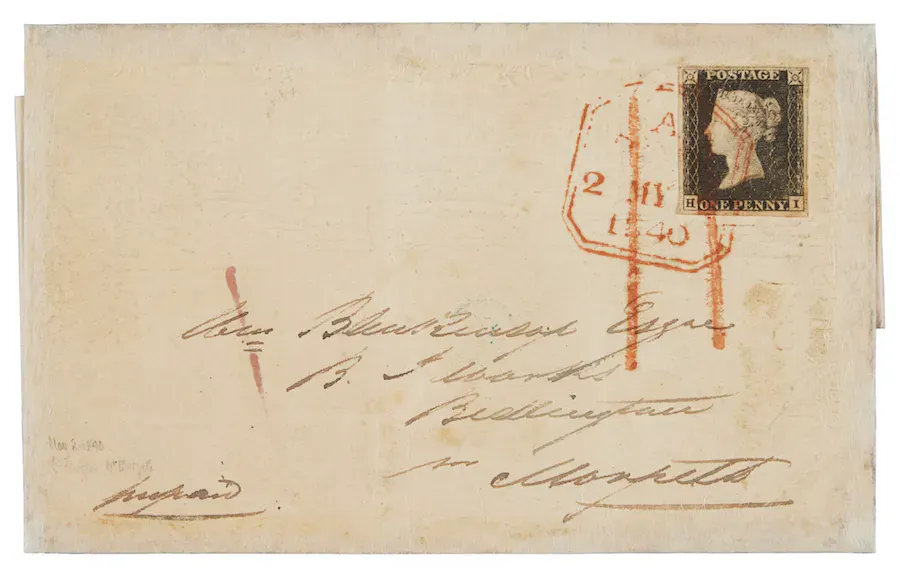
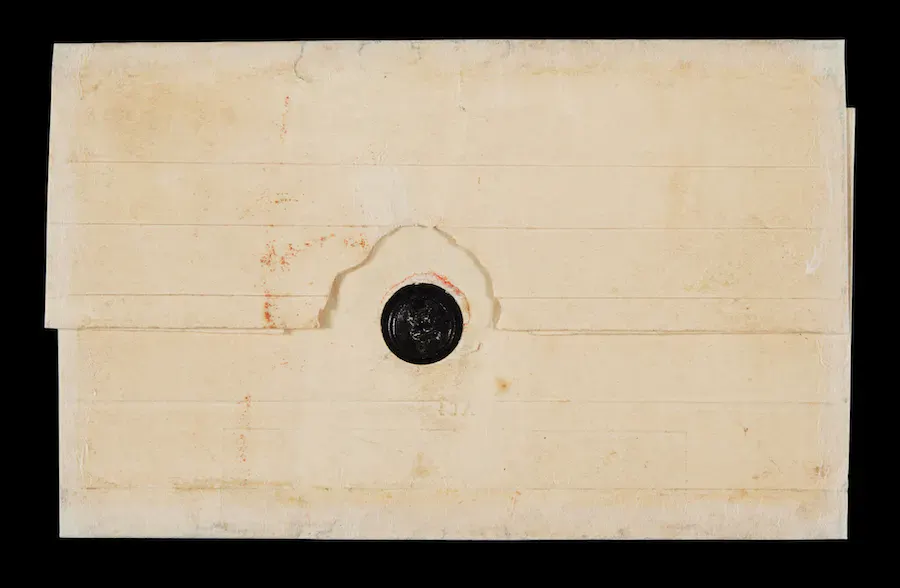
"Surviving over 180 years, the ornate Mulready envelope sealed with a Penny Black revolutionized the way people from all walks of life correspond, exchange ideas, share news and express themselves," said Richard Austin, Sotheby’s Global Head of Books & Manuscripts. "At the dawn of the AI age, this remarkable object speaks to our innate human desire for connection and the ways in which it has evolved to new heights in the two centuries since."
Related: How to Become an Outstanding Stamp Collector
Want to receive more articles like this via email? Sign up to our newsletter!
Today, in an era dominated by anonymous contact through cold PC screens and mobile phones, the allure of paper stamps and handwritten letters persists as a reminder of more personal communication. These fragments of paper, witnesses of a past full of meaning, remind us of the importance of human connection, an experience that defies the passage of time and the advancement of technology. Through the delicate art of philately, we can still touch the tangible beauty of script and the warmth of communications that know no digital boundaries.