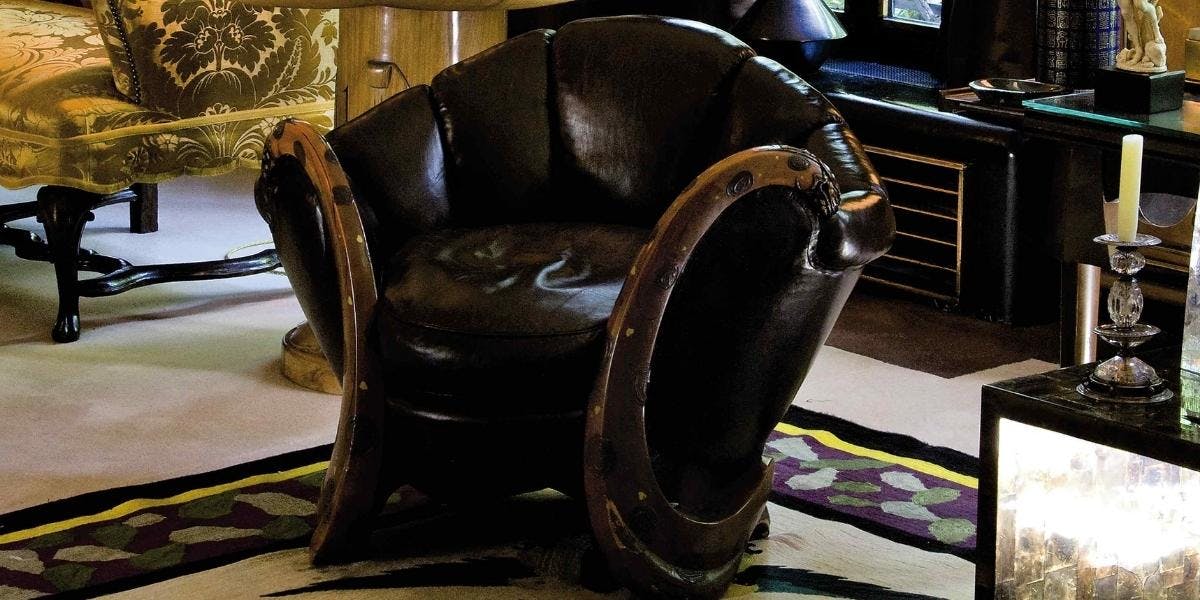
The armchair distills all that was so personal and so magical in the first, intimately expressive phase of Miss Gray's career — surprising, imaginative, subtly sculpted and crafted, it is a masterpiece of invention and execution.
In February 2009, the estate of Yves Saint Laurent and his partner Pierre Bergé came up for auction in Paris, achieving an astounding €373 million for their artworks, furniture, decorative objects and more. The top three most expensive items sold were a Matisse still life, a Brancusi sculpture, and an Eileen Gray armchair. Though the first two are by artists that are household names, Eileen Gray, the Irish-born designer, is lesser known except in niche circles. Here we look back on her phenomenal career and the record-breaking chair that encapsulates her legacy.
Related: The 10 Most Popular Furniture Designers
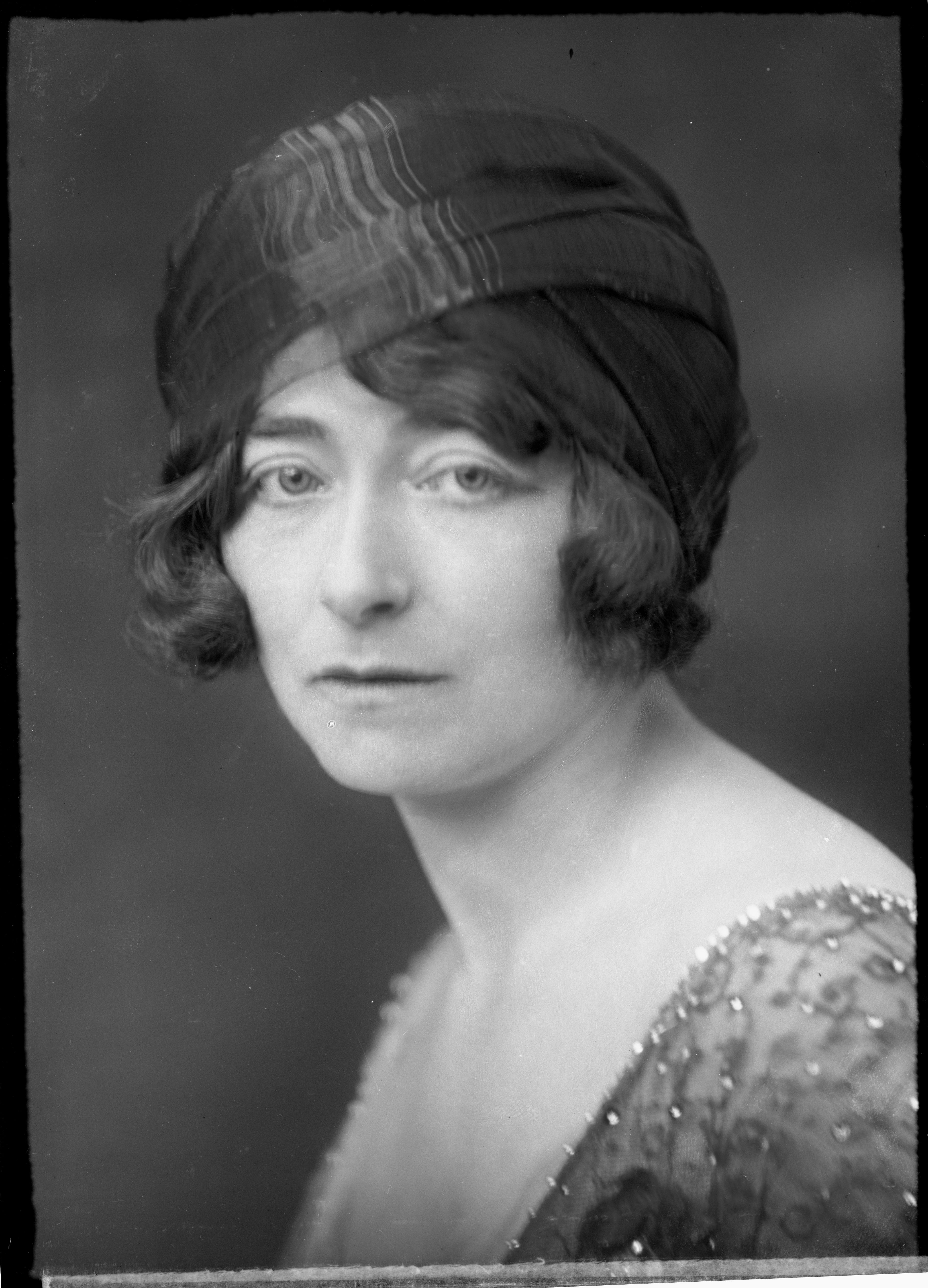
Eileen Gray (1878-1976) grew up surrounded by art and culture, with a Scottish father who was a painter and a mother who was a baroness. She split her upbringing between London and her family's country home in Ireland, and in 1900, enrolled at the Slade School, the art school of University College London. While at Slade, she was first exposed to the art of lacquering furniture, an Asian technique of applying a liquid sap to wood to create a glossy surface. After spending time in both Paris and London, Gray settled in Paris in 1910 and opened a lacquer workshop with Japanese lacquer specialist Seizo Sugawara. Though lacquer at this time was used primarily for restoring old works, Gray pioneered the use of it for new furniture design.
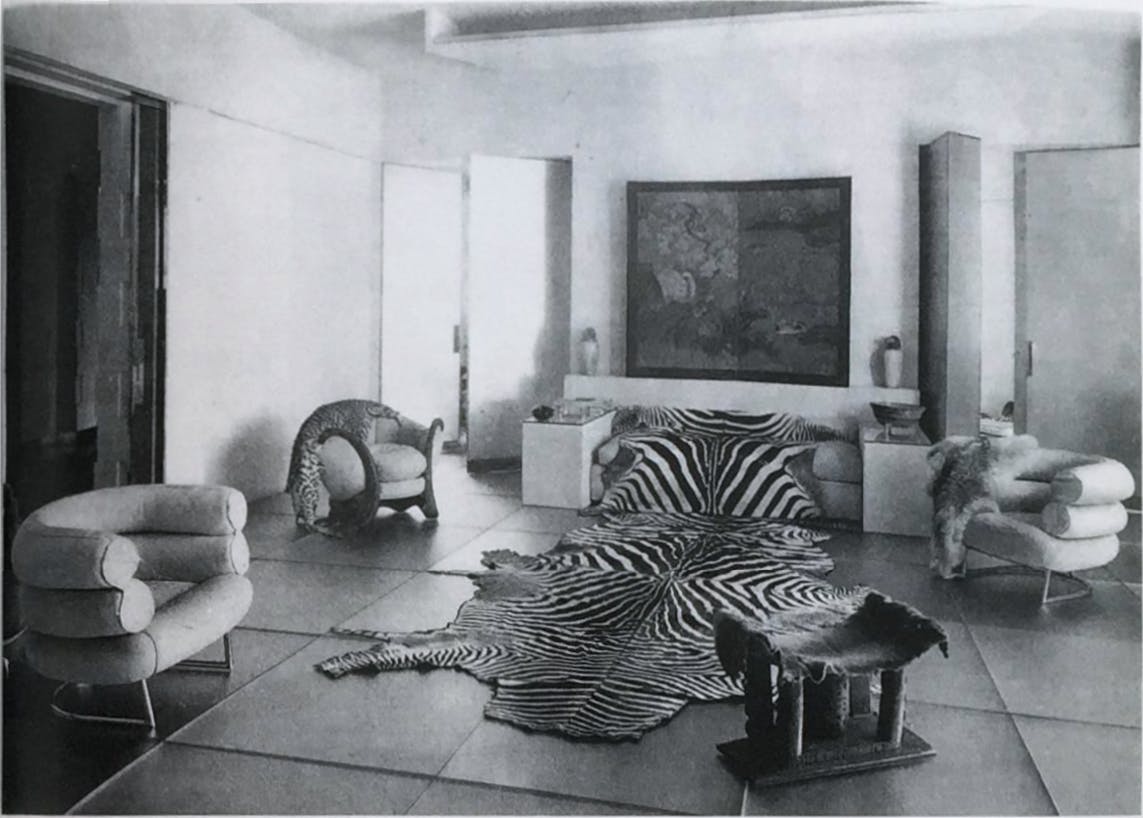
Her breakthrough commission came in 1917 when society hostess Madame Juliette Mathieu-Levy hired her to decorate her 16th arrondissement apartment in Paris. The apartment was featured in the 1920 edition of Harper's Bazaar, who wrote that it was "thoroughly modern although there is much feeling for the antique." Gray re-imagined the apartment in Art Deco style, and it featured some of her best known furniture designs, such as the Bibendum chair, inspired by the Michelin Man, the Pirogue day bed and the Dragons armchair.
Want more articles like this straight to your inbox? Subscribe to our free newsletter!
Dragons is the summation of many of Gray's earliest inspirations. By the time she started working on the chair in 1917, she had been working with lacquer for over 15 years. For this piece, she lacquered it by hand and later spent days polishing the piece. The dragon in Chinese culture is the highest-ranking creature and is associated with the emperor and therefore, power and good fortune. The two arms of the chair are made of wood lacquer in the shape of stylized dragons, combining ancient Chinese principles with a modern vision.
Related: 1925: The Height of Art Deco
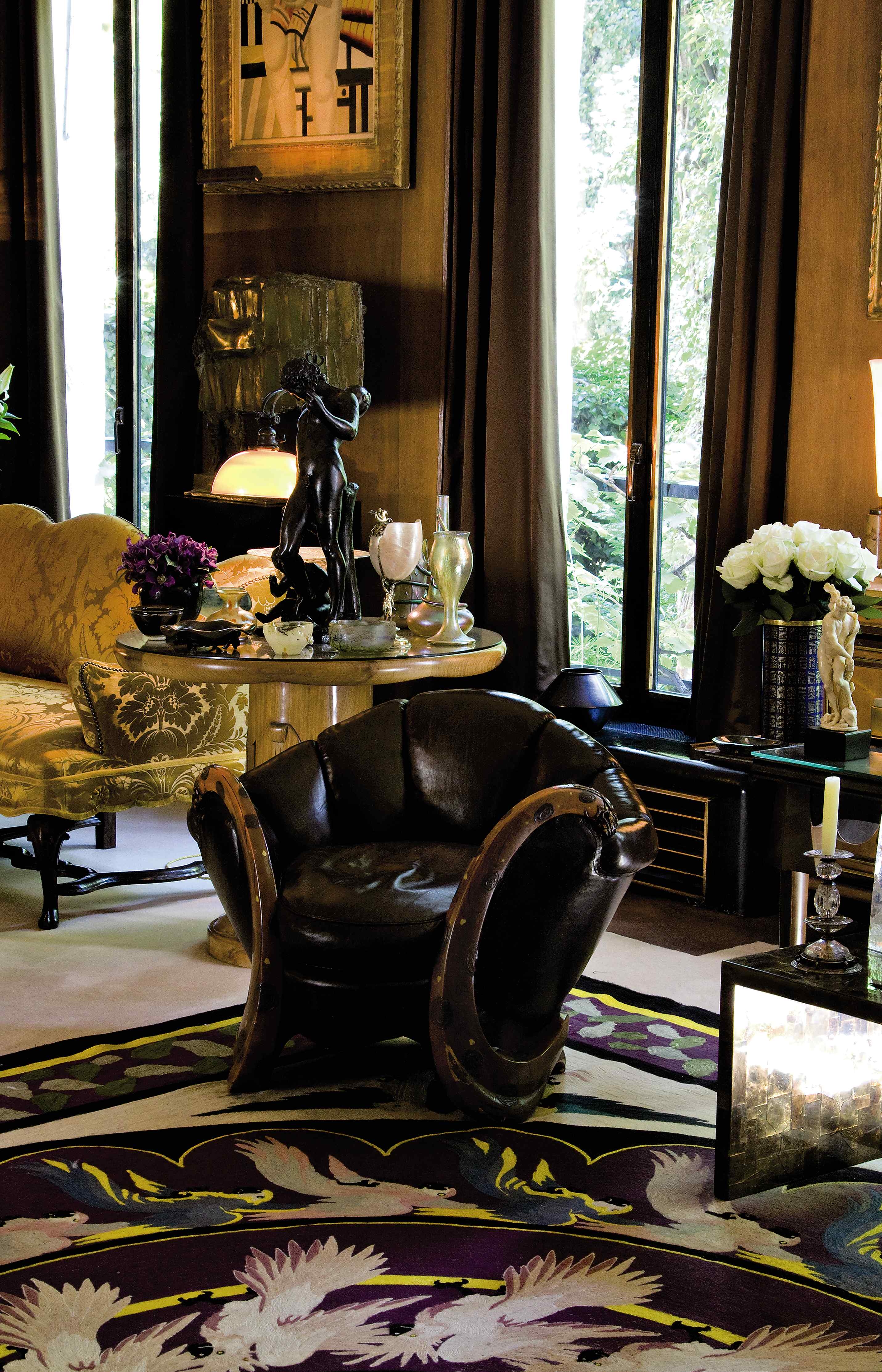
The chair was part of the apartment until 1971 when it was purchased by Parisian art dealer Cheska Vallois, who then sold it to Yves Saint Laurent in 1973. A year prior, Saint Laurent had purchased Gray's Le Destin, a four-panel lacquered screen, a sale that revitalized interest in her work. This coincided with her first retrospective Eileen Gray: Pioneer of Design, that was held in London, followed by another exhibit in Dublin in 1973.
Related: 6 Giants of Mid-Century Modern Design

At this point, however, Eileen Gray was in her late 90s, and she was not best known for her furniture. In the 1920s, she had met and fallen in love with a Romanian architect named Jean Badovici and had dedicated herself to learning the tenets of architecture. In 1926, she bought land in the South of France, near Monaco, and started designing and building a home for the two of them that they named E-1027. It was built in the modernist, open-floor style championed by Le Corbusier, who was also a frequent visitor to the home and even painted murals on the walls in the late 1930s, an act that Gray considered vandalism. Although Gray later designed other homes in the South of France, E-1027 is her most famous architectural accomplishment and is now open to the public.
Related: E-1027: Eileen Gray's Timeless Declaration of Love
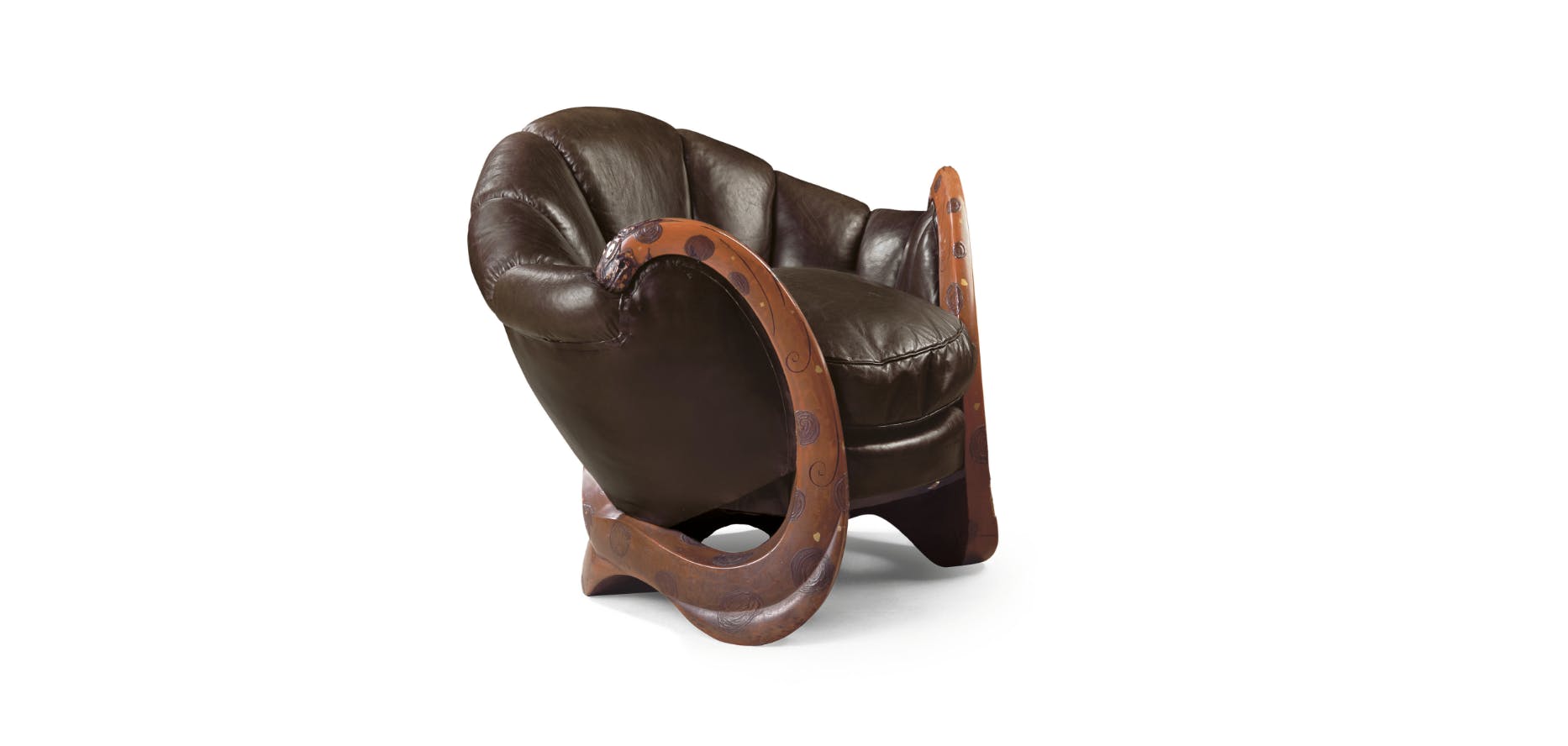
Today, her furniture has achieved multi-million dollar sale prices at auction and has brought the previously unknown designer back into the spotlight. When Yves Saint Laurent and Pierre Bergé's estate came up for auction in 2009, her Dragons armchair from her first major commission sold for €21.9 million ($28 million), almost ten times the pre-auction estimate of €2-3 million. It was sold back to Cheska Vallois, who bought it on behalf of the new owner.
Related: 8 Artists Inspired by the South of the France
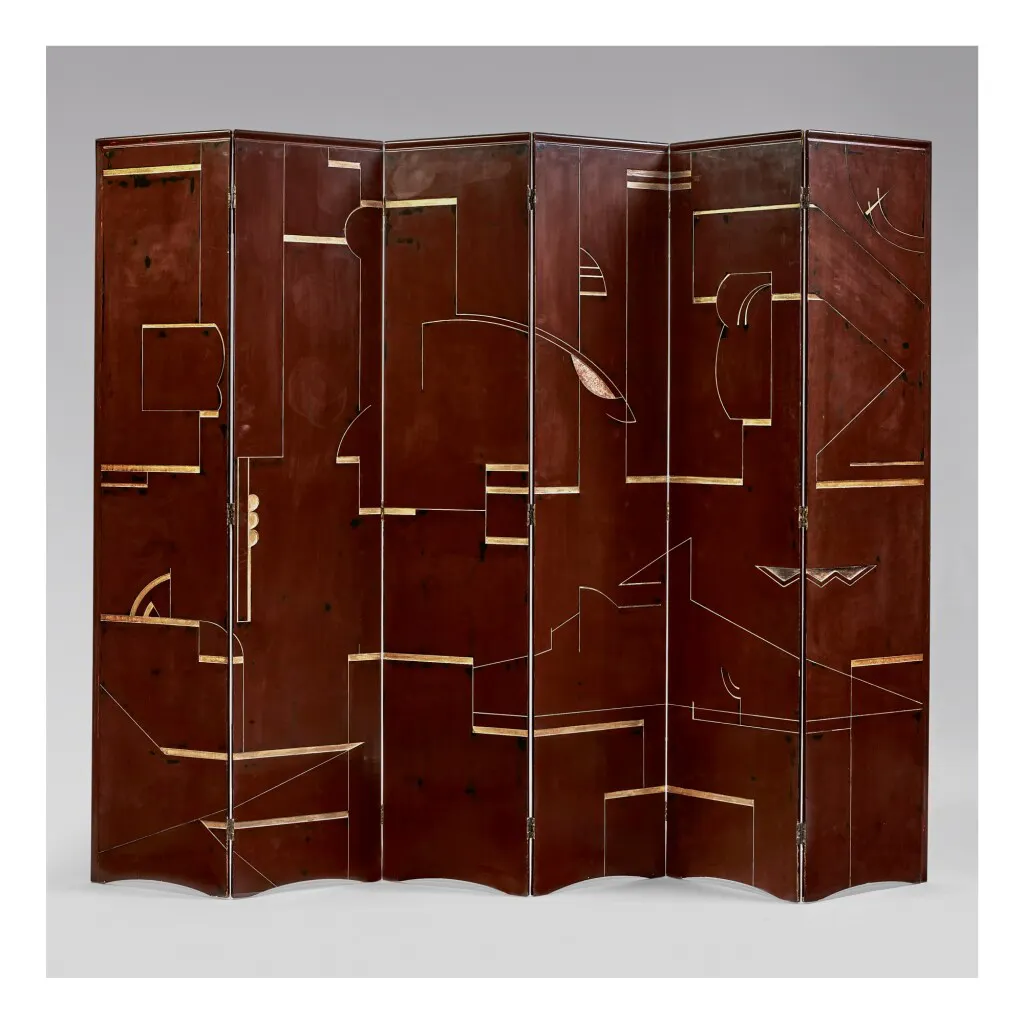
Many of Gray's designs have passed the million-dollar mark, including a sideboard also owned by Saint Laurent that sold for $5.1 million in 2009 and a suspension satellite chandelier that sold for $3.8 million.
Related: 8 Must-See Design Museums Around the World
Considered a pioneer of the Mid-Century Modern movement, Eileen Gray invented a new aesthetic language that paid homage to the past, as seen in her fascination with lacquer. While her early pieces featured opulent materials and ornate craftsmanship, her later designs became far more industrial and utilitarian in design. Dragons, the world's most expensive chair, is a testament to her command of lacquerware and an exemplar of Art Deco design.