Stay up-to-date with the antiques world

By subscribing, you are agreeing to the privacy policy. Unsubscribe anytime.

Barnebys

Barnebys HQ

Brahegatan 10
BOX 5038
114 37 Stockholm

Company

  • About Us
  • Join Barnebys
  • Our partners
  • Press
  • Career

Explore More

  • Barnepedia
  • Buying/Selling at auction
  • Auction Houses / Dealers / Galleries

Support

  • FAQ
  • Terms of Use
  • Privacy and Cookies policy
  • Contact us
  • Barnebys Group AB
  • Barnebys.se
  • Barnebys.com
  • Barnebys.co.uk
  • Barnebys.de
  • Barnebys.fr
  • Barnebys.es
  • Barnebys.it
  • Barnebys.hk
  • All auction items
  • Categories
  • Auction results
  • Magazine
  • Ancient Art
  • Arts & Graphics
  • Asian Art
  • Books, Maps & Manuscripts
  • Carpets, Rugs & Textile
  • Coins & Banknotes
  • Contemporary Art
  • Ethnographic
  • Fashion & Vintage
  • Folk Art
  • Furniture, Design & Mirrors
  • Glass
  • Jewelry & Gems
  • Lighting
  • Medals, Arms & Armor
  • Miscellaneous
  • Music & Musical Instruments
  • Nautica, Technica & Optic
  • Photographs
  • Porcelain & Pottery
  • Postcards & Stamps
  • Sculptures
  • Silver & Gold
  • Sports & Leisure
  • Tin & Metals
  • Toys & Collectibles
  • Vehicles
  • Watches & Clocks
  • Wine & Spirits
  • Works of art
  • All auction items
  • Auction results
  • Magazine
  • Get an appraisal
  • Auction system

Barnebys Magazine

LatestEditor's picksTopics
Magazine/Antiquities/The Remarkable Story of When Stonehenge Was For Sale

The Remarkable Story of When Stonehenge Was For Sale

Did you know? Over a century ago, the land on which Stonehenge stood went up for auction. Here's what happened.

February 22, 2024Gritta von Toll
Stonehenge (tritlite and other parallelepipeds of the monument in July 2008). Photo by Oparius (CC BY 3.0 license) via Wikimedia Commons (detail)

Stonehenge (tritlite and other parallelepipeds of the monument in July 2008). Photo by Oparius (CC BY 3.0 license) via Wikimedia Commons (detail)

On September 21, 1915, a local lawyer named Cecil Chubb (1876-1934) visited the Palace Theater in Salisbury, Wiltshire. The program included an auction with objects belonging to the recently deceased Sir Edmund Antrobus. Apparently Chubbs had been asked by his wife Mary to buy new chairs for the dining room, but on a spur of the moment, he bid on something completely different. Lot number 15 was a piece of land on which one of the most famous archaeological sites in the world is located: Stonehenge. 
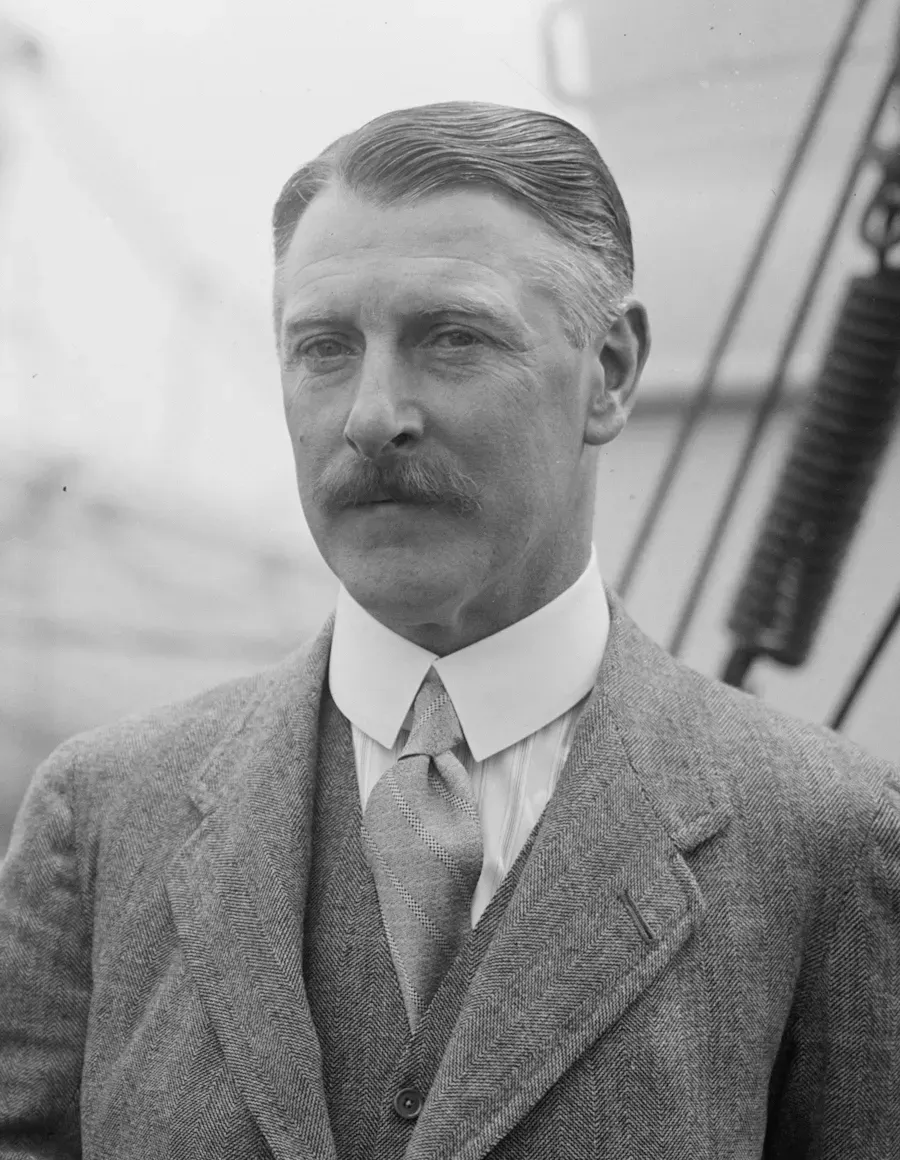
Sir Cecil Chubb aboard the RMS Aquitania in May 1926. Public domain photo

Stonehenge was first mentioned in writing around 1130–1035 in Henry of Huntingdon's Historia Anglorum (History of England) and in Geoffrey of Monmouth's famous Historia regum Britanniae (History of the Kings of England), which recounts that the enchanter Merlin brought the great stones from Ireland by magic. This theory lasted until the 17th century. More detailed studies of the site followed, but they gave rise to new erroneous theories, attributing Stonehenge sometimes to the Romans, sometimes to the Phoenicians, and sometimes to the Danes.

Related: Has a New 'Spanish Stonehenge' Been Discovered?
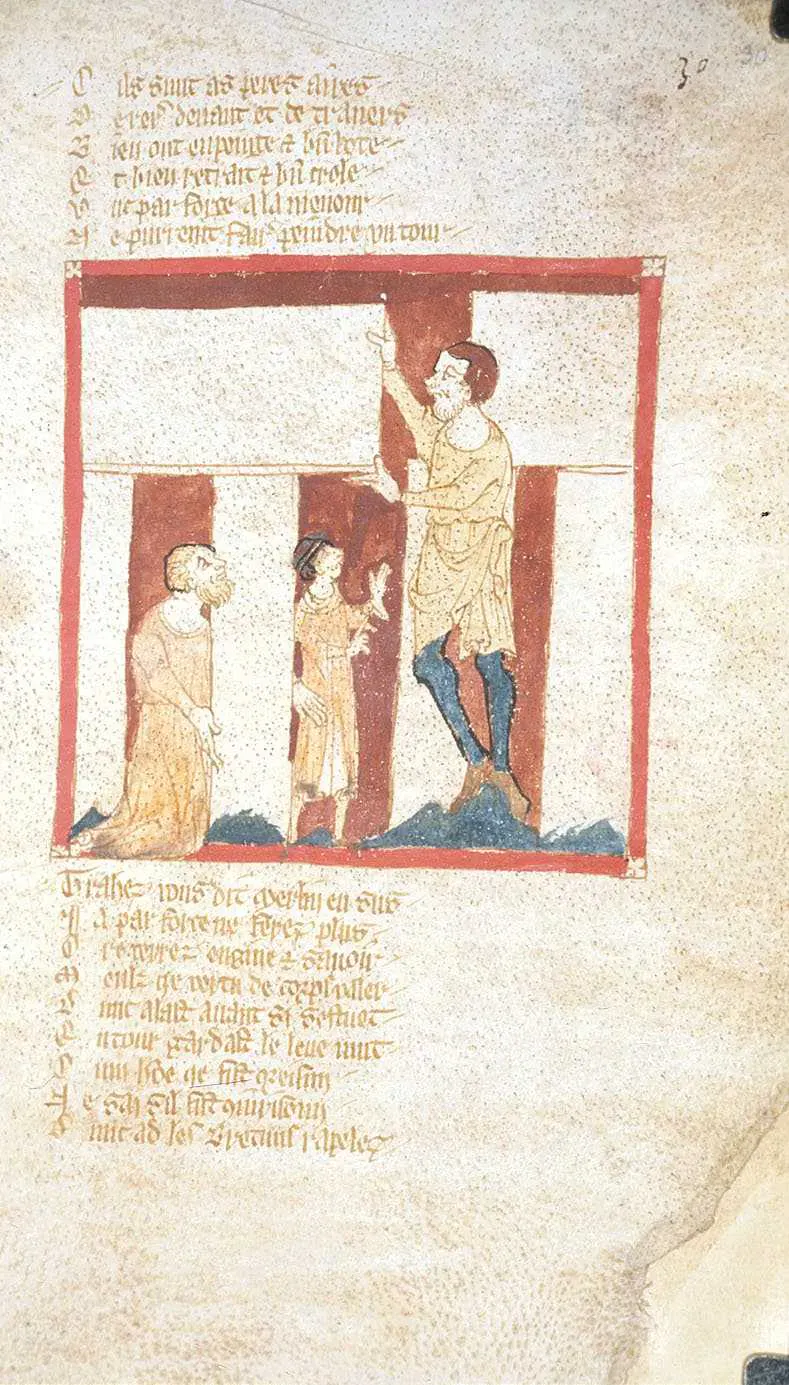
The first known illustration of Stonehenge is found in the "Roman de Brut" by the Norman poet Wace (2nd quarter of the 14th century). It shows how Stonehenge was built by giants with the help of the enchanter Merlin. Public domain image

At the end of the century it was finally recognized that it must have been the work of local builders. However, the Celts were believed to be responsible, whose druids were said to have held ceremonies in the stone circle.

Related: A Trove of ‘Exceptional’ Ancient Bronzes Found in Tuscan Spa
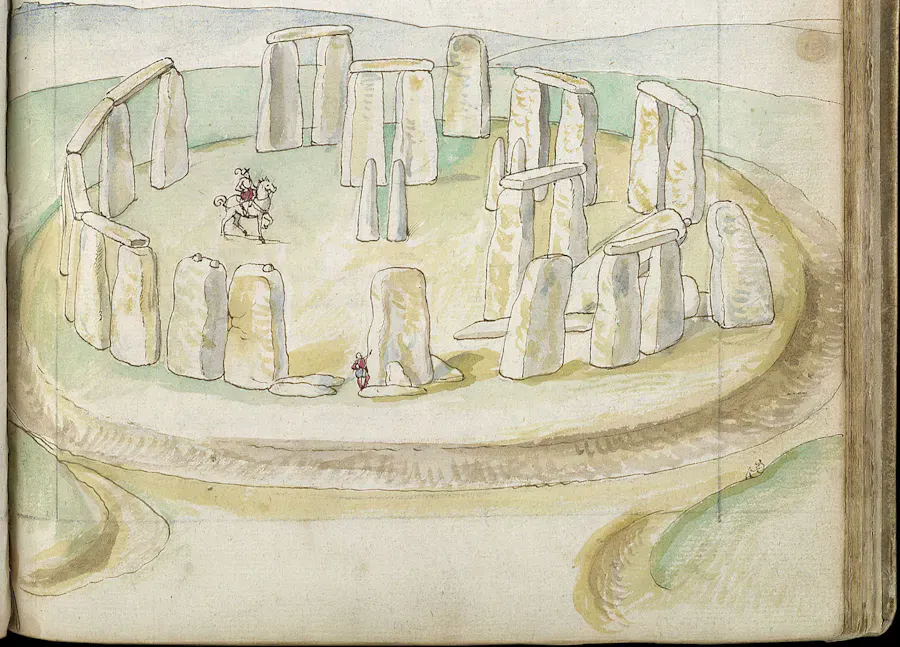
One of the first realistic depictions of Stonehenge is found in Luc de Heeres' work "Corte beschryvinghe van England Scotland ende Irland" (1573-75). Public domain image

When Stonehenge went up for auction in 1915, there was already a theory based on measurements that the alignment of the complex was based on astronomical reasons and was aligned with the summer solstice. It was also clear from some artifacts unearthed in the area that Stonehenge had already been used in the Bronze Age. However, the relevant research was still in its infancy. And perhaps there would have been no scientific research if Cecil Chubbs hadn't been inspired to bid that day.
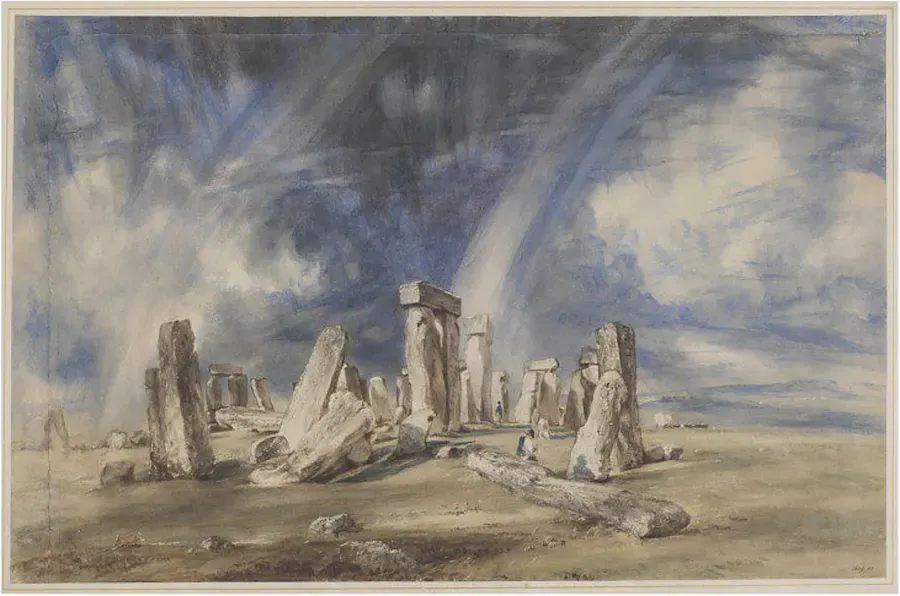
John Constable (1776-1837), Stonehenge, 1835, Watercolor, 38.7 x 59.7 cm, Victoria and Albert Museum, London. Photo domain image

Chubbs put £6,600 on the table for Stonehenge, which is equivalent to around £560,000 today. According to the English Heritage website, after his unplanned purchase, Chubbs was interviewed by a local press reporter, telling him that he wanted Stonehenge to be bought by someone from Salisbury. He also wanted to use his purchase to help protect the archaeological site.

Related: A Sea Monster and an Ancient Mausoleum: An Unprecedented Discovery in France
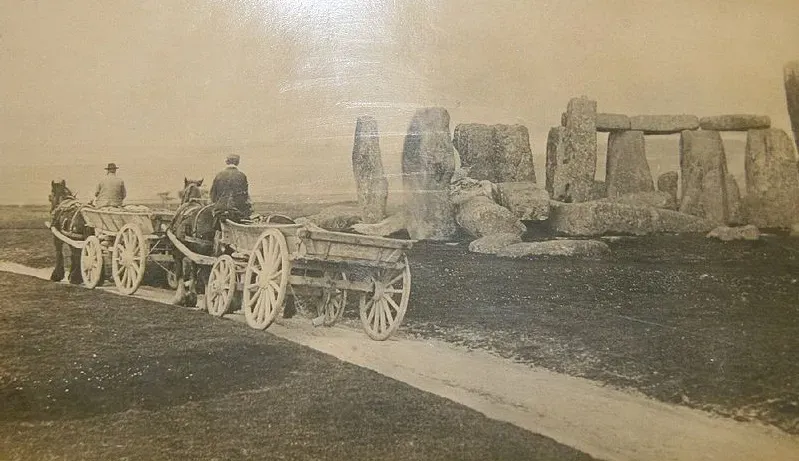
Old photograph of Stonehenge, circa 1885. Public domain photo

Three years later, that protection took the form of handing Stonehenge over to the British government. The donation was completed on October 26, 1918, with Chubbs decreeing that Stonehenge must remain open to the public and be preserved and that nothing could be built in the immediate vicinity. For his generosity, Cecil Chubbs was knighted the following year, earning him the nickname "Viscount Stonehenge."

Want to discover articles like this straight to your inbox? Then sign up for our free newsletter!
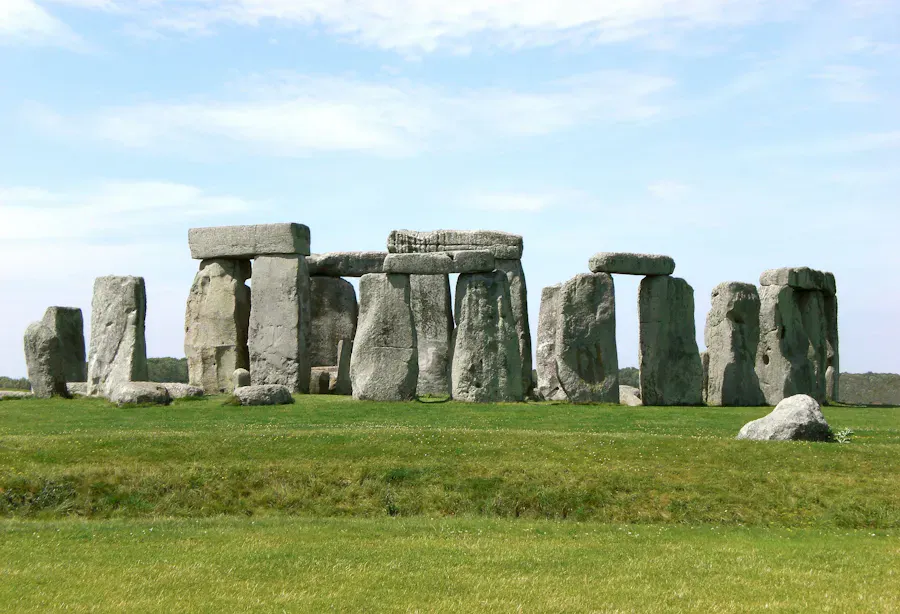
Stonehenge (tritlite and other parallelepipeds of the monument in July 2008). Photo by Oparius (CC BY 3.0 license) via Wikimedia Commons

Excavations and research in the 20th and 21st centuries have shown that Stonehenge's origins date back to the Neolithic period and that the famous stone circle was part of a much larger complex. Stonehenge is now managed by English Heritage and has been a UNESCO World Heritage Site since 1986.

Check out more Barnebys Magazine articles here!

stonehengeneolithicenglandauctioncecil chubb

Join 200,000+ collectors reading Barnebys Magazine

By subscribing, you are agreeing to the privacy policy. Unsubscribe anytime.

About the author

Gritta von Toll

Gritta von Toll is the German Editor at Barnebys Magazine. She completed studies in pre- and early history and archaeology, and since 2015, after a short detour into the world of advertising, she has worked at Barnebys, where she immerses herself in art history in order to bring bygone epochs closer to today's readers.

Read more from this author
Gritta von Toll

Explore related articles

Containers from the late Bronze Age, Austria, Enver-Hirsch image © Wien Museum
Antiquities

It Turns Out Prehistoric Baby Bottles are Adorable

Yexue Li, expert at Sworders Fine Art, image © Bournemouth News
Ceramics

Could A Chinese Vase Bought For $1 Sell For $100,000?

Bring your auction to collectors worldwide!