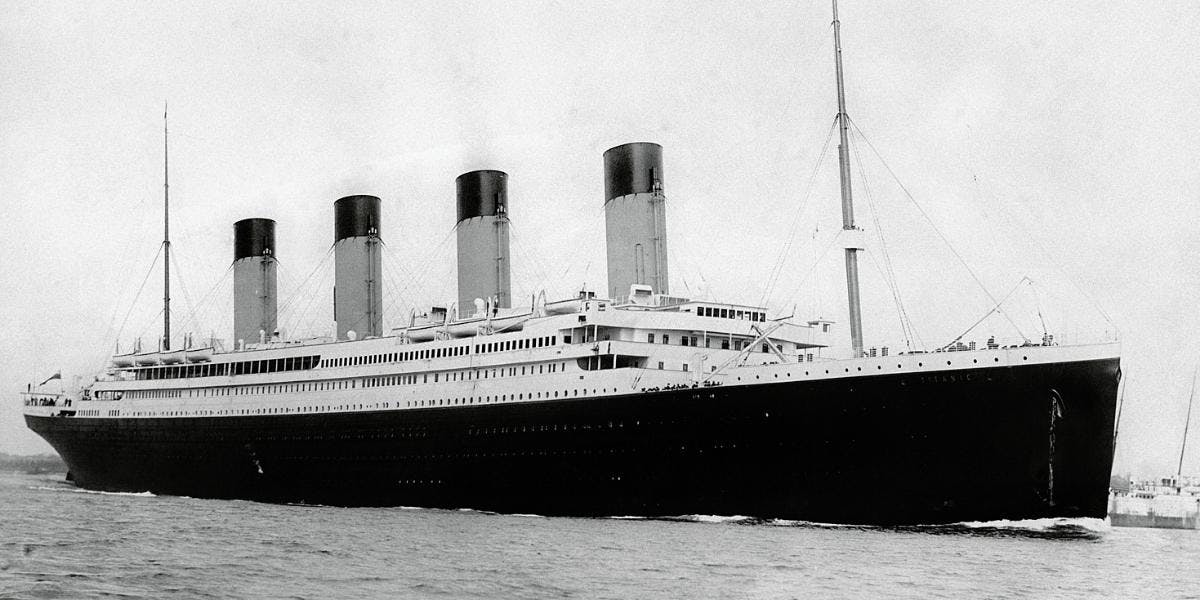
Over 100 years since the sinking, the story of the Titanic continues to captivate the masses with its ambitious beginnings and tragic demise. When the ocean liner departed for its maiden voyage in 1912, it was the largest ship to ever take to the seas. Of the 1,300 passengers, about 319 passengers boarded in first class, a rolodex of European aristocracy and American millionaires, and with them came a host of treasures, from artwork to motorcars. But the most expensive carry-on was brought abroad by the 29-year-old Swedish scion of a wood pulp fortune, Mauritz Håkan Björnström-Steffansson. In his possession was the oil masterpiece La Circassienne au Bain by the French Neoclassical master Merry-Joseph Blondel (1781-1853).
Merry-Joseph Blondel was born in Paris in 1781 and showed considerable talent in drawing from a young age. When he was 22, his submission to the Salon de Paris, an oil painting titled Aeneas rescuing his father from Troy, won him the prestigious Prix de Rome, an award to study at the Villa Medici in Italy.
Related: The 12 Most Expensive Paintings Ever Auctioned
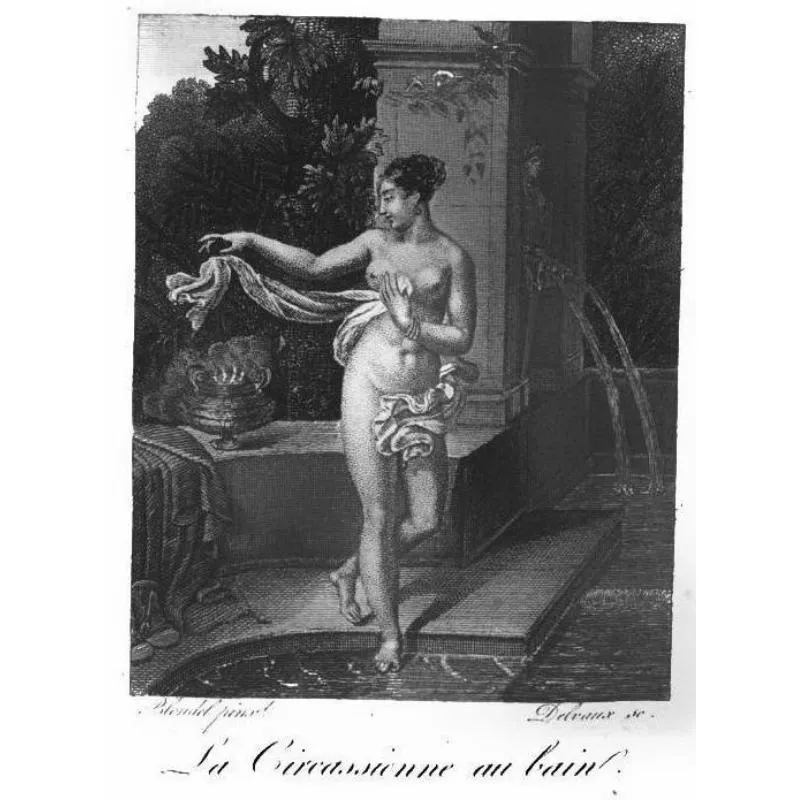
He studied in Rome for three years and upon his return to Paris, he submitted La Circassienne au Bain to the Salon in 1814, an oil painting depicting a nude Circassian woman as she steps into an elegant antiquarian bath, surrounded by dense foliage and fountains. Although critical reception was mixed at the time, audiences generally warmed to the work. In fact, a printed reproduction of the painting appeared in the French publication Almanach des Dames in 1823.
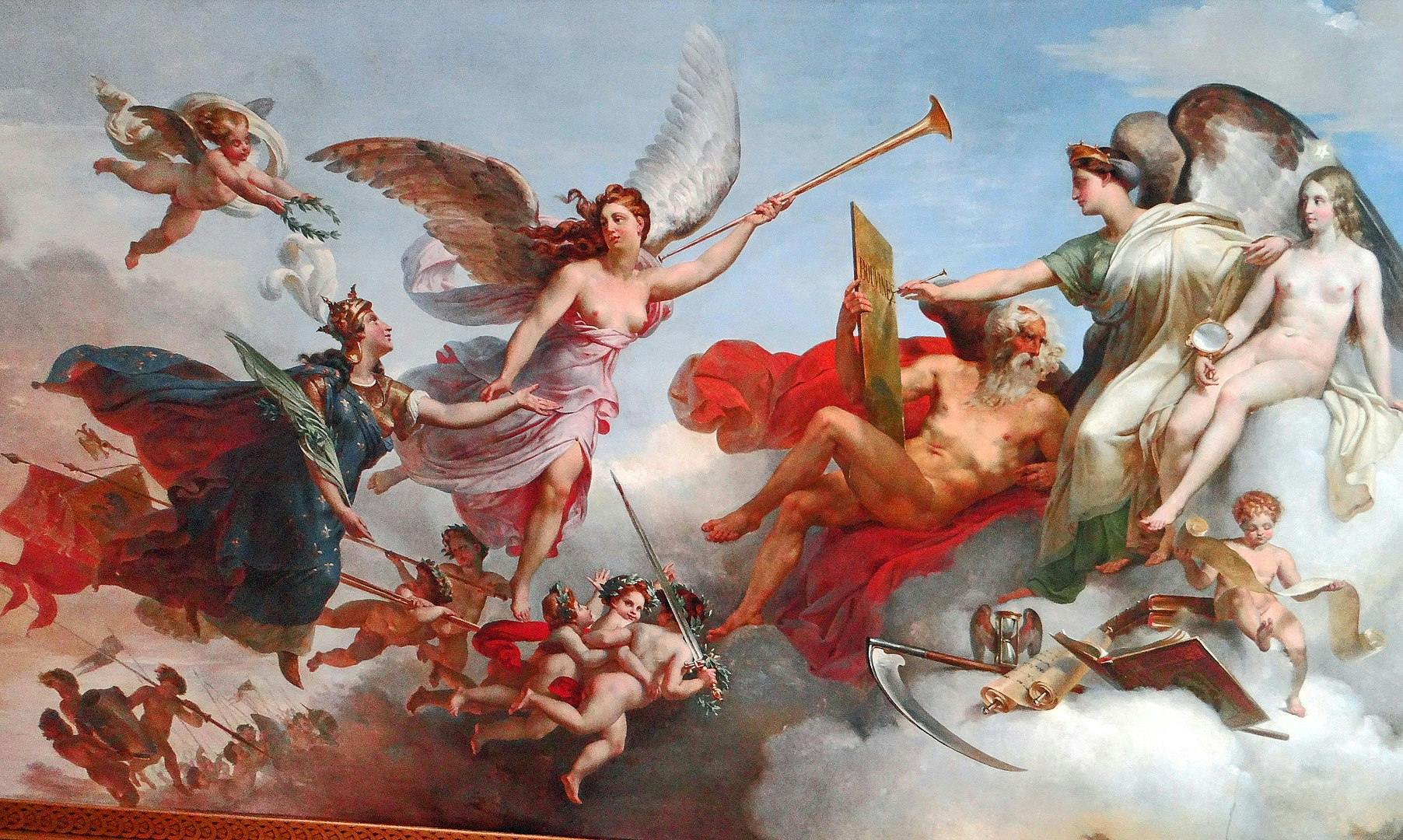
In Paris, Blondel received many commissions, including decorating Versailles, the Louvre, and Fontainebleau. His work adhered to the French Neoclassical style with elegant court portraits and grand historical and mythological scenes that paid attention to detail, lush color, dynamic movement, and idealized human anatomy. He had befriended Jean-Auguste-Dominique Ingres at the Villa Medici, and in 1824, both of them were awarded the Legion d'Honneur by King Charles X. That year, he began teaching at the Ecole de Beaux-Arts, a position he held for almost 30 years until his death in 1853.
Related: William Bouguereau: The Last Neoclassical Artist
The provenance of La Circassienne au Bain is unknown, but a century later it was in the hands of Björnström-Steffansson, who brought it with him on his journey to the United States. The 29-year-old was to continue his chemical engineering degree in Washington, DC, on a Swedish government scholarship.

On the Titanic, Björnström-Steffansson befriended Hugh Woolner. The two were in the first class smoking lounge when the ship hit the fated iceberg, according to Woolner's testimony at a U.S. Senate Inquiry into the sinking. The two assisted others into lifeboats, and just as the ship was about to completely submerge, they jumped into one of the last lifeboats, Lifeboat D. They were rescued by RMS Carpathia, which brought the surviving passengers to New York.
Related: Jacques-Louis David: The Neoclassical Revolutionary
Survivors heaped claims upon the White Star Line for loss of life and possessions. Björnström-Steffansson filed for $100,000 (over $2.5 million today) for the lost painting, the single largest claim in the $6 million worth of claims (about $150 million today). However, White Star Line settled for just $664,000 (about $17 million today), so it is unlikely Björnström-Steffansson received the full amount.
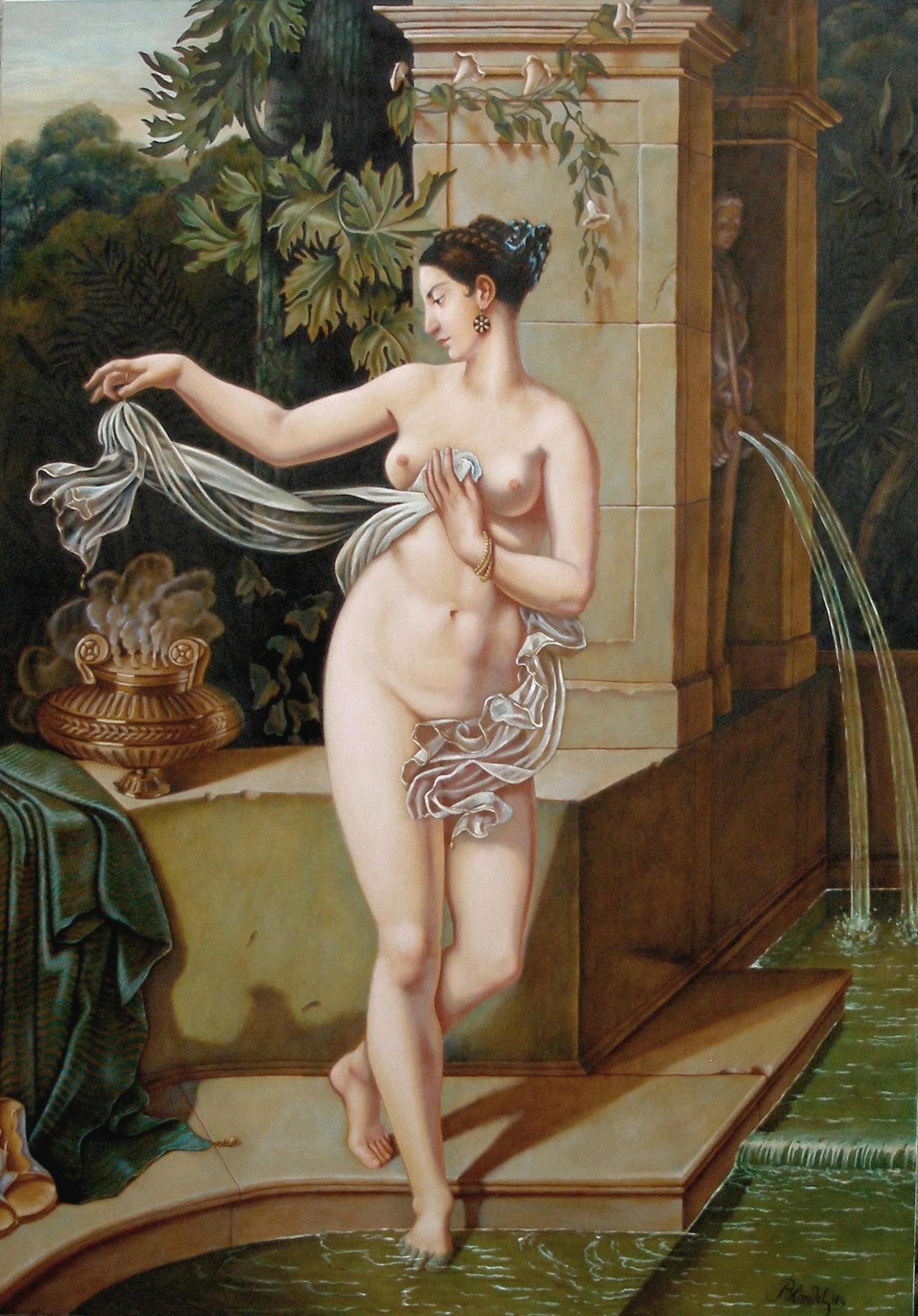
Interest in the work has endured for the past century because of its loss in the world's most famous voyage and its high value. In 2013, a British artist using the pseudonym John Parker undertook extensive research to reproduce a copy of the work. The faithful reproduction was auctioned in 2016 by Plymouth Auction Rooms in England for about $3,500.
Related: Top 10 Rediscovered Masterpieces
Although the Blondel painting was considered the most valuable masterpiece aboard, other noteworthy works disappeared in the disaster, including a signed portrait of Italian nationalist Giuseppe Garibaldi and a bejeweled edition of the Rubaiyat, a Persian book of poetry dating to the 11th century.