A seminal event in French history, the Dreyfus Affair represented a massive injustice and revolutionary scandal that forever altered French politics. Among the collections of documents from the Dreyfus Affair, the only dossier still remaining in public hands is now being offered for sale by the Manhattan Rare Book Company. This dossier, consisting of a formal report, working notes, and handwriting specimens collected by French handwriting expert Etienne Charavay, led to the false conviction and imprisonment of French army captain Alfred Dreyfus in the late 19th century.
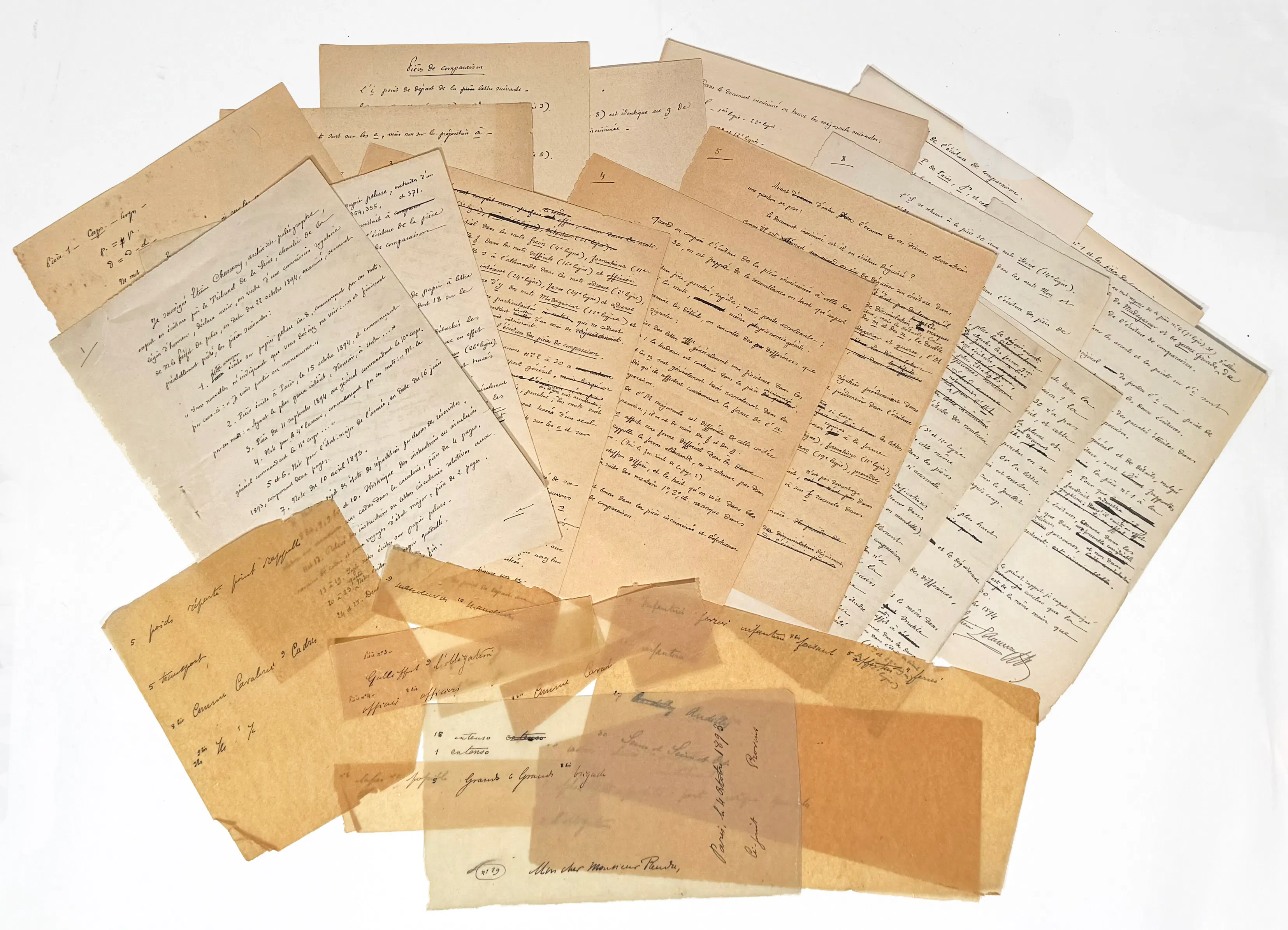
The Dreyfus Affair began in 1894 when a document, referred to as the bordereau, was discovered at the German Embassy in Paris. Written in French, the document revealed that a French army official was sharing classified information with the German government. French-Jewish captain Alfred Dreyfus was accused of writing the document and put on trial for treason against France. As part of the trial, Etienne Charavay, who was considered the foremost handwriting expert in France, was entrusted with comparing the handwriting in the bordereau and Dreyfus’ handwriting. While his findings initially concluded that the handwriting had been written naturally, and therefore was not Dreyfus’ typical handwriting, he later reversed his position and concluded that the bordereau was written by Dreyfus. Based on Charavay’s conclusion, Dreyfus was found guilty of the crime, though he continuously maintained his innocence. His military honors were removed, and he was sentenced to life imprisonment at a penal colony on Devil’s Island in French Guiana in 1895.
The following year, another document was found with identical handwriting to the bordereau written by French officer Ferdinand Walsin Esterhazy. The French army engaged in a massive cover-up to protect Esterhazy, who was later found innocent after a secret military trial. This cover-up was leaked to the French press, resulting in widespread outrage and the exposing of obvious anti-Semitism within the French army. French journalist Émile Zola supported Dreyfus and published a letter titled “J’accuse” in Paris’ top newspaper accusing the French army and government of the cover-up and pointed to their extreme anti-Semitism as the impetus behind unjustly imprisoning Dreyfus. A retrial was then held in 1898, in which Charavay withdrew his original report. Though Dreyfus was again inexplicably declared guilty in a 5-2 vote by a judicial panel, he was later pardoned by the president of France after a four-year imprisonment. Dreyfus was reinstated to the army as a captain, but the long-lasting effects of the Dreyfus Affair reverberated throughout early 20th-century France. French society had split into factions in support of and against Dreyfus, and this division led to, among other things, a law formally separating church and state in 1905.
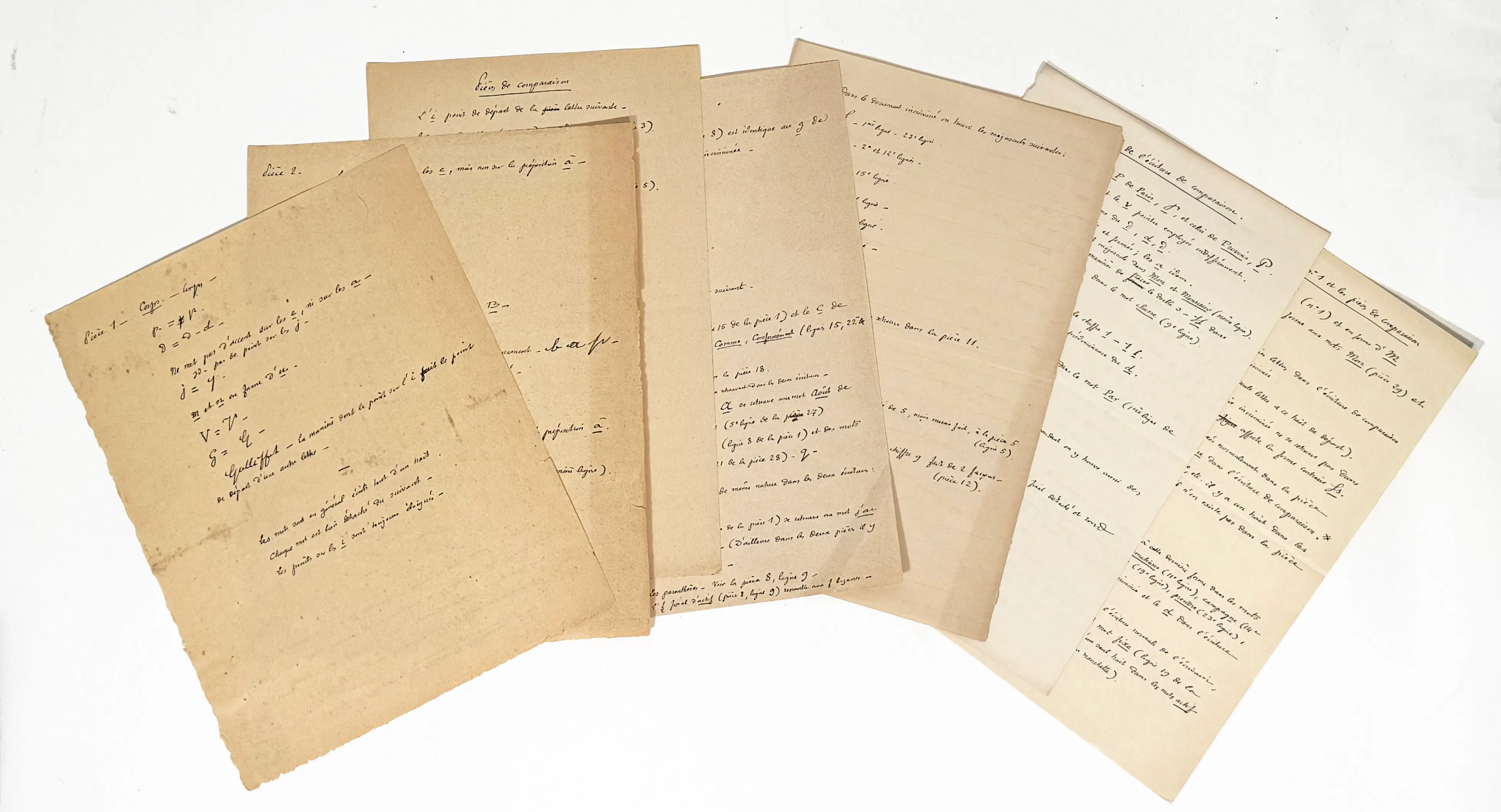
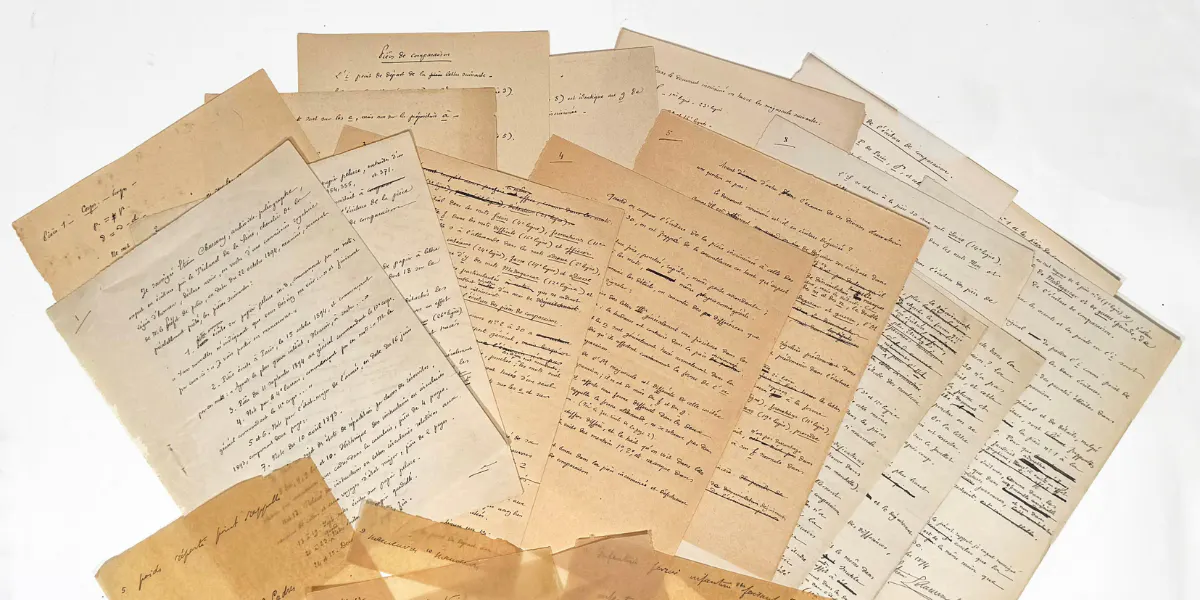
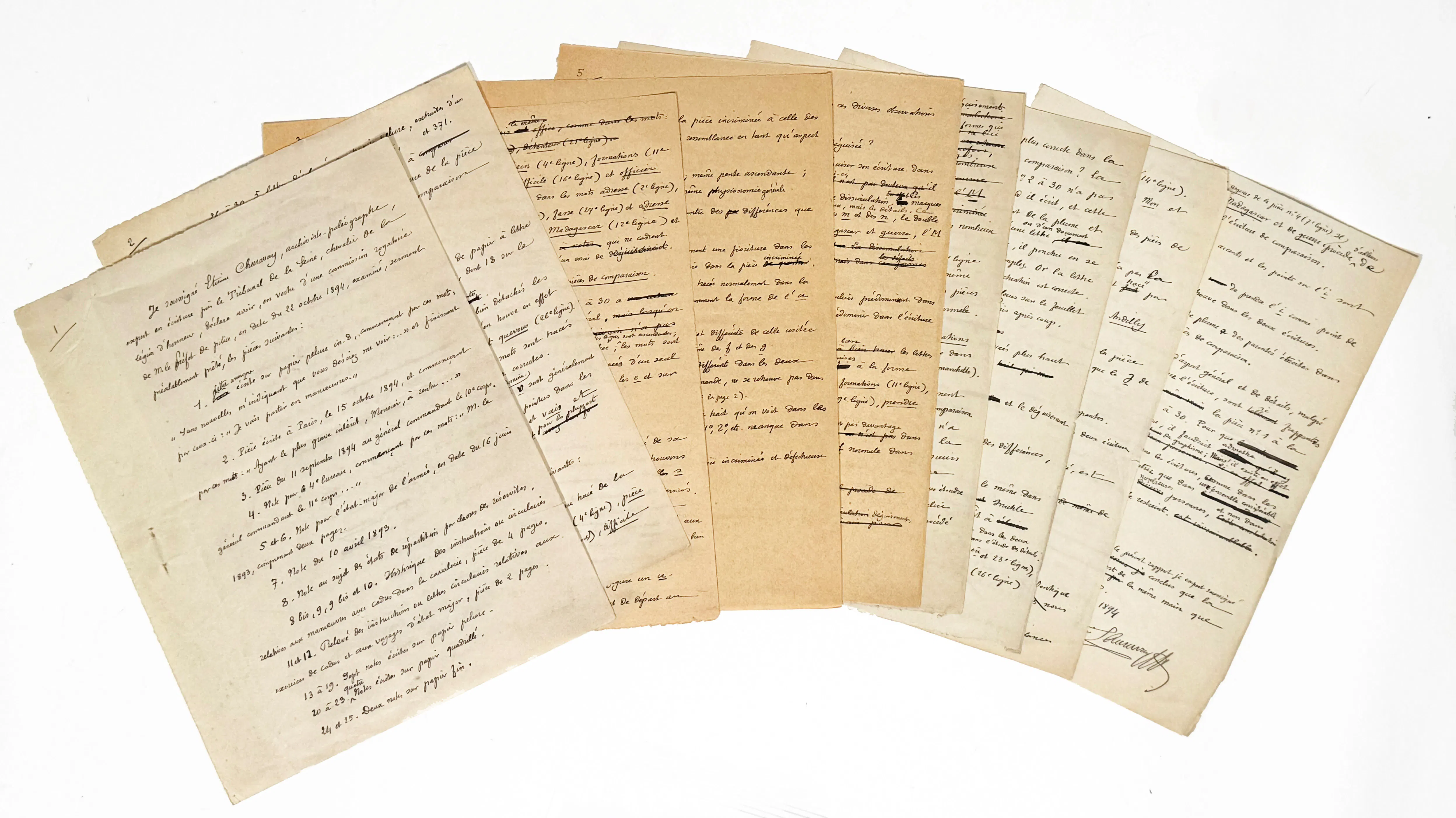
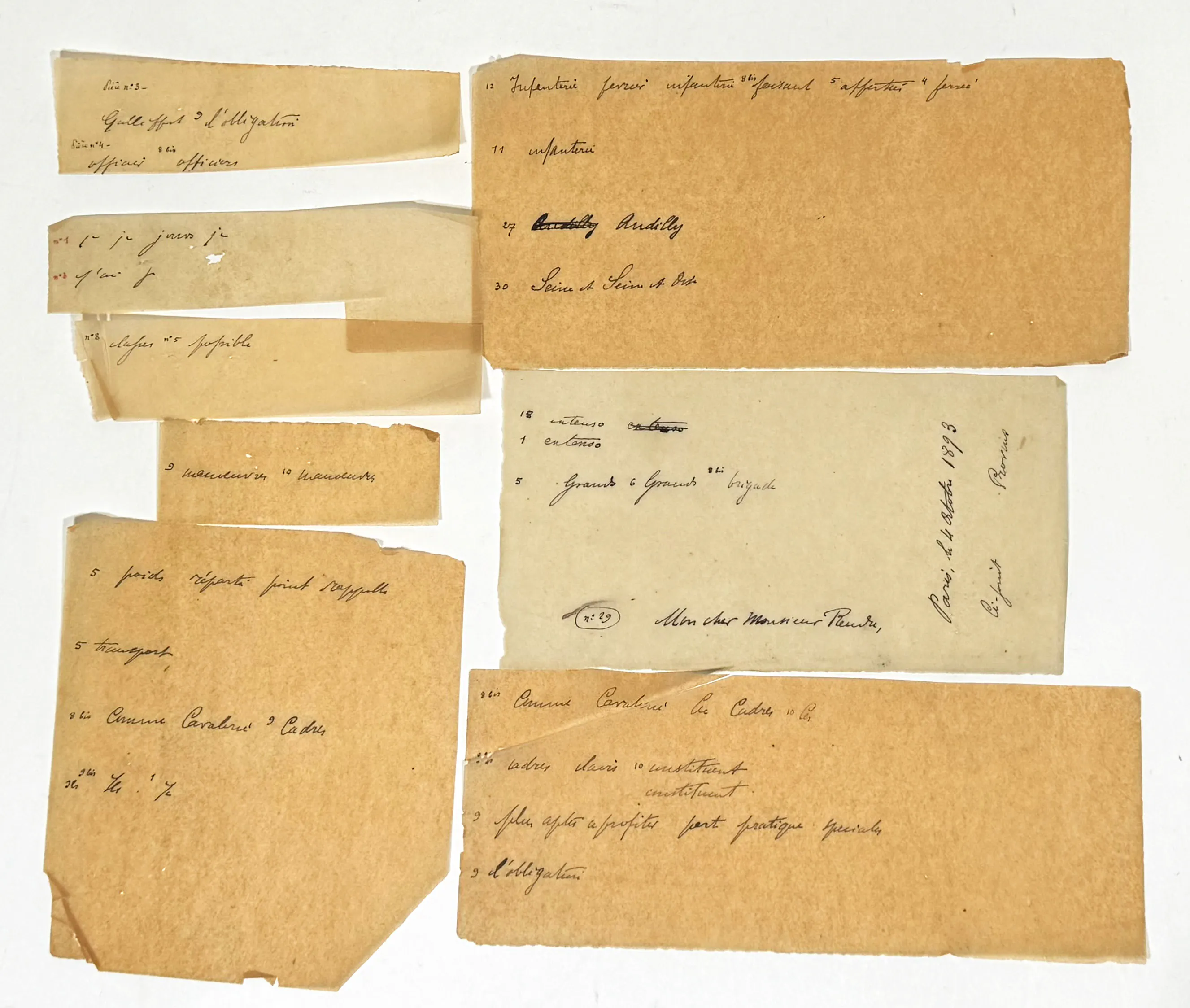
Now, the Manhattan Rare Book Company presents for sale the Charavay Dossier, the three-part collection of documents that was instrumental to Dreyfus’ first trial and his ultimate guilty verdict. It is priced at $125,000. The dossier features the 9-page report that Charavay wrote and signed on October 29, 1894 in Paris. In this report, Charavay explains that he came to his conclusion by analyzing the handwriting of the bordereau with authentic official letters and personal correspondence written by Dreyfus. In addition to this official report are 7 pages of working notes that Charavay used as drafts for preparing the final report. The last part of the dossier is 12 pages of Charavay’s direct tracings of Dreyfus' writings. Throughout the report, Charavay makes reference to the handwriting of specific words penned by Dreyfus to explain how he came to his final conclusion.
Charavay, renowned for his work in identifying forgeries, had concluded that the handwriting was natural, not disguised. He also relied on a questionable "auto-forgery" theory introduced by the prosecution that Dreyfus was purposely altering his handwriting to hide the fact that he was the author. As shown in the official report, written by Charavay’s hand, there are heavy amendments and edits throughout the documents. These depict how Charavay altered his initial decision that would have exonerated Dreyfus and reveal the illegitimacy of the evidence against Dreyfus. Charavay’s revisions in the official report greatly influenced the outcome of the case.
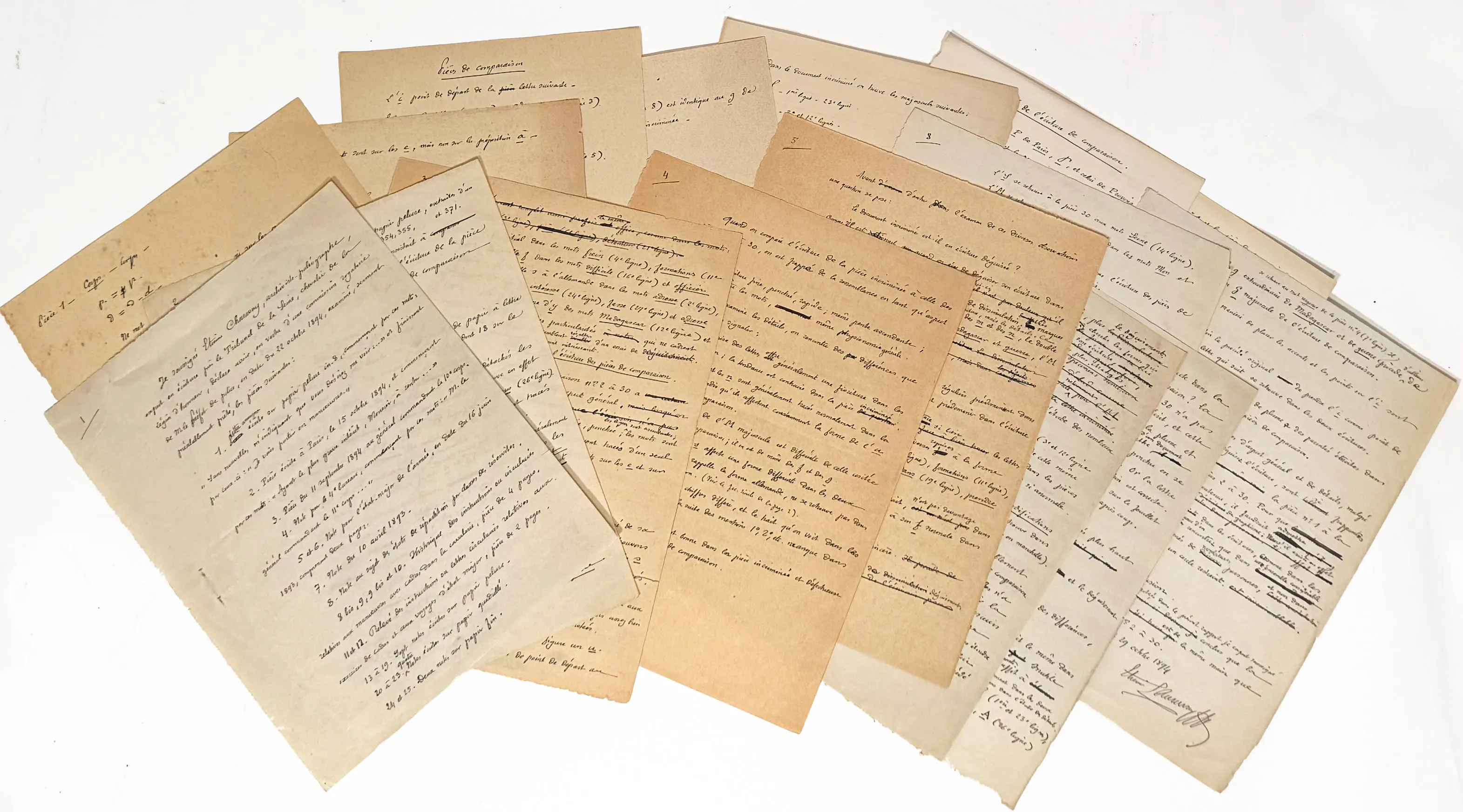
This highly significant collection will now pass to its next owner, who can review Charavay’s report, notes, and direct tracings of Dreyfus’ handwritten correspondences. As the original bordereau and the secret dossier of evidence that convicted Dreyfus are in institutional collections, the Charavay dossier is the only archive from the Dreyfus Affair that will ever come up for public sale. Charavay’s dossier is the physical testament to one of the most consequential events and mishandlings of justice in the modern era.