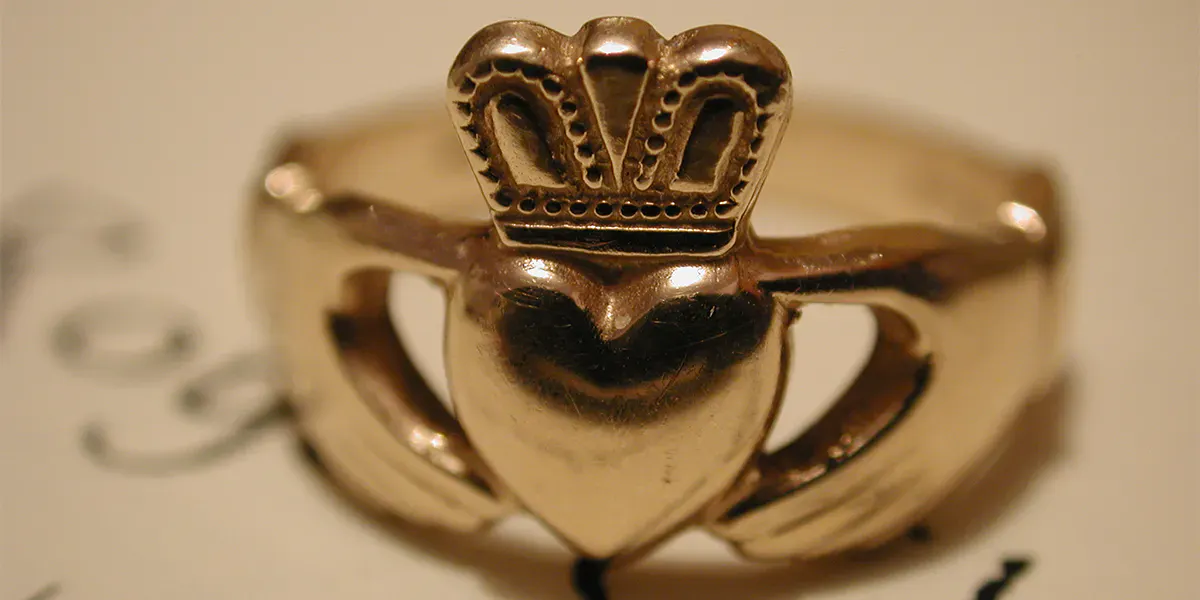
Along with the shamrock and the harp, the claddagh is one of Ireland's iconic images. The well-known ring is a symbol of love, friendship and fidelity and derives its name from the Claddagh fishing village located on Galway Bay. The claddagh symbol shows two hands embracing a heart adorned with a crown. More precisely, the heart denotes love, the crown represents loyalty, and the hands are a sign of friendship. Handed down for centuries from a mother to her eldest daughter, this jewel represents a precious family heirloom which over time has also become an emblem of Irish tradition.

The claddagh belongs to the category of betrothal rings whose origins date back to the times of Ancient Rome, where the gesture of joined hands indicated a promise of marriage. The story of the claddagh is said to have originated in the 17th century when it was made by a Galway goldsmith named William Joyce. However, folklore tells a somewhat different story, steeped in romance. Among the folk legends that circulate around the claddagh, one of the best known follows a young fisherman, captured by pirates and sold as a slave. During the years of imprisonment, the boy thinks of his lost love and, over time, makes a ring with gold stolen from his master. When the young man finally manages to return to his village, he discovers with joy that his beloved has never forgotten him and gives her the gold ring.
Related: History's Most Famous Engagement Rings
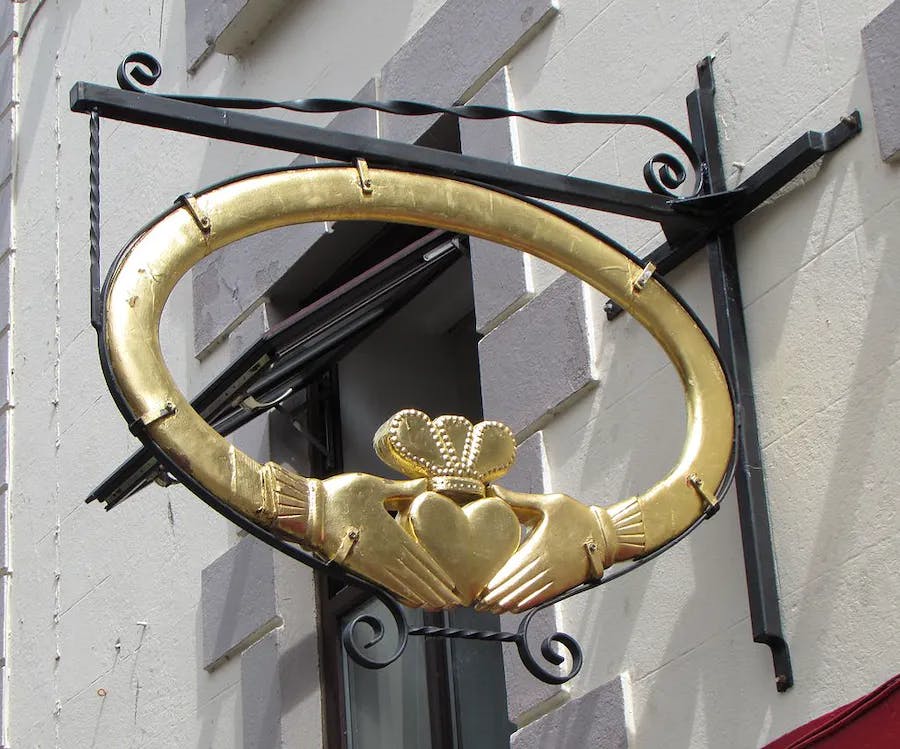
From 1845 to 1848, a disease called blight destroyed most of Ireland's potato crops, dooming the island to a long period of food shortage known as the Great Famine. In those years, many Irish people left their homeland to seek their fortune elsewhere, with most emigrating to America. In those melancholy years, the claddagh ring became a symbolic link to Ireland and was a gift between Irish immigrants abroad.
Want to receive news and articles like this by email? Sign up for our newsletter!
After having explained the meaning of the claddagh and its history, it is necessary to say how it is worn. The ring, in fact, transmits a different message depending on which hand it is worn and its position on the finger.
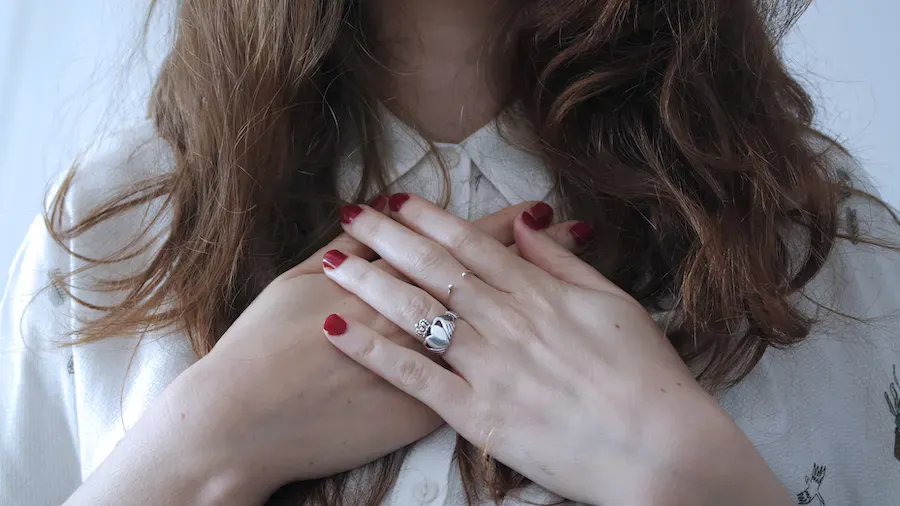
When worn on the right hand, with the point of the heart pointing towards the fingertips, the claddagh indicates that the wearer is free from sentimental ties and is single. If the wearer is in a relationship, however, the ring should also be worn on the right hand, but with the tip of the heart pointed towards the wrist. The left hand, traditionally used for wedding rings, is chosen in the event of an official engagement – in this case the tip of the heart faces the fingertips. If the wearer is married, the tip of the heart faces the wrist.
Related: The Intimate World of Artists' Jewelry
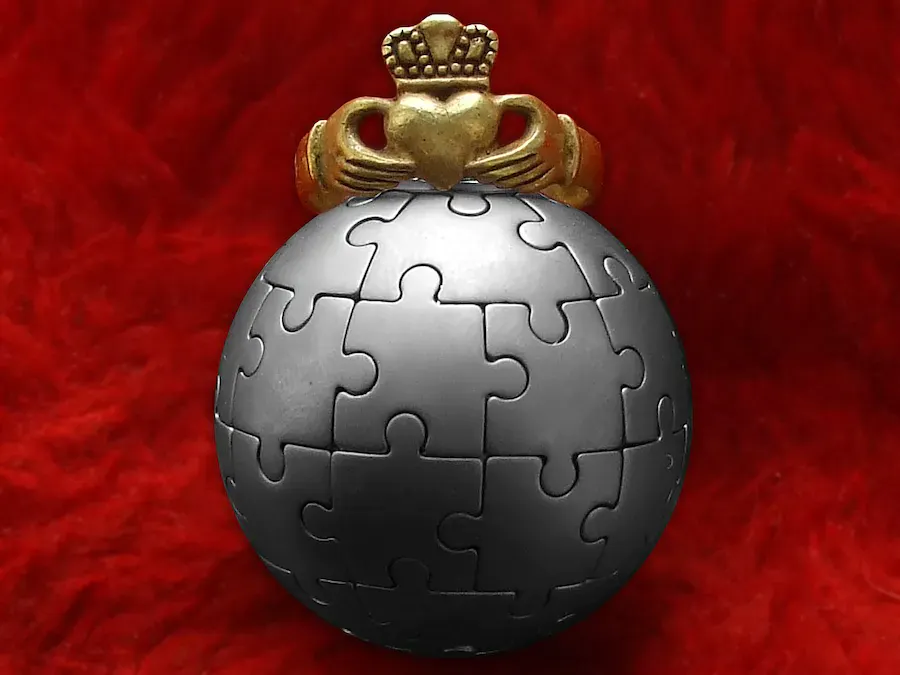
Today more than ever, the claddagh is exchanged among friends, given there are numerous variations on the market such as pendants, charms and key rings. The symbol of clasped hands surmounted by a crown never seems to go out of style and even appears in some tattoos. Jewelry with the claddagh symbol is the ideal choice for those looking for an affordable yet meaningful gift.
One last little curiosity: according to tradition, it is bad luck to buy a claddagh for oneself, so it must always be received as a gift from someone.