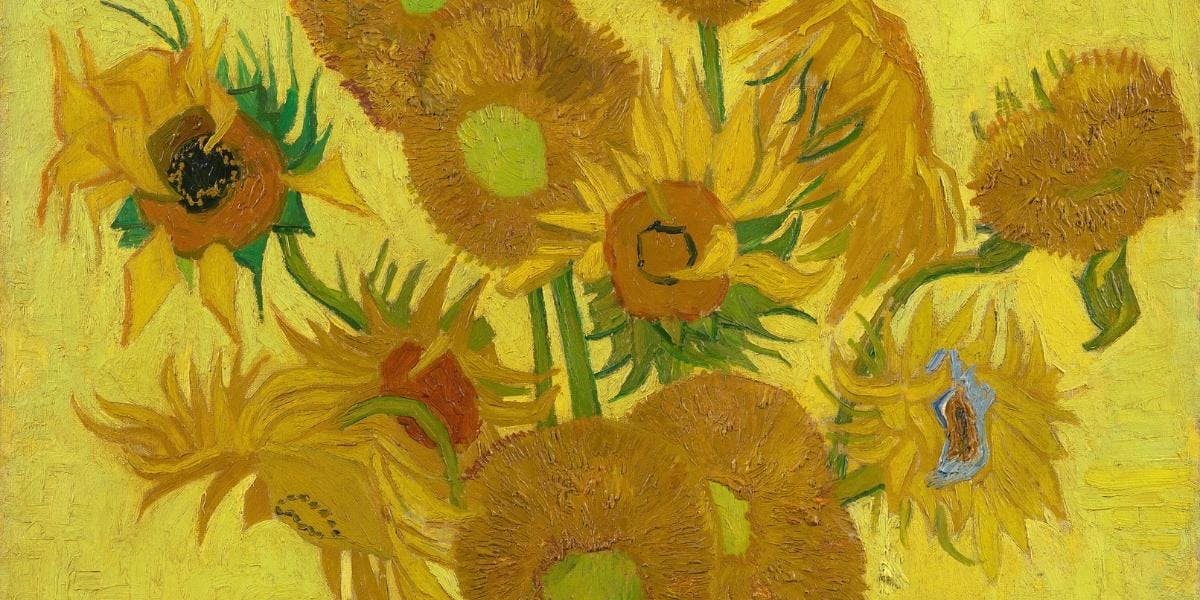
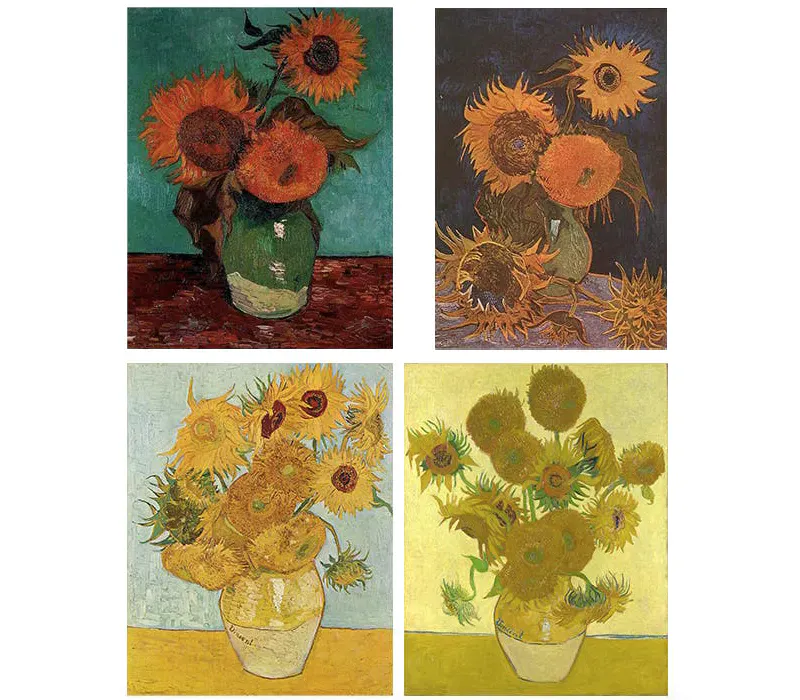
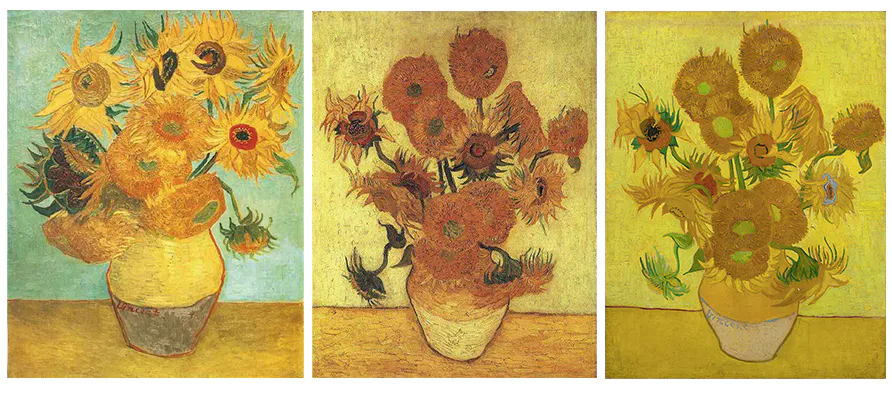
In 2019 the Van Gogh Museum in Amsterdam presented the exhibition Van Gogh and the Sunflowers. The focus of the exhibition is one of the sunflower paintings that Vincent van Gogh painted in Arles in southern France in January 1889 and that has been on display in the museum since 1973. In the run-up to the exhibition, the painting was examined more closely by experts.
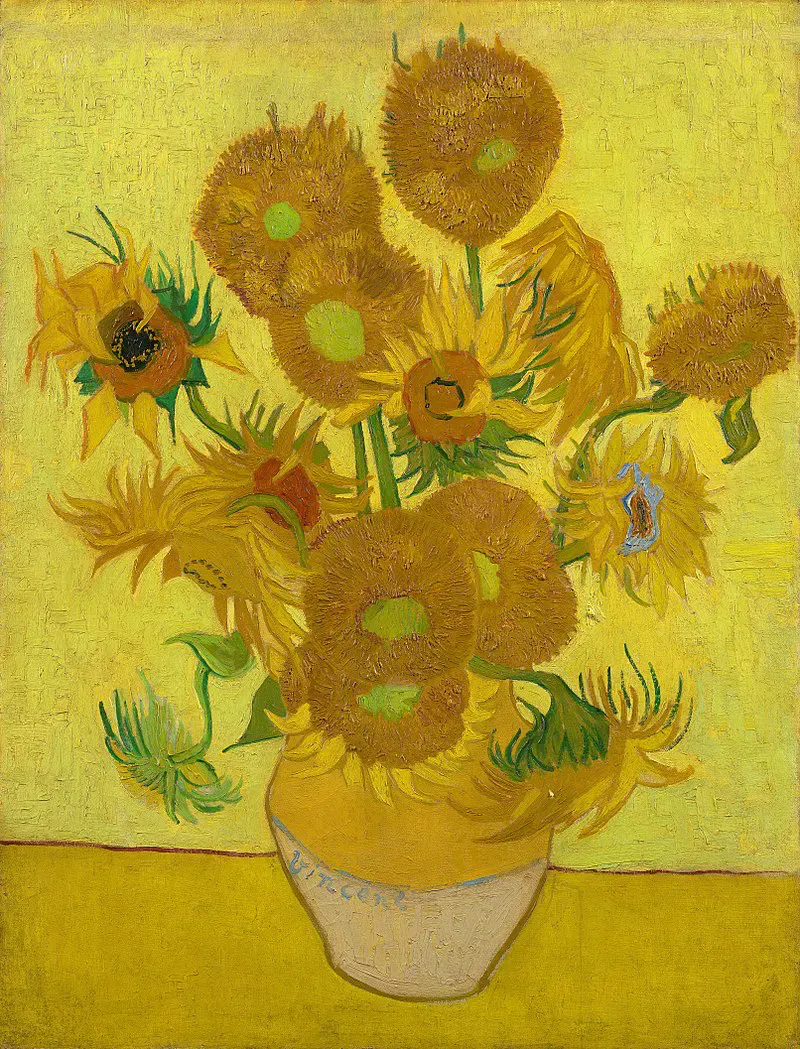
Led by Ella Hendricks, a professor at the University of Amsterdam, various microscopic and non-invasive methods were used, such as ultraviolet and infrared light and X-ray technology. These studies show how much the painting has changed over the past 130 years, especially the coloring. The bright yellow of the flowers has become darker over time. On the one hand, this is due to the reaction of the lead(II) chromate used for the yellow to the UV radiation. On the other hand, it is due to improper restorations that were carried out in 1927 and 1961. On both occasions Sunflowers was varnished - a technique totally unusual for a 19th-century painting. In the late 1990s another layer of wax was added.
Related: 6 Iconic Dutch Paintings
In the exhibition, visitors could also see a detail, which has led a shadowy existence up until now. Vincent van Gogh added a wooden strip to the upper part of the canvas, presumably because there didn't seem to be enough space for the full flower. And right there in the paint on the strip of wood, two fingerprints could be found. While fingerprints have been discovered around the edges of many van Gogh paintings, in this case it seems certain that they are in fact those of the painter himself.
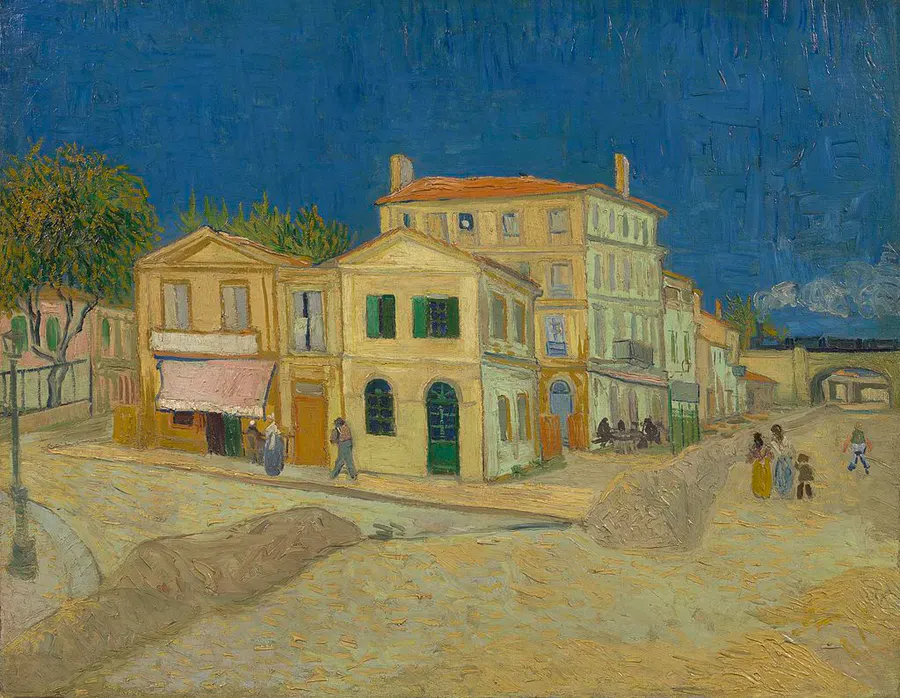
The Sunflower painting in the Van Gogh Museum was created in January 1889 in Arles, southern France, where Vincent van Gogh had been living and working extremely productively for almost a year by that time. He had previously lived in Paris for two years with his younger brother Theo, an art dealer who supported him financially throughout his life. During these two years, the always melancholy and short-tempered Vincent had actually integrated quite well into the Paris art scene, organized smaller exhibitions, became friends with his colleague Émile Bernard and socialized with Paul Gauguin, Paul Signac and Henri de Toulouse-Lautrec. Nevertheless, life in the big city became more of a burden for him. And so Van Gogh was grateful when Theo sent him to Marseille with an assignment. But van Gogh didn't get to that point. Arles in Provence, which was actually only intended as a stopover, became his permanent place of residence. Here he found the "blue tones and cheerful colors" that he had missed in Paris.
Related: 8 Artists Inspired by the South of the France
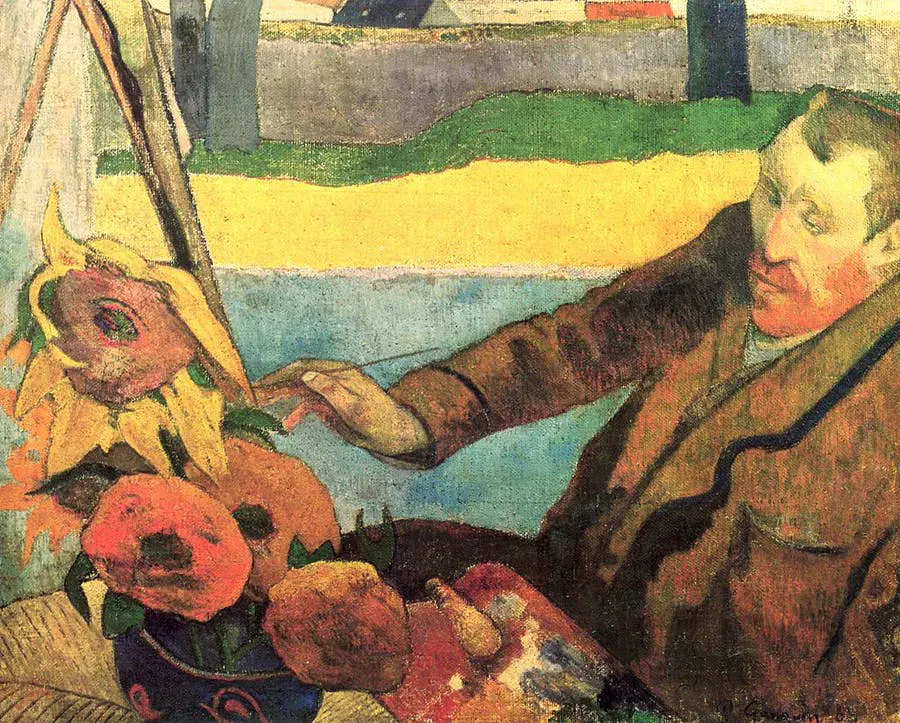
In Arles, Vincent van Gogh rented a yellow house that he imagined could serve as a studio for a whole colony of artists. However, only Paul Gauguin visited. In order to give his colleague a fitting greeting in October 1888 and to make the rooms of the yellow house more homely, Van Gogh painted a series of sunflowers, to which he added three more in January 1889, including the version now located in Amsterdam. Related: 6 Sensational Attic Finds
Related: The Secrets of Van Gogh's Final Painting Revealed
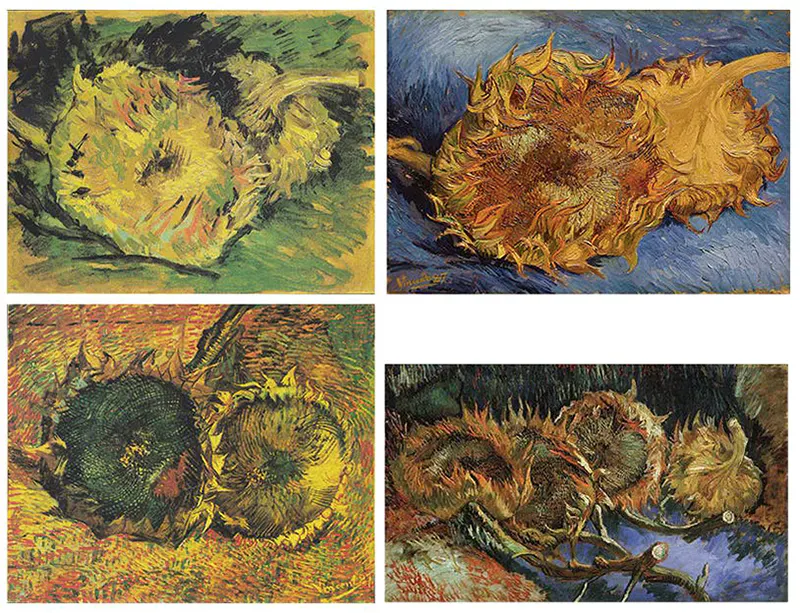
It was not the first time that Vincent van Gogh dealt with this motif: he had already made four studies in Paris, two of which passed into Gauguin's possession.
Related: 8 Patrons of the Parisian Avant-garde
What was well-intentioned, however, became a subject of contention between the two artists, which led to perhaps the most famous self-mutilation in art history when Van Gogh severed a large part of his left ear in early January 1889. However, it has never been fully clarified whether he really did it himself. In any case, Gauguin traveled back to Paris after this incident.
Related: 10 Artists Between Genius and Madness
From there Gauguin demanded that Van Gogh send him one of the sunflower paintings in exchange for two of his studies that he had left behind in Arles. Van Gogh was outraged and stated that Gauguin had no claim to it as he already owned two similar works by him. He would also give him the two studies back at any time if he could get his artworks back in return. However, there was no return. Gauguin sold the two sunflower paintings in the mid-1890s to finance a trip to the South Pacific, where his most important works were made. However, Vincent van Gogh had already died by this point. On July 29, 1890, the artist, who had been misunderstood during his lifetime, succumbed to injuries from a gunshot wound he may have inflicted himself.