The history of table lamps is long and varied, and it would be almost impossible to concentrate it in a single article. Therefore, we have decided to put the spotlight on 8 products that we particularly like, featuring some of the most famous designers in the world.
1. Gino Sarfatti, 600P
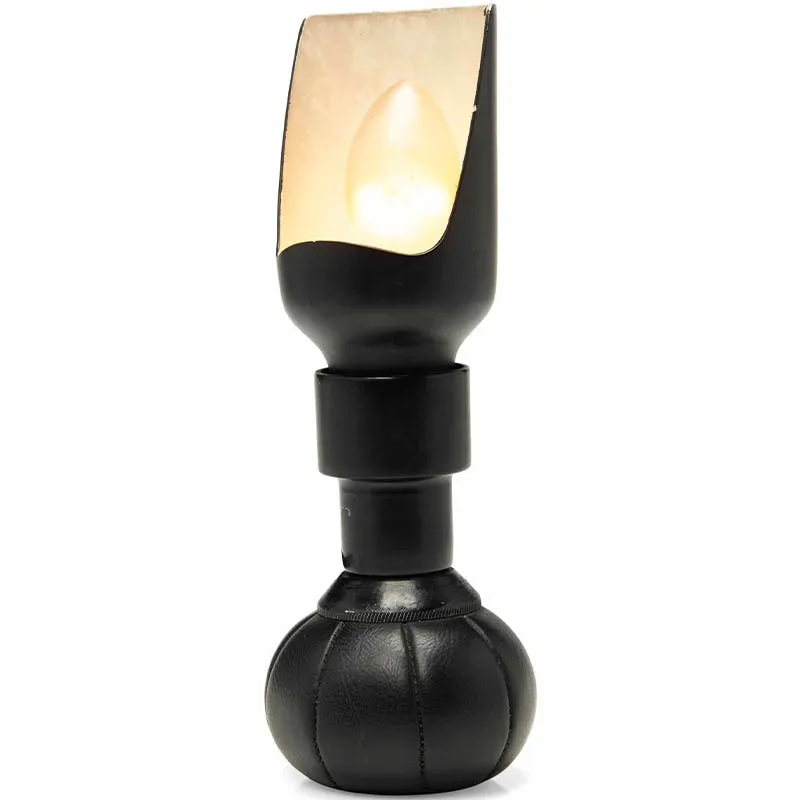
In the 1950s and 1960s, Milan was the undisputed capital of design, and at that time, Gino Sarfatti was considered the king of enlightenment. Founder of Arteluce, from 1939 until 1974 (the year in which the company was bought by Flos), the designer-entrepreneur created hundreds of luminaires. The lamps were not given a name, but were identified with a number: the numbers from 500 to 999 indicate table luminaires, such as this 600P, a lamp that can be easily adjusted in various angles and directions thanks to the base, consisting of a soft filled sphere with small lead balls. It's the perfect match between design and functionality.
2. Paavo Tynell, Simpukka
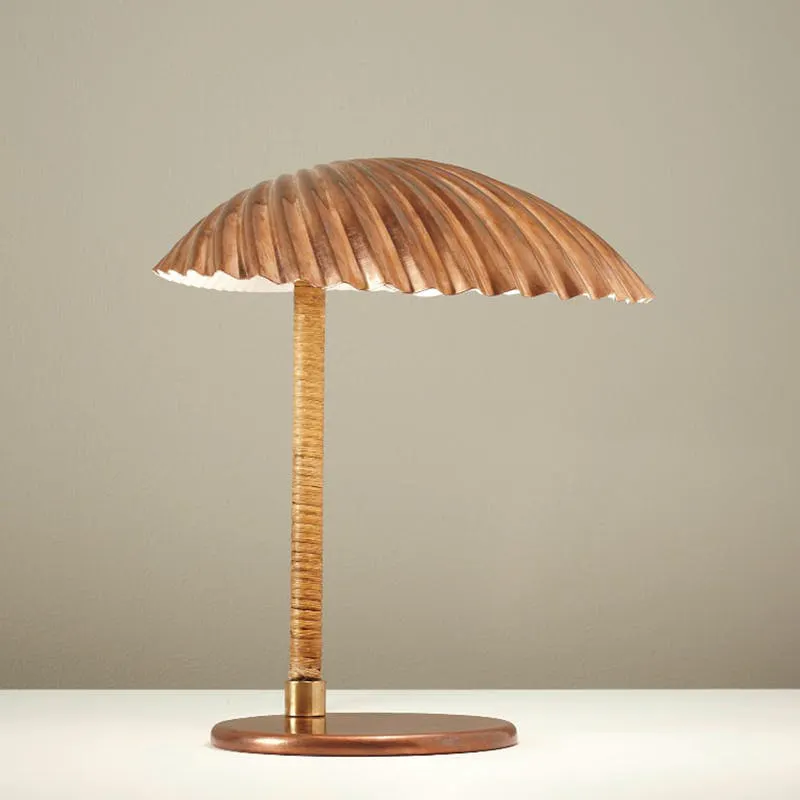
Paavo Tynell was a Finnish designer known for his unique lamps and for having designed the lighting for the office of the UN Secretary General in New York and for the Parliament in Helsinki. As was often the case with his creations, Tynell drew inspiration from nature and the romantic era, as in the case of the Simpukka table lamp, with some echoes of mid-century Modernism in its simplicity. The Finnish term "Simpukka" could be translated into "shell", a shape evoked by the lampshade, under which the bulb looks almost like a bright pearl.
Related: The 10 Most Popular Furniture Designers
3. Max Ingrand, Lampe
Do you want to read interesting articles by receiving them directly via email? Sign up for our free newsletter!
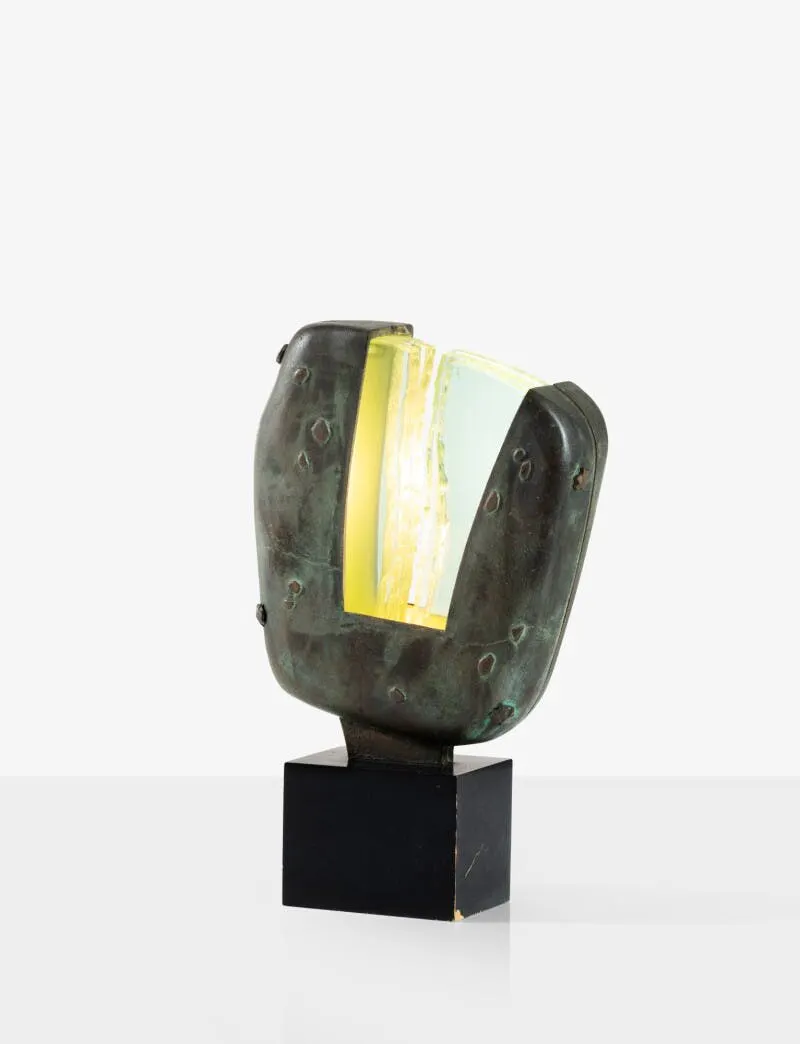
As a boy, the decorator and designer Max Ingrand saw Chartres Cathedral for the first time and was fascinated by its marvelous Gothic-style stained glass windows, on which the light was reflected in an explosion of color. Since then he decided that glass would be his life and dedicated himself to it with great passion, integrating his love for medieval art with a modern approach. An example of this perfect combination is the lamp we see here, made for Fontana Arte in chiseled glass, bronze and black lacquered wood.
4. Vico Magistretti, Eclisse
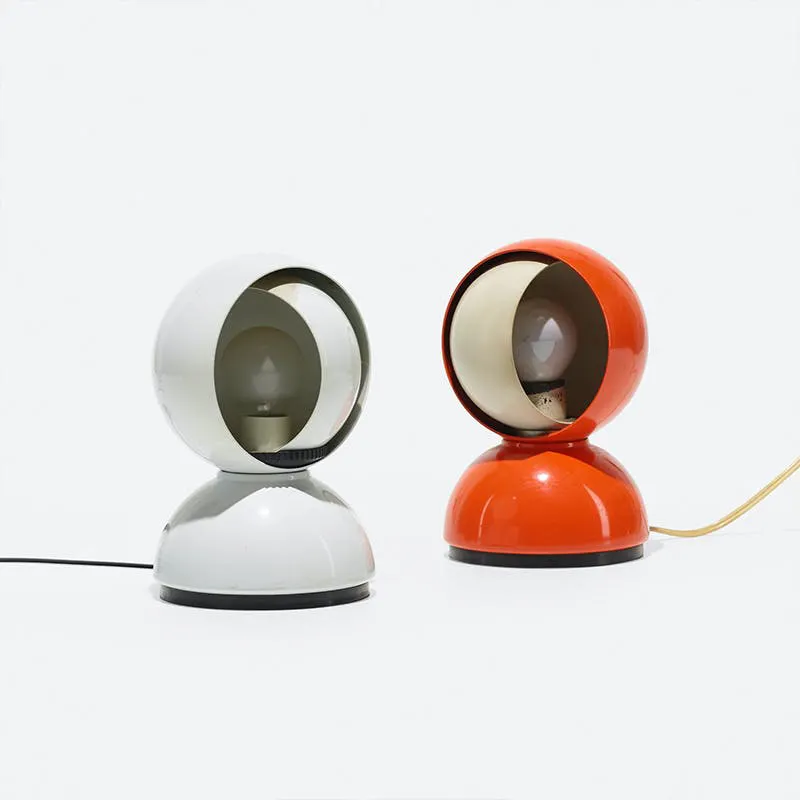
The name of Vico Magistretti is synonymous with "Made in Italy" design. Architect, urban planner, and designer, he devoted himself to an infinite variety of projects always imbued with simple and universal forms. “If they asked me for a definition of my work, I could say simplicity: if you have clear ideas you must be able to express them with simplicity. You have to be able to make pieces that seem normal”, declared Magistretti, who loved geometric and essential shapes. Eclisse, made for Artemide, brings together curved, minimalist lines and the cheerful spirit of the 60s. The lamp was awarded the prestigious Compasso d'Oro award in 1967 and has the timeless vintage charm.
Related: 5 Italian Design Brands to Know
5. Vico Magistretti, Atollo
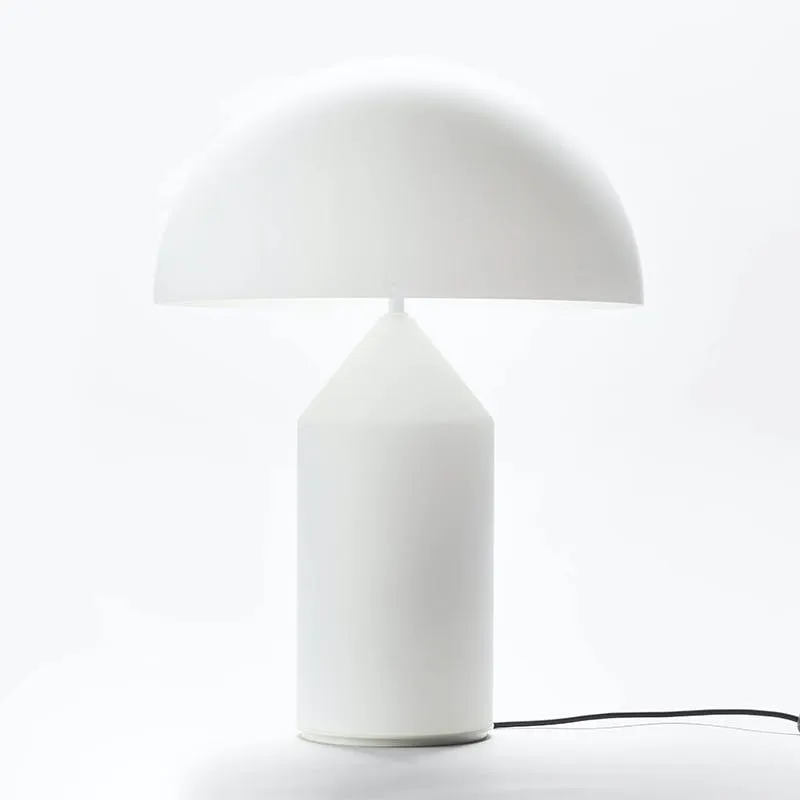
Also to Vico Magistretti we owe the Atollo lamp, which over time has become one of the best known symbols of Italian design, a recognizable and appreciated icon. Designed in 1977, it soon became part of the permanent collections of the most important design museums. Here the lines are simplified, and the geometric shape consisting of a hemisphere and a cylinder makes it a luminous, balanced sculpture.
Related: 10 Reasons to Buy Vintage
6. Ingo Maurer, Bulb
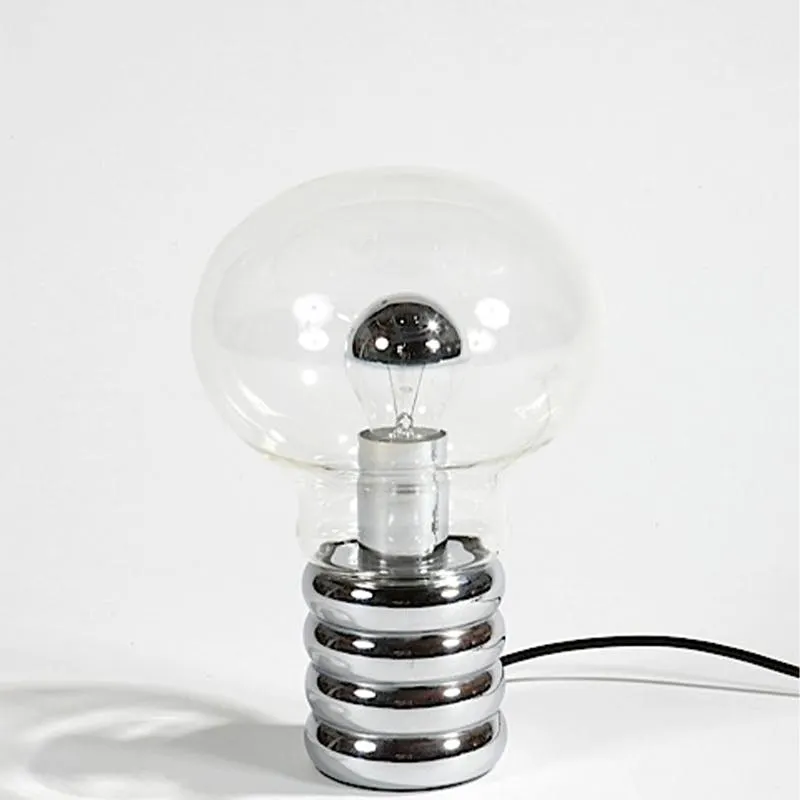
And we come to the "poet of light": this is how the German designer and entrepreneur Ingo Maurer was nicknamed, best known for the design of lamps and light installations, for which he also received numerous international awards. Among his most famous creations is the Bulb table lamp (1966) with a polished chromed metal base and blown glass globe, produced by his company Ingo Maurer GmbH. Many of his lamps, including Gulp(1969) and Light Structure (1970), have been included in the design collection of the Museum of Modern Art in New York.
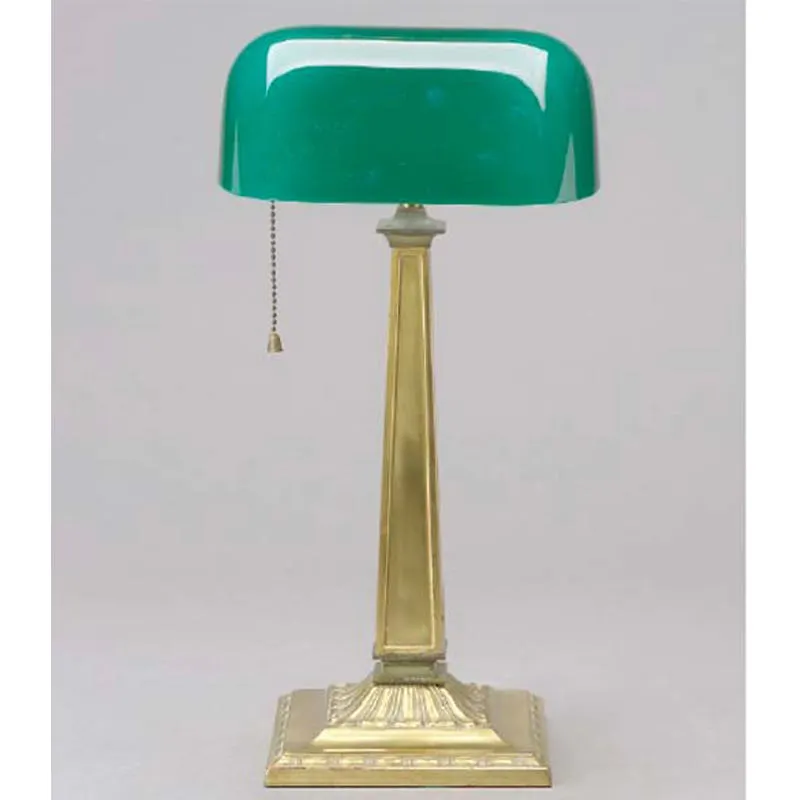
7. Banker lamp
Do you have a vintage lamp and want to know how much it's worth? Ask our experts!
The iconic banker lamp was born in the United States, where it was initially introduced by Harrison D. McFaddin in the early 1900s under the name of Emeralite (a combination of emerald and light), due to the green glass shade. At that time it was said the color green had positive effects on the psyche and that it was able to protect the eyes from the direct light of the lamps. This idea spread particularly among those who did office work or spent a lot of time reading documents, such as bankers, politicians and accountants. The latter even wore green visors to protect their eyes from the artificial light of the bulbs. MacFaddin, with an excellent marketing effort, commercialized the product by emphasizing the benefits that the lamp could have on the efficiency of the workers. Its success still endures in offices and home offices today.
8. Tiffany Studios, Wysteria
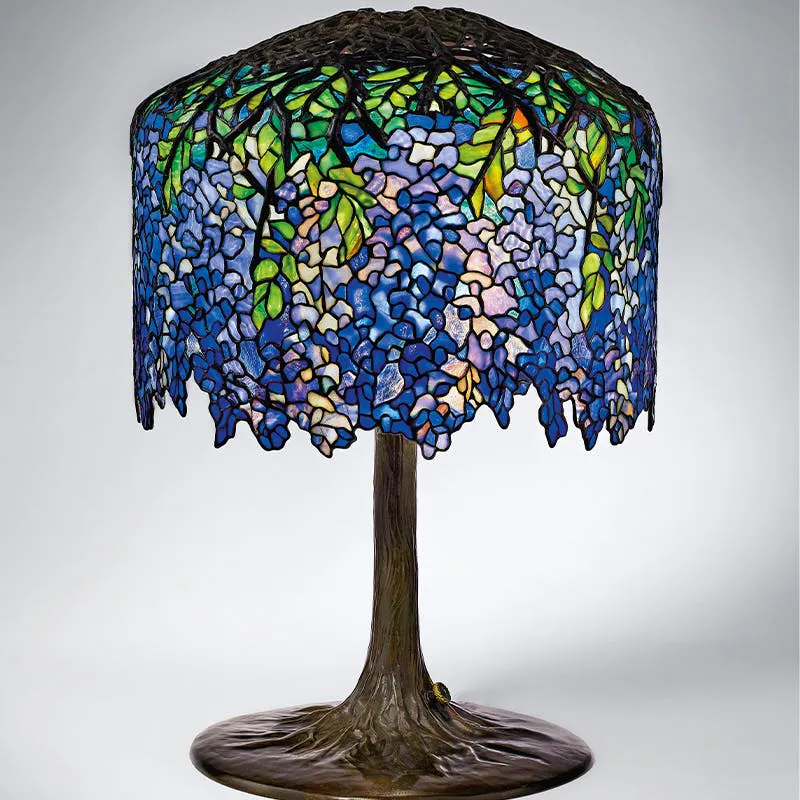
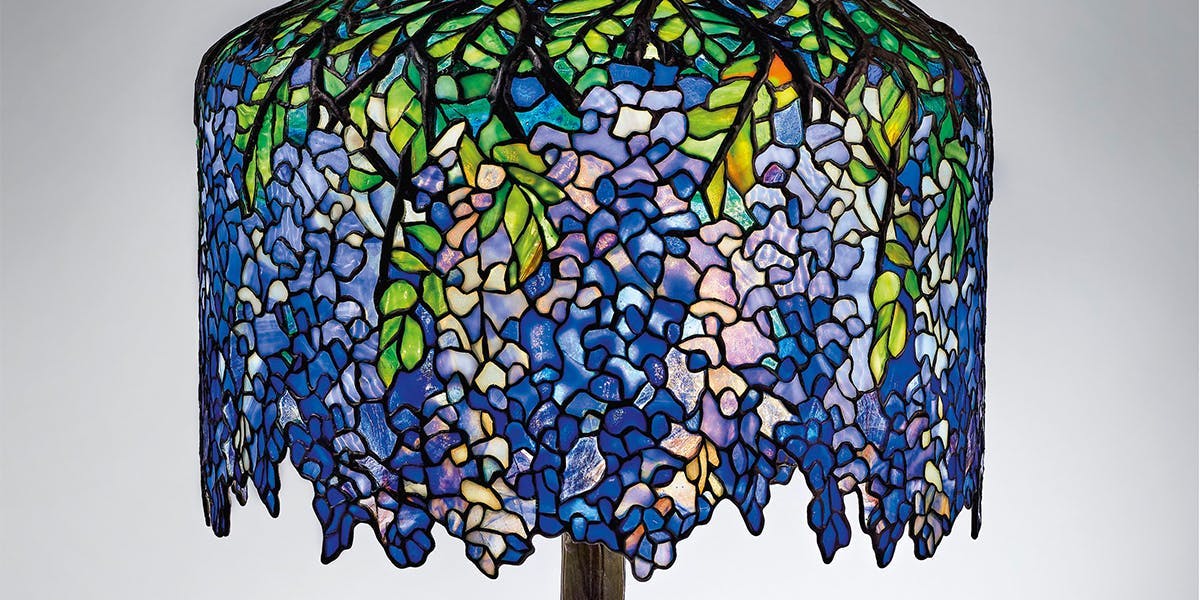
History, art, design, passion and style, all gathered in a single object: the beauty of Tiffany lamps is indisputable. Each of these lamps represents a real work of art. The "Wisteria" model we see here, designed by Clara Driscoll at the beginning of the 20th century, represents an icon of 20th-century design. The influences of Impressionism and Japanese aesthetics are evident, and the color palette is striking, composed of nearly 2,000 pieces of glass individually cut to form a lush whole in which cobalt and lavender play with green and aquamarine with an almost mesmerizing effect. When turned off, the lamp seems to radiate heat through its beauty; if turned on, however, it captures the light and spreads it around itself through its dripping curtain of wisteria flowers.
The list of table lamps that have made design history could go on and on. On Barnebys you will find a wide selection of articles dedicated to lighting in general; we invite you to take a look and choose your favorite style or designer!