
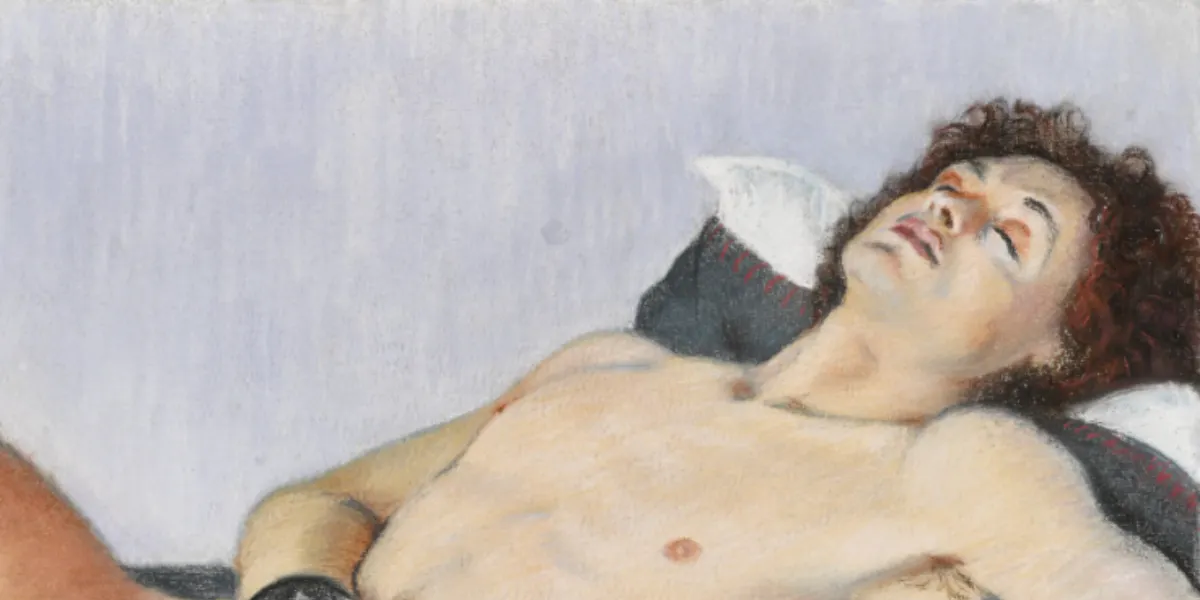
Born in New York City on May 6, 1947, Sandra Fisher became one of London's beloved painters after moving to England in 1971 to further her career as a full-time artist.
Fisher grew up in Georgia and then moved to California after graduating to attend the Chouinard Art Institute in Los Angeles. An avid art historian in addition to her artistic practice, she was greatly influenced by Delacroix, Monet and Matisse. She graduated in 1968 after studying minimalist art and sculpture, but soon realized that her passion lay in portraiture, which allowed her to capture her subjects in a more intimate and personal manner.
Related: Matisse: Master of Fauvism and Simplification
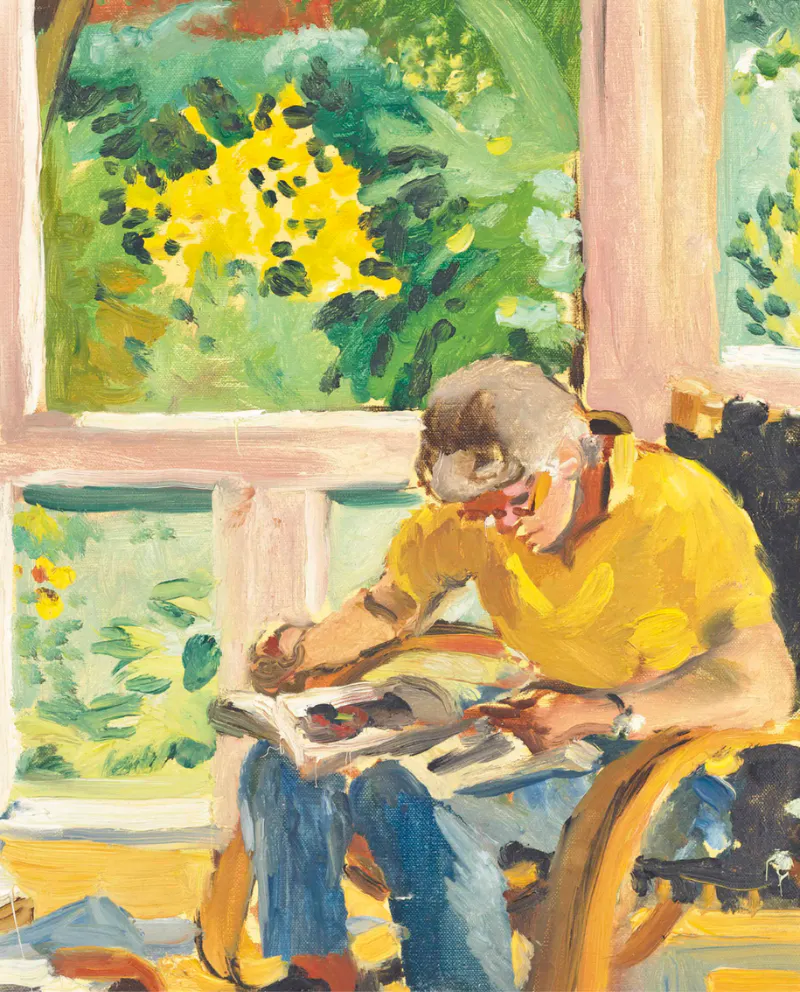
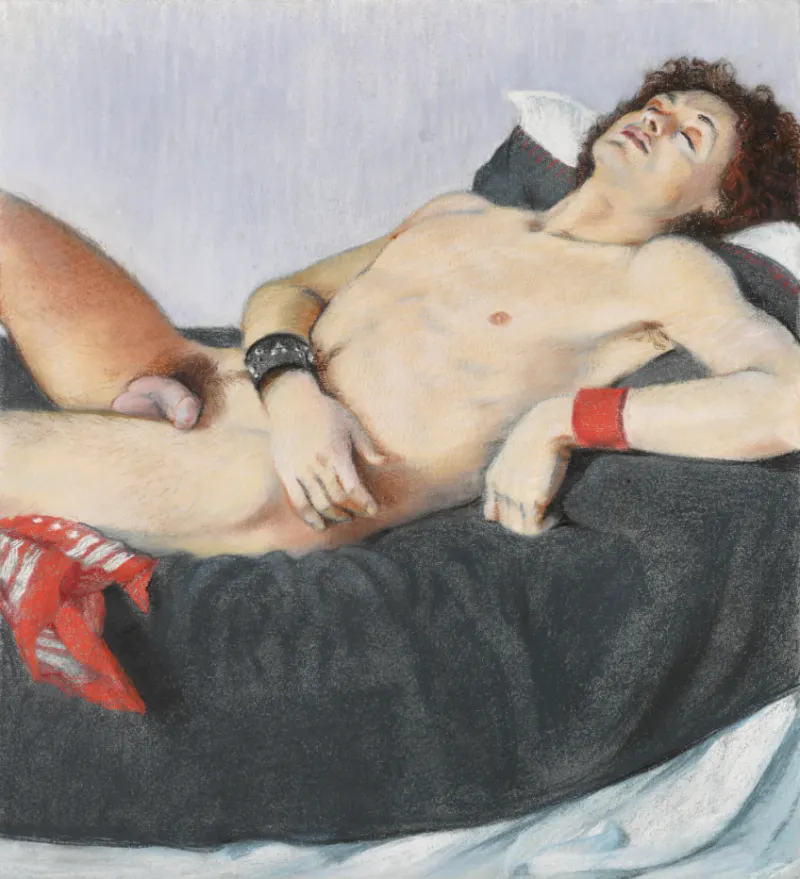
Though her style borrowed more from older movements like Fauvism and Impressionism, Fisher’s artistic approach was far from traditional or stale. Her creativity and unique artistic approach can be seen in her portraits of the male nude, which were some of the first works by a woman to frame men’s bodies as subjects of sensuality and desire, as female nudes have often been. Her models were often young actors and entertainers or other artists in her social circle, and she often returned the favor by posing for their works as well.
Related: 6 Female Artists and the Male Muses Who Inspired Them
Here are four facts to know about this little-known artist.
1. Her family was full of artists
Fisher’s interest in art and early practice was greatly influenced by her mother, Ethel Fisher, an acclaimed artist who worked in a variety of styles, including abstraction, portraiture, architectural art, landscapes, and still life. She coined the term 'Abstract Impressionism' to refer to her early abstract works. Her disparate styles were tied together with a signature focus on color and space, and her subjects were often fellow artists, something her daughter Sandra also inherited.
Related: Abstract Art: From Genre to a Movement
Fisher’s sister, Margaret Fisher, is also a highly renowned experimental performance, installation, and video artist, and has had her work exhibited at the Venice Biennale. First gaining attention in the Bay Area performance scene in the 1970s, she soon founded a production group named MA FISH CO, as well as the theatre known as the Cat’s Paw Palace, where she put on shows with her unique approach and style. Often termed 'cellular movement', her performances are mainly focused on the body itself, exploring the energy of the human form with a focus on the movement of joints. Her technique is inspired by a variety of sources including yoga, sign language, and martial arts.
Want more articles like this delivered straight to your inbox? Subscribe to our free newsletter!
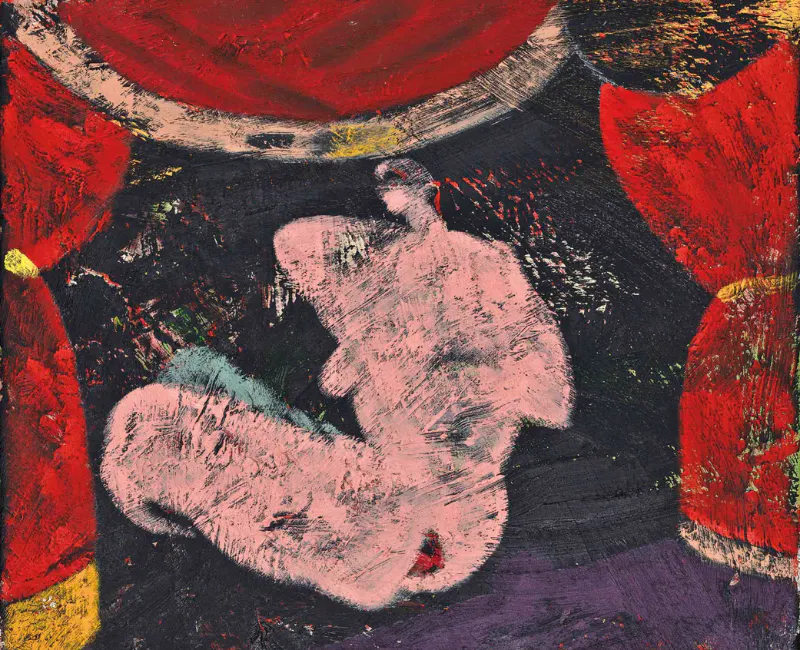
Fisher’s second husband, R.B. Kitaj, is perhaps the most well-known artist in her family. Also an American based in London, he hired her to work as his studio assistant before they eventually married in 1983. His work, with its bright colors and collage-like approach, had a massive impact on the British Pop Art movement, and primarily focused on topics concerning art history, politics, literature, and Judaism. He is also considered one of the greatest draftsmen in history, on par with Edgar Degas, and his work has also been exhibited at the Venice Biennale, which awarded him with the Golden Lion award in 1995.
2. She was part of the School of London
After relocating to London, Fisher soon joined a collective of artists known as the 'School of London', a term coined by her future partner R.B. Kitaj. Mainly active in the 1970s, these artists were pushing back against the dominance of the abstract, minimalist, and conceptual movements of the period, instead creating figurative works. This loose collective included Francis Bacon, Lucian Freud, Michael Andrews, and David Hockney, although he was at the time based in the United States. The first show focused on this art movement, curated by Kitaj, was called The Human Clay, and Fisher’s work was shown as part of the collection alongside these giants of British art.
Related: Obsessive Love: Francis Bacon and Peter Lacy
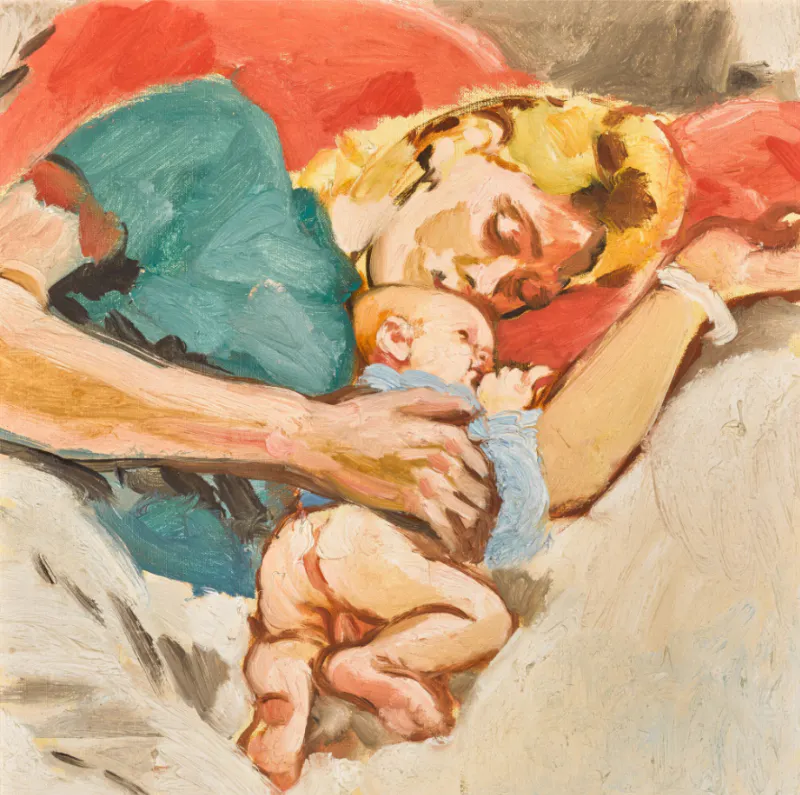
3. Her paintings were usually finished in one sitting
An avid scholar and art historian, Fisher adopted artistic approaches and styles from a variety of artists, including David Hockney, Robert Irwin, and her husband R.B. Kitaj. Another artist that had a major influence on her practice was Avigdor Arikha, who was an influential figure in the art world for his works as well as his writings. His approach to painting inspired Fisher, who began to complete all of her works in a single sitting, rather than working on them over a long period of time, and only painting based on models she was able to be in the same room with as she worked. This influenced her trademark, Fauvist-reminiscent style of thick, rapid brushstrokes and hazy, dreamlike visuals.
Related: David Hockney: Star of Contemporary Art
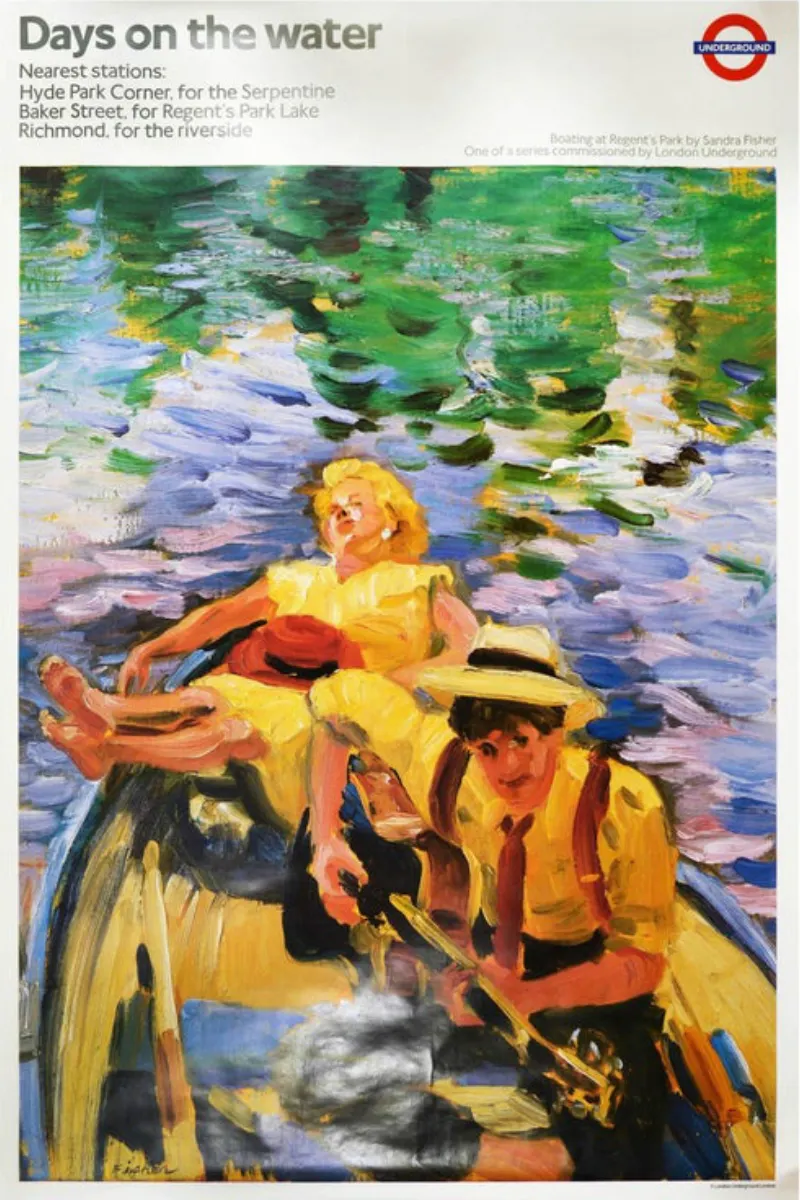
3. She worked with London Transport
Commissioned by London Transport’s 'Art on the Underground' program, Fisher’s painting Boating at Regents Park was used as a poster advertising the Tube. The poster, titled Days on the Water, depicted a young couple relaxing on a boat in the pond. A blonde woman reclines near the back of the craft while her companion, whose yellow shirt matches the hue of her dress, strums a guitar. Part of a series of posters created to bring in extra funds, Fisher’s work was so popular that she was invited to create another piece for the program – the only artist to be asked to do so.
Related: The 8 Top Selling Women in the YBA
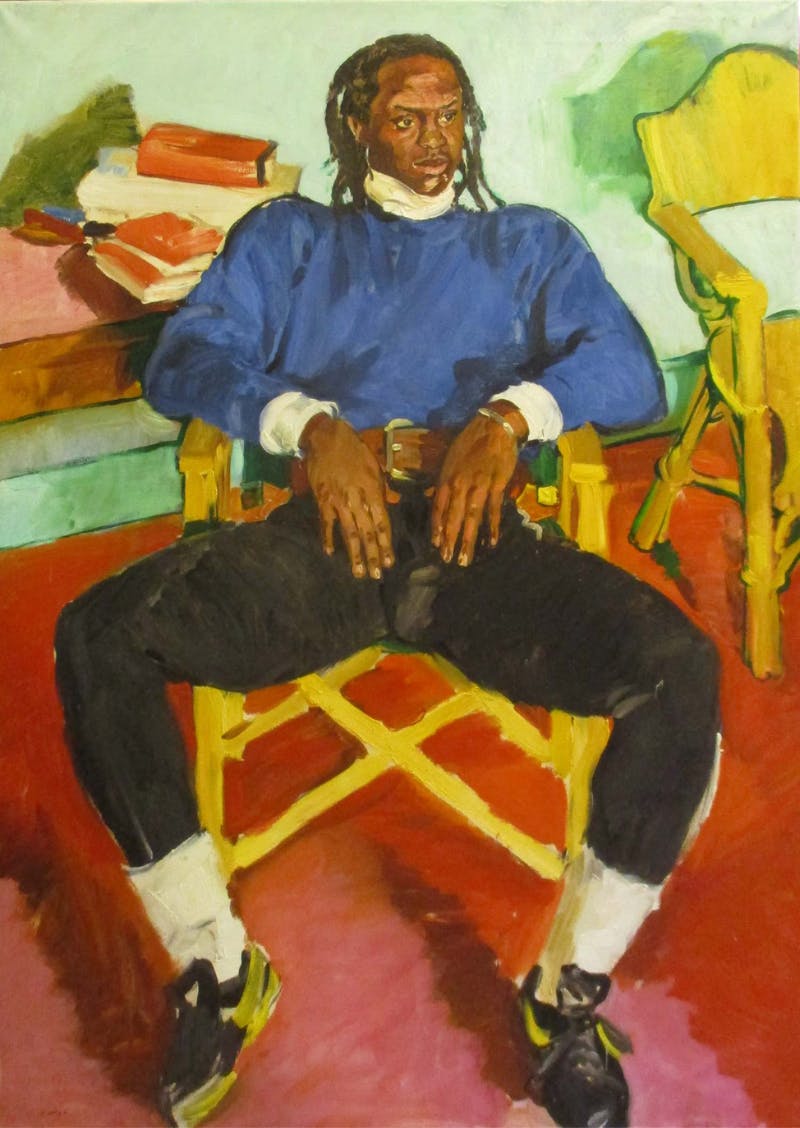
4. Her final commission was cut short by her early death
A major fan of the theatre, Fisher was offered the perfect project when in 1993 the Globe Theatre, which was being built on London's Bankside, approached her to create a series of portraits. The series, depicting characters from Shakespeare’s plays, was intended to be displayed in the theatre once it was complete. While she did complete some of the paintings, she tragically died on September 19, 1994 from Hurst disease, a rare neurological condition in which a sudden inflammation attacks the brain and nervous system, causing severe damage and leading to death. While her death at just 47 cut short a career that would have likely continued to grow, the catalog of work she left behind continues to reflect her individualism, creativity, and artistic eye.