
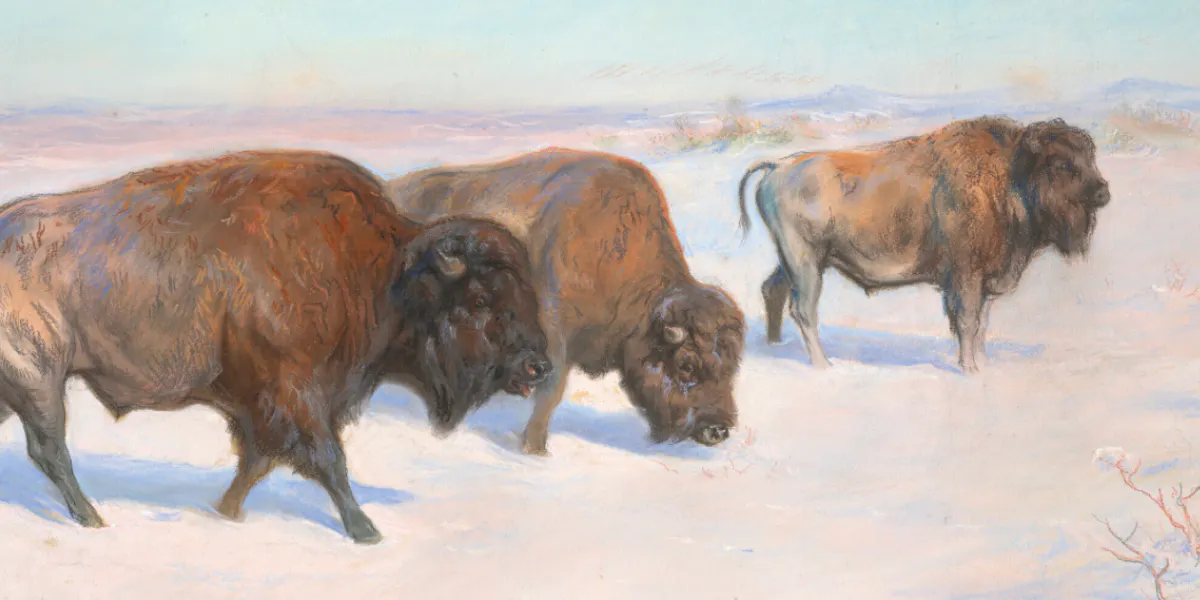
A previously undiscovered pastel by Rosa Bonheur, the renowned French animal artist, went under the hammer at Christie's Paris on Tuesday, March 20, as part of the specialized auction 'La pensée & le geste' showcasing early and 19th-century drawings.
Related: 6 Iconic American Paintings
The pastel, titled L'émigration des bisons, measuring 94 cm long by 57 cm wide, fetched €239,400 including fees (about $259,351), doubling its initial estimate of €100,000 to €150,000.
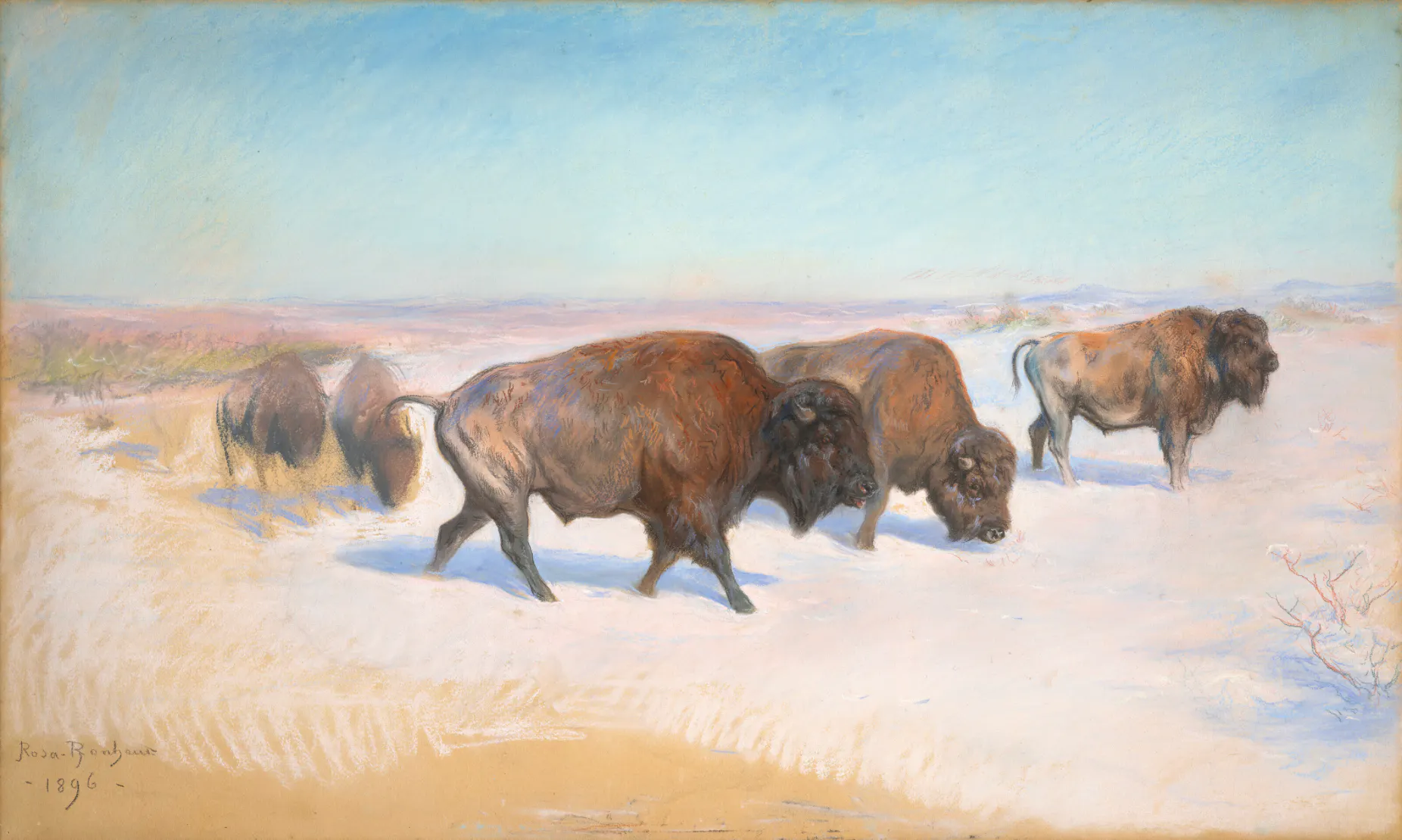
The pastel is exceptionally rare and probably is the largest known drawing by the artist, as noted by Hélène Rihal, head of the Old Master and 19th Century Drawings department at Christie's Paris. Moreover, the auction marked the first time that this piece was offered for sale, likely having remained within the same family since its acquisition during Rosa Bonheur's time.
Related: Wildlife Meets Watercolor: Inside Audubon's Birds of America
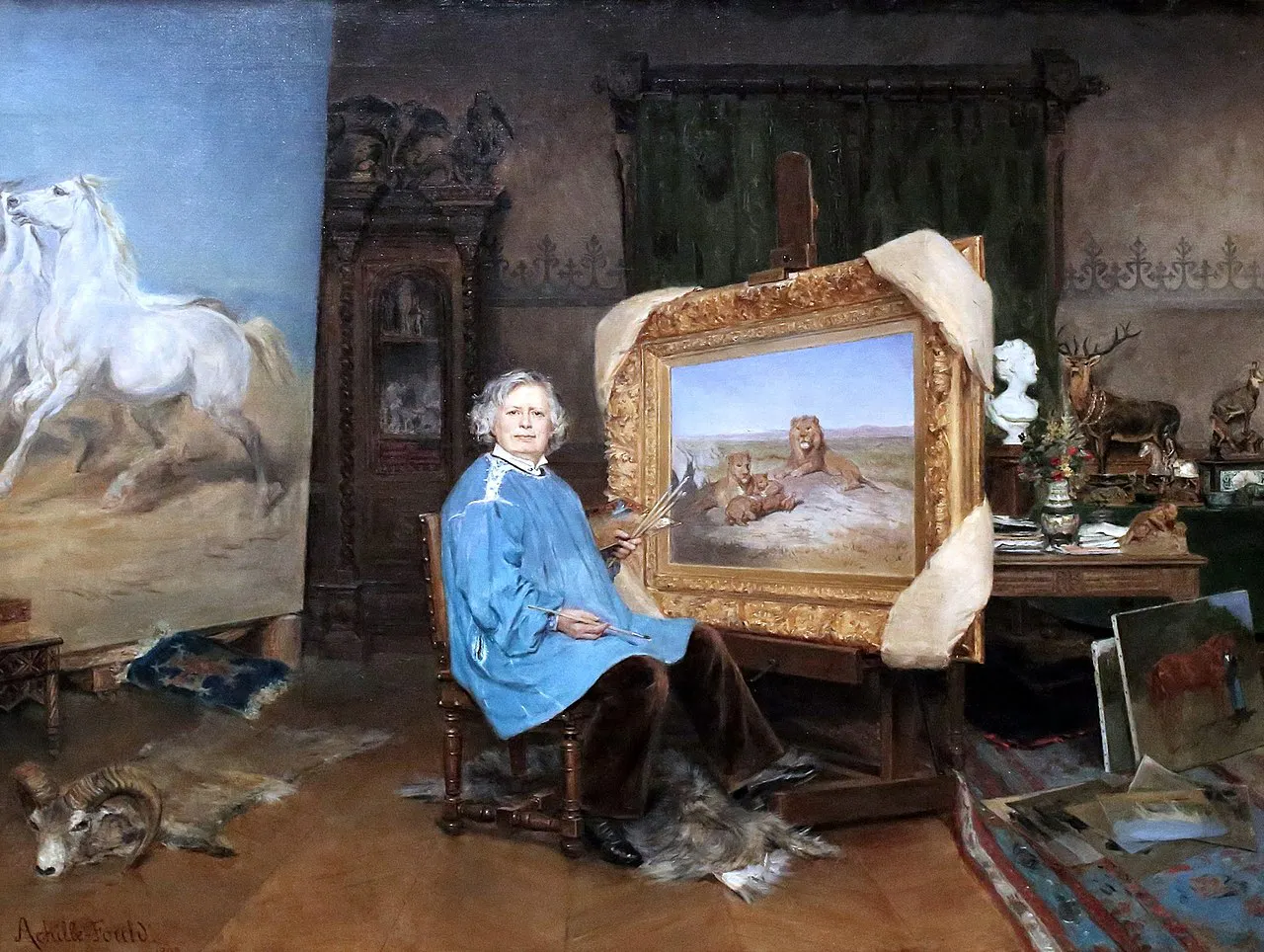
Rosa Bonheur, whose real name was Marie-Rosalie Bonheur, was born into a middle-class family in Bordeaux on March 16, 1822. Encouraged by her father, who is said to have met the Spanish painter Francisco Goya, she took up art from an early age. Her fascination with animals, fostered in part by her mother's creative teaching — associating each letter of the alphabet with an animal — became her hallmark. After exhibiting at the Salon at the age of 19, her success was immediate, and the State commissioned her painting Ploughing in the Nivernais, now on display at the Musée d'Orsay.

During the Universal Exhibition of 1889 in Paris, she met Buffalo Bill and became captivated by the American West. Buffalo Bill was organizing a spectacle called the Wild West Show, showcasing authentic cowboys, 'Indians', and wild animals, including bison. Rosa Bonheur created numerous drawings and sketches of the animals featured in the show. Despite never having visited the United States, her reputation as an animal painter drew the interest of American dealers and journalists. Today, many of Bonheur's paintings are exhibited there.
Want more articles like this straight to your inbox? Subscribe to our free newsletter!

Her series of bison paintings, influenced by the American West, bears witness to her keen fascination with this creature. She even went so far as to ask the American painter Albert Bierstadt for information and sketches of bison during his stay in Paris in 1889. Her diligent research culminated in two significant works: the pastel auctioned on March 20 and a larger canvas painting portraying a herd of bison.
Related: Albert Bierstadt: America the Beautiful
According to Christie's, Rosa Bonheur viewed L'émigration des bisons as a symbol of an unfettered America. In her interpretation, the pastel depicts the bison breaking free from captivity to roam once again in their natural environment on the Great Plains. She staunchly opposed any alteration or degradation of nature due to modernization, directing her focus towards animals and Indigenous peoples facing the threat of extinction.