
ARP, a flagship of the French capital, is an auction house known for its meticulous expertise, defining itself as a cultural enterprise dedicated to research and artistic experience. Each auction is the result of thorough research and a discerning eye, with each item or artwork selected based on emotion, innovation, and quality.
In keeping with this approach, the experts have curated a catalog of 183 exceptional lots for the upcoming sale dedicated to modern art, contemporary art, and design, scheduled for November 20.
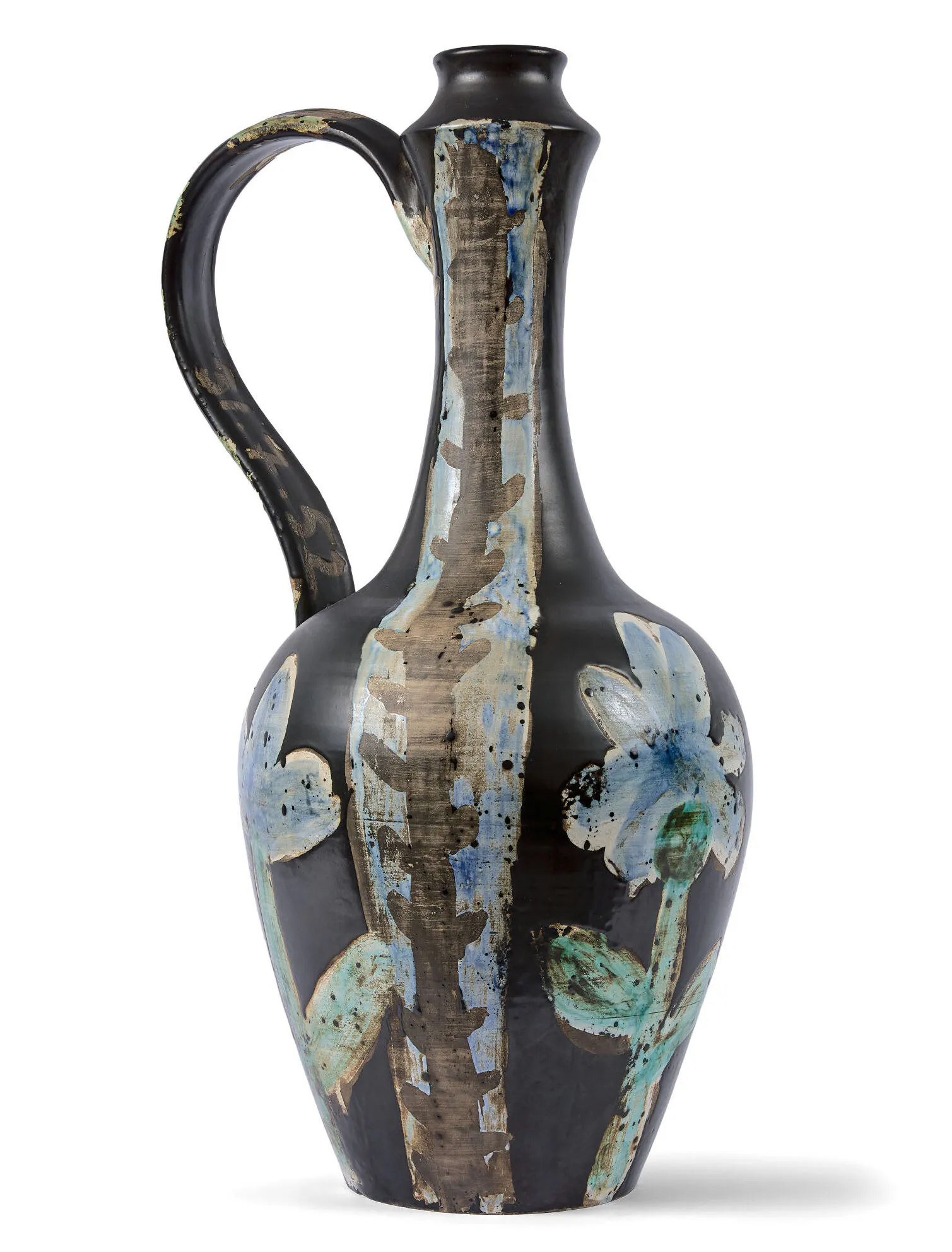
Pablo Picasso, an artist who needs no introduction and whose practice spanned several media over decades, left behind an immense oeuvre that includes painting, drawing, and ceramics. Alongside two unpublished drawings and a white clay pitcher, ARP will present a unique piece created by the artist at the Madoura workshop: a Provençal borage jar in earthenware, dated 1952.
Fascinated by ceramics after meeting artisans Suzanne and Georges Ramié in 1946, Picasso began experimenting with the medium in their Vallauris workshop. This process captivated him to the point that he produced over 4,000 pieces over the next two decades, reflecting his cubist style.
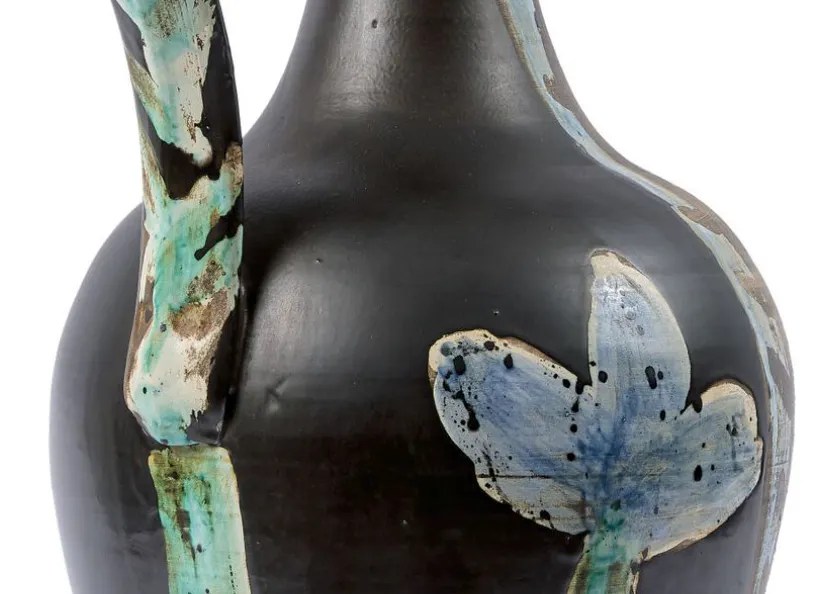
Some of Picasso’s Vallauris pieces are based on traditional pottery shapes, reimagined and modernized by Suzanne Ramié. This Provençal borage jar, typically a large oil pot without a handle, here features a grip that expands its spatial dimension and adds decorative elements.
In total, there are only 13 borage jars in Picasso's body of work, each a unique piece with different decorations, some of which are now housed in museums. The borage jar presented for sale, a faience piece with a stylized floral design, is of particular importance due to its provenance, as it was given directly to Jean Ramié and has remained with his family. The piece has never been part of an edition and measures 61 cm—a size surpassed by only about ten ceramics in Picasso's body of work.
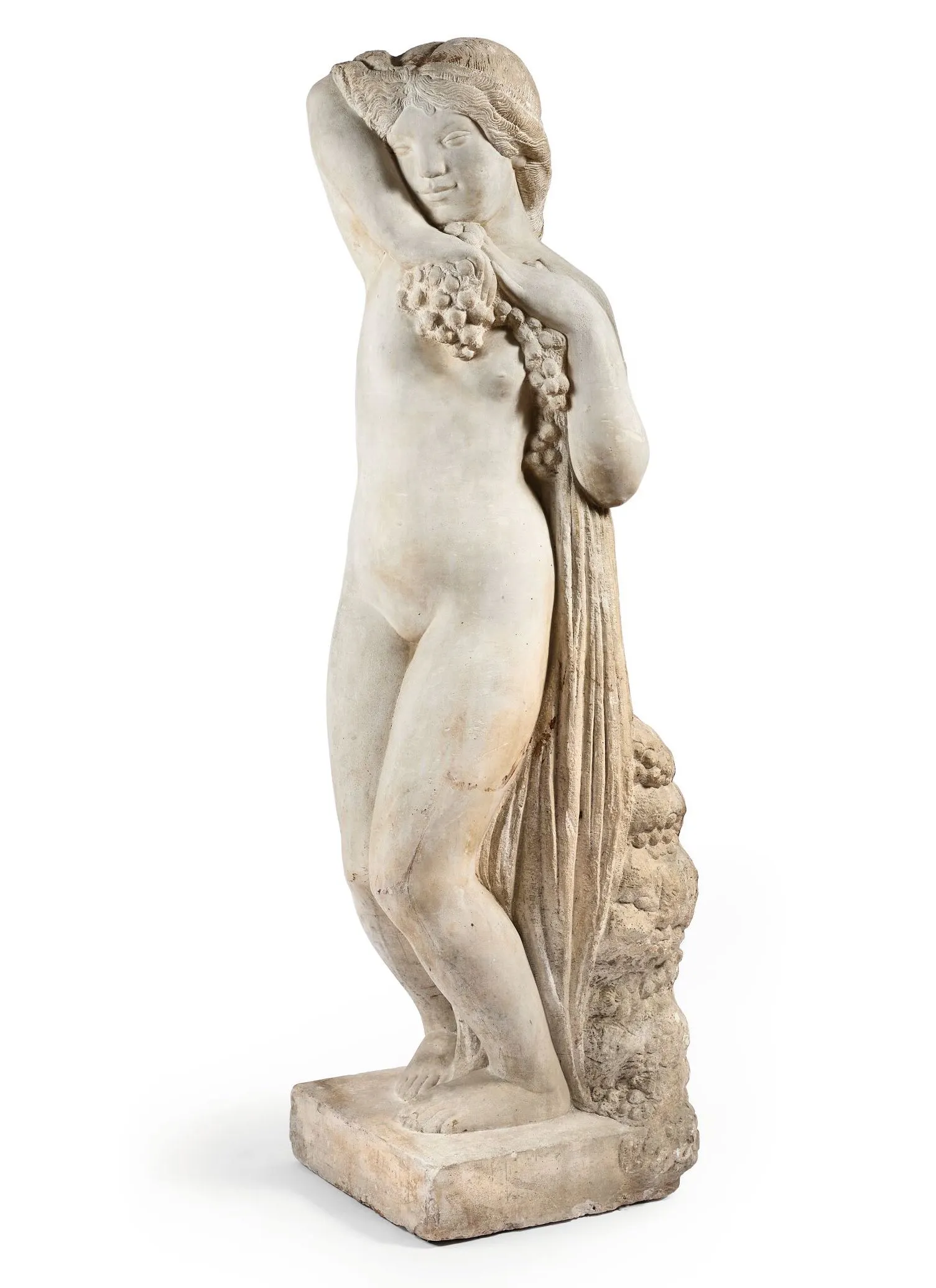
From the collection of a Parisian enthusiast, this Large Bacchante may be familiar to some collectors, as its stone version from Lens, housed at the Musée d’Orsay, is considered a major work by Joseph Bernard. Presented at the 1919 Salon d'Automne among Rodin's works, the sculpture was warmly received by both French and American audiences, laying the groundwork for Bernard’s success in the 1920s.
This studio plaster model is part of a limited series produced between 1914 and 1919. Notable for the preservation of its original material, the piece reveals the artist’s techniques in the form of seams and tool marks, which experts consider signs of Bernard's artistic journey that began in 1905.
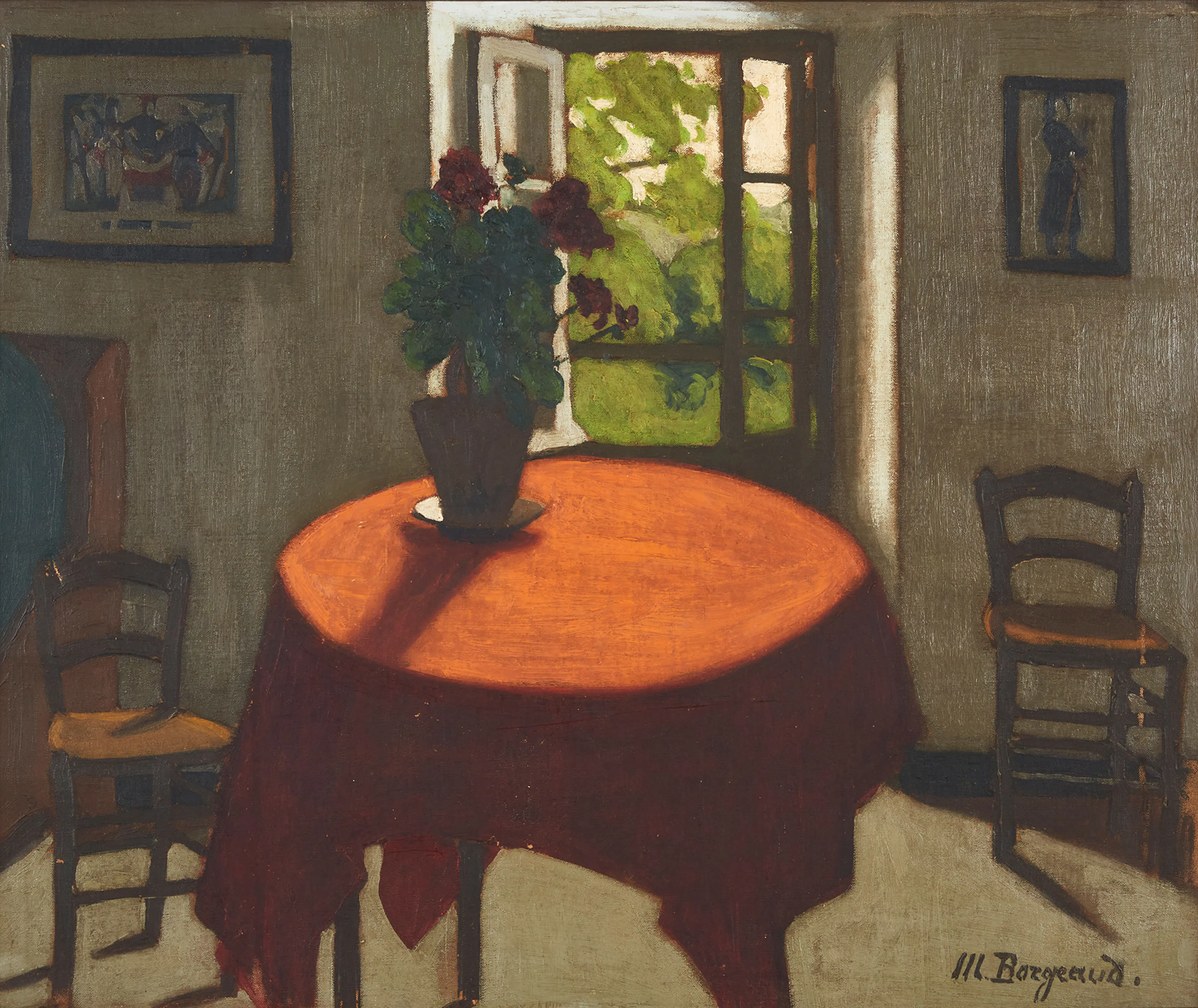
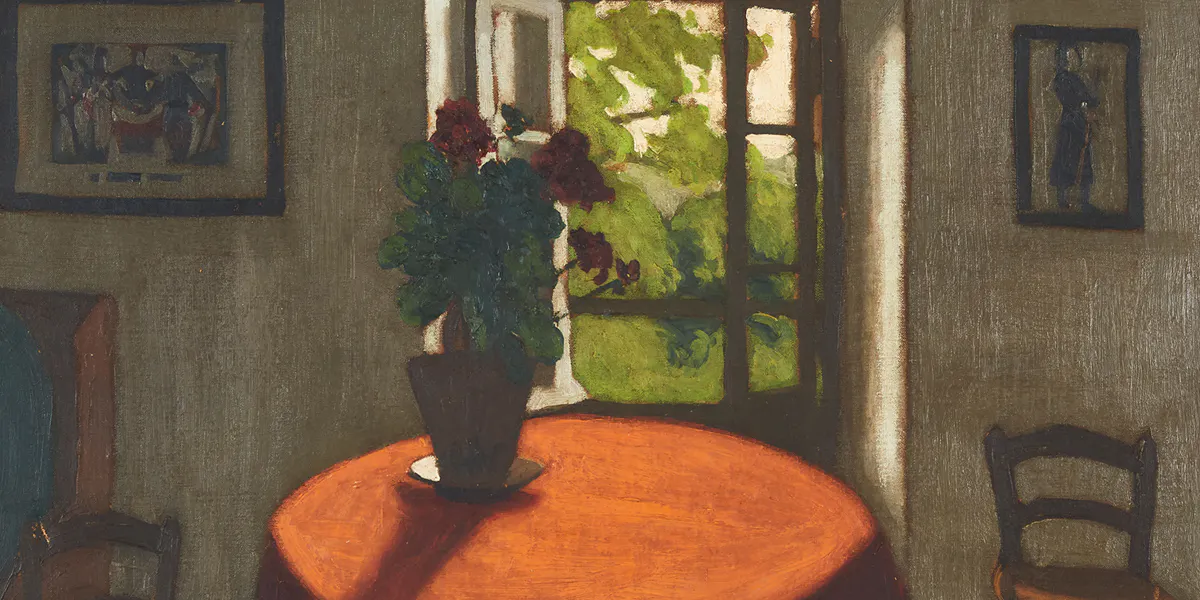
Later in life, Swiss painter Marius Borgeaud took up painting to recover from a turbulent life and poor health, joining the Swiss artistic community in Paris at the turn of the 20th century. His early work, influenced by Impressionism, focused on landscapes, though all works before 1904 have since been lost.
In 1908, his discovery of Brittany, a region long favored by Parisian artists for its landscapes and hospitality, marked a pivotal moment in his career. He first settled in Rochefort-en-Terre, where two of his most famous series emerged, before moving to Le Faouët, where he joined an established artist colony. Borgeaud's works from this three-year period in Le Faouët are often seen as the peak of his career. Interior with Bouquet and Open Window, the piece for auction, comes from this period. Dated 1921, it showcases a skillful play of light, with traditional images of the Great War by Eduardo Benito on the left and Joan of Arc on the right adorning the room’s walls.
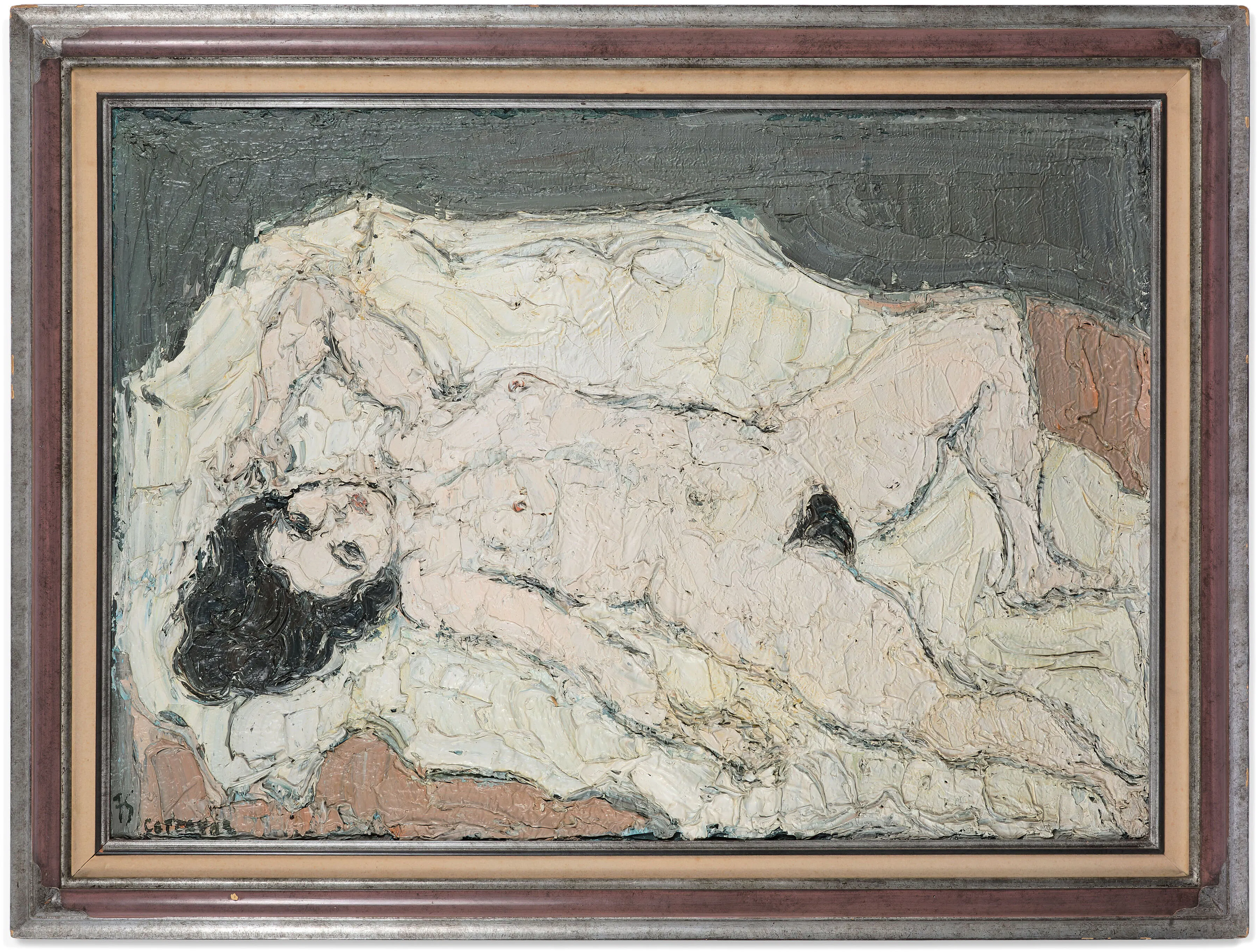
Collectors will also find a canvas by André Cottavoz, a French painter and lithographer known for his connection to the École de Paris and sanzism. Rejecting formal movements (all ending in “ism”), sanzism artists sought to express trends through light experimentation. Cottavoz, however, focused on texture, layering thick pastes in pastel tones to give his canvases a nearly sculptural feel. The work Nu féminin allongé au drapé blanc, dated 1975, exemplifies this texture.
The sale will also feature a black pencil drawing, Portrait de jeune femme au repos, by another major figure of modern art, Léonard Foujita.
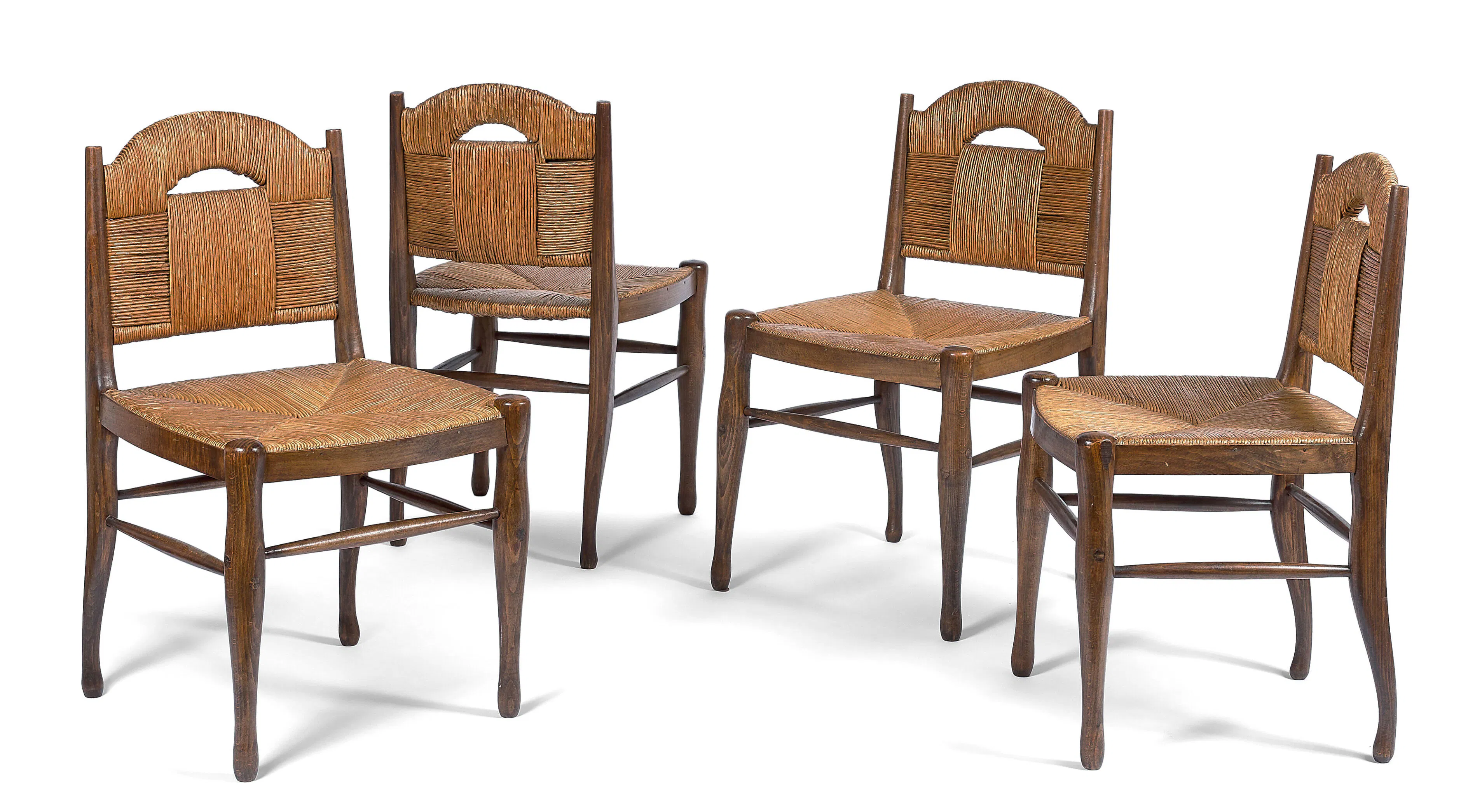
The Decorative Arts section will present Rendez-vous des pêcheurs de truite, a set of four chairs by the celebrated decorative artist Émile-Jacques Ruhlmann. Known as the "Riesener of Art Deco," Ruhlmann epitomized French luxury with furniture that appealed to wealthy clients who valued finely crafted pieces made from rare woods. His creations are admired for their pure forms, rhythm, and exquisite materials, as seen in these chairs featuring stained beech wood, zoomorphic rear legs, and straw seats, designed in 1932.
The sale’s design section includes works by Mathieu Matégot, Charles and Ray Eames, Gino Sarfatti, Isamu Noguchi, Ettore Sottsass, and Gaetano Pesce.
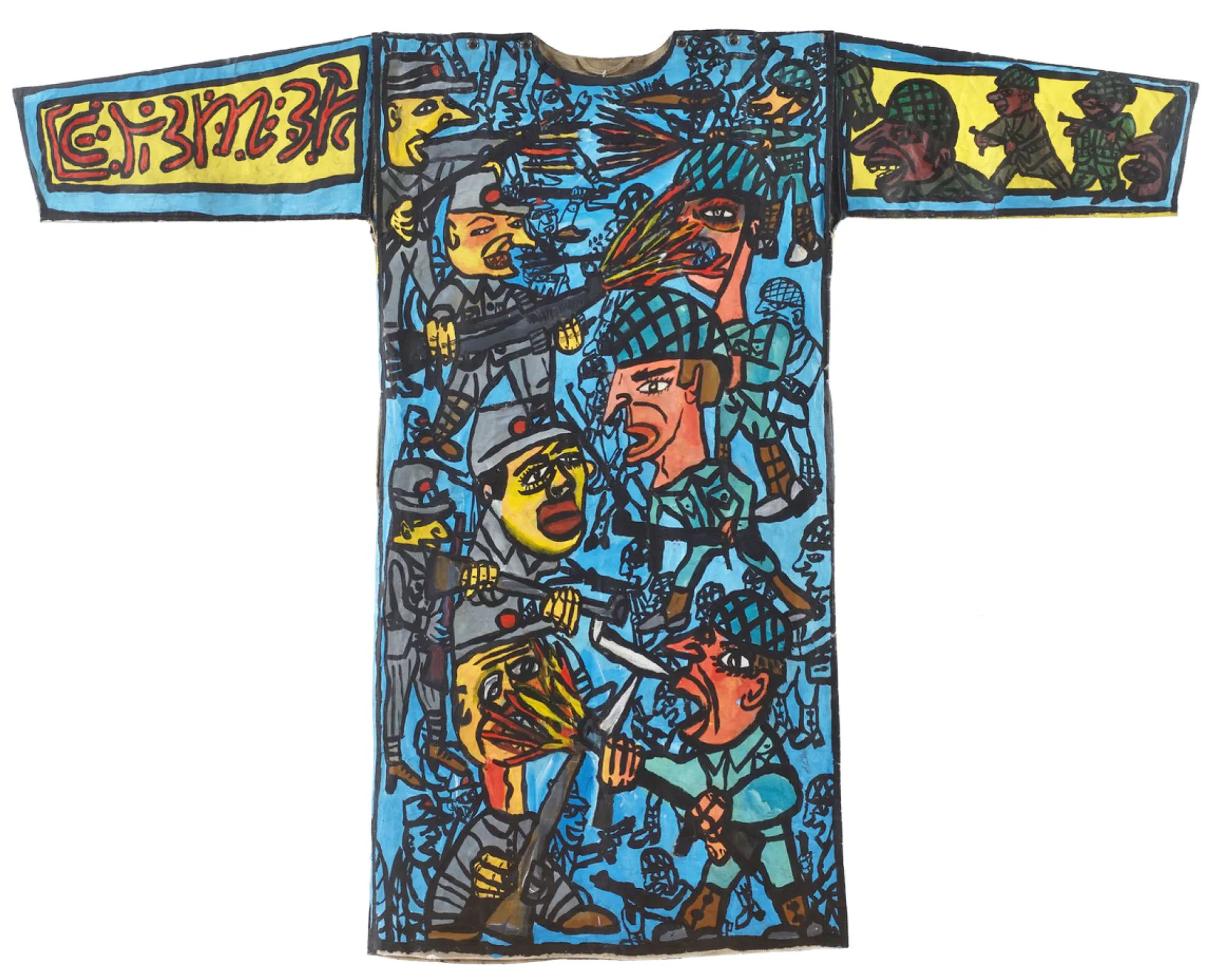
We conclude this overview with a work that merges two creative worlds: a dress painted by Robert Combas for Jean-Charles Castelbajac, presented during the Spring/Summer 1982 show. The collaboration between these two creators—Castelbajac, an eccentric designer with an avant-garde style, and Combas, a pioneer of Figuration Libre known for his vibrant palette—resulted in a living artwork that transcends fashion to become a unique piece. The dress, crafted from white linen, features La Bataille on the front and Le Piment de la Femme Orientale on the back, embodying a surrender of the garment to Combas's talent, expressed with total freedom.
The sale will take place on November 20 at 3:00 PM, at 174 rue du Faubourg Saint-Honoré, Paris.

![Vogue 1976, The New York living room of designer Diane Von Furstenberg, with portraits by Andy Warhol [detail]. Photo: Horst P. Horst/Condé Nast via Getty Images](https://images.prismic.io/barnebys/638fd1d1-588c-49d9-81ff-1de6e9f53c4a_Cover+new.jpg?auto=compress,format)