![Suzanne Valadon, La Joie de Vivre, oil on canvas, 1911, 122.9 x 205.7 cm, Metropolitan Museum of Art [detail]. Public domain image](https://images.prismic.io/barnebys/87ffe227-be8f-43af-ae12-fb7d75d4c91c_sv6.jpg?auto=compress,format)
Beautiful, cheeky, with a stray soul like the cats she loved so much and with hair “the color of cognac”, Suzanne Valadon (1865-1938) was herself a phenomenal work of art. Born with the name of Marie-Clémentine Valadon in Bessines-sur-Gartempe, Haute-Vienne, France, she grew up in poverty and soon moved to the Parisian district of Montmartre with her mother, who was unmarried and had to accept all kinds of jobs in order to support herself and her daughter.
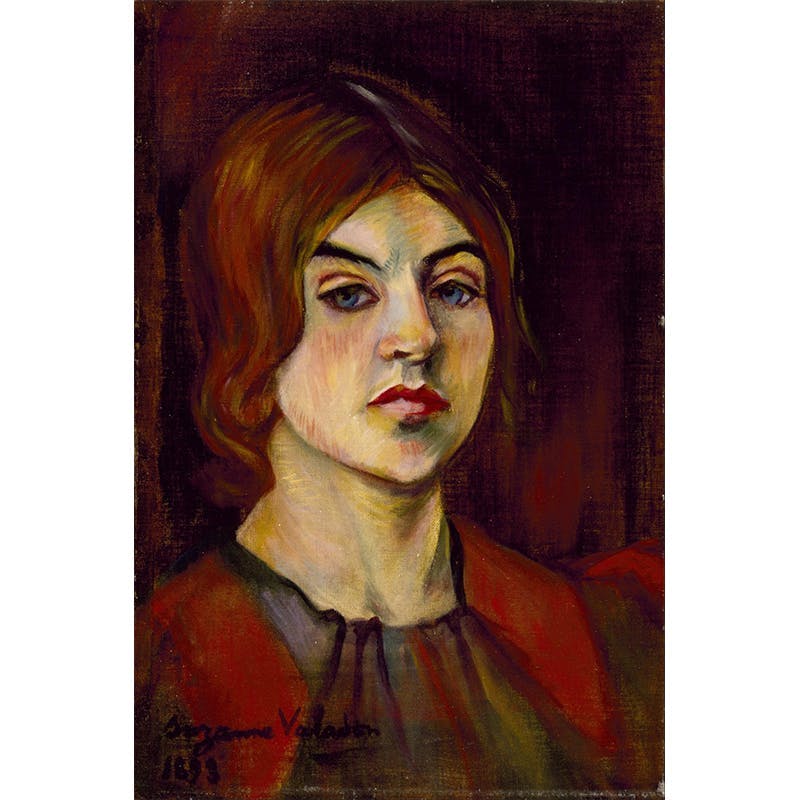
Valadon herself did a variety of jobs from a very young age, working as a seamstress, florist, pastry chef, and circus acrobat. Due to a fall from a trapeze during a circus performance, she had to abandon that role, but in the meantime she had already begun to try her hand at drawing, portraying in particular animals, such as dogs, horses and cats (which she especially adored).
Related: Fire, Passion, Inspiration: Red Hair in Art
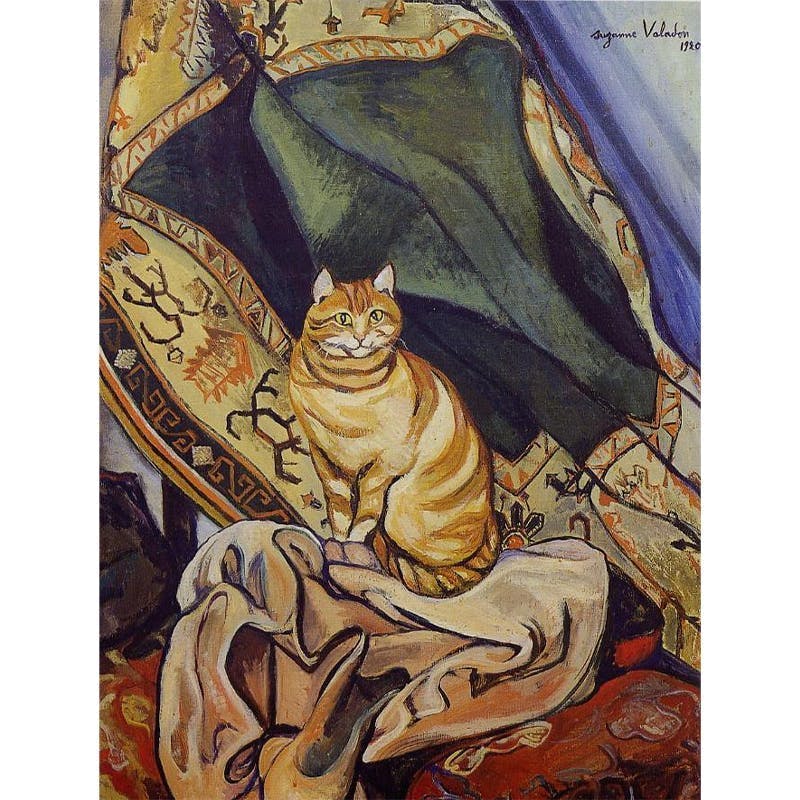
Equipped with porcelain skin and a magnetic beauty, she soon attracted the attention of several artists of whom she became a model and, in some cases, even a lover. She was the model of Pierre-Auguste Renoir (she was the dancing woman in his famous painting Dance at Bougival) and Henri de Toulouse-Lautrec. The latter jokingly renamed her Suzanne, referring to the biblical Susanna in the painting Susanna and the Elders, a nickname chosen because she often posed for painters much older than her. Being in close contact with great artists, Valadon was able to soak in different painting techniques.
Related: Cats in Art: 10 Decidedly Feline Works
She was considered a rebellious, ambitious and self-confident woman who often eschewed convention. In 1883, at the age of 18, she became pregnant and gave birth to a boy named Maurice Utrillo, who would become a well-known artist specializing in urban landscapes. In 1893 she began a relationship with the eccentric musician Erik Satie. The following year, 1894, was very important to her, as she became the first woman to be admitted to the Société Nationale des Beaux-Arts. The first to recognize Valadon's artistic talent was Edgar Degas who also became a great friend of hers.
Her marriage in 1896 to a stockbroker ended thirteen years later, in 1909, when, at the age of 44, the rebellious artist decided to leave her husband for a painter who was only 23, André Utter. Their union lasted almost 30 years and was also immortalized in a well-known work by Valadon entitled Adam and Eve, in which the two biblical characters are represented by her and her beloved André.
Related: Elizabeth Siddal: The Tragedy of the World's First Supermodel
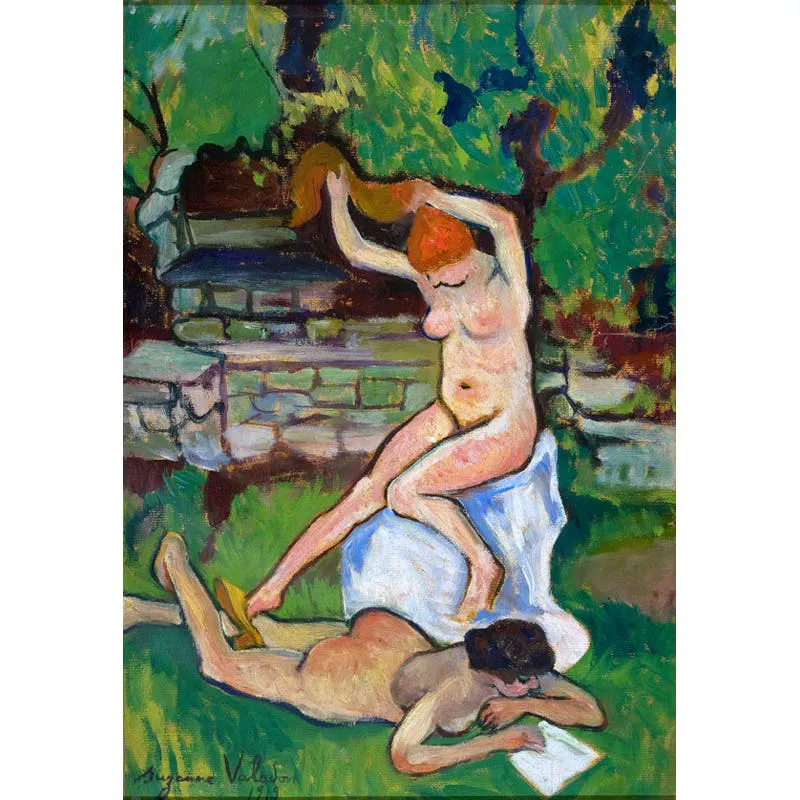
After an intense life, full of passion for art and love, Suzanne Valadon died on April 7, 1938 at the age of 72, leaving behind a series of paintings that speak of her strong personality in every stroke. However, the self-taught artist never confined her artistic expression within a specific tradition or movement.
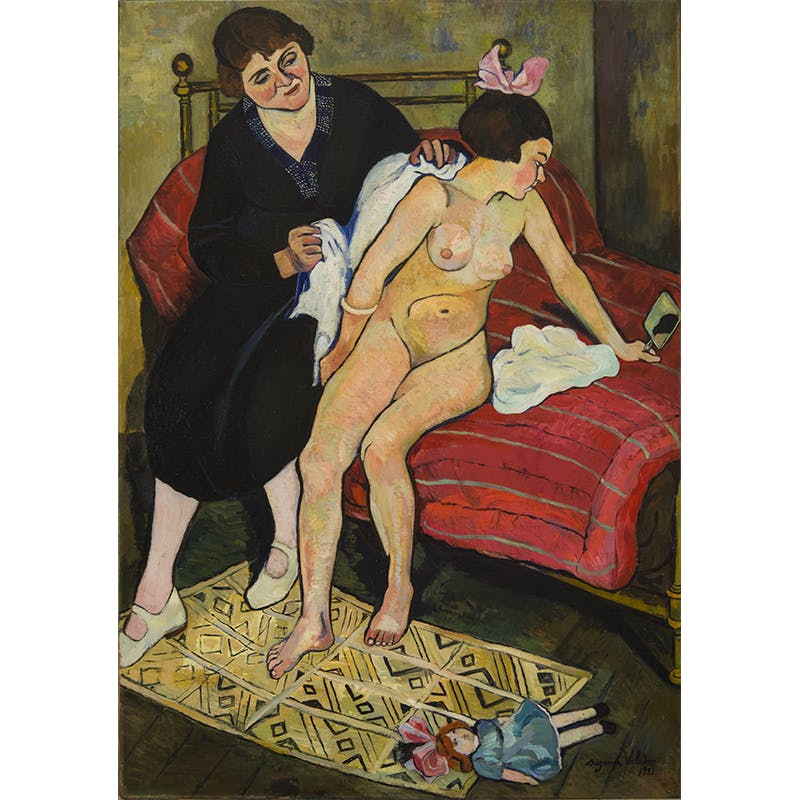
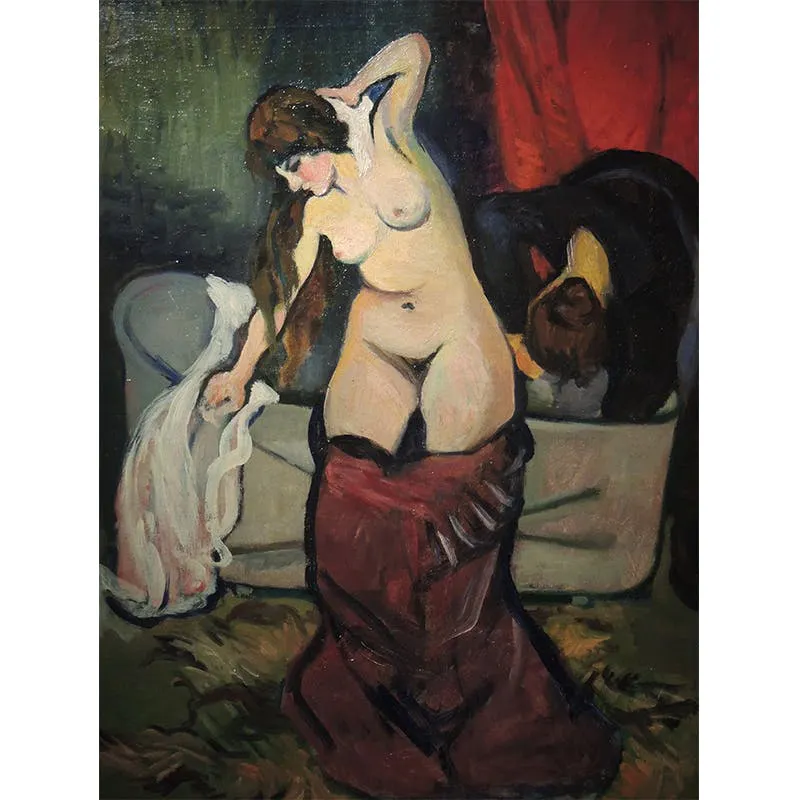
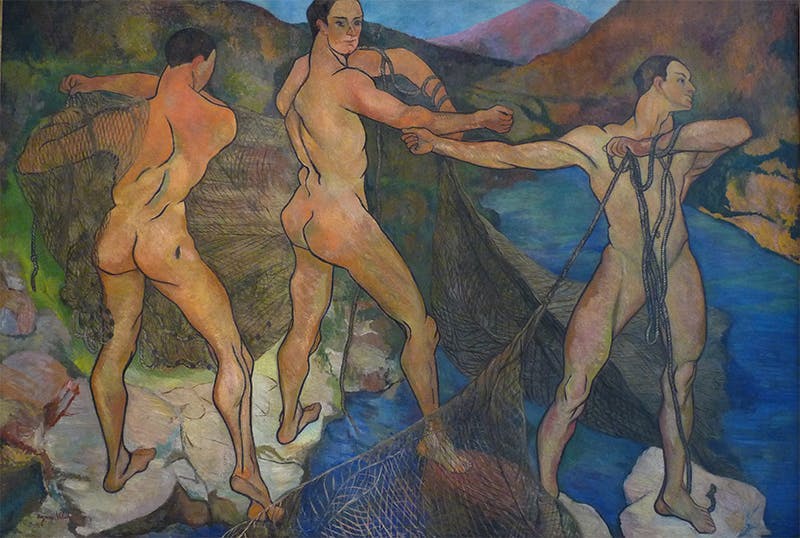
In addition to being self-taught, Valadon was a perfectionist: she would work for several years on a painting before deciding to exhibit it. Her paintings reveal influences such as Paul Gauguin's primitivism, themes used in works by Henri Toulouse-Lautrec and Edgar Degas and, later, motifs from Fauvism and Cubism. Her paintings are endowed with vibrant colors and a remarkable compositional strength. She was considered scandalous as a female painter who also portrayed the naked female body, as well as many nude self-portraits, the last of which shamelessly displayed her own aged body.
Her resistance to academic and avant-garde conventions and her depiction of the female nude have sparked interest in her work from numerous feminist artists and historians, who believe she rebelled against the dominant representations of female sexuality in western art of the early 20th century.