
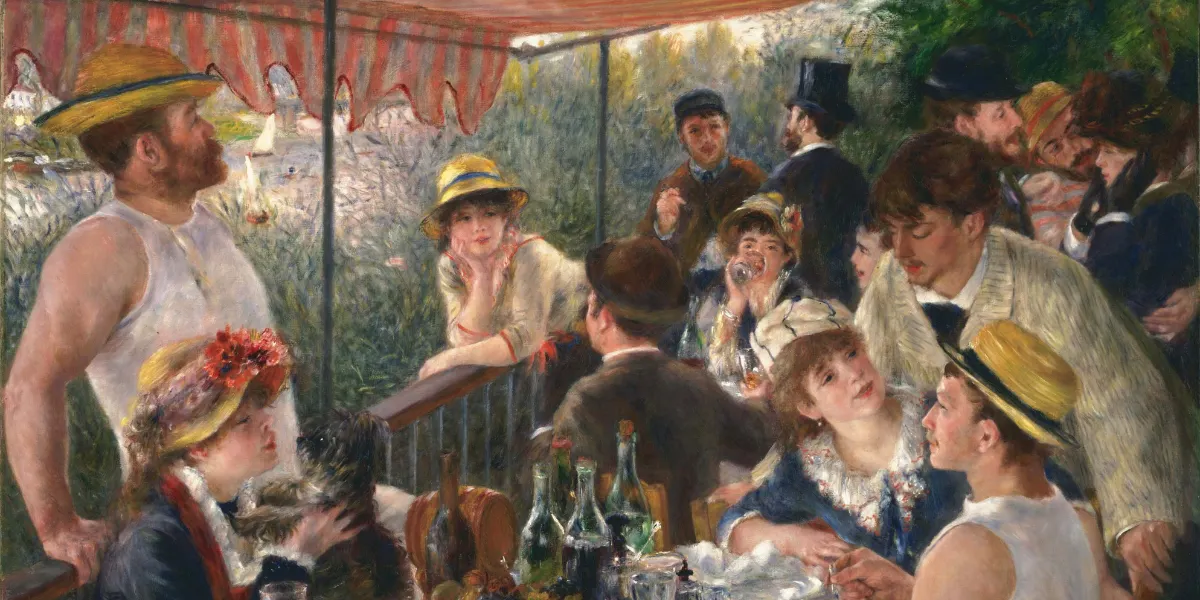
Pierre-Auguste Renoir was born on February 25, 1841 in Limoges, France. His parents worked as tailors, and when Renoir was three years old the entire family moved to Paris, where they lived near the Louvre.
Like many children of the poor, working class, Renoir had to contribute to the family income. He started an apprenticeship as a porcelain painter at the age of 13, and turned out to be so talented that he was soon entrusted with more demanding tasks. His time in the porcelain factory influenced Renoir's later work, with luminous enamel appearing in many still lifes and tabletop scenes.
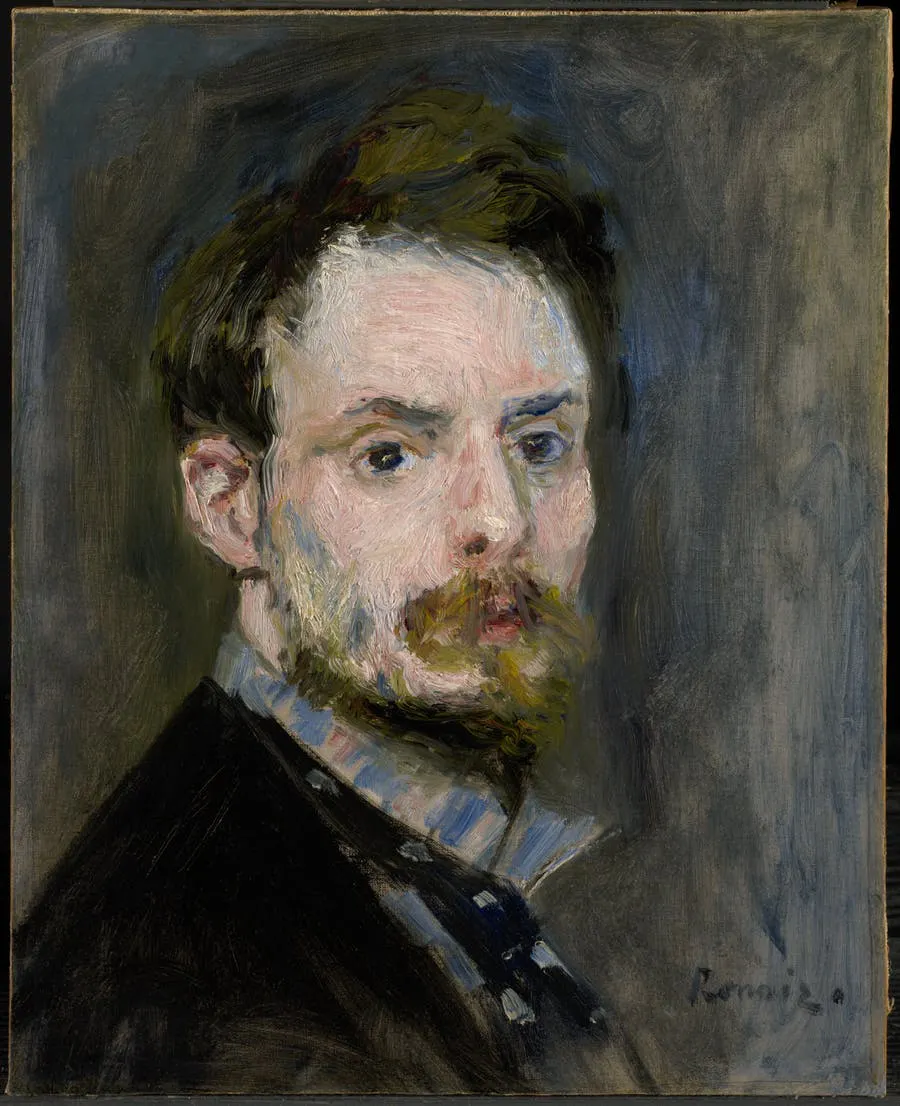
After the factory was shut down, Renoir made ends meet by painting fans and awnings. At the age of 20 he finally began studying with the painter Charles Gleyre and taking classes at the École des Beaux Arts. His classmates included Alfred Sisley, Claude Monet and Frédéric Bazille, with whom he would remain friends for life. The talented quartet frequently worked together, shared a studio and copied the masters in the Louvre. However, the four soon found more contemporary role models with the plein air artists who flocked around Gustave Courbet, and more and more they began setting their easels up outdoors.
Related: The Art of Plein Air Painting
After completing his training, Renoir's work was included in the annual exhibition of the Paris Salon. Although he was being included in shows, he was not making a very good living and often could barely afford food. Without a steady income he was unable to settle down and start a family, but his frequent model Lise Tréhot remained his lover for six years. This was when Renoir finally turned to Impressionism, which he developed together with Monet. In the early 1870s, Édouard Manet joined the circle of Renoir, Monet and Sisley, and the group would often set up their easels side by side and practice painting the same motifs.
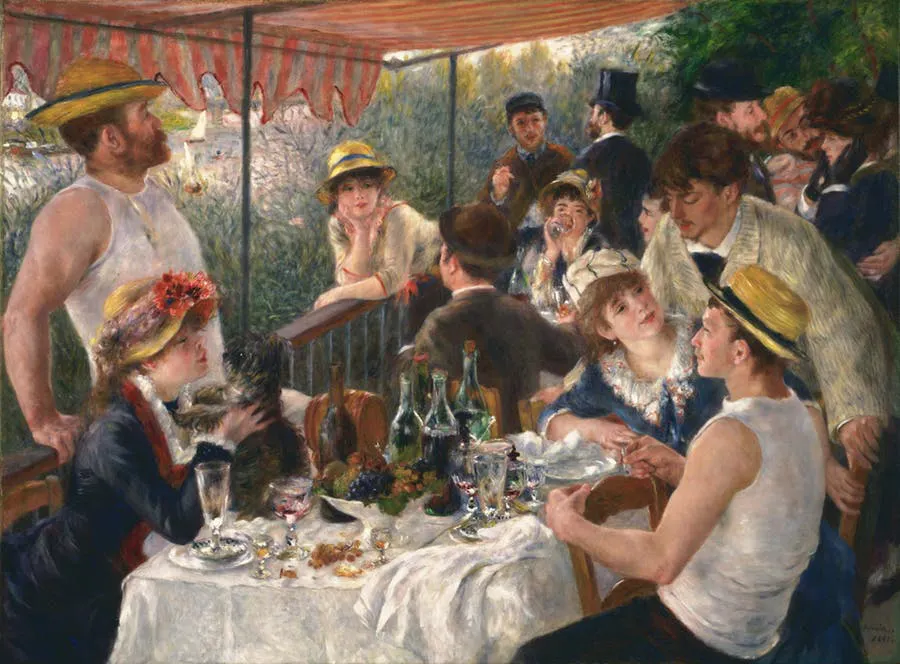
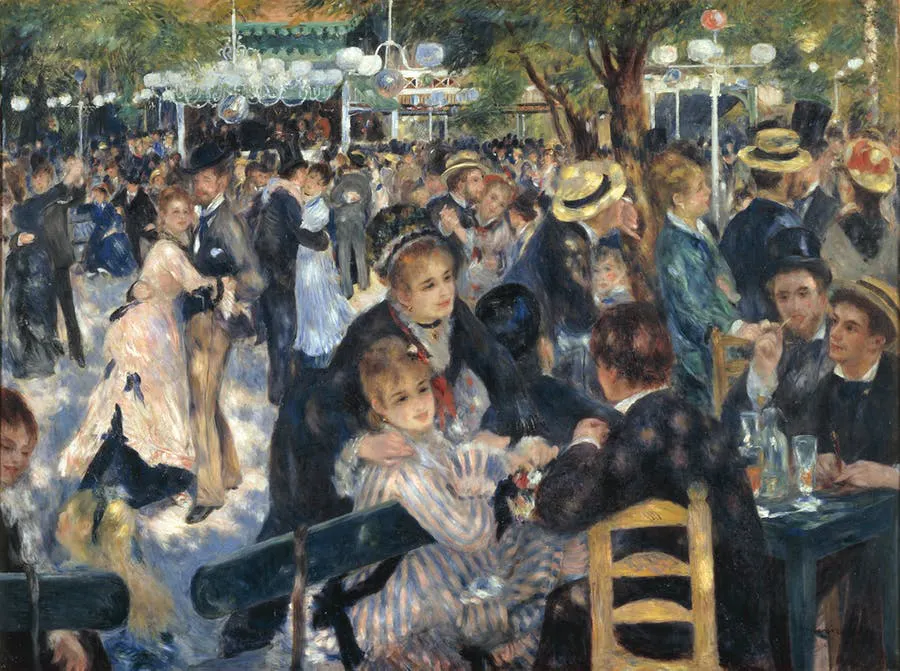
Renoir now entered an extraordinarily productive period during which he created many of his most famous paintings. He found inspiration in the entertainment venues on Montmartre, such as the Moulin de la Galette, as well as the outskirts of Paris on the banks of the Seine, like the Maison Fournaise excursion venue, where Luncheon of the Boating Party was created. These sunlit works radiate a light joie de vivre, populated with friends and acquaintances of the painter, who, like him, belonged to the creative milieu of the French capital.
Related: 8 Artists Inspired by the South of the France
Although some critics have dismissed him as frivolous, Renoir's aim was to only put things on the canvas that he found beautiful. His cheerful scenes were mainly created in spring and summer, as he was deeply reluctant to depict the dark seasons.
Related: Berthe Morisot Emerges From the Shadows
Dancing couples are a repeated theme in his oeuvre, as are the elegant ladies of Parisian society. He depicted them engaging in a variety of activities, like attending the theater as seen in The First Exit. Renoir participated in the Impressionist exhibitions, but continually strove to get his work accepted into the Salon. After he finally received several large orders in the mid-1870s, his financial situation improved considerably. As a result, however, he received so many orders for portraits that he struggled to keep up with demand.

Related: Spring in Art: 10 Works of the Season
Ultimately, this increased income gave Renoir the freedom to be choosy about his commissions, and in 1881 he traveled to Italy and Algeria. His stay in Italy had a lasting impact on his art, as he engaged deeply with the Old Masters and began to turn away from Impressionism. Raphael in particular inspired him, and around this period Renior’s pictures became more classical and sharply defined.
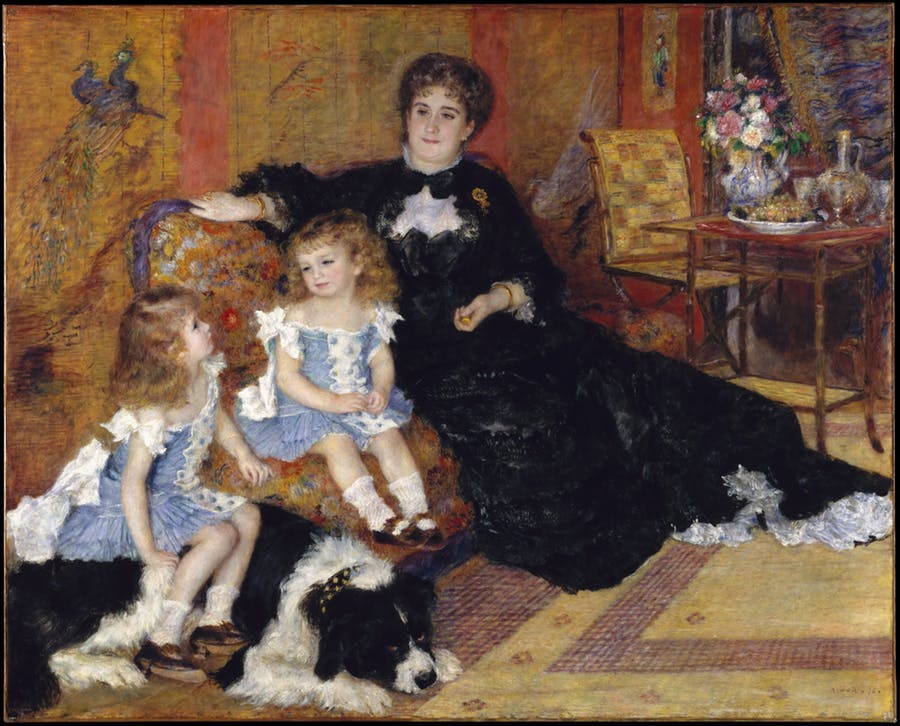
Renoir’s private life took a turn around this time too – in 1885 he had a son, Pierre, with his lover Aline Charigot. The couple married in 1890, and later had two more sons, Jean and Claude.
Related: 8 Patrons of the Parisian Avant-garde
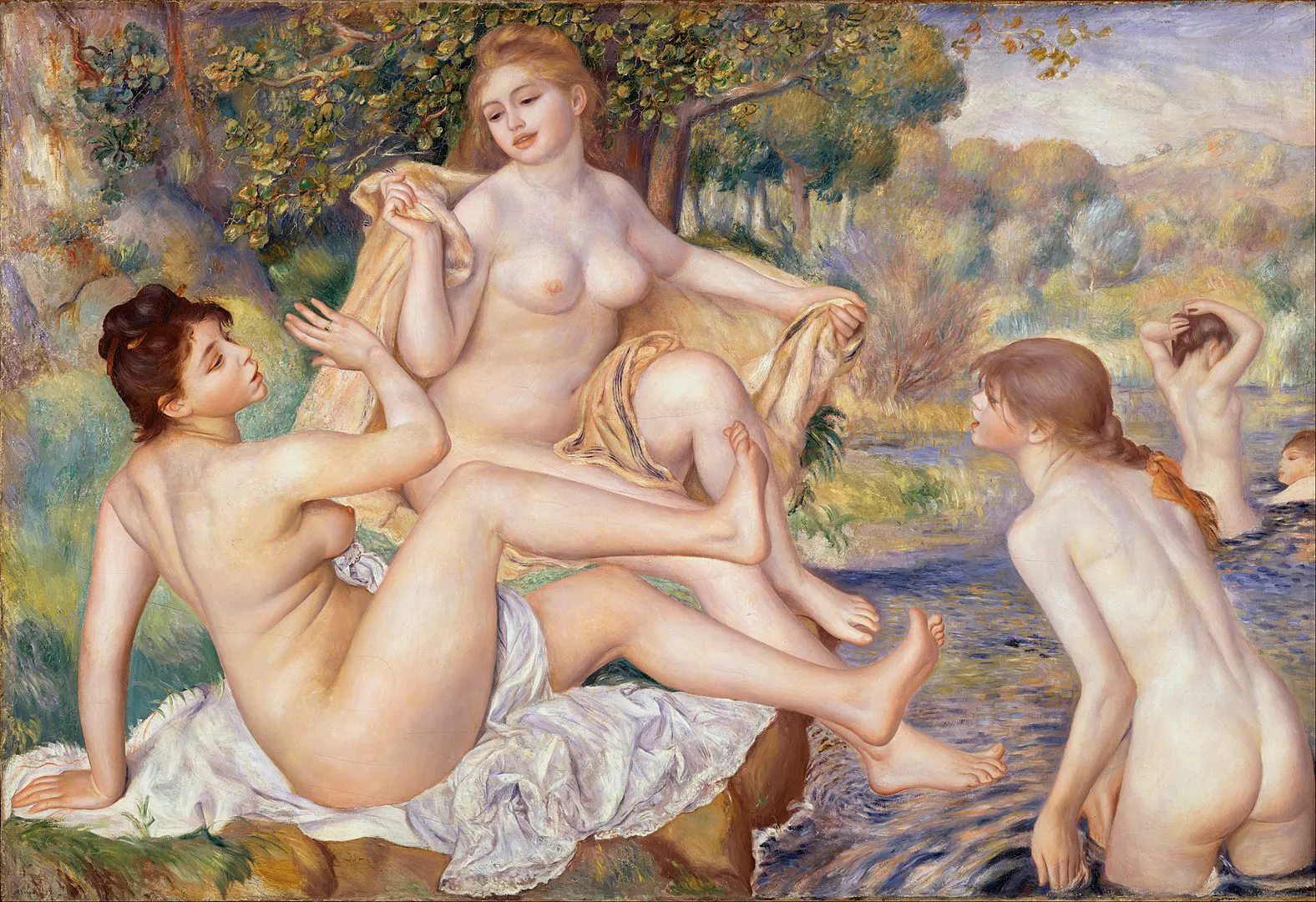
As Renoir settled into family life, artistically he turned back to a softer style. This was particularly evident in his depictions of bathing young women, his version of the classical nude. However, arthritis in his hands made his work increasingly difficult. As the Mediterranean climate in the south of France helped to ease the pain, he moved to Cagnes-sur-Mer in 1907.
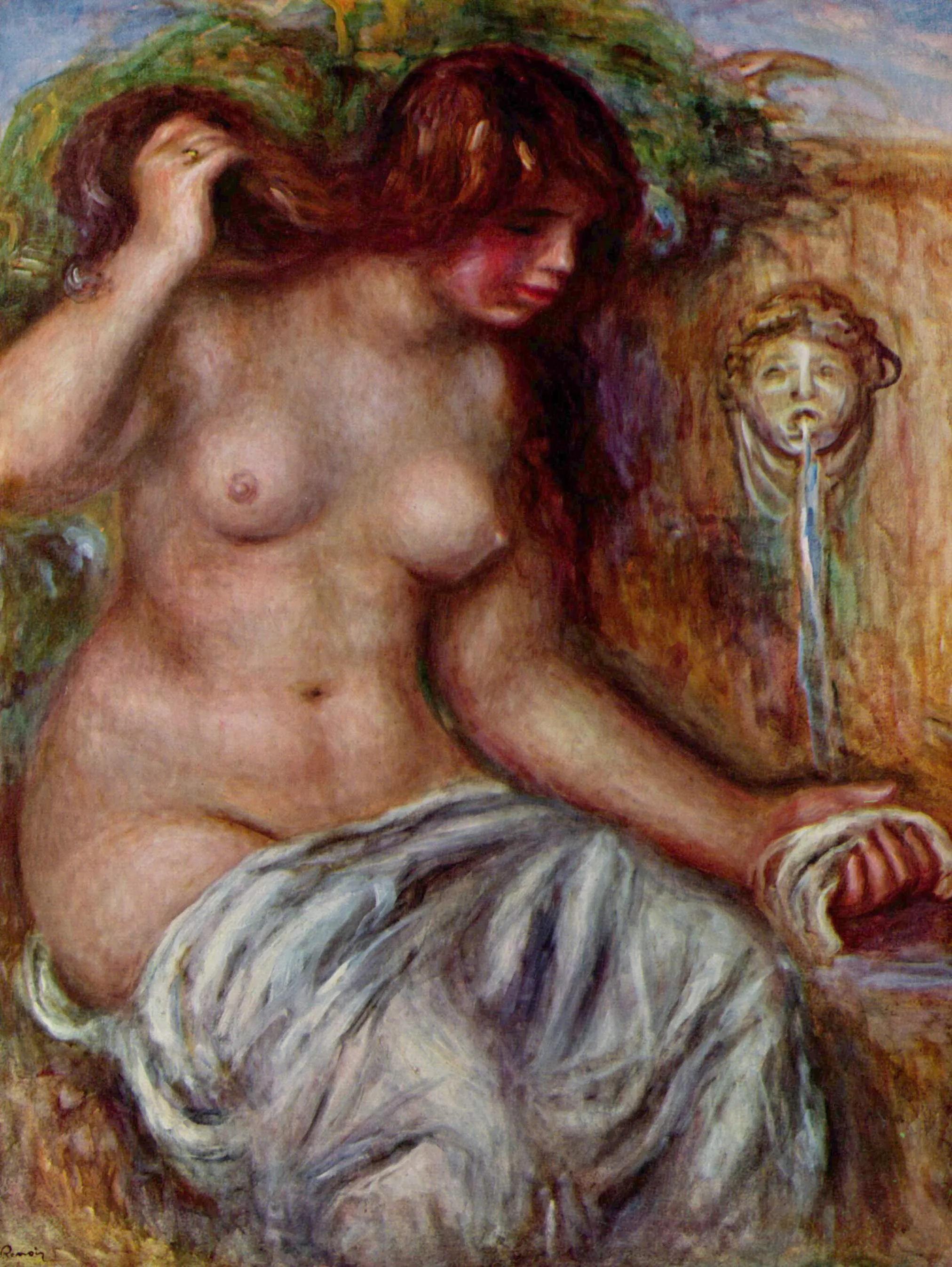
Renoir’s last great muse was his wife’s cousin Gabrielle Renard, who had already become part of the household in Paris and worked for the family as a nanny. In Cagnes-sur-Mer she sat as model and helped him paint, even tying brushes to his hand when he was unable to grasp them. While Renoir's health continued to deteriorate in the last stages of his life, his work received greater and more widespread recognition. In 1899 he became a knight of the Legion of Honor, in 1900 he was represented at the Paris World Exhibition and in 1910 a large retrospective was dedicated to him at the 9th Venice Biennale.

Pierre-Auguste Renoir died on December 3, 1919 in Cagnes-sur-Mer. He passed on his artistic talent to his sons – Pierre became an actor, Jean a filmmaker, and Claude a ceramicist. Today, Renior’s paintings are exhibited in the most important museums in the world and fetch prices in the multi-millions, proving that audiences world-wide are still charmed by his carefree canvases. Renoir's current auction record was set in May 1990 at Sotheby's New York when a small version of his Bal du moulin de la Galette sold for $78.1 million.
Discover more artist biographies on Barnebys
This is an updated version of the article originally published on March 1, 2020


