

In May 2019, a wisteria painting by Claude Monet, which arrived at The Hague's Gemeentemuseum in 1961, was taken off the wall for the first time since its acquisition, in order to be prepared for an upcoming autumn exhibition.
The restorers immediately noticed irregularities on the surface of the painting: tiny holes screening the canvas had been carefully covered by small touches of paint. As Doede Hardeman (chief curator of the museum) told Artnet News, these holes were caused by shards of glass, some of which are still inlaid in the painting.
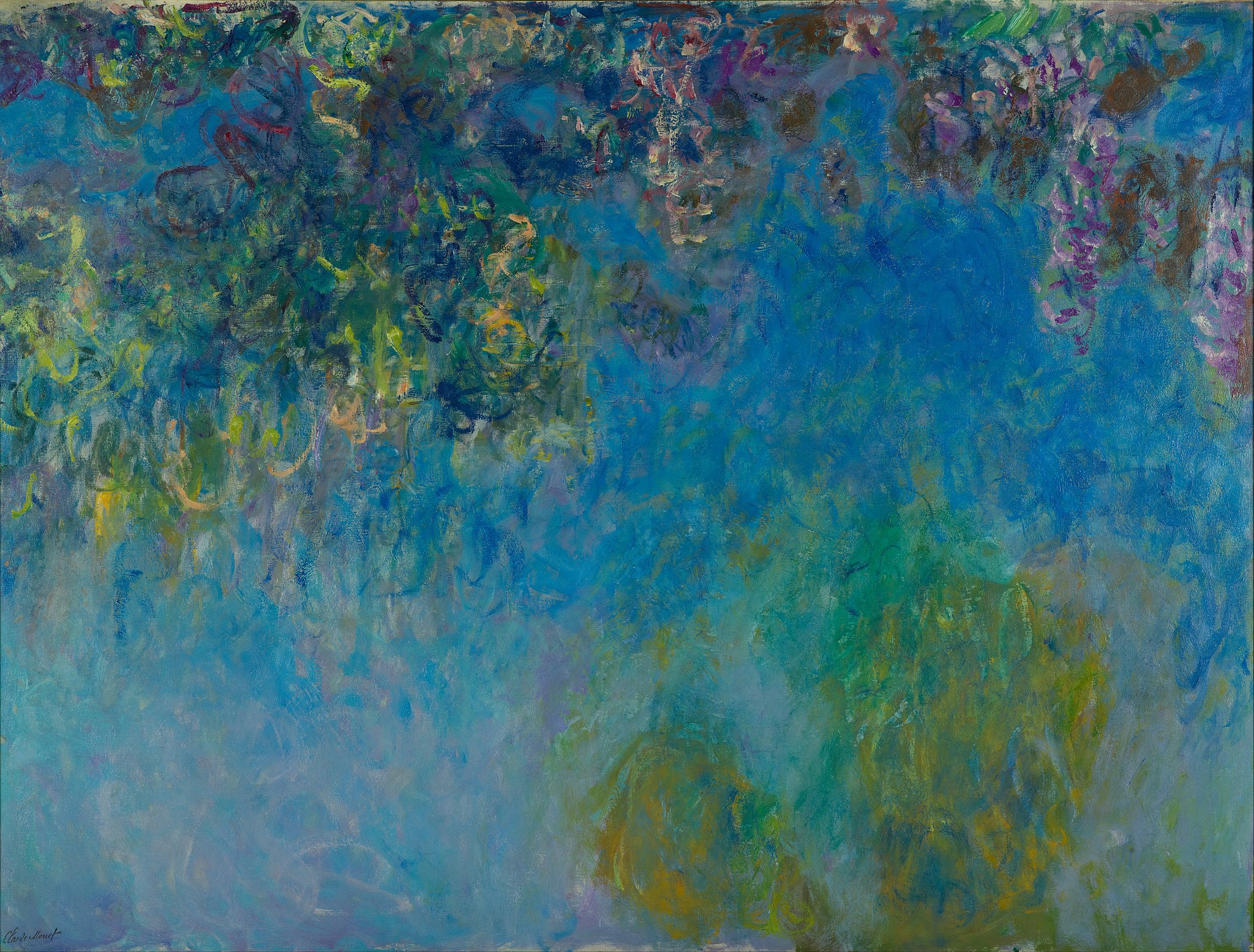
Following this discovery, curator Ruth Hoppe conducted a more in-depth investigation into the condition of the work. Against all expectations, radiographic examinations revealed the presence of water lilies concealed under the thick flowerings of wisteria.
Related: Travel the World Through Art
In 1918, Monet announced to the French government that he would sell several of his paintings for the creation of a major installation, which he himself called 'Great Decorations'. This installation was to include continuous panels, consisting of a series of water lily paintings and a second series of paintings, showing garlands of flowers and wisteria. The concept was intended to create, as he described it, 'the illusion of an endless whole'.
The most logical reason for me was that he wanted to try something new and he still did not know where it would end.
Although he wanted to see his ultimate masterpiece in a large museum in Paris, the state decided to exhibit it at the Musée de l'Orangerie, a space that was versatile and hosted all kinds of cultural events.
Related: Art Collectors: The Next Generation
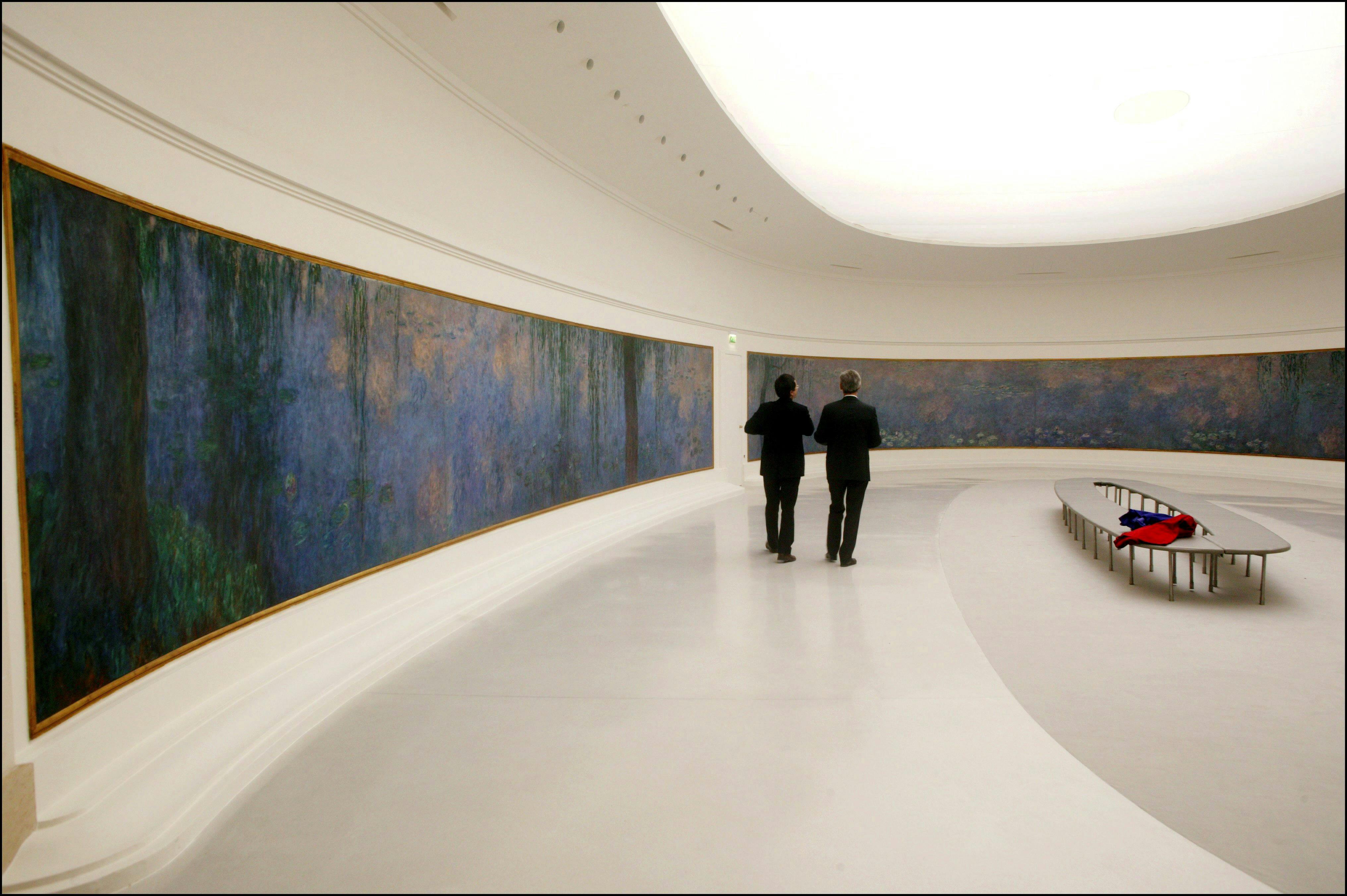
The wisteria paintings were left on the sidelines in his studio with dozens of other works for the 'Great Decorations' To date, only eight paintings of wisteria, including that of the Gemeentemuseum, are known.
Related: The 12 Most Expensive Paintings Ever Auctioned
The recent discovery confirms the theory that the artist's studio survived World War II. The shards of glass found in the work support the idea that several works of Monet, including the triptych preserved at MoMA in New York, were damaged when the glass roof of his studio exploded during the bombings.
"It's a bit like writing a new, brief chapter in art history," Hardeman said. Although the presence of water lilies cannot be explained with certainty, the museum believes that an 'incredible' historical value has been added to the work. The act of the artist remains mysterious: Monet, very fortunate at the end of his life, had neither the habit nor the need to reuse his own paintings.

According to museum experts, the painting could be the first in a series, serving as a link between the subject of water lilies and wisteria. "The most logical reason for me was that he wanted to try something new and he still did not know where it would end. To me, it's a bridge between water lilies and wisteria," Hoppe told The New York Times.
The head curator of the Marmottan Monet Museum in Paris, Marianne Mathieu, added that it was "difficult to know the exact sequence of events that led Monet to reuse his canvas" because no one, except for some of the artist's friends, saw his works.