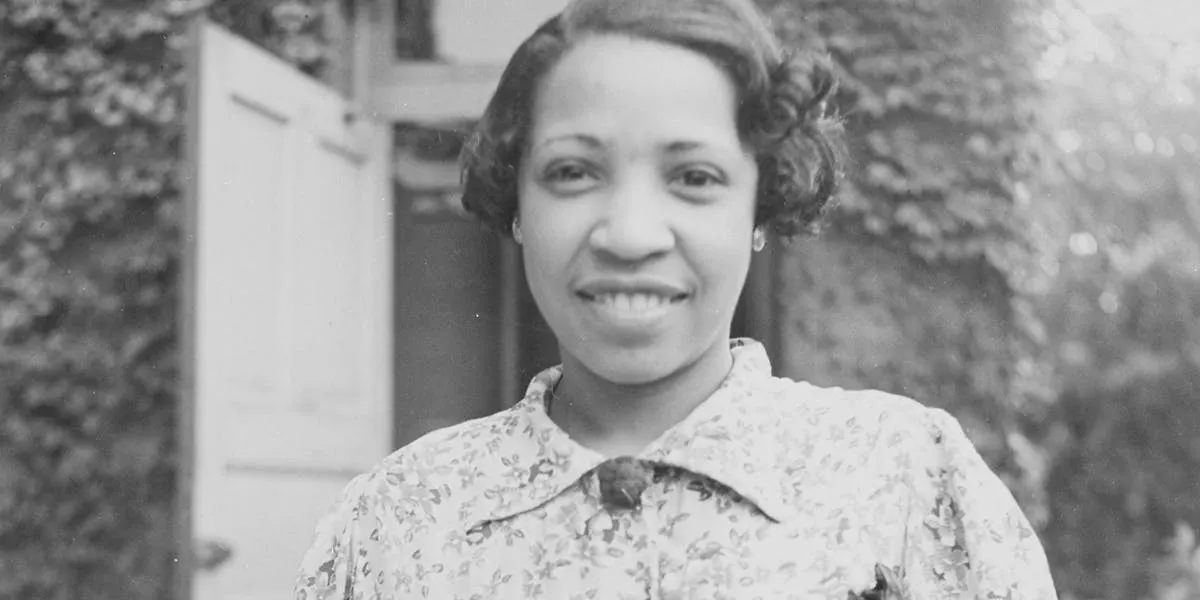
Passionate about mixing cultures in art, Lois Mailou Jones was one of the first painters to combine traditional African artistic forms with Western traditions. She painted alongside Emile Bernard, exhibited in Parisian salons, taught in Haiti and represented the daily life of African Americans in New York, all the while establishing herself as one of the figures of the Harlem Renaissance. Today, the prices of her works soar at auction.
Jones was born on November 3, 1905 in Boston to Thomas Vreeland and Carolyn Jones. Her father, who was at first a building superintendent, became a lawyer after he was the first African American to graduate from Suffolk Law School. Encouraged by her parents, Jones started to draw and paint at a very young age, and developed a penchant for watercolor. It was when the family moved to Martha's Vineyard that they became acquainted with the people who significantly influenced her practice.
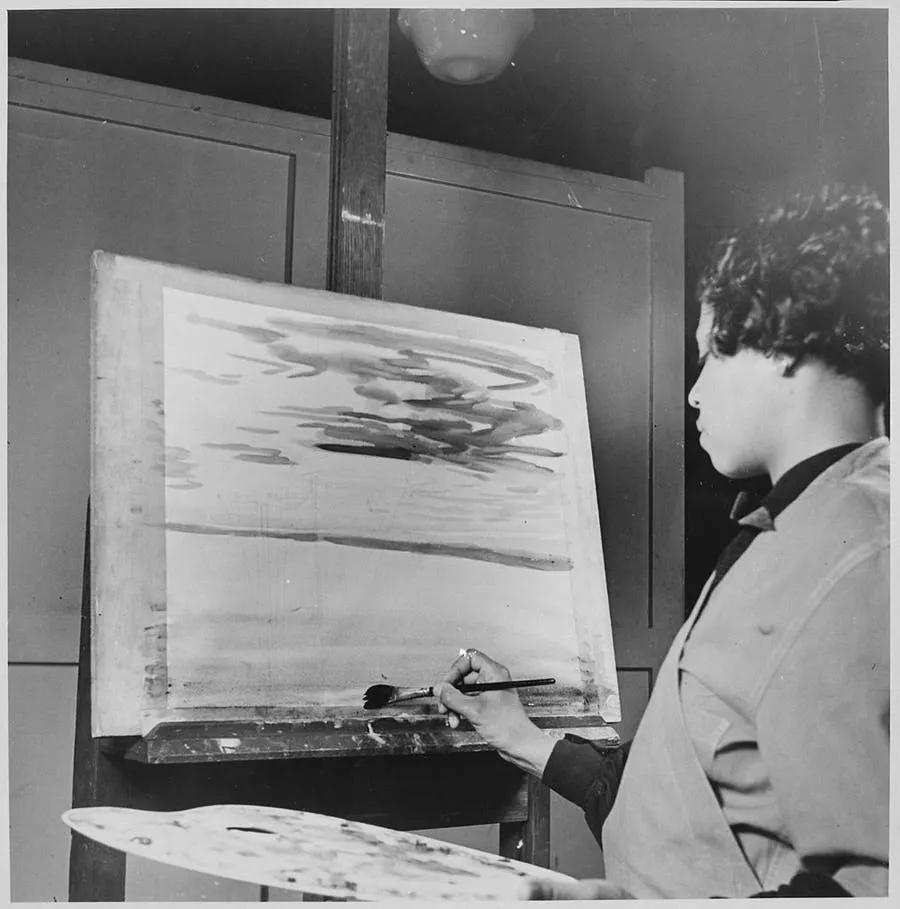
Surrounded by established artists, such as sculptor Meta Warrick Fuller, composer Harry T. Burleigh and novelist Dorothy West, Jones pursued her vocation and took evening classes at the Boston Museum of Fine Arts from 1919 to 1923. Particularly gifted, she obtained her first solo exhibition at the age of 18, at Martha's Vineyard, and worked in parallel as an intern in the textile design studio Grace Ripley. Her interest in African masks emerged during her experience with Ripley, and she later created costumes for the Denishawn dance school.
See also: Tamara de Lempicka and the Roaring Twenties
Passionate about study, she graduated from the School of the Museum of Fine Arts at Tufts University and from the Design Art School in 1928.
At the end of her studies, teaching came naturally to Jones. However, she was rejected by the Boston Museum, where she had distinguished herself as a student, when the director summoned her to go and look for work in the south where ‘people like her’ lived. In 1928, she was hired by Charlotte Hawkins Brown at the Palmer Memorial Institute in North Carolina, and there she created the arts department. She was just 23 years old.
In 1930, she joined the faculty of Howard University in Washington DC (a university nicknamed ‘Black Harvard’; a prestigious college that trained African Americans until the end of segregation laws), where she worked until her retirement in 1977. She developed her personal practice while taking on the role of mentor for her students there, defending art and artists of the black community.
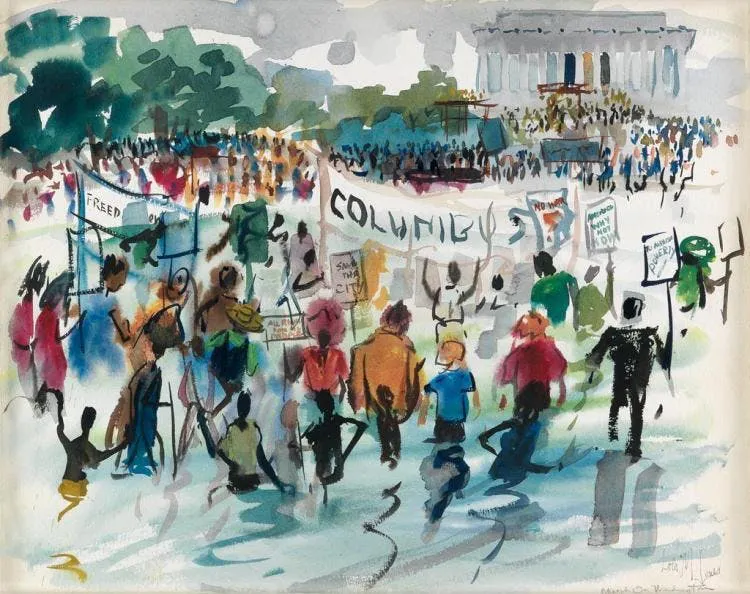
Her practice revolved around Harlem Renaissance artists, notably Aaron Douglas, who influenced Jone’s masterpiece The Ascent of Ethiopia. In her works, as in those of Douglas, we find graphic elements and objects from African culture.
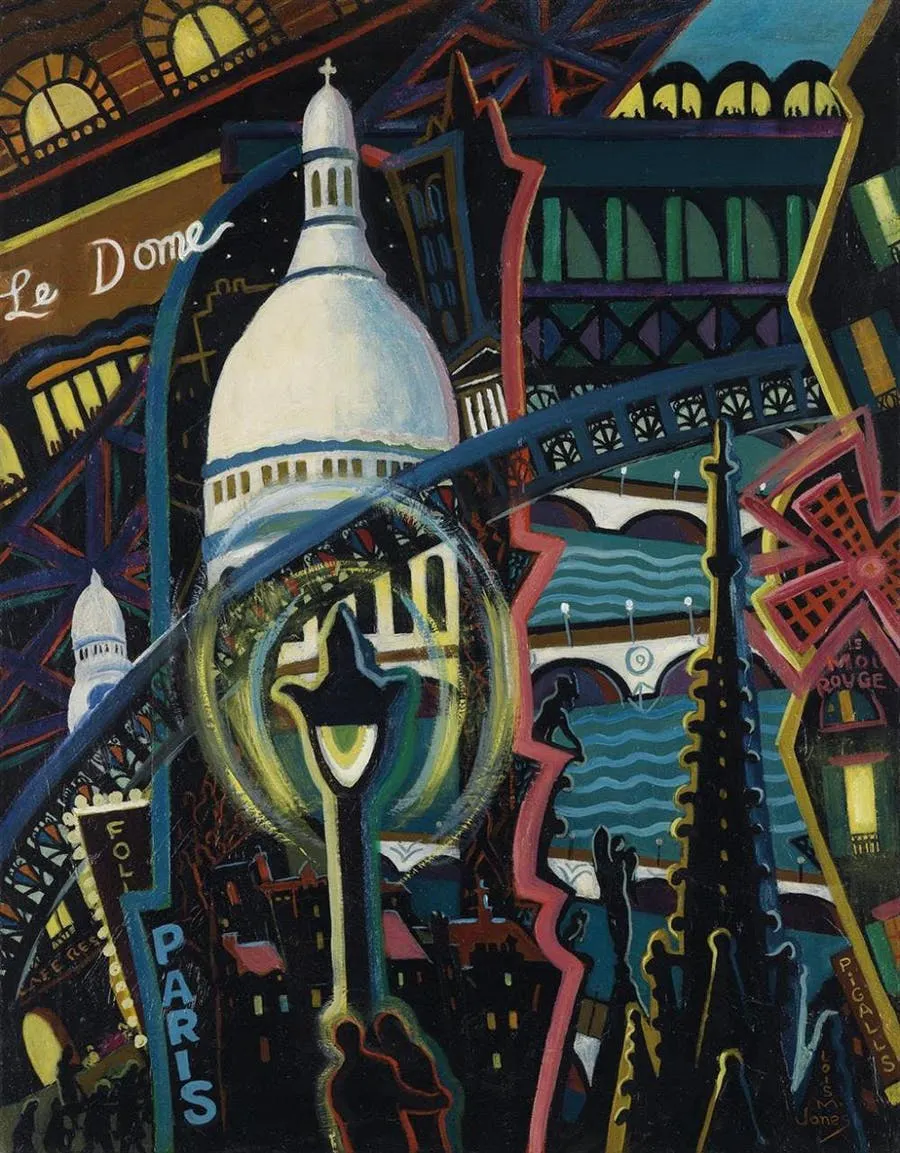
In 1937, she flew to Paris to study at the Académie Julian. During her year in the French capital, she produced more than thirty watercolors and forty paintings, often using the method of outdoor painting, and created Parisian street scenes in an Impressionist style. Two of her paintings were presented at the Salon of the Society of French Artists. Jones said she felt totally accepted in Paris, as a person and as an artist, unlike in her homeland.
See also: Claude Monet: The Father of Impressionism
In 1938, Jones painted Les Fétiches, a work now preserved at the Smithsonian American Art Museum. Here, African masks are presented in a post-Cubist style, which was in vogue in Paris at the time. Les Fétiches has proven to be a crucial work for transposing the ideals of the current of Negritude (a literary and political movement created during the interwar period by black French-speaking writers) in the visual world.
See also: Sonia Delaunay: Fine Art to Fashion
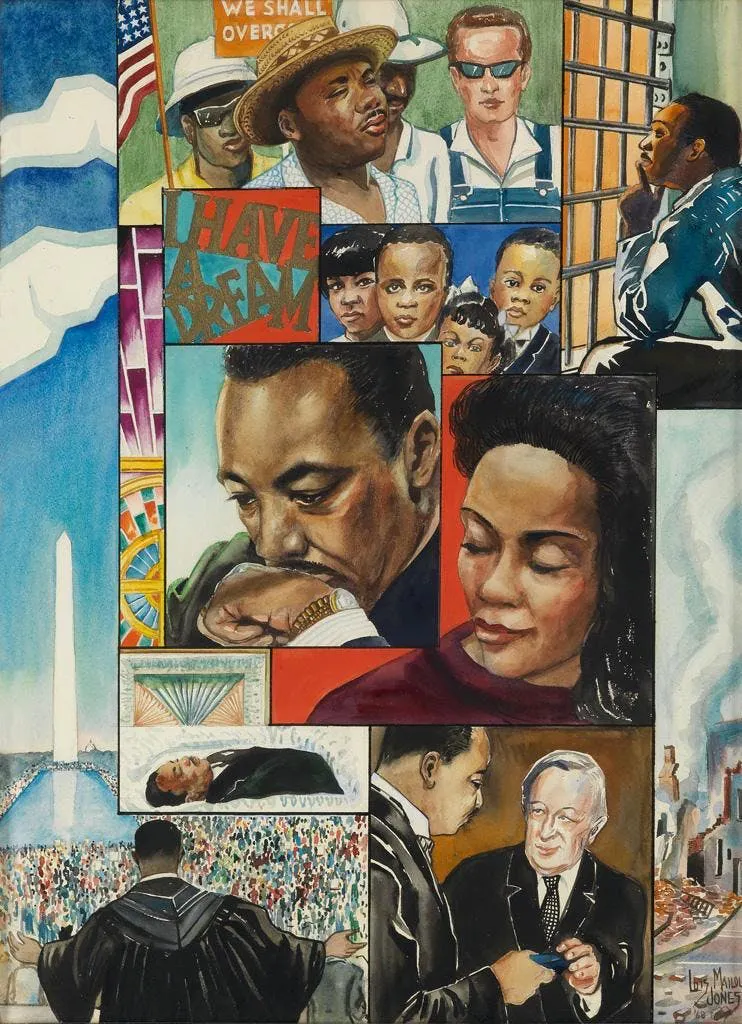
Returning to the United States, she presented the work Indian Shops, Gay Head, Massachusetts for the 1941 Corcoran Gallery competition (Washington D.C.). At the time, the institution did not allow African American artists to present their works themselves, so Jones had to call on her friend Céline Marie Tabary to take part in the competition for her. Jones' work won the Robert Woods Bliss Prize, but the artist could not receive her award in person, and Tabary had to send her the trophy. The Corcoran Gallery publicly apologized at the opening of the exhibition The World of Lois Mailou Jones in 1994, 50 years after the events.
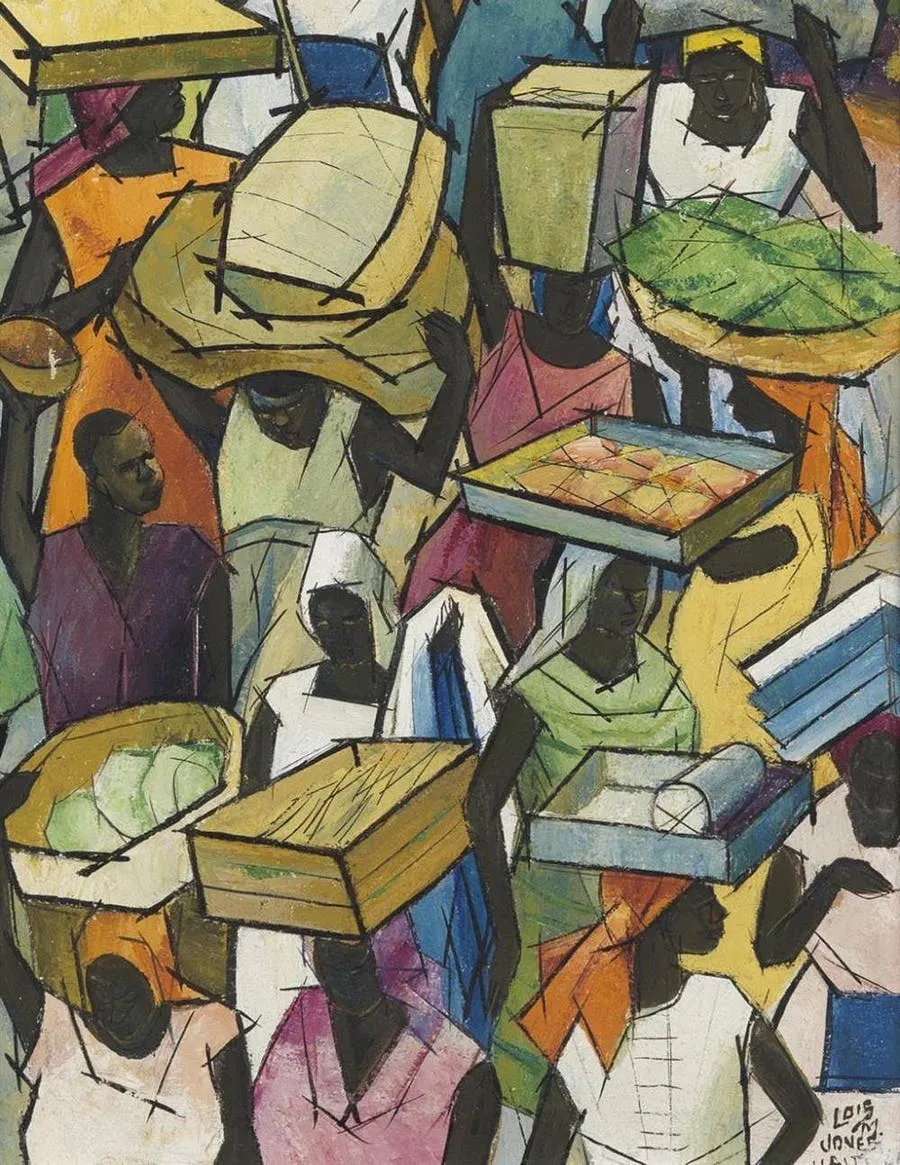
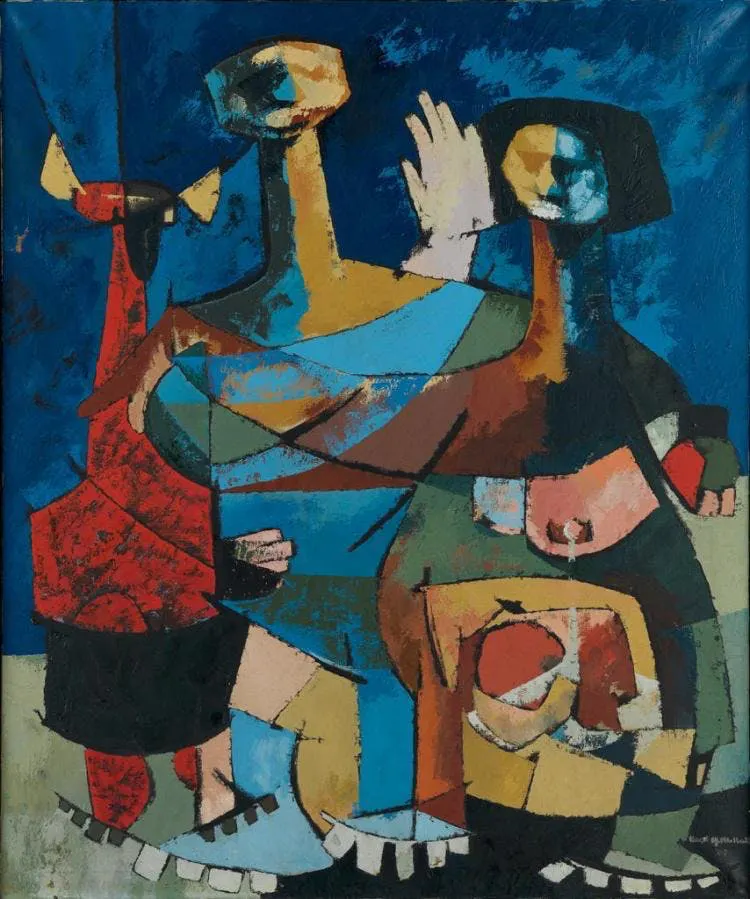
Jones married the Haitian artist Louis Vergniaud Pierre-Noël in 1953, in the south of France. The two painters met at Columbia University 20 years earlier, and had corresponded ever since. Their frequent trips to Haiti deeply influenced her painting, and, in 1954, Jones was invited by the government to paint the people and the landscapes of the island. Her palette was adorned with bright colors, and her mastery of the Cubist style, coupled with her personal style, gave birth to works that remained among the best known of her career. During this time, she briefly taught at the Centre d'Art et Foyer des Arts Plastiques in Port-au-Prince.
Her success in Haiti pushed her and her husband to return, and after a brilliant exhibition she was presented with the Diplôme et Décoration de l'Ordre National ‘Honneur et Mérite au Grade de Chevalier’. In 1955, US President Eisenhower commissioned her to paint a portrait of the Haitian president and his wife.
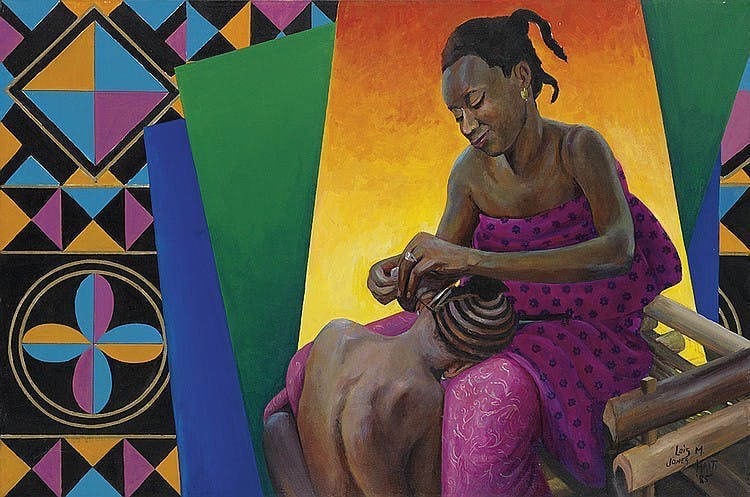
Using a grant from Howard University in 1970, Jones visited eleven African countries and documented her travels not only in paintings, but also by interviewing contemporary African artists. Her research inspired her to create a set of designs and patterns that she later combined into large, complex compositions. By skillfully integrating African patterns, masks, figures and textiles into her vibrant paintings, Jones positioned herself as a point of reference during the transition from the Harlem Renaissance movement to a contemporary expression addressing similar themes. On July 29, 1984, Lois Mailou Jones Day was declared in Washington D.C.
See also: The 15 Most Expensive Female Artists
Jones painted at an impressive pace until the end of her career, chaining exhibitions and retrospectives. Despite her extensive portfolio of works and themes, her teaching career and her cultural work, Jones has often been left out of history books because she has never contented herself with painting the subjects judged ‘acceptable’ for African American artists.
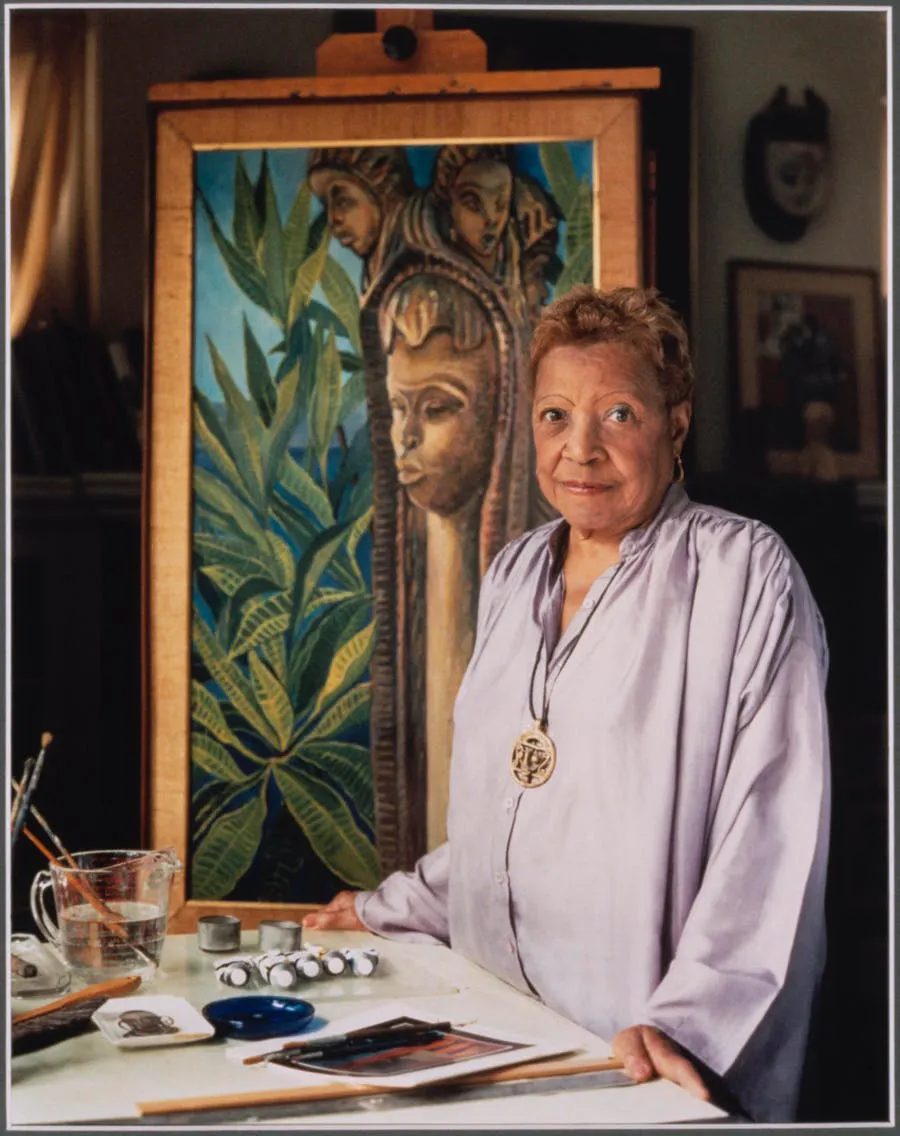
Jones' career spanned the 1930s until her death in 1998 at the age of 92. Her style evolved with her travels and meetings, adopting different influences, mediums and techniques. She said that her greatest contribution to the art world was undoubtedly to have proven "the talent of black artists". Refusing any label, she simply wanted to make herself known as an American painter, for a work that reflected her pride for her African roots and her American ancestors.
At auction, her works are snapped up for several tens of thousands, up to almost $70,000.
Find more articles about your favorite artists on Barnebys Magazine