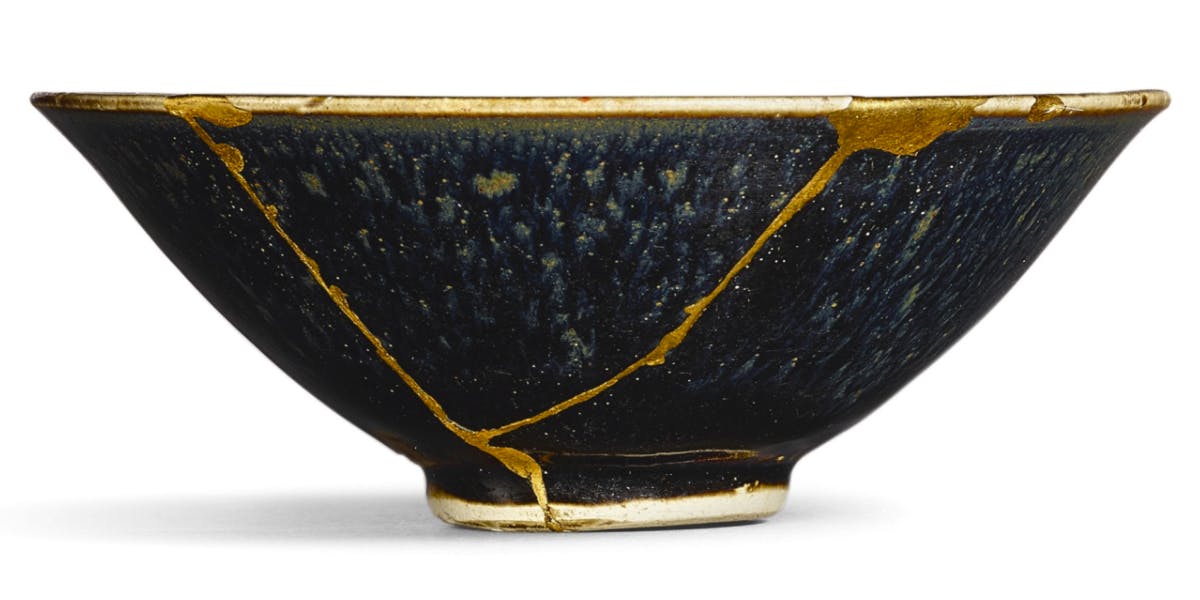
The word kintsugi (also known by the term ‘kintsukuroi’), is formed by the terms gold (‘kin’) and to reunite, to repair (‘tsug’), thus meaning ‘to repair with gold’. This Japanese art practice consists of using precious metal (gold, silver or platinum, for example) to fix broken or damaged ceramic objects (in particular, vases). The metal is allowed to flow into the cracks, thereby welding the shards together. Thanks to this system, the cracks aren’t hidden, but, rather, emphasized, as they are part of the history of the object itself.
The art of kintsugi has ancient origins, dating back to the 15th century and, according to one of the legends that circulate around its genesis, was born from a clumsy attempt to repair a ceramic. It is said that Shogun Ashikaga Yoshimasa (the 8th shōgun of the Ashikaga shogunate) sent his favorite teacup to China for repair. When the beloved object was returned to him, however, the man was far from satisfied: the cup had in fact been fixed with unsightly – and not particularly functional – metal ligatures. Without losing heart, the shogun decided to entrust the bowl to Japanese artists, who filled the cracks with lacquer and gold dust, inventing kintsugi. That simple object took the form of a small jewel, which fully satisfied the rightful owner, while the new technique became well known and appreciated.
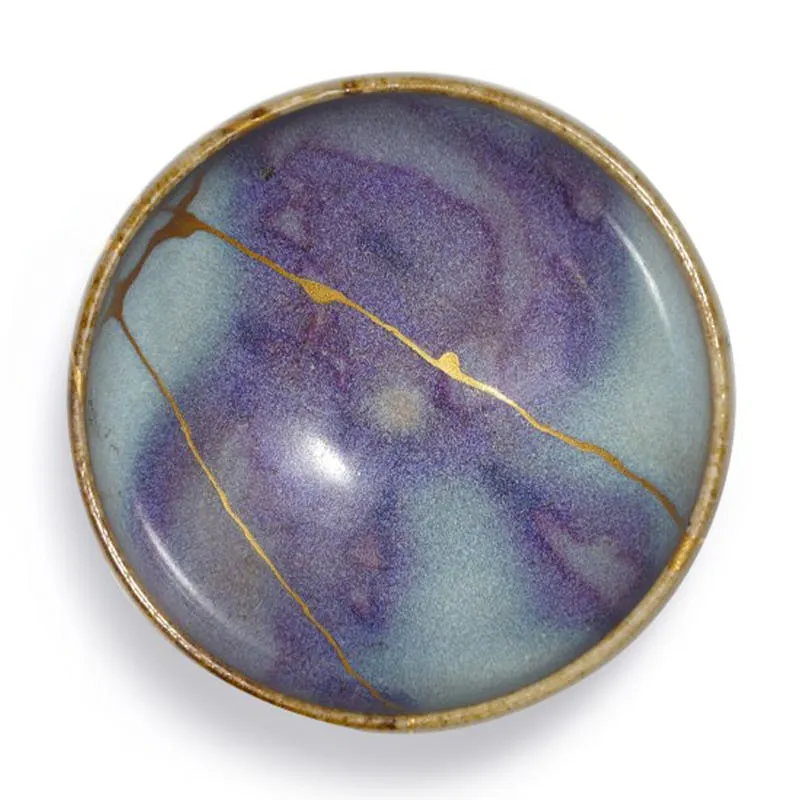
Kintsugi was soon associated with the bowls used for chanoyu, or the Japanese tea ceremony, and began to be used as a metaphor for resilience, also associated with the philosophy of wabi-sabi, based on the acceptance of the impermanence of things and on the ability to see beauty in imperfection. According to Japanese philosophy, we should learn to embrace our flaws and not hide scars, instead proudly showing them to the world as if they were medals, since “the most massive characters are seared with scars” (Kahlil Gibran). As the mythological phoenix rises from its own ashes, so each of us can be reborn from our own wounds.
Related: Ukiyo-e: The Art of Japan
In total contrast to the consumerist philosophy revolving around the disposable, kintsugi therefore teaches us not to snub or throw away something just because it is broken, but to ‘work on it’, to try to make that same object even more beautiful. By making a parallel with psychotherapy, the traumas we experience every day can help us grow, improve and become stronger. The ideal would be to always keep in mind the phrase ‘What does not kill, fortifies’ and to treasure the blows that life inflicts on us, as these can make us better, if we know how to work on ourselves and learn something from adverse events.

Let's imagine we have two objects in front of us (two vases, for example), which are completely identical in value, shape, size, color. One of them falls to the ground and breaks. At this point we would have three options: simply throw the item away, fix it using glue, or repair it using kintsugi. In the first case, we will have lost the object in its entirety. In the second, we will have an object repaired, but on which the ‘stitches’ can still be slightly seen. In the third, however, the cracks will have been sealed, and made even more visible, by beautiful, flowing liquid gold. In the latter case, the new object will no longer be identical to the one that has remained intact, but will have on the contrary acquired value (due to the precious metal) and will have been transformed into something different and unique.
Related: The Amazing Art of Sagemono and Netsuke
An object that falls to the ground will never break in the same way. Consequently, the cracks will always be different, and therefore the repairs made using the kintsugi technique will create an ever different intertwining of gold or silver lines. The result is precious and unique, both economically and artistically: not bad for a simple vase that someone else would have thrown away.
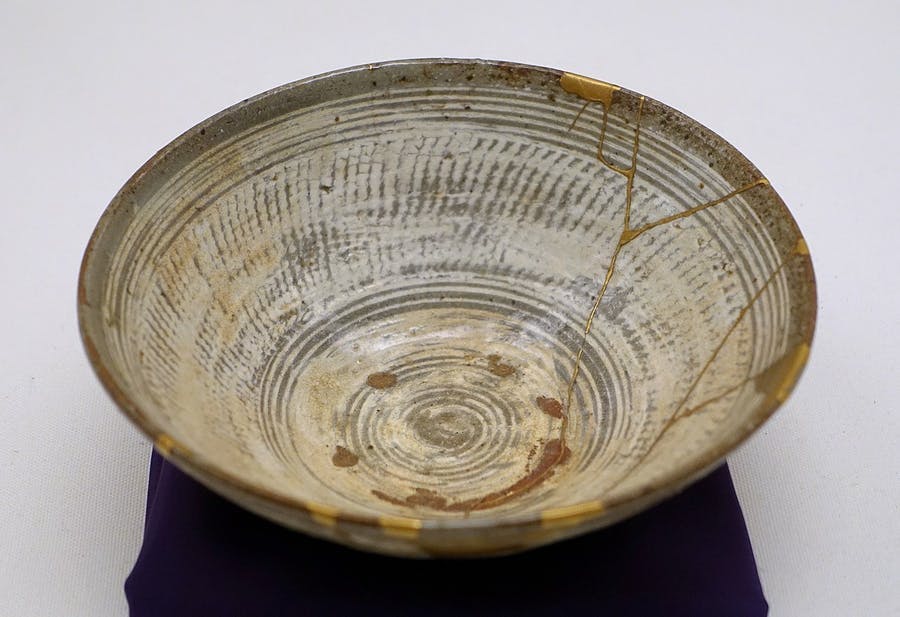
Something similar happens in everyday life: we each react to pain, whether physical or emotional, in a different way. The scars, on the body or on the soul, are unique and unrepeatable and therefore distinguish us from anyone else. Not only that, they show we have gone through a battle and that we have come out stronger.
Related: 5 Things You Didn't Know About Ceramics
Wrinkles are, in a sense, scars that time has left on our skin. These, too, ‘tell’ something about us, about what we have lived through, about the fact that we have probably gone through at least some small battle in life. And, like scars, wrinkles should also be something to show off with pride, because they are part of our history. The famous Italian actress Anna Magnani one day said to her makeup artist: "Please don't retouch my wrinkles. It took me so long to earn them." This sentence contains all the meaning and value of kintsugi.
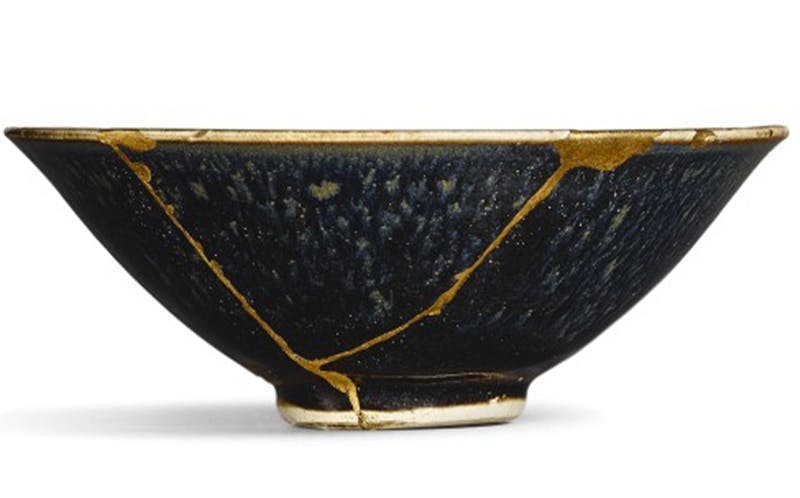
Kintsugi has been featured in major exhibitions, such as at the Freer Gallery at the Smithsonian, the Herbert F. Johnson Museum of Art, and the Metropolitan Museum of Art. This original art form (and the philosophy behind it) has often influenced artists, not only Japanese ones, who experiment with technique as a means of analyzing the idea of improvement through repair and rebirth.
The objects repaired using kintsugi are often sought after by collectors, who like to imagine the life that these objects have had, together with the fractures and cracks: signs that make them unique.
Once again, art mixes with philosophy and gives us a moral lesson, suggesting that it is always worthwhile to feel beautiful and, in any case, to treasure the lessons (physical and otherwise) that life has taught us, and to show the world our golden scars with pride.