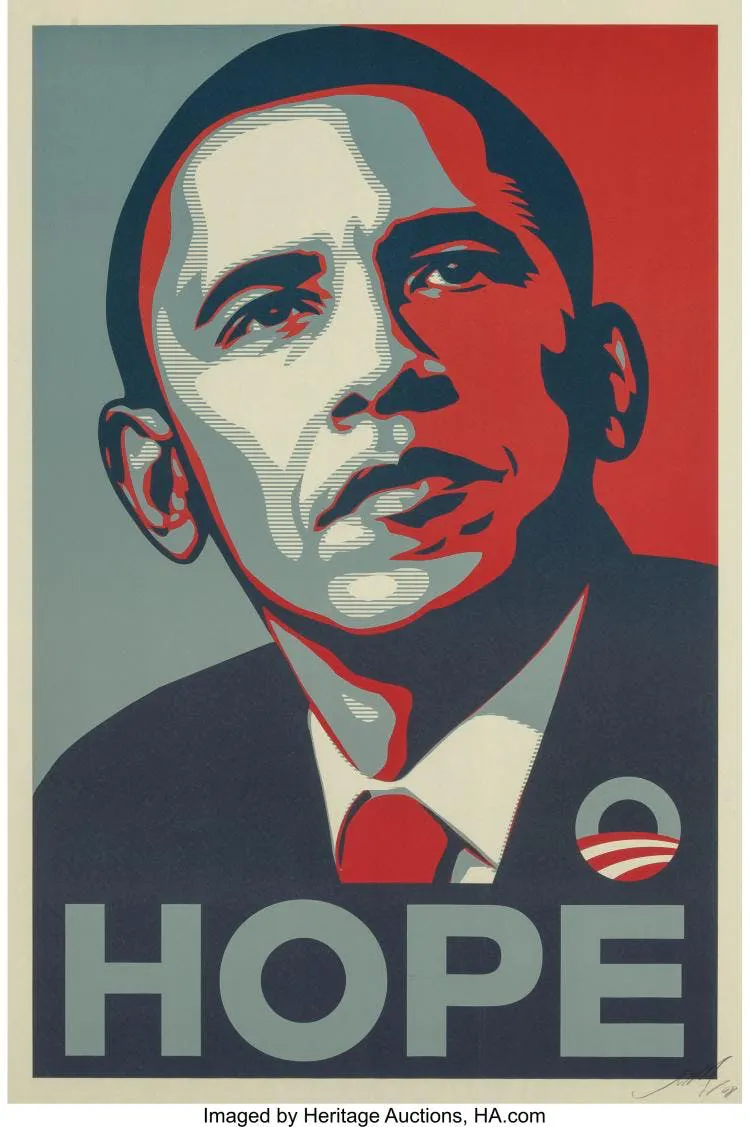
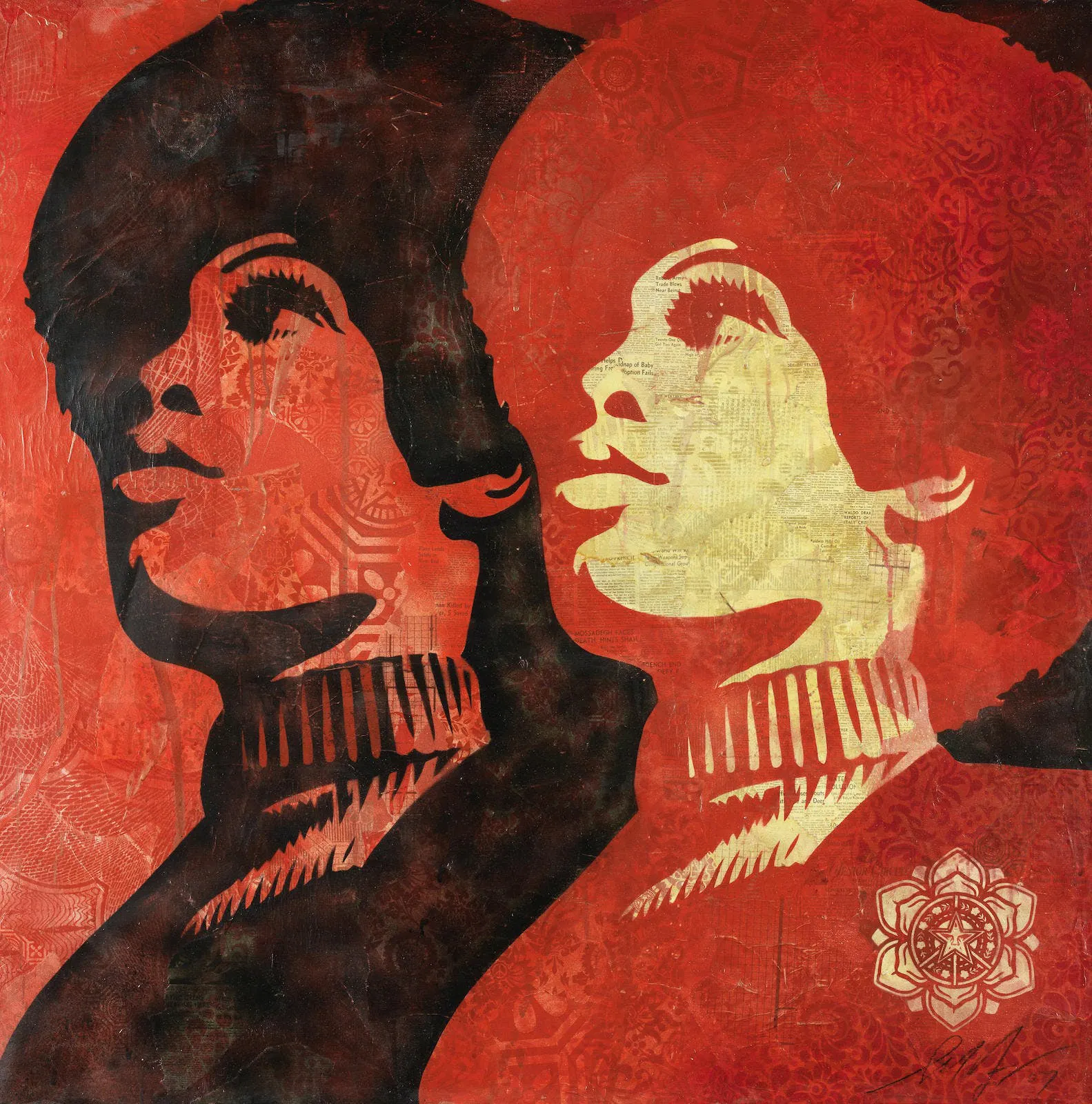
Contemporary artist Shepard Fairey (b. 1970) has produced some of the world's most iconic images, from his 1989 OBEY symbol to the Obama Hope campaign portrait in 2008. Born in Charleston, South Carolina, and a graduate of the Rhode Island School of Design, Fairey was involved with the punk skateboard and street-art scene in college. It was there that he designed his ‘OBEY’ sticker to push viewers to question the world around them. The design quickly reached phenomenon status. Since then, his art has appeared worldwide in a variety of media, from prints and posters to large-scale murals and full exhibit installations.
Related: The Art World’s Best Kept Secret
Recently, in collaboration with technology company VRt Ventures, Fairey has created the app ‘Damaged’, which allows users to view his 2017 exhibit Damaged on their smartphones or virtual reality sets. The thought-provoking exhibit, comprising murals, prints and sculpture, is Fairey's diagnosis for the world today and is accompanied by in-depth descriptions, written and spoken by Fairey.
I think it is important for artists to have courage and speak their minds.
We sat down with the acclaimed artist to talk about his favorite works, what the partnership with VRt Ventures means for the future of art, and what's up next for him.
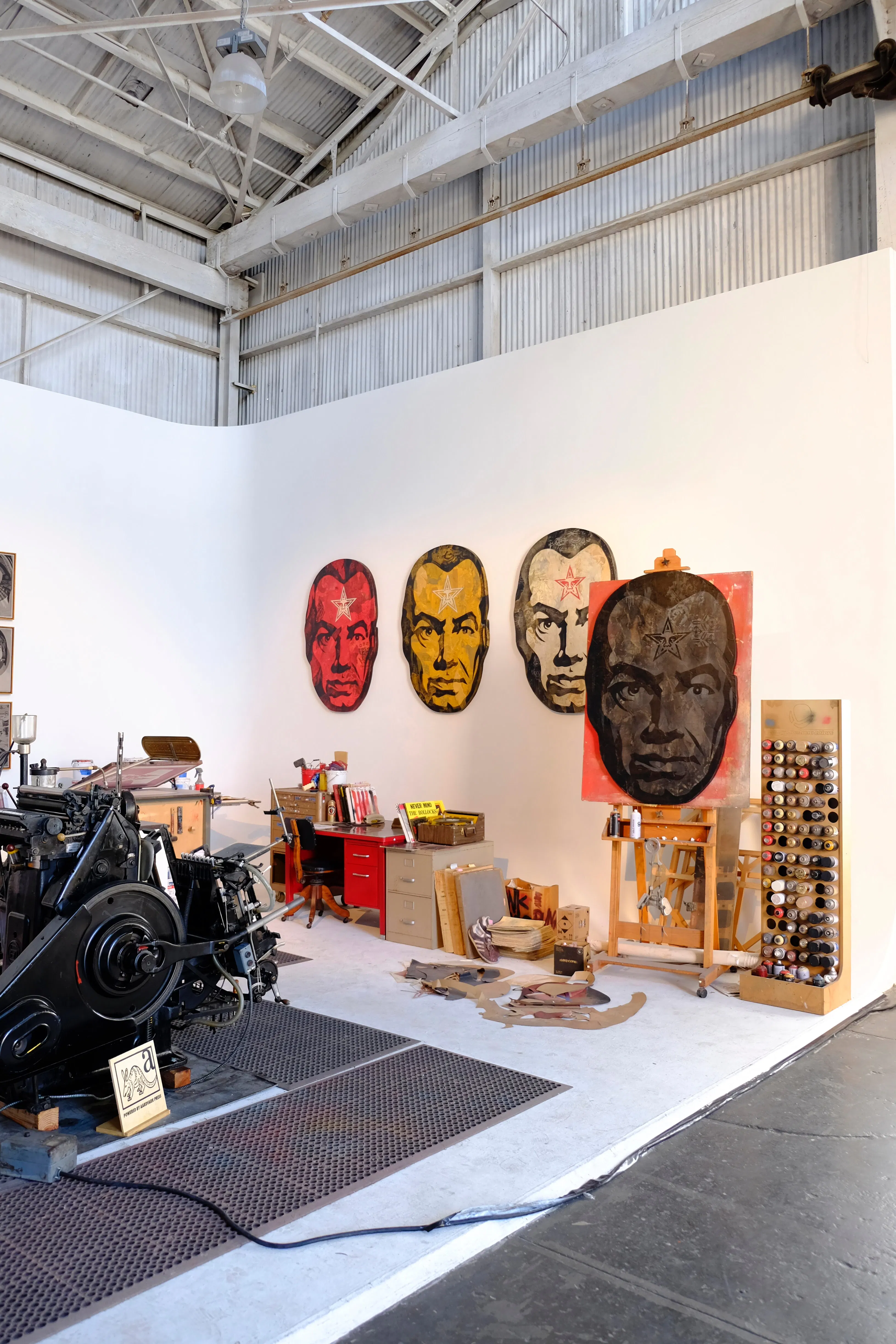
Barnebys: Your exhibit Damaged creates a dialogue on the social, political, and environmental issues that we’re facing today. What do you believe is the responsibility for artists in the 21st century, and what is yours in particular?
Shepard Fairey: I think art is an excellent way to convey ideas, and it has the advantage of provoking or seducing emotionally to initiate thoughts and conversations that might not otherwise happen intellectually. I don't think all artists have an obligation to make art about social or political issues, but I'm afraid that, unfortunately, many artists choose to avoid speaking their minds based on their concern that topical art is not what the art world wants.
I think it is important for artists to have courage and speak their minds. I see my art as a combination of my aesthetic and philosophical interests. Just like great musicians have used their lyrics to comment on things, I want to do the same thing with my artwork even if the added layer of social commentary creates an additional problem to solve. The way things are going with certain issues including environmental destruction, wealth inequality and xenophobia, I think we all, not just artists, should use the tools we have to push things in a more just direction.
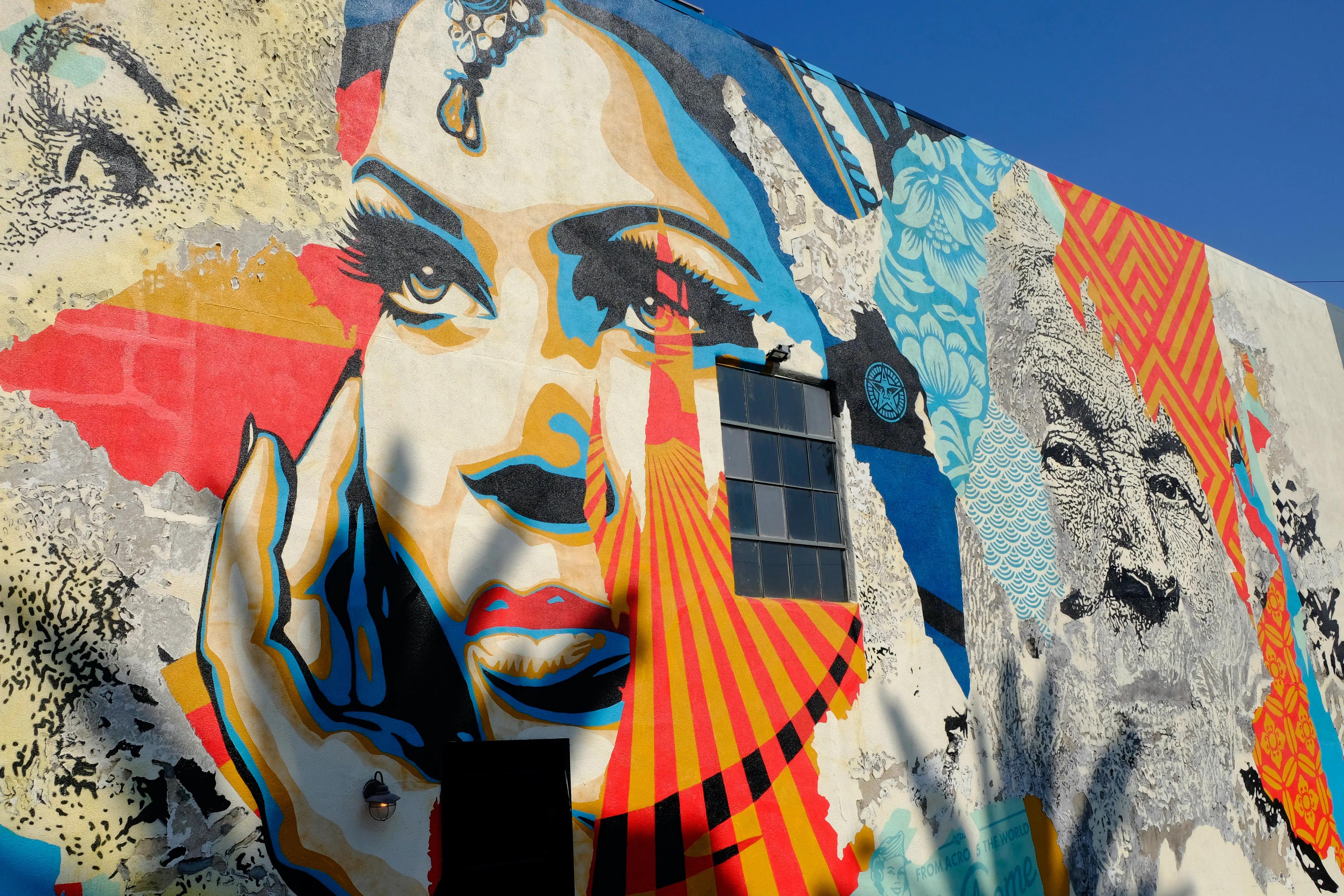
Your collaboration with VRt Ventures is an important step towards making art exhibits accessible to everyone. What does this digital move mean for how artists create work and the future of art exhibitions?
My hope is that artists are creating work mostly thinking about how it impacts people in person, but at the same time I think that time-consuming and expensive installations might make artists hesitant to invest in, if the exhibition is only up for a month or so. It might seem more worth the effort if VR/AR technology can preserve the excitement of that three-dimensional space for anyone to experience after the show is down.
Related: Banksy: A Variation on an Enigma
What were your original inspirations when you began creating art and how have they evolved?
When I was young, I was only exposed to more traditional art, but I luckily saw some of Chuck Close's work at the age of ten. That experience led me to hone my skills toward photorealistic drawing. Later, when I discovered skateboarding and punk rock, I got into making spray-paint stencils and screen prints. I also saw for the first time the combination of graphic art and politics. For a long time I considered my fine art and my graphic art to be separate things, but during my time at the Rhode Island School of Design, the lines began to blur and now my art is a fusion of fine art, graphic art and photographic techniques all combined to illustrate a social or political concept that's important to me.
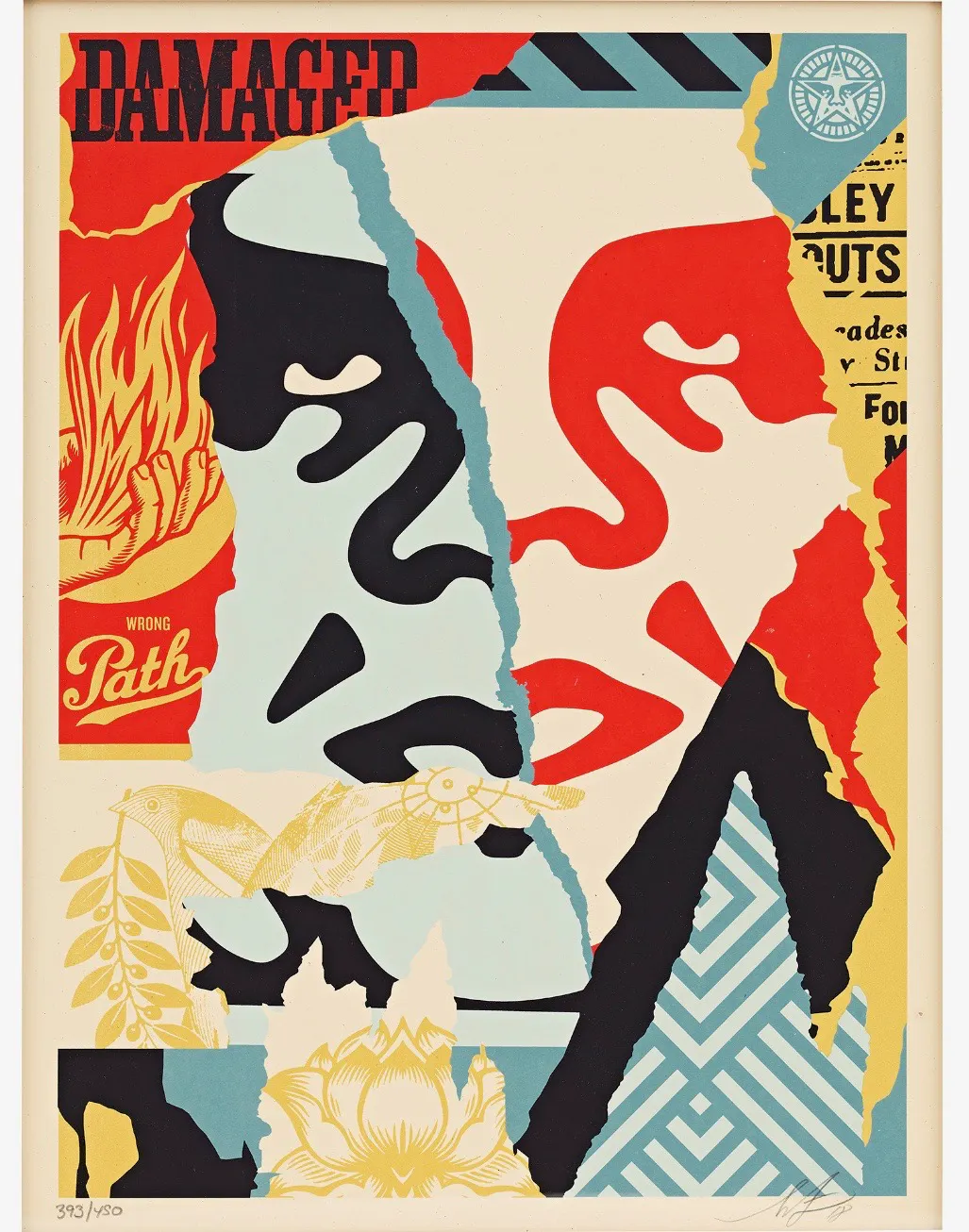
What is your favorite work of yours and why?
The ‘Obey’ icon face is my favorite because I think it works at any scale, cuts through the clutter of the street and is an identifiable badge or stamp in much of my work. I like its versatility. I'm always excited about what I'm working on at the moment because my favorite part of art is pushing to solve the problem.
Related: Street Art: For the People
What are your reflections on the transformation of the street art world in recent years and its role in the art market?
I'm happy that more people are interested in street art, and I'm happy that street artists making fine art also are finding markets, but there is no such thing as sellable street art. Street art is on the street, fine art is done on something that can be turned into a sellable object. I think artists should be able to reach a lot of people, but also survive.
What’s next for you? What projects are you currently working on?
I just launched the app version of my ‘Damaged’ art show, and then I’m getting ready for some big news in 2019 to celebrate the thirty-year anniversary of the ‘OBEY’ art project.